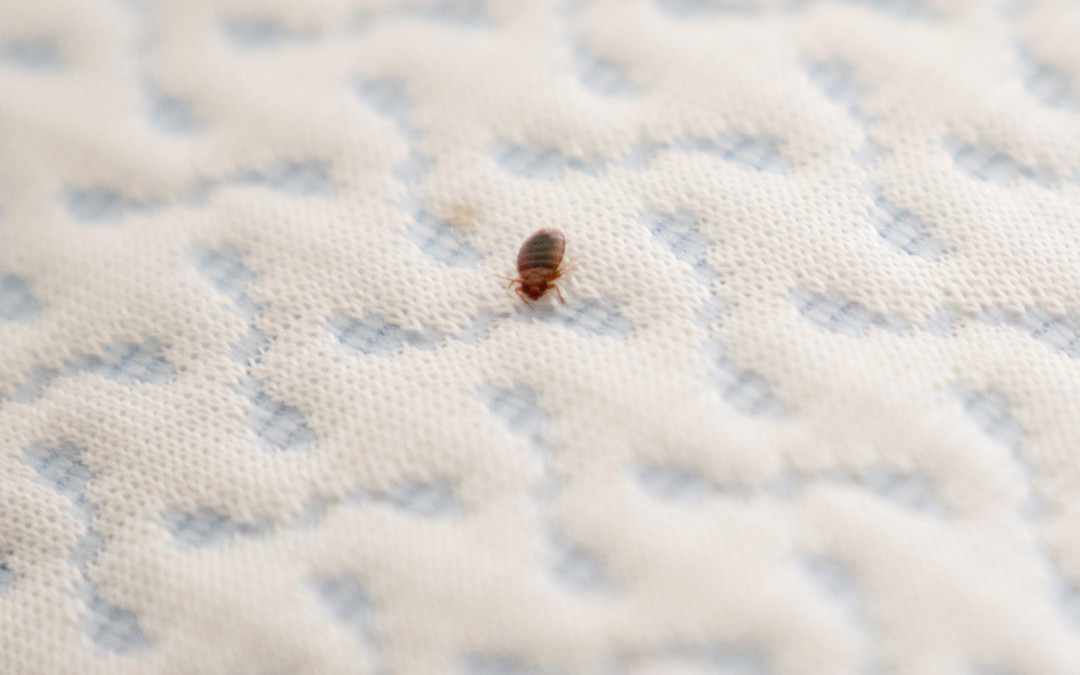

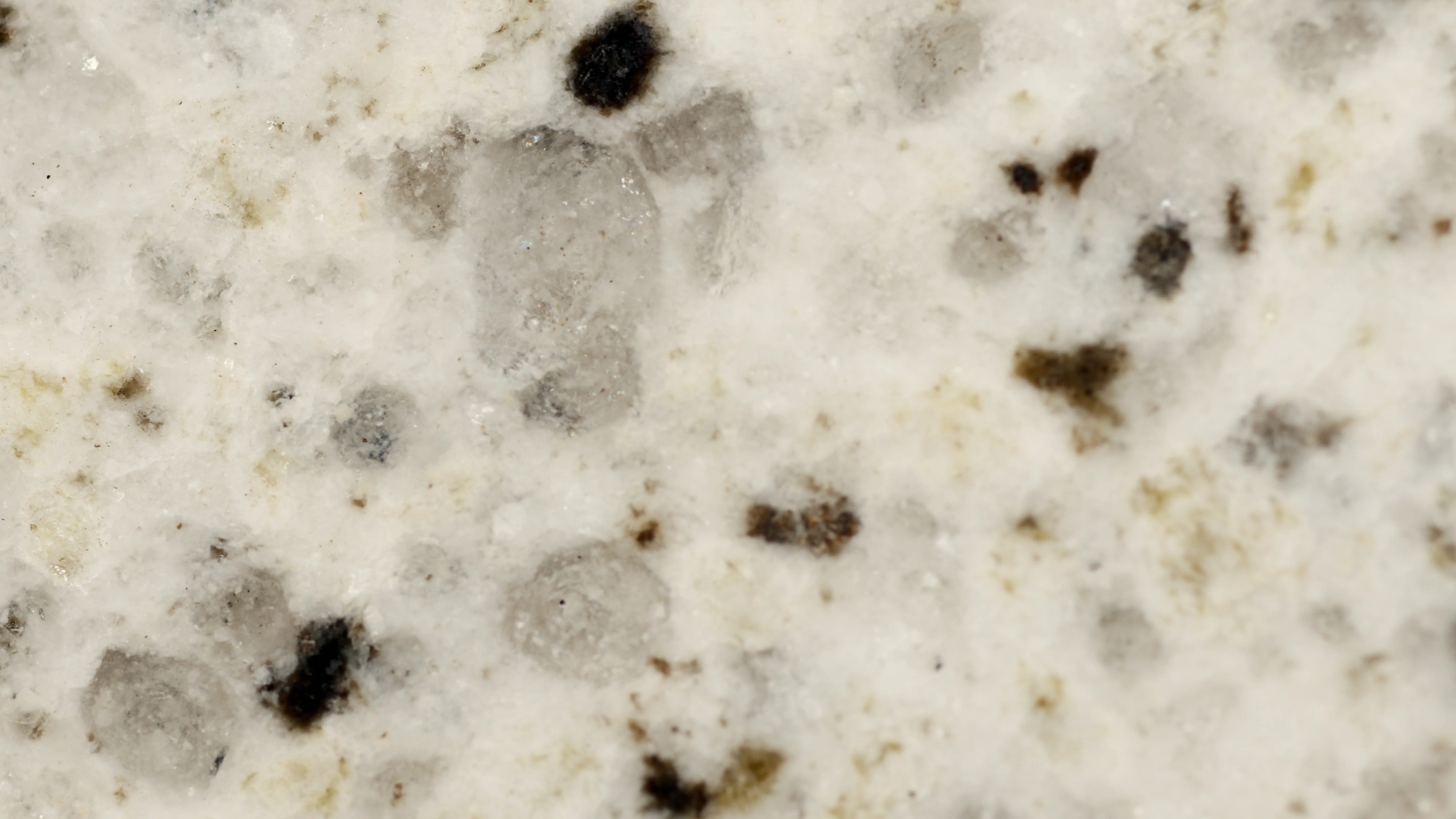
Black spots on a sheet, pillowcase, mattress, or bed frame are not enough to diagnose bed bugs. Bed-bug fecal marks can be dark, but so can mold, transferred ink or cosmetics, old blood, fabric dye, lint, and debris.
Keep the bedding in the room while you inspect it. Photograph the marks, note exactly where they appeared, and look for a second type of evidence before treating anything. A live bug identified as a bed bug is much stronger evidence than a stain or bite.
First, Check Whether the Marks Are on or in the Fabric
Work in bright light with a flashlight. Avoid shaking sheets or carrying loose bedding through the home.
-
Look at the shape and distribution. Note whether the marks are separate dots, absorbed smears, fuzzy patches, streaks, or loose particles. Check whether they cluster near a mattress seam, spread across a damp area, or line up with a pen, makeup, clothing, hair product, or another possible source.
-
See whether the material is loose. Pilling, lint, crumbs, soil, and other debris usually sit on the surface and may lift with clear tape or a lint roller. Bed-bug fecal material is absorbed into fabric or stuck to a surface rather than brushing away like dust 1.
-
Check for moisture. Feel for dampness and inspect the underside of the mattress, bed base, nearby wall, floor, and window for condensation, a leak, or poor drying. A spreading or irregular patch on a repeatedly damp surface is more consistent with mold than with scattered insect evidence.
-
Inspect the bed before cleaning the clue away. Slowly remove the bedding and examine mattress piping, seams, stitching, labels, buttons, and corners. Continue around the box spring or foundation, frame joints, screw holes, and headboard. These are common bed-bug hiding places 2 1.
If you find an insect, do not crush it. Trap it in a sealed clear container or under clear tape and ask a licensed pest professional, local cooperative extension service, or other qualified insect expert to identify it. Many insects can be mistaken for bed bugs, and treating the wrong pest wastes time and increases pesticide exposure 3.
Which Clues Point Toward Bed Bugs?
Bed bugs are visible insects, although young stages and eggs are small. Unfed adults are flat, oval, brown, and about the size of an apple seed. Young bed bugs can be translucent or pale yellow-white. Eggs are pearl-white and about the size of a pinhead 3.
During an inspection, look for a combination of:
-
Live adults or nymphs in seams, folds, cracks, frame joints, or nearby furniture.
-
Eggs or eggshells, which are about 1 millimeter long and pale.
-
Shed skins, which resemble empty, pale versions of the insect.
-
Fecal spotting, usually small dark reddish-brown or black dots or smears. On fabric, these may soak in and bleed at the edges like a marker mark.
-
Rusty or red blood marks, which can occur when a recently fed bug is crushed.
EPA lists all of these as physical signs worth checking 2. The more convincing pattern is repeated spotting beside a hiding place together with eggs, cast skins, or an identifiable bug. A single black dot or old blood stain has many possible causes.
A musty or sweet odor is sometimes reported with heavier infestations, but odor alone is not diagnostic. Do not wait for an odor if you find a live bug, and do not assume an ordinary musty smell proves bed bugs.
Bites Cannot Confirm the Cause
Bed-bug bites can resemble mosquito, flea, and other insect bites. Reactions vary from no visible mark to itchy bumps or, rarely, a substantial allergic reaction. A line or cluster is not a unique bed-bug pattern. CDC guidance says the skin reaction is not diagnostic and recommends confirmation by identifying a bug from the sleeping area 4.
New skin marks can justify a careful inspection, but they should not be used to choose a pesticide.
What Else Can Make Black or Brown Spots?
Mold or Mildew
Mold can grow on fabric and upholstery when moisture persists. Color does not identify the mold type, and black color does not establish that a particular mold is more dangerous. Clues that support a moisture problem include:
-
a diffuse, irregular, speckled, or fuzzy patch rather than isolated ink-like dots;
-
a musty smell associated with damp bedding, a mattress underside, wall, or bed base;
-
condensation, a plumbing or roof leak, a recent spill or flood, or bedding stored before it was fully dry;
-
similar growth or staining on nearby porous material.
If visible mold is present, routine home mold testing is usually unnecessary. The useful response is to remove the growth safely and correct the moisture source so it does not return 5 6.
Ink, Dye, Cosmetics, and Body Products
Pen ink, printer toner, mascara, eyeliner, hair dye, shoe polish, self-tanner, and dark fabric dye can transfer to bedding. These marks often match a contact area or repeat in the shape of the source. Check sleepwear, pillow materials, labels, a leaking pen, recently dyed hair, and newly washed dark items.
Follow the textile care label before spot treatment. Test any cleaner on a hidden area, and do not mix cleaning products. A mark that remains after washing may be a permanent stain, not active contamination.
Old Blood, Rust, or Other Debris
A small nosebleed, scratched skin, acne lesion, menstrual blood, a pet scratch, or another minor source can dry brown or nearly black. Rust from a damaged spring, zipper, fastener, or bed-frame contact point can also transfer to fabric. Blood or rust may explain a mark, but neither appearance proves its source.
Dark pilling, lint, soot, crumbs, and material shed by a deteriorating mattress cover usually sit on top of the textile or correspond to wear. Remove a particle with clear tape and inspect it under bright light rather than assuming it is insect waste.
What to Do if Bed Bugs Are Plausible
If you find a suspected bug or several types of bed-bug evidence, contain first and get the identification confirmed.
Contain Bedding and Laundry
-
Sort washable items in the affected room and place them directly into sealed bags. Do not carry them loose to another room or shared laundry area.
-
Check every care label. For items that tolerate it, University of Minnesota Extension advises drying for at least 30 minutes on medium-high or high heat. Washing alone may not kill every life stage 7.
-
Tip the contents directly from the bag into the machine. Seal the emptied bag for disposal, and put dried items into a new clean bag or lidded container so they are not reinfested.
-
Ask a pest professional how to handle wool, leather, foam, electronics, dry-clean-only textiles, and other heat-sensitive belongings. Do not improvise a temperature or treatment that can damage the item or start a fire.
Laundry can kill bed bugs on suitable textiles, but it does not treat the frame, nearby cracks, or another infested unit. A confirmed infestation usually needs an integrated plan that combines inspection, containment, monitoring, physical controls, and, when appropriate, carefully selected pesticides.
Contact the Right Person Early
A licensed pest professional with bed-bug experience can confirm the insect, map the affected areas, and plan follow-up. In an apartment, dormitory, shelter, or other multi-unit building, notify the landlord or manager promptly because nearby units may need inspection. Responsibilities and notice rules vary by location 8.
Do not discard the mattress, bedding, or all your belongings by default. Many items can be treated or contained. Moving unsealed furniture through a building can spread bugs, and replacing a mattress does not eliminate bugs in the frame or room. If something truly cannot be treated, ask the professional or local waste service how to wrap, mark, and dispose of it safely.
Bed-Bug Treatments to Avoid
Bed-bug treatment is not a reason to spray ordinary household chemicals on a bed.
-
Do not use rubbing alcohol, kerosene, or gasoline. They can harm people or ignite, and they are not a complete treatment 8.
-
Do not heat the room with a thermostat, fireplace, oven, propane heater, or space heater. Improvised whole-room heat is dangerous and may fail to heat hiding places enough to kill all life stages 8.
-
Do not use a pesticide on sheets, blankets, pillows, a mattress, or another sleep surface unless the product label explicitly permits that exact site and application. The label also specifies ventilation, reentry, protective equipment, and drying requirements. More pesticide is not better 9.
-
Do not rely on total-release foggers or bug bombs. The pesticide may not reach the cracks where bed bugs hide, and improper use can cause poisoning, fire, or explosion. EPA warns that a fogger should never be the only control method and must not be used unless bed bugs and the intended location are on the label 8.
What to Do if the Problem Looks Like Mold
Start by stopping the water or humidity source. Dry the area fully, improve airflow where practical, and make sure the mattress is supported in a way that allows it to remain dry. Renters should report leaks, condensation, and persistent dampness to the property owner or manager in writing.
Wash removable sheets and covers according to their care labels and dry them completely. For a mattress or upholstered base, the boundary is different: these are porous materials, and mold can grow into spaces that surface cleaning cannot reach. EPA notes that moldy porous materials may have to be discarded when they cannot be cleaned completely 10.
Do not saturate a mattress with bleach, detergent, or water. Check the manufacturer's care instructions. If growth is extensive, follows flooding or contaminated water, penetrates the mattress, returns after drying, or cannot be assessed without opening the mattress, consult an experienced mold or water-damage professional. EPA suggests professional guidance when mold covers more than about 10 square feet, when there is extensive water damage, or when sewage or contaminated water is involved 10.
People with asthma, chronic obstructive pulmonary disease, mold allergy, immune suppression, or another condition that raises mold risk should not perform mold cleanup themselves. CDC recommends at least a NIOSH-approved N95 respirator, gloves, and eye protection for people who do clean mold 11.
If You Find Spots While Traveling
In a hotel or other temporary lodging, keep luggage away from the bed while you inspect. If you find a suspected bug or a cluster of physical signs, photograph the evidence, contain exposed clothing in sealed bags, and report it to management. Ask for another room that is not adjacent to the suspected room, or choose other lodging if the response is inadequate 7.
Before bringing belongings through your home, inspect luggage in a well-lit, easy-to-clean area. Keep suspect textiles bagged until they can be dried or otherwise handled safely. A stain on hotel linen alone still does not prove an active infestation.
When Symptoms Need Medical Care
Most suspected bed-bug bites need only basic skin care and avoiding scratching, but the environmental source still needs separate confirmation. Seek medical care for a large or worsening reaction, persistent symptoms, or signs of infection such as increasing pain, warmth, swelling, pus, red streaks, or fever. CDC notes that severe bite reactions may need treatment and secondary infection may require antibiotics 12.
Call emergency services for trouble breathing, throat or tongue swelling, fainting, or another severe whole-body allergic reaction. If mold exposure seems to trigger significant wheezing, shortness of breath, fever, or worsening of a chronic lung condition, leave the affected area and seek medical advice promptly 6.