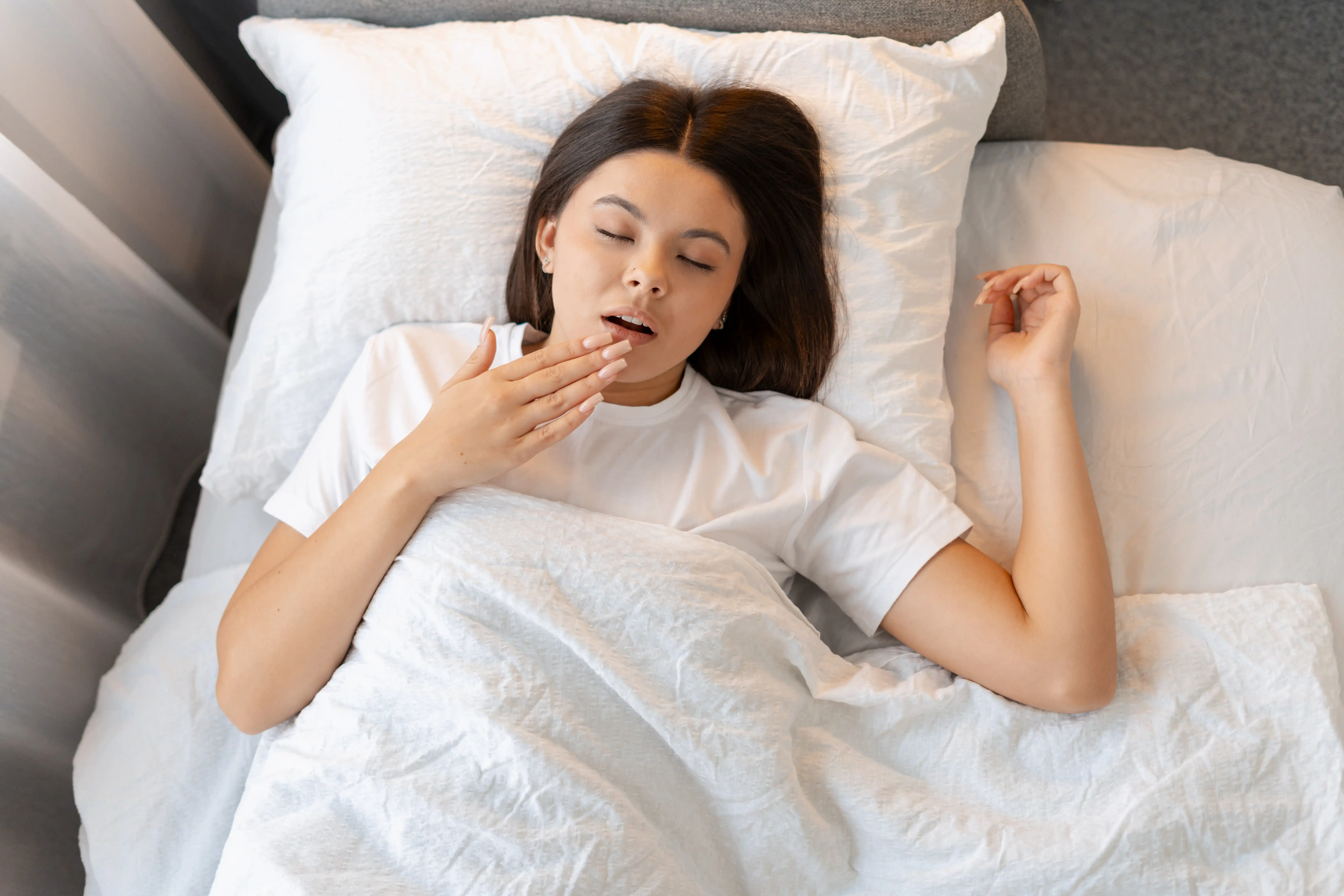

Dry mouth at night is a symptom, not a diagnosis. It may come from air passing over the mouth, a temporary fluid deficit, a medication effect, reduced saliva production, or more than one factor at once. Waking with a dry mouth does not identify the cause by itself.
Dentists use xerostomia for the subjective feeling of oral dryness. Hyposalivation means objectively low salivary flow. The two can occur together, but a person may feel dry even when measured flow is within the normal range 1. This is why the useful question is not only “How do I add moisture?” but also “What pattern might be causing it?”
Why dry mouth often feels worse at night
Salivary output normally reaches its lowest daily level during sleep. Mouth breathing can make the sensation worse because moving air increases surface drying 1. A dry bedroom, nasal congestion, or pressurized air leaking through the mouth can add to that effect.
A morning symptom may involve several related sensations:
- Dry mouth: a sticky, rough, burning, or parched feeling inside the mouth
- Low saliva: a measured reduction in salivary flow, which requires clinical assessment
- Thirst: a drive to drink that may reflect a whole-body fluid or metabolic issue
- Dry or sore throat: irritation that can accompany mouth breathing, illness, reflux, or other throat problems
- Snoring: vibration from narrowed upper-airway tissues, which can occur with or without dry mouth
These clues can overlap, but they are not interchangeable. Dry mouth can be one sign of dehydration, yet dehydration usually creates a broader pattern that may include thirst, less urination, dark urine, dizziness, or fluid loss from fever, vomiting, diarrhea, heat, or heavy sweating 2. A dry mouth without those features may have a more local cause.
Common causes of dry mouth at night
Mouth breathing and nasal blockage
Sleeping with the mouth open lets air pass continuously over oral tissues. A cold, allergies, chronic rhinitis, or a structural nasal problem can make nasal breathing difficult. Snoring may occur at the same time, but it does not show whether saliva production is actually low.
Dry mouth is also listed among the possible symptoms of obstructive sleep apnea. More specific warning clues include frequent loud snoring, witnessed pauses in breathing, gasping during sleep, and daytime sleepiness 3. Dry mouth alone is not enough to diagnose sleep apnea, and symptom improvement alone cannot rule it out.
Dehydration or fluid loss
Too little fluid intake can contribute, especially after illness, heat exposure, heavy sweating, vomiting, or diarrhea. Diuretics and uncontrolled diabetes can also increase fluid loss through urination 2.
Do not assume every dry morning means you need to force down large amounts of water. If your urine pattern, thirst, and daytime hydration seem normal, continued dryness may point to airflow, medication, or salivary factors. People with a prescribed fluid limit for heart, kidney, liver, or another condition should follow their clinician's instructions rather than increasing fluids on their own.
Medications
Medication is a frequent cause of reduced saliva. Potential contributors include some antidepressants, antihistamines, decongestants, blood pressure medicines, bladder medicines, pain medicines, diuretics, muscle relaxants, antiseizure medicines, and other drugs with anticholinergic effects. Taking several medicines can increase the chance of oral dryness 1.
Look for timing rather than guessing from a category. Did dryness begin after a medicine was started, a dose changed, or the time of a dose moved? Bring the full list of prescription drugs, over-the-counter products, and supplements to the prescriber or dentist. Do not stop, skip, split, or reschedule a medicine without the prescriber's guidance.
Alcohol, tobacco, cannabis, and caffeine
Alcohol, tobacco, and cannabis can contribute to oral dryness. Excessive caffeine can also worsen symptoms for some people 1. The useful test is whether dryness repeatedly changes when exposure changes, not whether one substance must be the cause.
Alcohol-containing mouth rinses may sting or worsen the feeling of dryness. Choose an alcohol-free product if you use a rinse for comfort, and ask a dentist which oral-care products fit your cavity risk.
Salivary-gland and systemic conditions
Persistent dryness can occur with Sjögren's disease, diabetes, HIV, nerve damage, and cancer treatments that affect oral tissues or salivary glands 4. These are possible causes, not conclusions that can be drawn from one symptom.
The accompanying pattern matters:
- Dry or gritty eyes, fatigue, joint or muscle pain, or recurrent swelling near the face or neck can occur with Sjögren's disease 5.
- Marked thirst and increased urination, especially with unexplained weight loss, blurred vision, fatigue, or recurrent infections, warrant medical assessment for diabetes or another cause 6.
- Painful swelling near the cheek, ear, jaw, or floor of the mouth, fever, redness, a foul taste, or difficulty opening the mouth can point to a salivary-gland infection or blockage 7.
Gastroesophageal reflux can irritate the throat and leave an unpleasant taste, but a dry mouth does not establish reflux. Anemia can cause fatigue and shortness of breath, but it is not a routine explanation to assume from nighttime dryness alone.
PAP therapy
Positive airway pressure (PAP) does not need to reduce salivary-gland function to leave the mouth feeling dry. With a nasal mask or nasal pillows, air may escape through an open mouth. Mask leak, nasal congestion, low effective humidification, or dry airflow can also contribute.
Treat the dryness as a troubleshooting signal, not a reason to abandon prescribed therapy. The American Thoracic Society recommends addressing mask leak and discussing measures such as humidification, heated tubing, saline nasal products, artificial saliva, a chin strap, or a different mask when appropriate 8.
Why persistent dry mouth matters
Saliva lubricates the mouth, supports speech and swallowing, helps clear food and sugar, and buffers acids. When salivary flow is persistently low, the risks of tooth decay, demineralization, tooth sensitivity, and oral infections rise 1 4.
Watch for:
- new cavities or tooth sensitivity
- plaque buildup, bleeding or inflamed gums
- mouth sores, burning, or white patches
- cracked lips or splits at the corners of the mouth
- bad breath that persists despite oral care
- changes in taste
- difficulty chewing, speaking, or swallowing dry food
- dentures that become uncomfortable or difficult to retain
Relief and prevention are separate goals. A gel may make the mouth feel better for a few hours without correcting the cause or protecting the teeth enough on its own.
Low-risk steps that may help
1. Look for a repeatable pattern
For several mornings, note only the details that can change the next step:
- whether dryness is present only on waking or throughout the day
- nasal congestion, mouth breathing, snoring, gasping, or witnessed breathing pauses
- strong thirst, increased urination, vomiting, diarrhea, fever, or heavy sweating
- recent medication or dose-timing changes
- alcohol, tobacco, cannabis, or unusually high caffeine exposure
- PAP mask type, leak reports, water use, and nasal symptoms
- dry eyes, gland swelling, mouth sores, dental sensitivity, or swallowing difficulty
A pattern can guide the conversation with a dentist, prescriber, sleep clinician, or primary care professional. It still cannot diagnose the cause by itself.
2. Add moisture without overcorrecting
Sip water when thirsty or when you need moisture, and maintain your normal daytime hydration. Avoid forcing excessive water as a treatment for unexplained dryness. If the room air feels dry, a clean humidifier may improve comfort. Follow its cleaning instructions 4.
A saliva-substitute gel, spray, or alcohol-free rinse may provide temporary relief. Evidence does not show that one topical category reliably works best for everyone, and these products do not cure the cause 1.
3. Stimulate saliva safely while awake
Sugar-free gum or a sugar-free lozenge can stimulate saliva if your glands still respond. Use gum and lozenges only while fully awake. Choose a nonacidic option rather than a sugary or sour lozenge, because saliva's normal acid-buffering and tooth-protective effects may already be reduced 1.
Skip a product that burns or irritates your mouth. Do not rely on coconut-oil pulling or herbal drinks to identify or correct the cause.
4. Protect the teeth and soft tissues
Brush gently twice a day with fluoride toothpaste and clean between the teeth daily. Regular dental care matters because early decay or fungal infection may be easier for a dentist to detect than for you to see 1. Lip balm can help cracked lips, while a dentist can recommend stronger fluoride or other preventive treatment when risk is high.
Avoid tobacco and consider whether alcohol, cannabis, or excess caffeine tracks with your symptoms. Avoid frequent sugary drinks or candies as a dryness remedy.
5. Address the reason for mouth breathing
Saline nasal spray or gel may help simple nasal dryness, but persistent blockage needs a cause-specific approach. A clinician can assess allergies, chronic inflammation, anatomy, medication effects, and sleep-disordered breathing.
Do not tape your mouth shut to self-treat dry mouth, snoring, or suspected sleep apnea. A 2025 systematic review found only 10 small, heterogeneous studies, judged their overall quality poor, and found no strong support for mouth taping as an OSA treatment. Several studies raised safety concerns when nasal obstruction is present 9.
If PAP is making your mouth feel dry
Keep using prescribed PAP unless your clinician tells you otherwise, then work through the likely causes:
- Check the mask seal and leak information. A displaced mask can direct air toward the mouth, while a nasal interface can leak through an open mouth.
- Check the water chamber and heated tube. Fill, install, and clean them according to the manufacturer instructions.
- Change humidification gradually. If your machine allows user adjustment, try one small change at a time. More humidity can help dryness, but too much may cause condensation.
- Address nasal symptoms. Saline spray or gel may help dryness. Ask the sleep team or another clinician before adding a medicated nasal spray.
- Ask about fit and interface options. A sleep clinician or equipment provider can assess whether refitting, a different mask, heated tubing, or a clinician-guided chin strap is appropriate 8.
Do not change prescribed pressure settings, stop PAP, or use mouth tape on your own. If dryness prevents regular use, contact the sleep team promptly rather than accepting untreated nights.
How a dentist or clinician may investigate it
A useful evaluation starts with when the dryness occurs, whether it is subjective or accompanied by signs of low saliva, and what changed before it began. A dentist or clinician may review medications and health conditions, examine the mouth and salivary glands, look for decay or infection, and measure salivary flow. Blood tests or other targeted testing may be appropriate when the history suggests a systemic cause 4.
Bring:
- a complete medication and supplement list
- the symptom pattern and associated thirst, urinary, eye, nasal, or sleep symptoms
- recent dental changes
- relevant PAP leak and comfort information
- any history of head or neck radiation, chemotherapy, autoimmune disease, or salivary-gland problems
The goal is to treat the cause where possible while protecting oral health and improving comfort.
When to seek care
Arrange a dental or medical appointment if dry mouth is persistent, occurs during the day as well as at night, or keeps returning without a clear temporary trigger. Seek care sooner for:
- new cavities, tooth sensitivity, bleeding gums, mouth sores, burning, or white patches
- difficulty chewing, speaking, or swallowing
- dry eyes, recurrent gland swelling, fatigue, or joint and muscle pain
- marked thirst, increased urination, unexplained weight loss, blurred vision, or recurrent infections
- painful facial or neck swelling, fever, redness, pus, a foul taste, or difficulty opening the mouth
- frequent loud snoring, witnessed breathing pauses, gasping, or problematic daytime sleepiness
- symptoms that began after a medication change
- PAP-related dryness that interferes with treatment
Get urgent medical help for confusion, fainting, lack of urination, rapid breathing, or other signs of severe dehydration 2. High fever with salivary-gland swelling, trouble swallowing, or any breathing difficulty also requires immediate medical help 7.
Frequently asked questions
Is waking with a dry mouth always dehydration?
No. Dehydration is one possibility, especially with strong thirst, reduced or dark urine, heat, illness, vomiting, diarrhea, or heavy sweating. Mouth breathing, medication effects, low salivary flow, substances, and PAP-related airflow can cause a similar morning sensation.
Does dry mouth mean I have sleep apnea?
No. Dry mouth can occur with sleep apnea, but it is nonspecific. Loud habitual snoring, witnessed pauses, gasping, and daytime sleepiness make a sleep evaluation more relevant 3.
Should I drink extra water before bed?
Sip enough to relieve thirst, but do not force large amounts. Excess fluid close to bedtime may increase nighttime urination, and water does not correct every cause of dry mouth. Follow any fluid limits prescribed for you.
What is the best product for nighttime dry mouth?
There is no single product shown to be best for everyone. Saliva-substitute gels, sprays, and alcohol-free rinses may provide temporary comfort, while sugar-free gum or lozenges can stimulate saliva when used while awake. Persistent symptoms still need cause assessment and dental protection 1.
Can I tape my mouth closed?
Mouth taping is not a safe general solution for dry mouth, snoring, or suspected sleep apnea. Evidence is limited and poor quality, and forced closure can be risky when nasal obstruction is present 9. Address the reason for mouth breathing instead.