


What memory foam should feel like
Memory foam softens and conforms under heat and pressure, but the finished feel depends on the entire foam stack. Firmness, foam formulation, layer thickness, transition foam, support-core resistance, and cover design all affect how deeply the body settles and how quickly the surface returns.
A good foam fit does not require the deepest hug. Your shoulder and hip should receive enough contour for your position, while the pelvis remains controlled and turning stays manageable. Some sleepers enjoy a slow, close cradle. Others want the quiet motion of foam with a quicker, more lifted surface.
Most mattresses ranked here use memory foam in the comfort system. Nolah Original 10 uses the brand's responsive AirFoam instead. It is included as a clearly separated route for a shopper who wants an all-foam mattress but discovers that classic memory foam recovers too slowly. It should not be mistaken for a memory-foam construction.
Contour is not the same as softness
Softness describes the resistance you feel at the surface. Contour describes how closely the material fills around the body. A medium-firm foam can contour deeply after the sleeper settles, while a soft but thin mattress may allow the body to reach a hard support layer too quickly.
Comfort depth matters more as body weight rises because the sleeper compresses farther into the mattress. A higher-weight side sleeper usually needs enough cushioning to avoid bottoming out, plus a support core that prevents the pelvis from drifting. A lighter side sleeper may need a softer first layer to reach the available contour at all.
| Foam response | How it feels | Useful for | Compare another feel when |
|---|---|---|---|
| Slow, close hug | The surface holds the body's shape briefly | Pressure-sensitive side sleepers and motion-sensitive couples | Turning feels labored or heat builds around the body |
| Balanced contour | Noticeable cushioning with moderate recovery | Side-and-back sleepers wanting an all-around foam feel | You want a very plush or very lifted bed |
| Quick responsive foam | The surface regains shape promptly with modest contour | Back and combination sleepers | You need deeper shoulder cushioning or stronger motion control |
How response time affects turning
Firmness and recovery are separate. A soft foam can recover quickly, while a medium-firm memory foam can hold an impression. The combination of response time, sinkage, and bounce determines how much effort a turn requires.
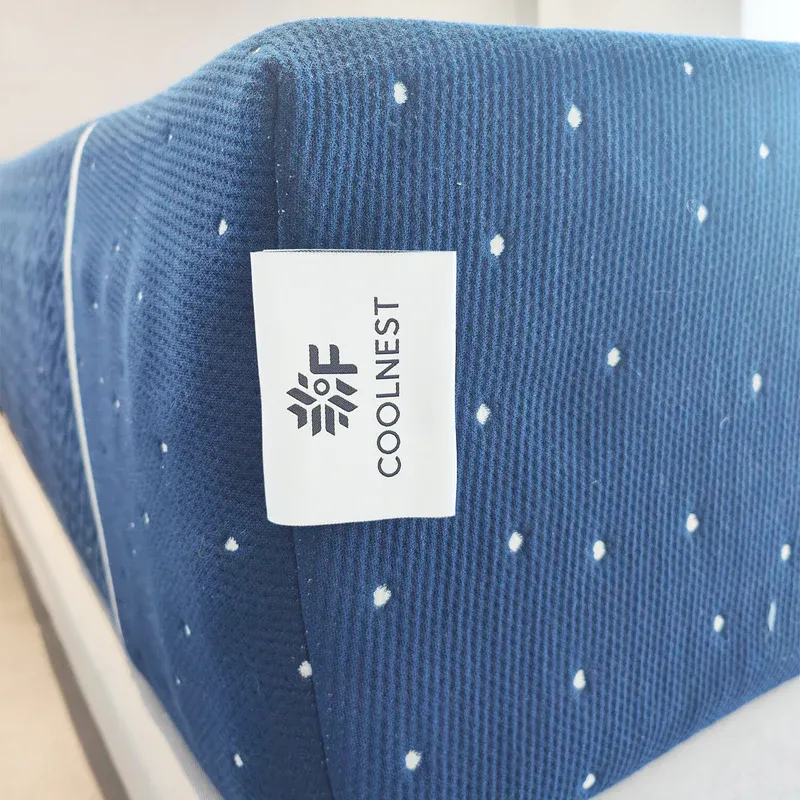
Amerisleep AS3 has low bounce but reasonably prompt recovery, so it feels calm without remaining deeply indented. Nolah Original 10 and SweetNight CoolNest recover faster and suit sleepers who dislike a slow surface. A person with limited mobility should also consider a hybrid or latex mattress if spring-assisted movement and a firmer edge are more useful than foam's quiet contour.
Heat and airflow in an all-foam bed
All-foam support cores contain less open space than coil units. Deeper sinkage also increases the amount of material touching the body. Cooling covers, open-cell foams, phase-change materials, and faster response can improve heat release, but they do not turn solid foam into an actively cooled bed.
Bedding matters. A thick waterproof protector or dense sheets can mute a cool-to-the-touch cover. Keep the room and bedding consistent while comparing mattresses, then give the bed several full nights before judging temperature.
A mattress can be cooler than other memory foam without being the best construction for a very hot sleeper. If Amerisleep, BedInABox, or CoolNest still feels warm, a breathable hybrid or latex mattress provides a more direct airflow route.
Motion isolation versus edge support
Foam absorbs local movement because it does not connect the sleeper to a spring unit. This is why AS3, BedInABox, and Layla perform so well for couples. The same construction often lacks reinforcement at the perimeter.
Judge the edge in two positions. Lying support tells you whether the side rolls away while sleeping near it. Sitting compression tells you whether the edge feels secure for dressing, putting on shoes, or standing. AS3 remained stable while lying but compressed deeply while seated. Nolah Original 10 provided the strongest edge in this group but allowed more partner motion.
Foam density, thickness, and durability claims
A taller mattress is not automatically more supportive, and a denser foam is not automatically the right comfort feel. Thickness must be divided among comfort, transition, and support layers. A very tall soft comfort system can still allow excessive pelvic sink, while a thinner well-designed mattress may support a lighter back sleeper adequately.
Density can help assess material use when brands disclose comparable numbers, but it does not capture every aspect of resilience, formulation, or construction. Do not treat cooling gel, copper, or a certification logo as proof of durability. Use the actual warranty definition for an impression, follow the foundation requirements, and rotate the mattress only when the manufacturer permits it.
Unboxing, odor, and setup
Foam mattresses may release an odor after the package is opened. Volatile organic compounds come from many indoor products, and ventilation is a practical way to reduce concentration while a new item airs out. 1 Follow the brand's expansion instructions, keep the room ventilated, and avoid covering the mattress until it has regained its intended shape.
Strong or persistent odor accompanied by irritation is a reason to leave the room and contact the manufacturer. A foam certification can describe limits for particular emissions or contents, but it does not mean the entire mattress is chemical-free or suitable for every sensitive person.
Place the mattress on the foundation specified by the maker. Closely spaced slats and center support for Queen and larger sizes are common requirements. The federal mattress flammability standards apply across mattress constructions; they do not establish that memory foam as a category is uniquely safe or unsafe. 2
A practical memory-foam trial checklist
Record the minimum-use period and return deadline when the mattress arrives. Keep your pillow, protector, and bedding consistent for the first part of the trial.
- Check shoulder and hip pressure in your usual position.
- Notice whether the pelvis stays level with the rest of the body.
- Turn several times and judge whether the foam releases promptly.
- Sleep near the edge, then sit where you normally get dressed.
- Ask a partner whether ordinary turns cross the mattress.
- Compare temperature after the mattress has expanded and the room is stable.
A topper can add contour to an evenly supportive mattress that feels slightly firm. It cannot restore a softened support core, strengthen a weak perimeter, or make an already deep cradle easier to move through.
Frequently asked questions
Is memory foam hot?
It can be, especially when the sleeper sinks deeply and the solid foam core limits airflow. Open-cell foam, cooling covers, moderate contour, and faster recovery can improve the result. Bedding and room temperature still affect how any cooling feature feels.
Is memory foam good for back pain?
Memory foam can distribute pressure, but no construction treats back pain or guarantees good alignment. The mattress still needs to fit your position and body weight. Persistent, severe, or injury-related pain should be discussed with a healthcare professional.
How long does off-gassing last?
Odor intensity and duration vary by product, packaging time, room size, and ventilation. Let the mattress expand in a well-ventilated room and follow the maker's instructions. Leave the space and contact the manufacturer if odor is strong, persistent, or causes irritation.
Can memory foam go on slats?
Usually, when the slats are flat, sturdy, and spaced according to the mattress maker's rules. Queen and larger sizes commonly need center support. Wide gaps can allow the foam base to dip and may affect both comfort and warranty coverage.
Is a thicker foam mattress better?
Not automatically. The extra height may add useful comfort depth, but it can also be a soft layer that increases sink. Compare how the height is divided among comfort, transition, and support layers, then match the complete feel to your body weight and position.
How should couples balance motion isolation and easier movement?
Start with how easily the lighter sleeper wakes. AS3 and BedInABox keep the surface very quiet, while Nolah Original and CoolNest respond faster. If both strong movement and a stable edge matter, a pocketed-coil hybrid may provide a better compromise.
The bottom line
Amerisleep AS3 is the best memory foam mattress for most shoppers because its medium contour combines excellent pressure relief, exceptional motion isolation, and strong cooling for foam. BedInABox Original is the value route. Choose Layla when you are unsure about firmness, CopperFlex Memory Foam for a stricter budget, Nolah Original 10 for frequent position changes, and SweetNight CoolNest when sleeping hot is the main concern.
Decide how much contour and recovery you want before comparing marketing materials. Then confirm the exact profile, check the sitting and lying edges separately, and use the home trial to evaluate pressure, pelvic support, turns, partner motion, and temperature over full nights.