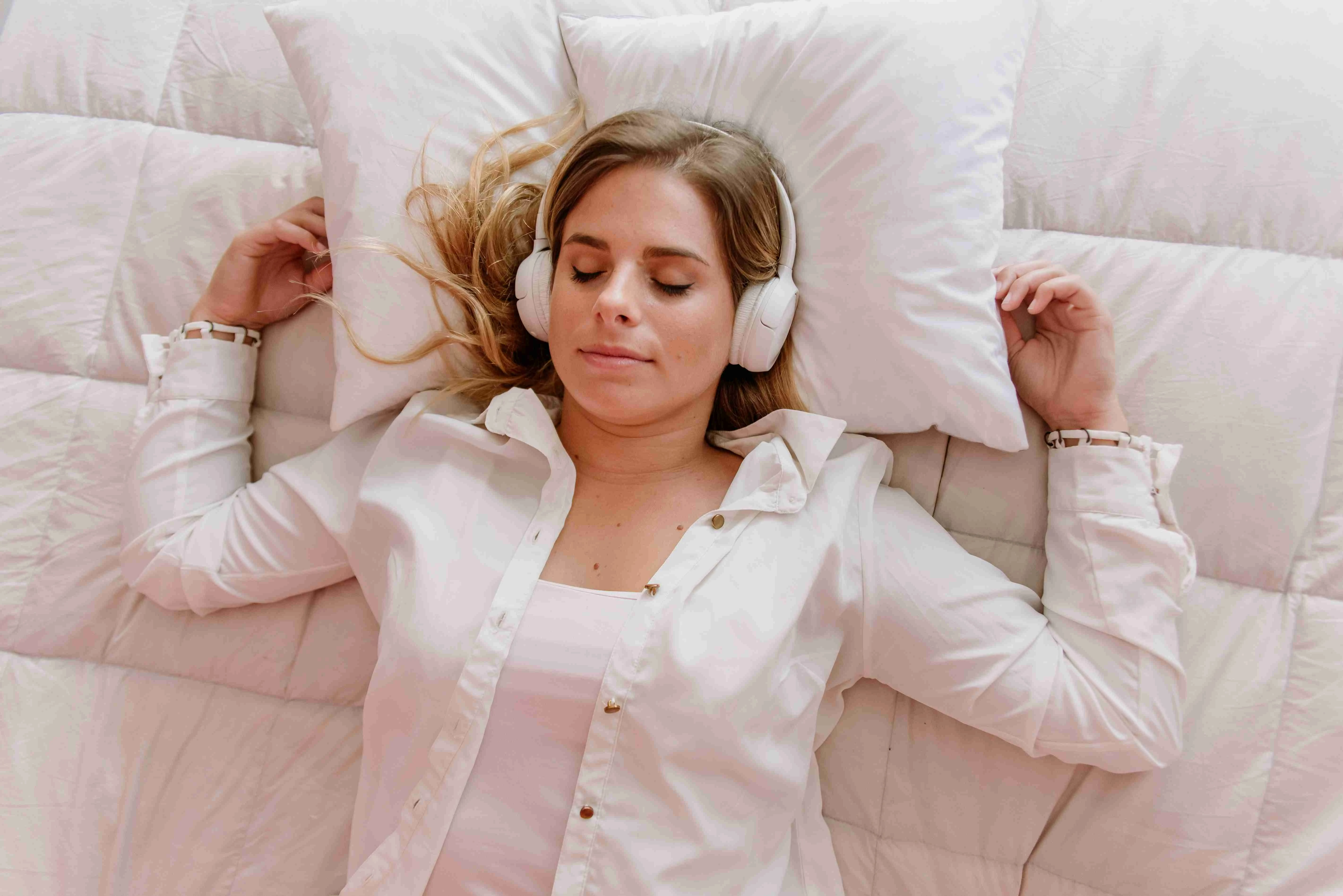


Microsleep is a brief, involuntary transition into sleep or a sleep-like lapse while a person is expected to be awake. It can interrupt the brain's processing of sights, sounds, or instructions even when the person's eyes appear open 1.
The safety response matters more than proving that a particular lapse was microsleep. If your eyelids keep closing, your head nods, you drift from your lane, you miss steps in a task, you cannot remember the last few miles, or you cannot maintain alertness, stop driving or hazardous work as soon as you can do so safely 2.
Do not wait for a crash, an alarm from a vehicle, or certainty about the label.
What microsleep means
There is no single clinical test or universal duration that makes every brief lapse a microsleep. Researchers may define an episode by changes on an electroencephalogram (EEG), eye closure, loss of task performance, or a combination of these. One research group described the transition between wakefulness and sleep as a poorly defined borderland and developed high-resolution EEG criteria because standard sleep-stage scoring did not capture it 3.
This is why a fixed claim such as “microsleep always lasts 3 to 15 seconds” is misleading. Individual studies may use a duration range for a specific experiment, but that range is an operational definition, not a diagnosis that readers can apply with a stopwatch.
The term can also hide two related but different ideas:
- A whole-person sleep episode: the person briefly crosses into a sleep-like state and may stop responding or processing information 1.
- Local sleep-like activity: parts of an otherwise awake brain show slow-wave activity associated with missed or poorly timed responses. In one experiment, these local slow waves preceded both mind wandering and mind blanking, but the researchers cautioned that their undemanding laboratory task may not represent everyday settings 4.
These findings help explain why the boundary can be difficult to see. They do not mean every distraction, blank thought, or mistake is microsleep.
Signs you or someone else may notice
A person may notice:
- Heavy eyelids, repeated blinking, or brief eye closure
- The head dropping and then jerking back up
- Losing their place while reading, typing, or following instructions
- Missing part of a conversation, road, or task
- A startle-like return to attention
- No memory of the last few miles driven
An observer may see a blank stare, slow or absent response, drooping eyelids, a head nod, an omitted task step, or a vehicle or tool moving off its intended path. Eyes can remain open during a lapse, so appearance alone cannot confirm that information is being processed 1.
Self-awareness is not reliable enough for safety decisions. NIOSH notes that sleep-deprived people may be unable to control microsleep onset and may not realize an episode occurred 1. Treat the warning pattern as evidence that alertness is failing, even if you feel that you can push through.
What else can look similar
The table below is for orientation, not self-diagnosis. A brief event can be difficult to classify without a witness account, medication history, examination, or sleep and neurological testing.
| Event | What may distinguish it from microsleep |
|---|---|
| Mind wandering or an ordinary attention lapse | Attention turns away from the task, often toward thoughts, while the person remains awake. Sleep-like local brain activity can accompany some attention lapses, but a missed detail alone does not prove sleep 4. |
| Fainting, also called syncope | This is an actual loss of consciousness and muscle tone caused by a temporary drop in blood flow to the brain. Lightheadedness, nausea, sweating, fading vision, pallor, or collapse may occur 5. |
| Seizure | Some seizures cause staring, confusion, or loss of awareness rather than dramatic shaking. Others cause collapse, stiffening, or jerking 6. |
| Narcoleptic sleep attack | Narcolepsy causes persistent daytime sleepiness and sudden sleep episodes during ordinary activities. Type 1 narcolepsy also includes cataplexy, a sudden loss of muscle control often triggered by emotion. Neither a single sleepy lapse nor a head nod establishes narcolepsy 7. |
| Medicine or substance impairment | Prescription medicines, over-the-counter products, cannabis, alcohol, or combinations may cause drowsiness, poor focus, dizziness, slowed movement, or fainting. These effects may persist into the next day and are not safely identified as microsleep 8. |
| Blackout or other loss of consciousness | “Microsleep” should not be used as a catch-all for collapse, inability to be awakened, a memory gap caused by a substance, or another unexplained loss of consciousness. These events need cause-led medical assessment 58. |
Why microsleep and severe sleepiness happen
Microsleep is a sign that the brain is failing to sustain wakefulness, not a diagnosis that identifies the cause. Common contributors include:
- Too little sleep: Acute sleep loss and restricted sleep across several days can impair alertness. Longer continuous time awake also raises fatigue risk 2.
- Circadian timing: Sleepiness tends to rise overnight and again in the late afternoon because of the body's internal timing. NHTSA reports that drowsy-driving crashes occur most often around midnight to early morning and in the late afternoon 9.
- Shift work and extended hours: Night work and nonstandard schedules can shorten or disrupt sleep. Work-related fatigue can reduce attention, reaction time, memory, and judgment 10.
- Monotonous conditions: Long, repetitive, or low-stimulation tasks make declining alertness easier to miss. They are especially risky when combined with sleep loss or an unfavorable time of day 2.
- Sleep apnea: Repeated breathing interruptions can fragment sleep. Loud snoring, witnessed pauses, gasping, and daytime sleepiness are reasons to ask about evaluation, not proof of the disorder 11.
- Narcolepsy: Sudden sleep attacks, persistent excessive daytime sleepiness, sleep paralysis, sleep-related hallucinations, or emotion-triggered muscle weakness require a specific clinical evaluation 7.
- Insomnia or another cause of poor sleep: Difficulty falling asleep, staying asleep, or obtaining restorative sleep can affect daytime function. Evaluation may include a sleep history, sleep diary, medication review, and testing for another sleep disorder when indicated 12.
- Medicines and substances: Sleep medicines, sedating antihistamines, opioids, some anxiety or psychiatric medicines, antiseizure medicines, cannabis products, alcohol, and combinations can impair alertness. Do not stop a prescribed medicine abruptly. Check the label and ask the prescriber or pharmacist when it is safe to drive or operate equipment 8.
Pain, illness, a mental health condition, or another medical problem can also disrupt sleep or alertness. A clinical sleep assessment considers other health problems rather than naming a cause from one episode 12.
What to do while driving or doing hazardous work
If you are driving
Move out of traffic and park in a safe place as soon as possible. If another fully alert, licensed driver is available, change drivers. Otherwise, arrange a ride, use public transportation, or delay the trip. NHTSA identifies adequate sleep as the only reliable way to prevent drowsy driving and advises people who become sleepy at the wheel to pull over safely 9.
A caffeinated drink followed by a short nap may improve alertness temporarily after you have stopped. NHTSA and NIOSH both describe this as a short-term measure, not a substitute for sleep 92. Do not continue simply because the caffeine has started working. If you are still sleepy, your eyelids are heavy, or you cannot sustain attention, do not drive.
Opening a window, turning up music, pinching yourself, moving around, eating, drinking water, smoking, or relying on willpower does not establish that you are safe to drive. NIOSH warns that drivers using window, radio, or similar strategies are already impaired enough to cause a crash 13. Food and water may address hunger or thirst, but they do not replace sleep. Stimulant products can also create a misleading sense of alertness and may themselves affect driving 98.
If you are operating equipment or doing safety-critical work
Stop the task without creating a new hazard. Secure the equipment if you can do so safely, move to a safe area, and tell the supervisor or responsible coworker that you cannot maintain alertness. Fatigue management is a shared workplace responsibility, not a test of commitment or toughness 10.
A workplace response may include relief from the safety-critical task, a safe place to rest, transport after a long or night shift, peer monitoring, schedule changes, staffing changes, or review of fatigue-prone work. NIOSH recommends fatigue risk management rather than expecting individual workers to overcome a biological need for sleep 2.
A practical plan to reduce recurrence
Use a layered plan. A single alertness trick cannot correct every cause.
- Protect enough sleep opportunity. Set aside enough time for sleep before driving, a night shift, or hazardous work. Recovery sleep is more important than squeezing in another task.
- Plan around vulnerable times. When possible, avoid long drives or high-risk work after a short night, after extended time awake, during the overnight circadian low, or when you normally become sleepy 92.
- Arrange alternatives before sleepiness starts. Share driving only with an alert driver, plan public transportation or a ride home after difficult shifts, and identify safe rest locations in advance.
- Use workplace controls. Employers can examine schedules, consecutive shifts, staffing, monotonous tasks, fatigue reporting, relief coverage, transport, and near misses. The goal is to reduce exposure to the hazard, not to punish a person for reporting it 210.
- Review medicines and substances. Read warnings on prescription and nonprescription products. Ask a clinician or pharmacist about timing, interactions, next-day effects, and safer options. Do not combine sedating products or alcohol without confirming that the combination is safe 8.
- Investigate the cause when the pattern persists. A sleep diary can record sleep times, awakenings, naps, shifts, caffeine, alcohol, medicines, and when severe sleepiness occurs. Bring the pattern and any witness description to a clinician 12.
When to seek medical care
Arrange a medical evaluation if:
- You frequently struggle to stay awake during the day
- Suspected microsleeps recur despite allowing adequate time for sleep
- Sleepiness affects driving, work, school, or caregiving
- Someone reports loud snoring, breathing pauses, or gasping during sleep
- You have sudden sleep attacks, sleep paralysis, sleep-related hallucinations, or emotion-triggered muscle weakness
- Symptoms began after starting or changing a medicine or substance
- You have insomnia, restless sleep, or another symptom that repeatedly limits sleep
A clinician may review sleep opportunity, work schedule, medicines, substances, medical history, and witness observations. Depending on the pattern, evaluation may include a sleep study or tests of daytime sleepiness. One suspected episode cannot diagnose sleep apnea, narcolepsy, a seizure disorder, or another cause 711126.
When it may be an emergency
Do not assume an episode was microsleep if the person collapsed or truly lost consciousness. Call emergency services if there is chest pain, a pounding or irregular heartbeat, trouble breathing, serious injury, failure to become alert quickly, convulsions, or new trouble speaking, seeing, or moving a limb 5.
Call emergency services for a first suspected seizure, a seizure lasting more than five minutes, repeated seizures without recovery, trouble breathing or waking afterward, injury, or a seizure in water 6. Sudden facial droop, one-sided weakness or numbness, trouble speaking or understanding speech, new vision trouble, loss of balance, or a severe unexplained headache can signal a stroke and also requires an immediate emergency call 14.
Microsleep is best treated as a warning that wakefulness has become unreliable. Stop the immediate hazard first. Then restore sleep opportunity and investigate why the sleepiness occurred, especially when it is persistent or unexplained.