
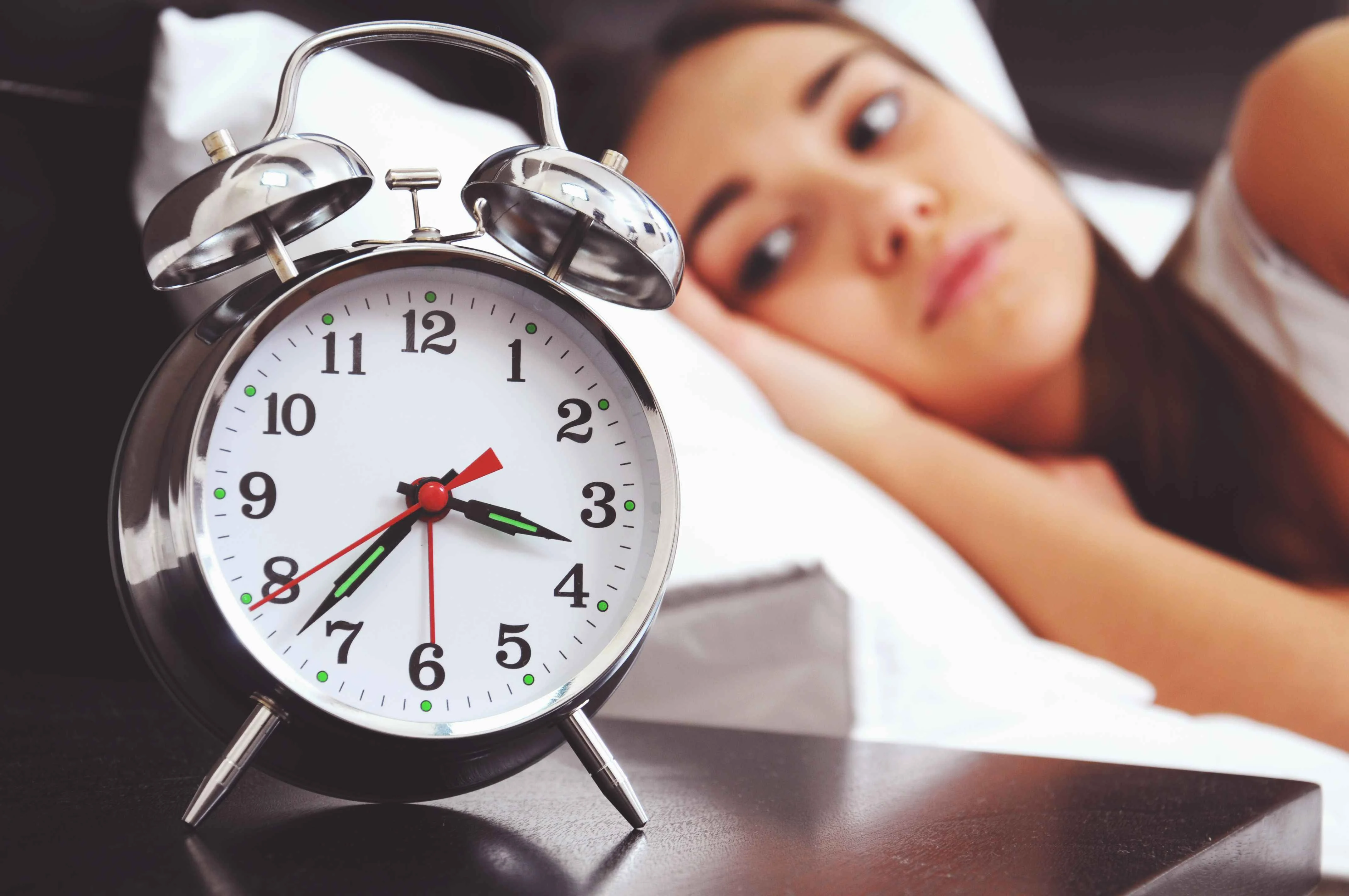
Non-24-hour sleep-wake disorder, often shortened to Non-24, is a circadian rhythm disorder. A person's biological sleep-wake phase does not stay synchronized with the 24-hour day. Sleep and wake times usually move later from one cycle to the next, although an earlier drift can occur 12.
This is different from going to bed late by choice, having an irregular week, or struggling with insomnia at the same clock time. The defining feature is a repeated drift across clock time that produces insomnia, excessive sleepiness, or both when the person tries to meet a 24-hour schedule.
What the Non-24 pattern looks like
A person whose phase is drifting later may fall asleep near midnight for a period, then at 2 a.m., then near dawn, and eventually during the day. The phase may later pass through the evening again. The change is not necessarily the same size every day, and social obligations can hide the underlying pattern.
When biological night happens to line up with the required nighttime sleep period, sleep may feel fairly normal. As the two schedules move apart, the person may be unable to sleep at the required bedtime, struggle to wake for work or school, nap unintentionally, or feel alert when everyone else is asleep. This alternating pattern can make Non-24 look as though it comes and goes 13.
A forced schedule can create a second problem. Someone may keep using alarms and obligations to wake at a fixed time even while their biological night moves later. The resulting sleep loss can impair concentration, reaction time, and daily function 4. Those effects reflect misalignment and insufficient sleep, not proof that Non-24 directly causes every symptom.
Totally blind and sighted Non-24 need different context
Non-24 can occur in both totally blind and sighted people, but the evidence and likely mechanisms are not interchangeable.
In people who are totally blind
Light normally reaches specialized retinal pathways that send timing information to the brain's central circadian clock. Some people who are totally blind, particularly those with no conscious light perception, no longer receive enough of that timing signal to keep the clock synchronized with the environmental day. Their internal rhythm can then free-run 21.
Total blindness does not automatically mean Non-24. Conscious vision and circadian responses to light are related but not identical, and some blind people retain enough nonvisual light input to stay synchronized. A blind person can also have insomnia, sleep apnea, restless legs, depression, medication effects, or another sleep problem. Diagnosis still requires the characteristic pattern.
A totally blind person may continue trying to sleep and wake at conventional clock times. Their diary may therefore show recurring blocks of poor nighttime sleep and daytime sleepiness rather than an obvious sleep period circling the clock.
In sighted people
Non-24 is uncommon in sighted people, and its causes are less settled. Some reported cases follow a long-standing delayed sleep-wake pattern. Mental health, neurological, developmental, medication, substance, light-exposure, and behavioral factors may also shape sleep timing, but none should be assumed from the diagnosis alone 15.
A detailed study of only three sighted people found that their moving sleep schedules were not explained simply by an abnormally long central circadian period. In some cases, self-selected sleep and light timing appeared to push the circadian system later or let sleep behavior separate from it 6. This small case series does not establish one cause for all sighted people. It does show why an apparent 25-hour schedule should not be treated as proof that everyone with Non-24 has a 25-hour body clock.
How Non-24 is diagnosed
There is no single symptom, questionnaire, blood test, or consumer wearable result that diagnoses Non-24. The main evidence is the sleep-wake pattern over enough time to show that the phase is moving rather than simply late or inconsistent.
Diagnostic criteria described in the sleep-medicine literature include symptoms lasting at least three months and a sleep diary plus actigraphy covering at least 14 days. Longer monitoring is often needed in blind people or whenever the drift is slow, masked by alarms, or interrupted by work and family demands 2.
Sleep diary and actigraphy
A useful diary records:
- attempts to sleep, estimated sleep onset, awakenings, and final waking
- naps and unintended sleep
- alarm use, forced waking, and days when sleep was unrestricted
- work, school, care duties, travel, and shift changes
- the timing of light exposure and intentional light avoidance
- caffeine, nicotine, alcohol, cannabis, medicines, and supplements
- daytime sleepiness, alertness, and periods of better or worse function
Clinical actigraphy uses a wrist device to estimate rest and activity across many days. The American Academy of Sleep Medicine conditionally recommends it when assessing adults with a circadian rhythm sleep-wake disorder 7. Actigraphy adds an objective view of timing, but it can mistake quiet wakefulness for sleep and cannot measure circadian phase directly. A phone or consumer sleep tracker may help someone notice a pattern, but it is not equivalent to clinically interpreted actigraphy.
Plotting the data on an actogram, with successive days stacked vertically, can make a moving sleep period easier to see. Clinicians interpret it alongside the diary so that forced waking, missing data, naps, and unusual days do not create a false pattern.
Circadian phase markers
When the diary is ambiguous or precise treatment timing matters, a specialist may measure a biological phase marker. Options include dim-light melatonin onset from carefully timed saliva samples or repeated measurement of a melatonin metabolite in urine. Samples have to be collected under the correct conditions and repeated far enough apart to show that the phase itself is moving 25.
One melatonin value cannot demonstrate a free-running rhythm. Phase-marker testing can also be expensive, inconvenient, or unavailable, so it is selected when the result would change diagnosis or treatment.
Other sleep and medical tests
Polysomnography is not the routine test for proving Non-24 because one night does not show a long-term drift. It may be appropriate when symptoms suggest sleep apnea, unusual movements, seizures, or another disorder that needs an overnight study. Blood tests, neurological evaluation, medication review, or mental health assessment are chosen according to the history rather than ordered as one standard Non-24 panel 7.
What can look similar?
The distinction depends on the pattern, not just the hour at which someone sleeps 25.
| Possible explanation | How it differs from Non-24 |
|---|---|
| Delayed sleep-wake phase disorder | Sleep is persistently late but remains relatively stable when obligations allow. It does not keep moving around the clock. |
| Irregular sleep-wake rhythm disorder | Sleep is broken into several bouts without one clearly defined main sleep period. Non-24 usually has a main sleep period whose phase moves. |
| Shift work disorder | Insomnia or sleepiness tracks a work schedule that overlaps usual sleep time. The pattern should be reassessed after accounting for shift changes. |
| Insufficient sleep | Sleep opportunity is repeatedly too short. Symptoms improve when enough sleep is consistently allowed, without a continuing phase drift. |
| Insomnia disorder | Sleep remains difficult despite adequate opportunity, but the problem does not show a systematic non-24-hour movement across clock time. Both conditions can coexist. |
| Medicines or substances | Stimulants, sedatives, caffeine, nicotine, alcohol, cannabis, medication withdrawal, and dosing changes can alter sleep timing or alertness. |
| Mood or neurological conditions | Depression can disrupt sleep, while mania may involve a reduced need for sleep rather than an inability to sleep. Brain injury and neurological illness may also change sleep timing and need their own evaluation. |
A freely chosen schedule that moves later is not automatically a disorder. Clinical diagnosis also requires distress or meaningful impairment and exclusion of a better explanation.
Treatment aims to establish entrainment
The main treatment goal is entrainment: keeping the circadian phase synchronized with the 24-hour day at a schedule the person can sustain. Feeling sleepy after a sedative is not the same as changing circadian timing.
Timing is central to treatment. Light and melatonin can move the clock in different directions depending on when they reach the body. Because the phase itself is drifting, a clock time that is appropriate during one part of the cycle may be ineffective or shift the clock the wrong way during another. A clinician may use diary, actigraphy, phase-marker results, or the current sleep pattern to choose when to begin and how to monitor treatment 5.
Strategically timed melatonin
The 2015 American Academy of Sleep Medicine guideline suggests strategically timed melatonin for blind adults with Non-24, but labels the recommendation weak because it rested on three small studies with low-quality evidence. The guideline could not make an evidence-based treatment recommendation for sighted Non-24 8.
That does not mean melatonin never helps a sighted person. Small case series describe entrainment with carefully timed melatonin, often combined with light and structured schedules, but they do not establish one dose, formulation, or timing rule for everyone 5.
Melatonin should be treated as a circadian intervention, not a generic bedtime supplement. The plan should identify the exact product and formulation instead of treating every melatonin product as interchangeable. In the United States, supplement content may differ substantially from the label. Melatonin can cause daytime drowsiness and can interact with medicines; people with epilepsy or taking blood thinners require medical supervision 9.
A clinician or pharmacist should review the exact product, formulation, other medicines, pregnancy or breastfeeding, and the need to drive or perform hazardous work. Do not copy a dose or clock time from another person's plan.
Tasimelteon
Tasimelteon is a prescription melatonin-receptor agonist. The current U.S. prescribing information indicates the capsule for adults with Non-24; it does not restrict that label to adults who are blind. However, the pivotal randomized trials enrolled totally blind adults, so the strongest direct efficacy evidence comes from that population 310.
In the larger trial, circadian entrainment after the first month occurred in 20% of assessed participants receiving tasimelteon and 3% receiving placebo. The withdrawal trial was much smaller and included people who had already entrained during treatment: 9 of 10 who continued tasimelteon remained entrained, compared with 2 of 10 switched to placebo 10. These findings show benefit for some people, not a guaranteed response. The trials were funded by the manufacturer.
The U.S. label gives product-specific instructions tied to bedtime, food, and a consistent schedule. Effect may take weeks or months. Follow the prescribed instructions rather than adapting a melatonin routine. Safety and effectiveness for pediatric Non-24 have not been established 3.
Tasimelteon can cause sleepiness, so activity after taking it should be limited to preparing for bed. The label advises avoiding strong CYP1A2 inhibitors such as fluvoxamine and strong CYP3A4 inducers such as rifampin. Some beta blockers may reduce its effect, smoking may lower exposure, and severe liver impairment changes whether it is appropriate. Review every prescription, over-the-counter medicine, supplement, and smoking change with the prescriber or pharmacist 3.
Timed light and darkness
Light treatment is relevant when functional retinal light input remains, including in sighted people and some visually impaired people. A plan may combine light at a phase-advancing time with reduced light at times that would push the clock later. The correct timing depends on current biological phase, not simply on a universal instruction to use a light box after waking.
Evidence in sighted Non-24 is limited mainly to case reports and small case series. In a seven-person series, clinicians used timed light and melatonin, but keeping the rhythm entrained over time remained difficult 5. There is not enough evidence to promise that a particular light intensity, duration, color, or commercial device will work for everyone.
A specialist should define the device, timing, duration, and what to do when the sleep phase moves. Eye disease, light-sensitive conditions, photosensitizing medicines, and a history of mania or hypomania also need to be discussed before intensive light treatment 8.
Schedule and daily time cues
A consistent wake target, planned light and darkness, meals, activity, and social timing can reinforce a treatment plan. These cues are supportive, not substitutes for appropriately timed circadian treatment. For a sighted person, reviewing the entire light-dark and sleep-wake pattern may uncover a modifiable timing loop without implying that the disorder is a matter of poor discipline 6.
For a totally blind person without circadian light perception, ordinary advice to get more morning sunlight does not restore a missing retinal timing signal. A medication-based plan may be more relevant.
Do not try to circle the clock on your own
Phase-delay chronotherapy deliberately moves sleep later around the clock until it reaches a target time. Controlled evidence has not established its safety, and a published report described a persistent non-24-hour pattern after chronotherapy for delayed sleep phase 1112.
Staying awake for prolonged periods or repeatedly pushing sleep later can worsen sleep loss, mood, and accident risk. It can also make the underlying rhythm harder to interpret. Do not attempt sleep deprivation or a self-directed phase shift as a reset.
How response is monitored
A few nights of easier sleep do not prove entrainment because symptoms naturally improve when the drifting phase passes through a favorable alignment. Continue the diary and, when advised, actigraphy long enough to show that sleep timing and function remain stable 3.
Follow-up should ask:
- Has the sleep phase stopped drifting?
- Is sleep occurring at the intended time without repeated forced waking?
- Are daytime alertness and function improving?
- Is treatment causing drowsiness, mood changes, or other adverse effects?
- Can the plan survive weekends, travel, seasonal light changes, and real obligations?
- Have medicines, supplements, smoking, or work schedules changed?
Loss of entrainment does not always mean that the treatment never worked. Timing may have shifted, doses may have been missed, product formulation may have changed, or the target schedule may be unsustainable. Reassess rather than escalating or retiming treatment alone.
Protecting function while treatment is adjusted
A rigid conventional schedule can force someone to work during biological night and sleep during biological day. Practical supports may include flexible start times, remote or asynchronous work, recorded classes, deadline flexibility, planned transportation, and help with medication reminders. The useful accommodation is the one that reduces forced wakefulness without making treatment impossible to follow.
Share a concise plan with household members when safe waking support is needed. If alarms are repeatedly failing because they occur during biological night, adding louder alarms does not solve the circadian problem and may deepen sleep loss.
Driving and mood safety
Do not drive, cycle in traffic, operate machinery, work at heights, or perform another hazardous task when sleepy. Opening a window, playing loud music, or using caffeine does not reliably make severe sleepiness safe. The National Highway Traffic Safety Administration advises prioritizing adequate sleep and checking whether medicines can cause drowsiness 4.
Stop driving and arrange another way home if you are fighting to keep your eyes open, missing turns, drifting across lanes, or having brief lapses in awareness. A near miss or unintended sleep while driving warrants prompt clinical review.
Sleep and circadian disruption can strain mood, but a changing mood should not automatically be attributed to Non-24. A reduced need for sleep with unusually high or irritable mood, racing thoughts, faster speech, or risky behavior can signal mania or hypomania and needs prompt mental health assessment 13. Thoughts of suicide or immediate danger to yourself or someone else require emergency help now.
When to seek medical care
Arrange an assessment with a sleep clinician familiar with circadian disorders when sleep and wake times keep moving across clock time, especially when the pattern interferes with work, school, care duties, relationships, or safe driving. Bring several weeks of sleep records and a complete list of medicines, supplements, caffeine, nicotine, alcohol, and other substances.
Seek more urgent care for a sudden major change after a head injury, new neurological symptoms, inability to remain safely awake, severe medication effects, or signs of a manic episode. These situations need assessment beyond a circadian diary.
The practical takeaway
Non-24 is defined by a sustained, moving sleep-wake phase, not by a single late bedtime or a preference for living on a longer day. Diagnosis comes from the pattern over time, usually with a detailed diary and actigraphy, and sometimes with repeated circadian phase markers.
Treatment aims to entrain the rhythm to a workable 24-hour schedule. Strategically timed melatonin has limited guideline support in blind adults, tasimelteon has direct trial evidence in totally blind adults and a broader U.S. adult label, and timed light may be used when retinal light input remains. None has a universal clock time or self-directed protocol. The safest plan is individualized, monitored over time, and designed around both circadian timing and real daily function.