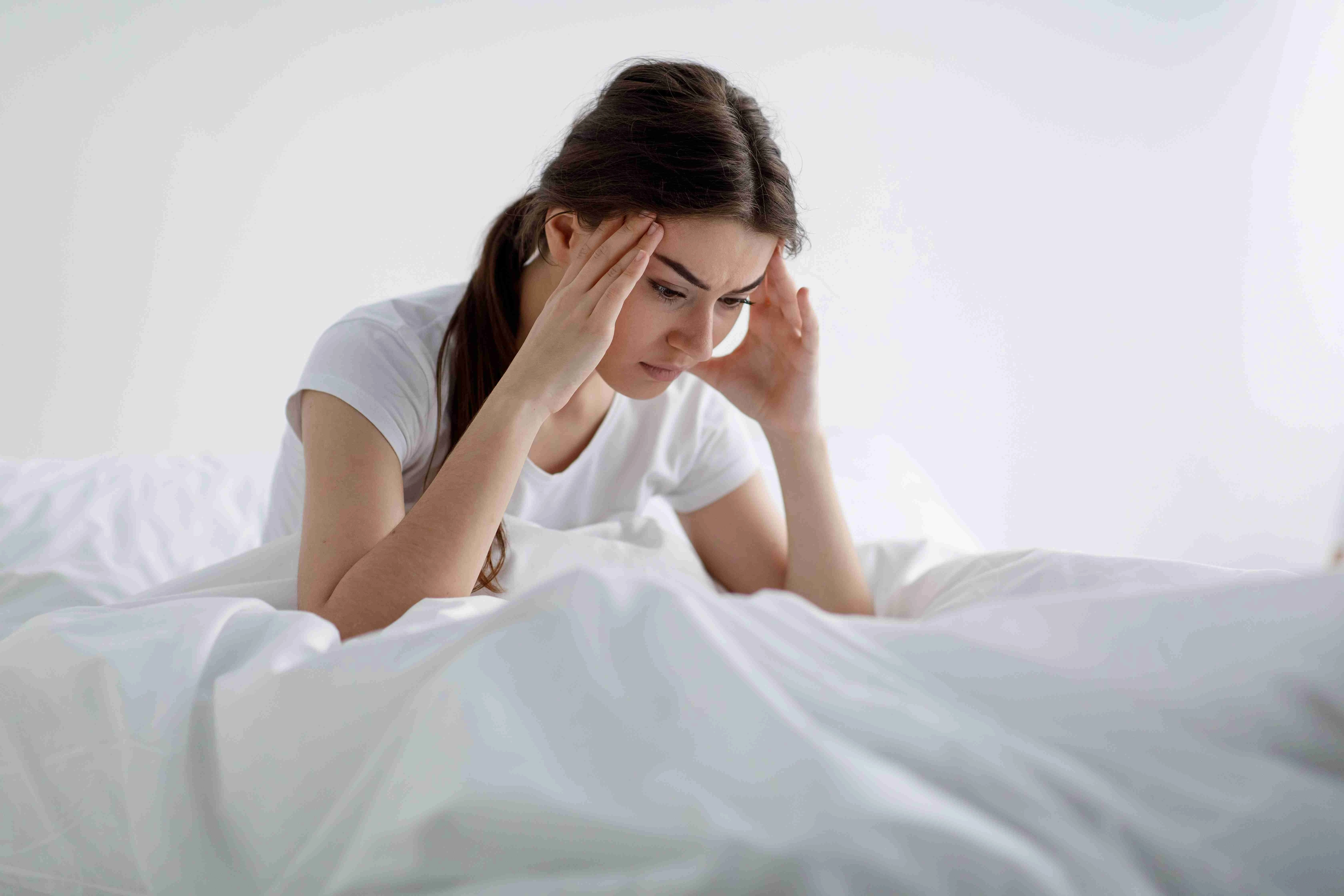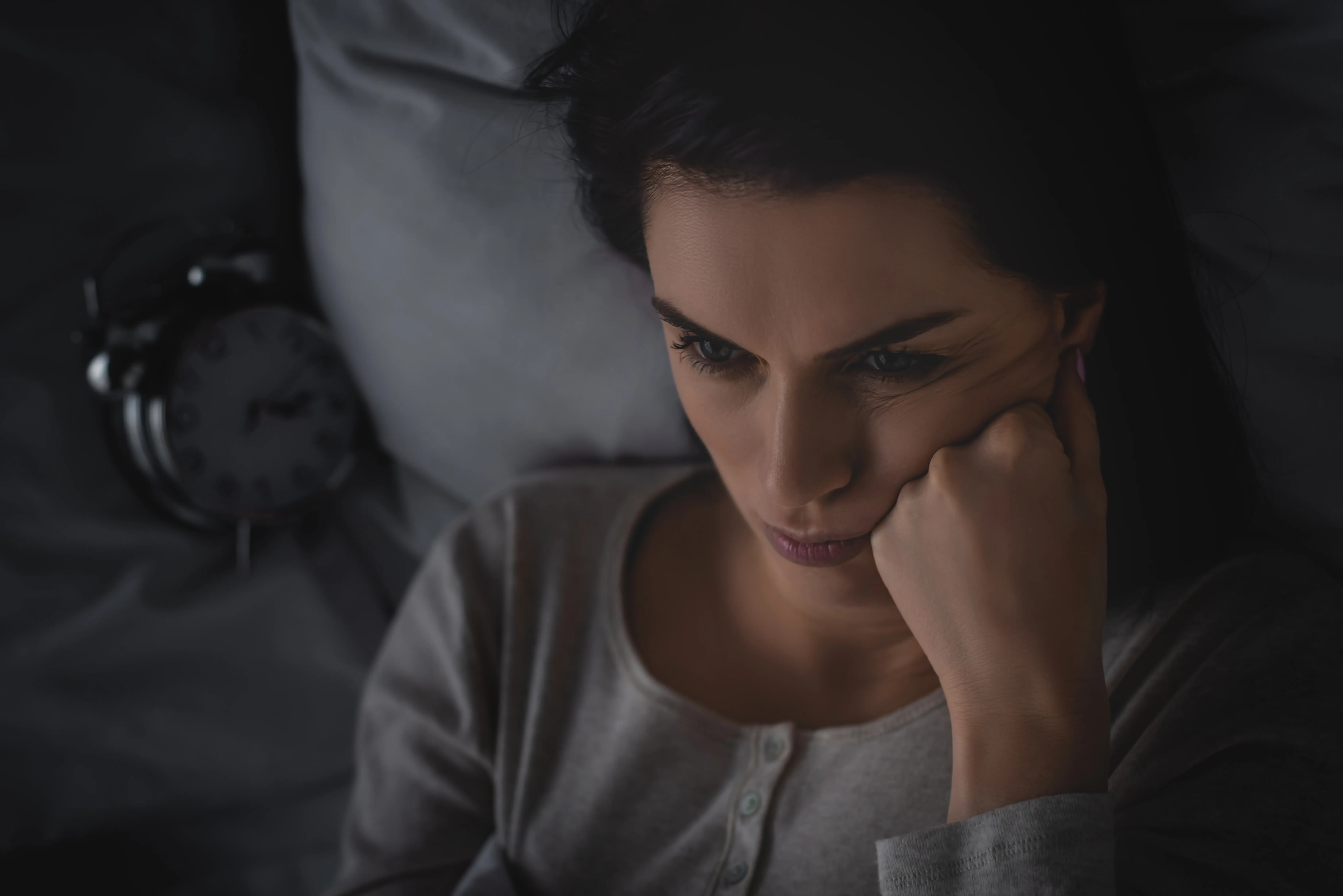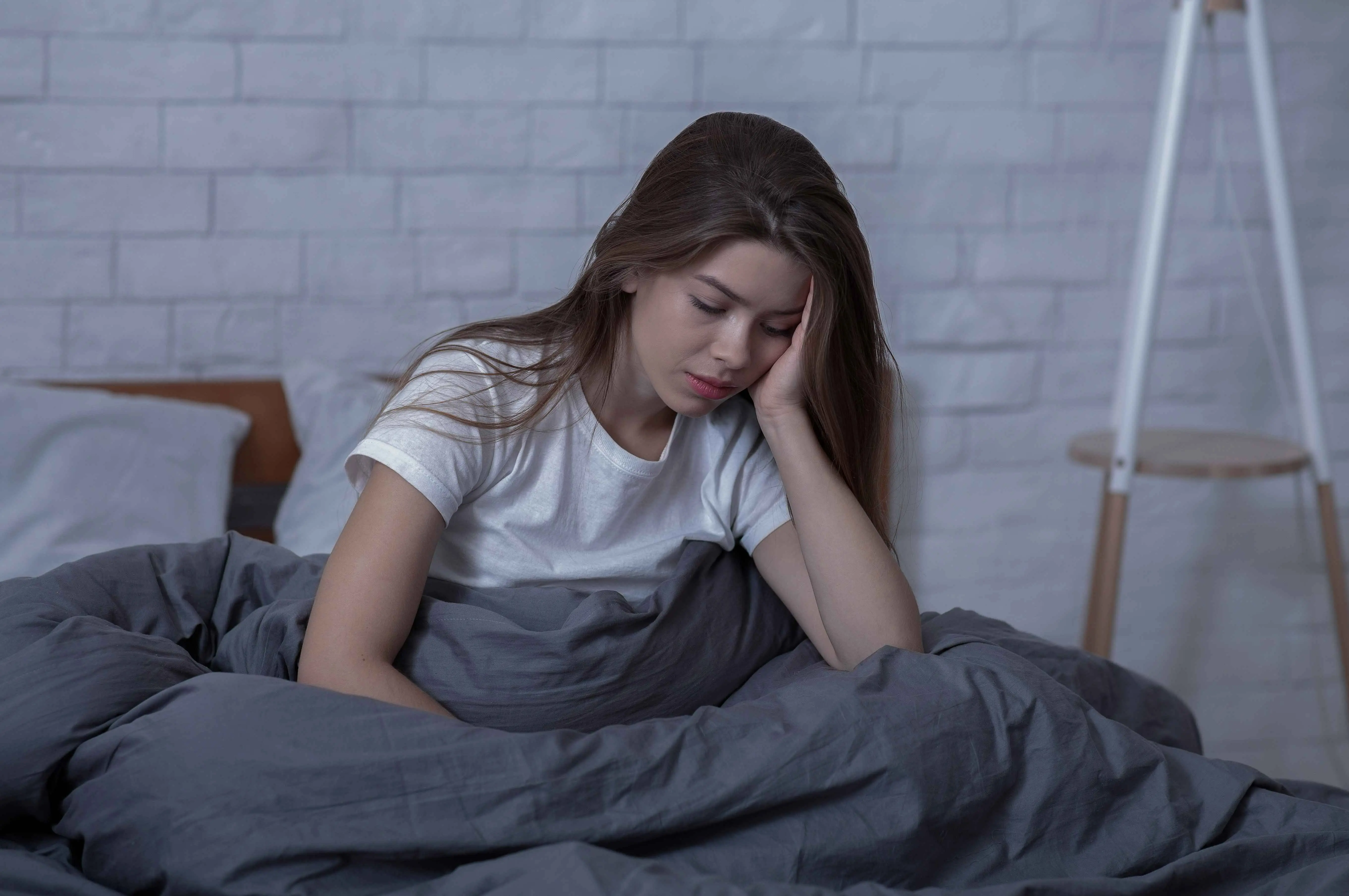


Paradoxical insomnia describes a striking difference between experienced and measured sleep. A person may feel that they slept very little, or not at all, while a sleep study or other clinical measurement records substantially more sleep. The measurement does not make the experience, distress, or daytime impairment unreal 12.
The term is also called sleep-state misperception or subjective-objective sleep discrepancy. It is best understood as a pattern that can occur within insomnia, not as proof that someone is mistaken about everything they feel and not as a rigid diagnosis with one numerical cutoff.
What paradoxical insomnia means
Sleep is scored using defined signals and rules. Polysomnography, or an overnight sleep study, measures brain activity, eye movements, muscle activity, breathing, heart rhythm, and other signals. A person can experience a period as wakefulness even when those signals meet the criteria for light sleep.
In a marked discrepancy, someone might recall lying awake for most of the night while polysomnography records several hours of sleep. The mismatch may involve:
- estimating that it took much longer to fall asleep
- remembering more or longer awakenings than the study records
- estimating much less total sleep
- feeling that sleep was absent or not restorative despite recorded sleep
Small differences between recalled and measured sleep are ordinary. People do not carry a clock through sleep, and brief awakenings may be difficult to place in time. The term becomes clinically useful when the discrepancy is large, persistent, and part of an insomnia complaint that causes distress or affects daytime life 32.
It is not a separate rigid insomnia subtype
Older classification systems divided chronic insomnia into named subtypes, including paradoxical insomnia. The current International Classification of Sleep Disorders groups these presentations under chronic insomnia disorder and retains the older descriptions for clinical and research context. It does not support treating them as sharply separated diseases 41.
This matters because sleep discrepancy exists on a spectrum. It can vary from night to night, occur alongside objectively disturbed sleep, and appear with other sleep or health conditions. A clinician should not apply the label from one number or use it to end the evaluation.
Insomnia is not disproved by measured sleep
Insomnia is diagnosed from persistent difficulty with sleep despite an adequate opportunity to sleep, together with distress or impaired daytime functioning. It is a clinical diagnosis, so polysomnography is neither necessary nor sufficient on its own 15.
A study that records more sleep than expected can answer an important question about that night. It cannot show that the person feels rested, that sleep is trouble-free on every night, or that treatment is unnecessary. Even a technically normal study should be interpreted alongside the sleep history, schedule, symptoms, and function.
Why sleep can feel different from the recording
Researchers do not have one established explanation. Several processes may contribute, and they can overlap:
- Light sleep and quiet wakefulness may feel similar from the inside.
- Brief awakenings may be remembered as one long stretch of wakefulness.
- Worry, clock checking, and close monitoring may make signs of wakefulness more memorable.
- High cognitive or physical arousal may leave a sense of remaining alert even during conventionally scored sleep.
- Standard sleep staging summarizes sleep in short epochs and may not capture every local or moment-to-moment feature that shapes the experience.
Reviews have discussed attention, memory, time estimation, brief arousals, and heightened cortical or physiological arousal as possible contributors. Studies of brain activity and sleep microstructure suggest that standard scoring may miss some relevant features, but the findings do not establish one cause or a diagnostic brain signature 32.
Anxiety about sleep can intensify the pattern without making it imaginary. Trying hard to verify or force sleep may increase monitoring and arousal. At the same time, not everyone with sleep discrepancy has an anxiety disorder, and anxiety should not be assumed to explain every case.
What else can resemble paradoxical insomnia?
Before settling on a sleep-perception explanation, a clinician should consider whether the person is actually obtaining too little or poorly timed sleep.
Objectively short or fragmented sleep
Some people with insomnia have both a severe subjective complaint and clearly shortened or fragmented sleep on testing. A person can also alternate between nights with substantial discrepancy and nights with true short sleep. One relatively normal night does not erase the rest of that pattern.
Insufficient sleep opportunity
Limited time in bed because of work, caregiving, late activities, or early alarms is insufficient sleep, not paradoxical insomnia. A diary can reveal whether the schedule regularly allows enough time for sleep 5.
Circadian timing problems
A delayed body clock may make sleep difficult at a socially required bedtime while allowing easier sleep later. The key problem is timing, rather than a mismatch between experienced and measured sleep 5.
Other sleep disorders
Obstructive sleep apnea, periodic limb movements, restless legs syndrome, and some parasomnias can disrupt sleep or cause unrefreshing sleep. Snoring, gasping, witnessed breathing pauses, uncomfortable urges to move the legs, repeated kicking, or unusual nighttime behavior should not be dismissed as misperception 5.
Medicines, substances, and health conditions
Caffeine, alcohol, cannabis, prescribed medicines, over-the-counter sleep aids, pain, menopausal symptoms, mood disorders, and other medical or mental health conditions can change sleep, alertness, memory, or sleep perception. The evaluation should include them without assuming that one condition makes the insomnia less worthy of treatment 5.
How clinicians evaluate the mismatch
Start with a sleep history and diary
A useful assessment covers bedtime, attempted sleep time, estimated sleep onset, awakenings, final waking, getting-out-of-bed time, naps, schedule differences, medicines, substances, symptoms, and daytime function. A morning sleep diary records the person's experience across multiple nights and is a core clinical tool, not a failed substitute for a device 6.
The diary does not need to match a laboratory measure to be valuable. Its purpose is to show what the nights feel like, identify patterns, and guide treatment. Exact minute-by-minute reconstruction is unnecessary; estimates are enough.
Polysomnography is selective, not routine
Most people with uncomplicated chronic insomnia do not need an overnight study. Current guidance recommends polysomnography when another disorder such as sleep apnea or periodic limb movement disorder is suspected, when insomnia has not responded to appropriate treatment, or when the size of the subjective-objective mismatch needs clinical clarification. It can also be appropriate when fatigue or sleepiness creates a major accident risk 5.
The result represents one night in a particular setting. A clinician should ask whether that night resembled the person's usual sleep and interpret any mismatch in context. A normal apnea result, for example, does not prove that chronic insomnia is absent.
Actigraphy can add a multi-night estimate
Clinical actigraphy uses a wrist-worn movement sensor and an algorithm to estimate sleep and wake over multiple days. The AASM conditionally suggests it for estimating sleep parameters in adults with insomnia, particularly when an objective multi-night pattern would change care 7.
Actigraphy cannot directly measure brain-defined sleep stages. Quiet wakefulness may be classified as sleep, so its estimate is not a final verdict about what the person experienced.
Consumer trackers have stricter limits
Consumer watches, rings, and apps can help record routines, but they are not validated diagnostic tests for insomnia or sleep-state misperception. The AASM advises that their data be considered only within a clinical evaluation and not used in place of validated testing 8.
Two unhelpful extremes are treating every tracker estimate as fact and discarding the device whenever it differs from memory. If the data are useful, look for broad timing patterns with a clinician. Avoid repeatedly checking stages and scores when doing so increases sleep anxiety.
Treatment focuses on insomnia and function
Cognitive behavioral therapy for insomnia (CBT-I) is the first-line behavioral treatment for chronic insomnia. The AASM strongly recommends multicomponent CBT-I for adults, including people with medical or psychiatric conditions 95.
Depending on the person, CBT-I may include:
- a schedule that strengthens regular sleep timing
- stimulus control to rebuild the link between bed and sleep
- a carefully planned time-in-bed window to consolidate sleep
- cognitive work on catastrophic predictions, sleep effort, and constant monitoring
- relaxation or counter-arousal skills
The goal is not to persuade someone that the night felt good or force their diary to match a machine. It is to reduce insomnia distress, make sleep more reliable, and improve daytime function. Sleep hygiene can support this work, but the AASM does not recommend sleep-hygiene education as a stand-alone treatment for chronic insomnia 9.
A clinician may sometimes review a study or actigraphy pattern with the patient to explore how sleep is experienced. Evidence for making device feedback a treatment in its own right is limited. In one randomized trial, wearable feedback with interpretation improved some insomnia outcomes but did not reduce subjective-objective discrepancy more than sleep education and hygiene 10.
There is no established medication specifically for correcting sleep perception 2. If medication is being considered for insomnia or another condition, the choice should be individualized with a clinician. Do not increase, stop, or combine sleep medicines based on a tracker result.
When to get help
Arrange an assessment when the feeling of little or no sleep persists, causes significant distress, affects work or relationships, or comes with impaired concentration, mood changes, or difficulty functioning safely. Mention symptoms that point beyond uncomplicated insomnia, including loud snoring, gasping, irresistible daytime sleep, leg discomfort, unusual movements, or a sleep schedule that continually shifts away from required times.
Driving decisions should be based on how alert you feel, not on a tracker telling you that you slept. If you are struggling to stay awake, do not drive or operate hazardous equipment. A device estimate of adequate sleep does not make drowsy driving safe 811.
Seek prompt medical care for rapidly worsening confusion, balance or movement problems, hallucinations, marked personality change, or major changes in heart rate, sweating, temperature control, or weight alongside progressive sleep loss. Rare neurologic diseases such as fatal familial insomnia involve a worsening neurologic and autonomic syndrome, not simply a longstanding mismatch between perceived and measured sleep 12.
Common questions
Am I imagining my insomnia?
No. Sleep measurements and sleep experience answer different questions. A discrepancy can be real, and so can the distress, fatigue, concentration problems, and fear around sleep. Good care uses the measurement to add information, not to discredit the person.
Does a normal sleep study mean I do not have insomnia?
No. Insomnia is diagnosed clinically, and an overnight study is not required for most cases. A study may rule in or rule out certain competing disorders and show that you slept more than you perceived on that particular night. It cannot determine by itself whether chronic insomnia and daytime impairment are present.
Can a tracker diagnose paradoxical insomnia?
No. Consumer trackers estimate sleep through proprietary algorithms and cannot establish this pattern. If a repeated mismatch is distressing, take a simple diary and, if useful, the device's broad timing data to a clinician rather than trying to prove which one is right.
Can paradoxical insomnia improve?
Yes, the insomnia symptoms and the distress around sleep can improve. CBT-I has strong evidence for chronic insomnia overall, while evidence for special treatments aimed only at the discrepancy remains limited. Progress is better judged by sleep stability, reduced struggle, and safer daytime function than by forcing every subjective estimate to match a device.