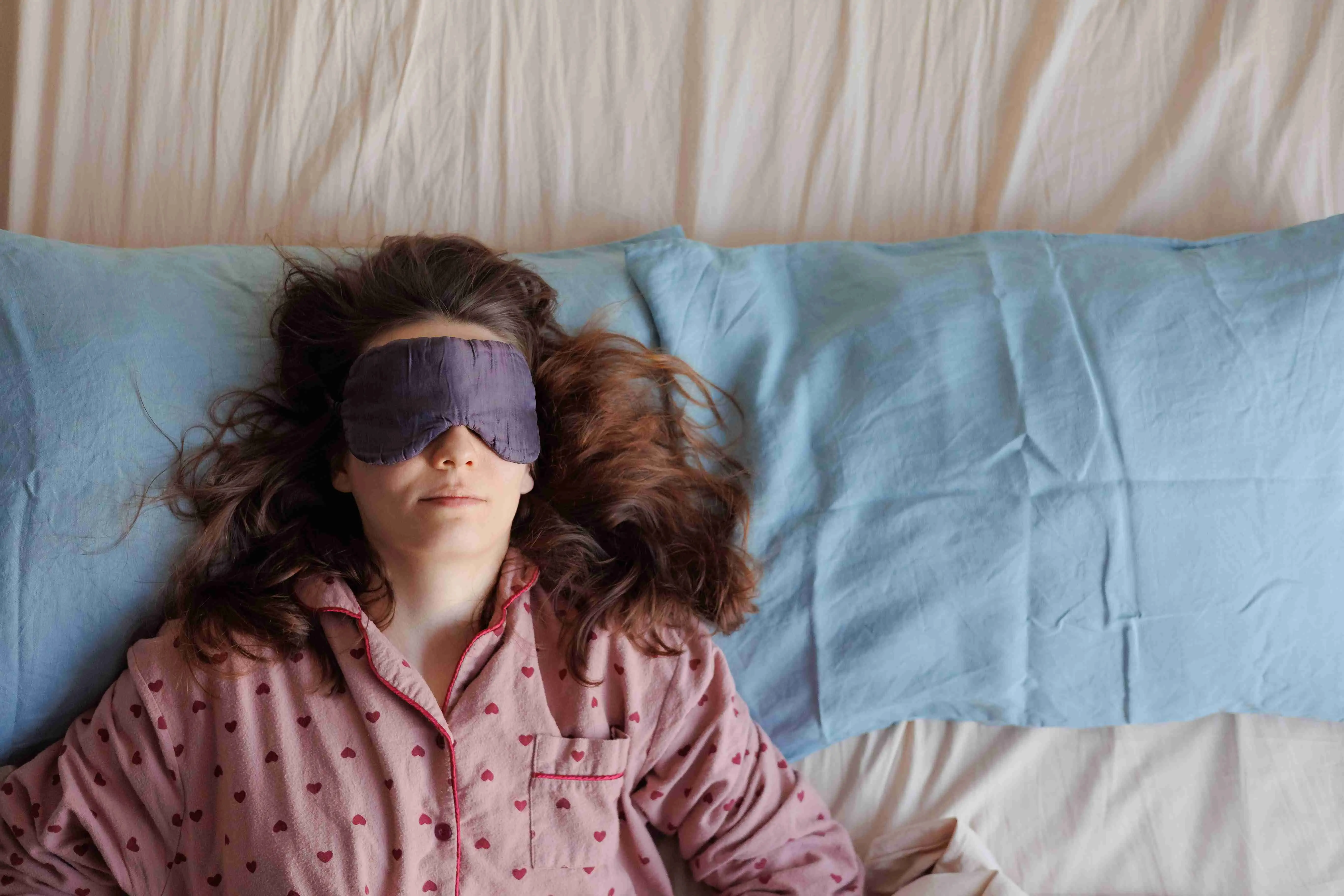


Sleep does not simply get shorter with age. Its timing, distribution across day and night, internal stages, and resistance to interruption all change from infancy through older adulthood. The biggest transition occurs early in life, when sleep gradually consolidates from multiple periods across 24 hours into a main nighttime sleep period. Later transitions are more subtle and vary considerably between individuals 1.
Recommended sleep durations are useful reference points, but they cannot diagnose whether one person is sleeping well. They need to be interpreted alongside sleep opportunity, regularity, health, daytime alertness, and whether the pattern has changed. A child or adult can spend the recommended number of hours asleep and still have a sleep disorder. Someone may also occasionally fall outside a range without being unwell.
Sleep duration guidance by age
The American Academy of Sleep Medicine (AASM) recommendations below describe sleep across a full 24-hour period for children and adolescents. Naps count where they occur. For adults, the AASM and Sleep Research Society recommend a regular minimum of seven hours rather than a strict upper-and-lower range 23.
| Age | Recommended sleep duration | How to read the guidance |
|---|---|---|
| Birth to 3 months | No AASM duration recommendation | Newborn duration and patterns vary too widely for the AASM to set an evidence-based range. Feeding and safe sleep remain priorities. |
| 4 to 12 months | 12 to 16 hours per 24 hours, including naps | Sleep is still distributed between night and daytime naps. |
| 1 to 2 years | 11 to 14 hours per 24 hours, including naps | Night sleep usually supplies most of the total, with naps still common. |
| 3 to 5 years | 10 to 13 hours per 24 hours, including naps | Some children still nap while others meet their need overnight. |
| 6 to 12 years | 9 to 12 hours per 24 hours | Sleep is usually concentrated at night. |
| 13 to 18 years | 8 to 10 hours per 24 hours | Puberty commonly shifts preferred sleep timing later. |
| Adults | At least 7 hours per night on a regular basis | Individual need varies. The recommendation is a public-health minimum, not proof that exactly seven hours is enough for everyone. |
Recommendations for infants younger than 4 months are omitted because evidence is insufficient and normal sleep duration and patterns vary widely at that age. The pediatric ranges also allow for individual variation related to health, behavior, environment, and biology 2.
For older adults, the National Institute on Aging describes a need of about seven to nine hours a night, similar to other adults. Aging can change when and how sleep occurs, but it does not make a marked reduction in sleep need inevitable 4.
Five parts of sleep that change across life
A duration figure answers only one question. A fuller picture includes:
- Duration: the total amount of sleep obtained over 24 hours.
- Distribution: whether sleep occurs in several bouts, overnight plus naps, or mainly in one nighttime period.
- Timing: when the body is most ready to sleep and wake.
- Architecture: how sleep is organized into non-REM and REM stages.
- Continuity: how easily sleep is maintained without long or frequent awakenings.
These features mature on different timelines. They are also shaped by school or work schedules, caregiving, illness, medicines, pain, mental health, light exposure, and sleep disorders. Age is one influence, not a complete explanation.
Infancy: sleep develops before it consolidates
Newborn sleep occurs in repeated periods across the day and night. Waking to feed is expected, and the pattern can change quickly. Newborn sleep states are not organized exactly like adult sleep stages. Over the first year, circadian signals strengthen, nighttime sleep generally becomes longer, and naps become more predictable, although there is substantial variation between babies 1.
This means a newborn's sleep should not be judged against a promise to sleep through the night or against a fixed number of daytime naps. Feeding needs, growth, gestational age, illness, and development affect the pattern. Parents should discuss concerns about feeding, breathing, color changes, unusual difficulty waking, or growth with the baby's clinician rather than trying to impose an adult-like schedule.
Safe sleep takes priority over a longer sleep stretch
The American Academy of Pediatrics recommends placing an infant on their back for every sleep, on a firm, flat, non-inclined surface that meets applicable safety standards, without soft objects or loose bedding. It recommends room sharing without bed sharing, preferably for at least the first six months. Car seats, swings, strollers, carriers, and slings are not recommended for routine sleep. If a baby falls asleep in a sitting device outside travel, move them to an appropriate flat sleep surface as soon as practical 5.
A product, position, weighted item, or home monitor should not be used to make a baby sleep longer if it conflicts with safe-sleep guidance 5. Ask the pediatrician for individualized advice when prematurity, reflux, a respiratory condition, or another medical issue raises questions.
Toddlers and preschoolers: consolidation with variable naps
During early childhood, nighttime sleep becomes the main sleep period. Naps usually become fewer and then disappear, but there is no single age when every healthy child should stop napping. A preschooler who no longer naps may need an earlier bedtime to keep total sleep within an appropriate range. A child who still naps and sleeps well at night does not need to lose the nap solely because of age.
Bedtime resistance, requests for a caregiver, nighttime fears, and occasional parasomnias can occur during this stage. The useful question is not whether every night is uninterrupted. It is whether the pattern is manageable, the child has enough opportunity to sleep, and daytime behavior and alertness are reasonably stable.
A calm, predictable sequence before bed can make the transition easier. Keep the sequence simple enough to repeat. If bedtime takes a long time, compare the planned sleep window with the child's actual sleep need and nap timing instead of repeatedly extending the routine.
Seek pediatric advice for loud habitual snoring, gasping, pauses in breathing, unusual movements, persistent insomnia, extreme difficulty waking, or sleepiness and behavior changes that interfere with daily life.
School-age children: stable nights, growing schedule pressure
Most school-age children obtain sleep in one main nighttime period and have relatively strong deep non-REM sleep. Across later childhood and adolescence, the amount and intensity of this slow-wave sleep decline from their childhood peak as the brain and sleep system mature 1.
School, activities, homework, family routines, and access to entertainment can compress the sleep window even when the child's biological need has not changed. A regular morning commitment sets the latest practical bedtime. If a child cannot wake without repeated prompting or sleeps much longer on free days, the weekday schedule may be providing too little sleep.
Sleep loss in children does not always look like quiet drowsiness. Irritability, emotional volatility, attention difficulty, or increased activity can also accompany insufficient or disrupted sleep. Those signs are not specific to sleep, so persistent concerns deserve a broader assessment rather than a conclusion based on behavior alone 2.
Adolescence: a later clock meets an early schedule
Puberty is associated with a shift toward later sleep and wake timing. Changes in both circadian timing and the build-up of sleep pressure make many teenagers able to stay awake later, even though they still need eight to ten hours in each 24-hour period 12.
This later tendency is biological, but biology is not the only influence. Homework, jobs, activities, social contact, gaming, and phone use can delay sleep further. Early school or work times then restrict the morning end of the sleep period. Treating the entire pattern as laziness misses the conflict between timing and required wake time.
Practical priorities are:
- protect enough time for eight to ten hours before the required wake time;
- keep wake time reasonably stable rather than shifting by many hours between school and free days;
- use morning light and daytime activity to reinforce daytime alertness;
- move stimulating or absorbing activities earlier when they repeatedly delay sleep; and
- avoid caffeine late enough in the day that it affects sleep onset.
A normal adolescent phase shift does not explain every late schedule. A teenager who cannot fall asleep until very late despite a sustained effort, cannot wake for required activities, or has substantial distress or impairment may need assessment for a circadian rhythm sleep-wake disorder. Persistent daytime sleepiness, falling asleep in class or while driving, loud snoring, gasping, depression symptoms, or a major change in sleep also deserves attention.
Adulthood: sleep need is stable, but opportunity is not
Adult sleep architecture is more stable than it is during childhood development, yet sleep opportunity can vary sharply with work, caregiving, pregnancy, new parenthood, menopause, health conditions, and shift schedules. The AASM recommendation of at least seven hours is a minimum for regular sleep in healthy adults, not a claim that every adult functions best on exactly seven hours 3.
A useful personal estimate comes from observing sleep during a period with adequate opportunity and relatively few schedule constraints. Consider how long you sleep without an alarm, whether you are alert through the day, and whether you depend on large weekend extensions to recover. Time in bed is not identical to time asleep, so a seven-hour sleep opportunity may provide less than seven hours of actual sleep.
Extra sleep can be appropriate during recovery from sleep debt or illness, and individual need differs. A sudden rise or fall in sleep duration, especially with fatigue, mood change, pain, breathlessness, or another symptom, is more informative than a small difference from a population average.
Older adulthood: earlier and lighter does not mean unimportant
On average, older adults tend to become sleepy and wake earlier than they did in younger adulthood. Sleep may contain less deep non-REM sleep, and nighttime awakenings can become more frequent. These are group-level trends, not rules for every individual 61.
The distinction between an age-related change and a treatable problem matters. Insomnia, sleep apnea, restless legs syndrome, pain, nocturia, depression, neurodegenerative disease, and medication effects become more relevant in later life. They can fragment sleep independently of normal changes in architecture. The National Institute on Aging advises talking with a doctor when an older adult is always sleepy or cannot get enough sleep at night 4.
Daytime napping also needs context. A planned nap that leaves someone refreshed and does not interfere with night sleep may be compatible with healthy sleep. Unintended dozing, increasing naps because nighttime sleep is poor, or sleepiness during driving and other safety-critical activities is different and warrants prompt attention.
How to tell normal variation from a problem
One unusual night or a short-lived schedule disruption is common. Consider professional assessment when a pattern persists, causes distress, creates a safety concern, or impairs school, work, mood, relationships, or physical function.
Warning signs at any age include:
- loud, habitual snoring, gasping, choking, or witnessed breathing pauses;
- severe or increasing daytime sleepiness;
- falling asleep while driving, working, eating, or talking;
- ongoing difficulty falling asleep or returning to sleep despite adequate opportunity;
- an urge to move the legs, repeated unusual movements, or acting out dreams;
- a sleep schedule that cannot be aligned with required activities;
- a marked and unexplained change from the person's usual sleep;
- morning headaches, confusion, or unusual difficulty waking; and
- sleep problems occurring with depression, mania, cognitive change, pain, breathing trouble, or medication changes.
Infants need age-specific assessment. Seek urgent medical care for breathing difficulty, blue or gray color, limpness, a seizure, or inability to wake normally. Contact the pediatric clinician for feeding or growth concerns, persistent unusual sleepiness, or any pattern that worries you.
Supporting sleep without forcing the same routine at every age
Healthy routines should protect sleep opportunity while adapting to development and circumstances.
Anchor the day with an appropriate wake time. Consistent wake timing helps organize the sleep-wake rhythm, but a rigid schedule should not deprive a child or adult of needed sleep. Shift workers need a routine anchored to their actual main sleep period, not conventional nighttime hours.
Match the sleep window to the person, not only the table. Use the age guidance as a starting point. Then look at actual sleep, daytime function, naps, and required wake time. Do not keep extending time in bed when it produces long periods awake, and do not shorten sleep simply because someone can push through tiredness.
Use light deliberately. Bright daytime light supports alertness and circadian timing. Dimmer light and less stimulating activity before the intended sleep period can help signal the transition. Screens can delay sleep through light, content, and lost time, so address the part that is actually keeping the person awake rather than treating every device as identical.
Protect age-appropriate naps. Naps are a normal part of infant and early-childhood sleep. They become optional later. Adjust timing or duration if a nap repeatedly prevents sleep at the intended bedtime, but do not remove a needed nap to chase a longer night.
Treat a persistent problem by its cause. A longer bedtime routine will not correct sleep apnea, chronic insomnia, a circadian disorder, restless legs syndrome, pain, or a medication effect. Track the pattern and bring the relevant details to a clinician.
The bottom line
Sleep changes throughout life, but age does not provide a complete explanation for how one person sleeps. Infants move from sleep around the clock toward more consolidated nights. Children gradually lose naps and have abundant deep sleep. Adolescents develop a later biological preference while still needing substantial sleep. Adults usually retain a need for at least seven hours, and older adults continue to need about as much sleep as other adults even as timing and architecture shift.
Use duration recommendations as reference ranges, not rigid targets. Pay equal attention to sleep timing, continuity, breathing, daytime alertness, and change from baseline. Normal development can explain some variation. It should not be used to dismiss persistent impairment or a treatable sleep disorder.