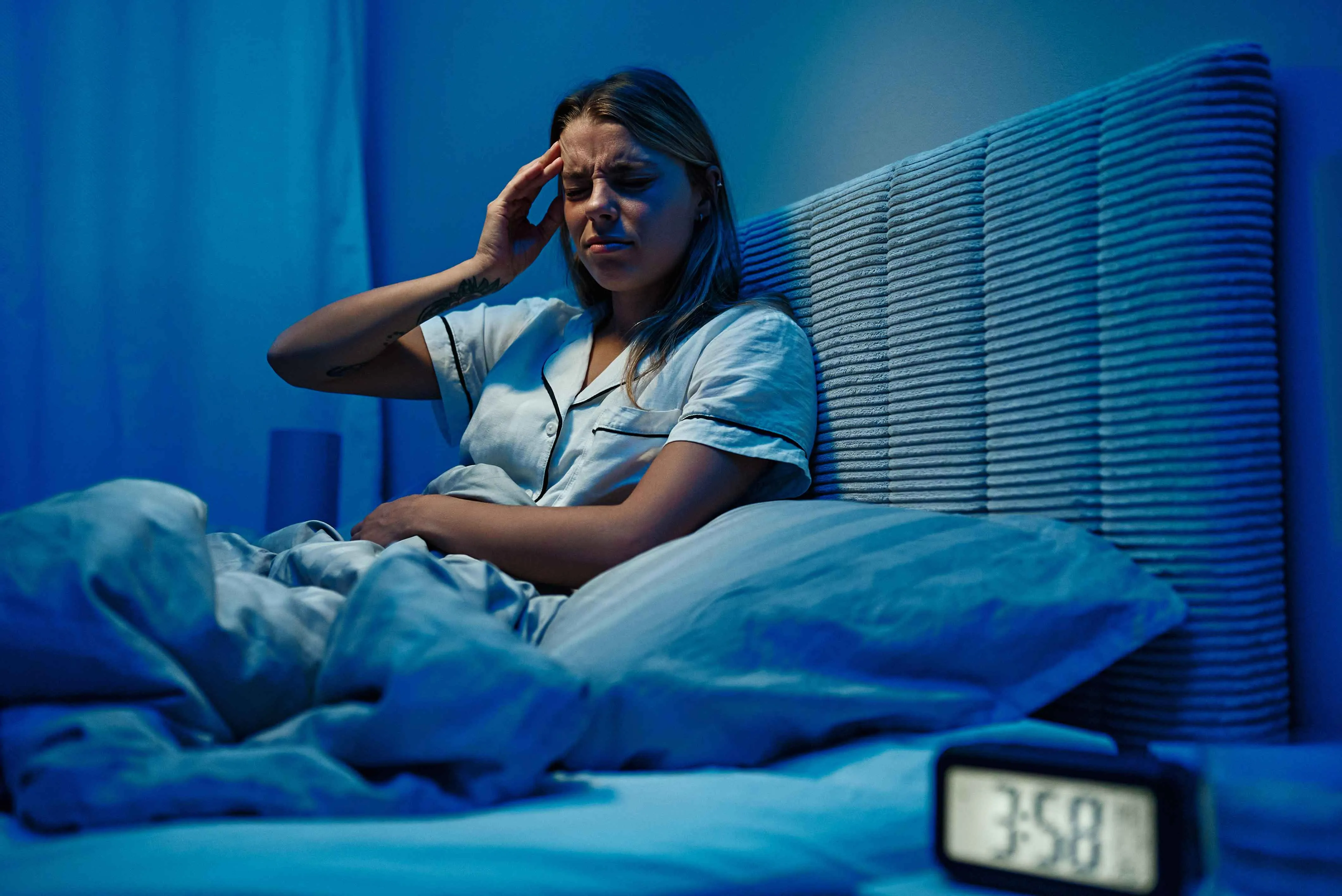


A dry throat on waking usually reflects local overnight dryness, not one specific disease. Common explanations include breathing through the mouth, a blocked nose, the normal drop in saliva during sleep, PAP airflow or leak, genuinely dry room air, medicines that reduce saliva, and a short-term illness. Repeated dryness can also accompany obstructive sleep apnea (OSA), persistent dry mouth, reflux-related throat symptoms, or a systemic condition, but dryness alone cannot tell these causes apart 12.
Start by locating the symptom and noticing what travels with it. A sticky mouth, blocked nose, sour taste, painful swallowing, voice change, or PAP leak points in a different direction from an isolated throat sensation that clears soon after waking.
Dry throat is not the same as dry mouth or a sore throat
These descriptions can overlap, but they are not interchangeable.
| Pattern | What it usually means |
|---|---|
| Dry throat | A parched, scratchy, or sticky feeling mainly at the back of the mouth or throat |
| Dry mouth, or xerostomia | A subjective dry or sticky mouth, sometimes with thick saliva, cracked lips, altered taste, bad breath, or difficulty chewing, speaking, or swallowing |
| Hyposalivation | Objectively reduced saliva production, which a clinician or dentist can assess; it is not identical to the feeling of dry mouth |
| Sore throat | Pain, inflammation, or tenderness, often worse with swallowing and sometimes accompanied by fever, cough, swollen glands, or other infection symptoms |
| Hoarseness | A rough, weak, breathy, or changed voice, which comes from the larynx rather than proving that the throat is dry |
| Postnasal or rhinitis symptoms | Congestion, runny nose, sneezing, itching, mucus sensation, or throat clearing |
| Reflux pattern | Heartburn, regurgitation, sour or bitter taste, cough, hoarseness, or painful swallowing; isolated dryness does not establish reflux |
| Dehydration | Body-fluid loss accompanied by clues such as marked thirst, less or darker urine, fatigue, or dizziness, not a dry throat alone |
Xerostomia can occur with or without a measurable fall in salivary flow. Salivary output normally reaches its lowest circadian level during sleep, so someone with a mild daytime issue may notice it most on waking. Mouth breathing can add airflow across the mouth and throat and make the sensation stronger 1.
A sore or inflamed throat is more likely when pain, fever, swollen glands, cough, redness, or white patches accompany the dryness. Most acute sore throats are viral, while some are bacterial or have another cause. A dry feeling alone does not show that antibiotics or an antiseptic throat product is needed 3.
What may be causing it?
Mouth breathing and a blocked nose
If the mouth, lips, and throat are dry together, overnight mouth breathing is a useful possibility. The next question is why the nose was not comfortable to breathe through.
Allergic rhinitis commonly causes congestion, sneezing, itching, and watery nasal or eye symptoms. Nonallergic rhinitis can also cause year-round congestion or a runny nose without the same allergic pattern. A cold, sinus inflammation, smoke or fragrance exposure, nasal anatomy, and overuse of a topical decongestant can produce different blockage patterns 4.
Do not assume every stuffy night is an allergy or treat it indefinitely with an antihistamine. Some allergy, bladder, blood-pressure, depression, and other medicines can contribute to dry mouth. A clinician or pharmacist can help match nasal treatment to the pattern while reviewing whether a medicine is adding to the dryness 1.
Snoring and obstructive sleep apnea
Morning dryness can occur in people who snore or have OSA, but it is not a diagnostic test. OSA becomes more concerning when dryness appears with loud habitual snoring, witnessed pauses in breathing, choking or gasping, morning headaches, unrefreshing sleep, or excessive daytime sleepiness. A clinical sleep evaluation and an appropriate sleep test, not the throat symptom, establish the diagnosis 2.
Mouth taping is not a safe way to test this possibility. It can conceal the reason for mouth breathing and may restrict an alternative airway when the nose is blocked.
PAP airflow, mouth leak, or mask leak
PAP treatment can be associated with a dry nose, mouth, or throat. With a nasal mask or nasal pillows, air escaping through an open mouth is one possible reason. Mask leak, nasal congestion, humidifier settings, tubing temperature, and the interface itself can also matter.
Heated humidification reduces several PAP side effects, including dry mouth and throat, on average, but it does not solve every case and does not reliably improve adherence by itself 5. The American Thoracic Society recommends troubleshooting dryness through humidification, heated tubing, nasal saline, and, when appropriate, a different mask or a clinician-recommended strategy for mouth leak 6.
Keep using prescribed PAP unless the treating team tells you otherwise. Do not change therapeutic pressure, tape the mouth, or abandon treatment because of dryness. Ask the PAP team to review the mask seal, leak data, nasal symptoms, humidifier and tubing setup, and whether another interface is appropriate. Recurrent snoring, gasping, witnessed pauses, or daytime sleepiness despite PAP also deserves review.
A genuinely dry room
Heating, air conditioning, climate, and seasonal conditions can leave indoor air dry. The sensation does not prove this, so check with a hygrometer if possible rather than adding humidity automatically.
If humidity is low and the timing fits, a room humidifier may improve comfort. More moisture is not always better. The U.S. Environmental Protection Agency advises keeping indoor relative humidity at or below 50%, reducing output if windows or nearby materials become damp, and using a humidifier only when conditions require it. Excess moisture can support biological growth, while poorly maintained tanks can disperse microorganisms or minerals 7.
Medicines, substances, and reduced saliva
Hundreds of medicines can contribute to dry mouth. Common categories include some medicines used for depression, blood pressure, bladder control, allergies, pain, nausea, and sleep. The effect can depend on the dose, timing, combinations, and the person's health 81.
Review what changed before the symptom started, including prescription medicines, over-the-counter products, cannabis, nicotine, and alcohol. Do not stop a prescription medicine abruptly. A pharmacist or prescriber may be able to adjust timing, dose, or the specific medicine when clinically appropriate.
Alcohol is not a dry-throat treatment or a sleep aid. Even moderate amounts can alter sleep physiology, and alcohol can aggravate sleep-disordered breathing 9.
Infection, reflux, and broader dryness
A viral or bacterial throat illness usually produces more than dryness. Pain, fever, swollen glands, cough, marked redness, white patches, or feeling generally ill shifts the question toward a sore-throat assessment 3.
Reflux can reach the throat and may be associated with heartburn, regurgitation, sour taste, chronic cough, hoarseness, or swallowing symptoms. Dryness by itself is not enough to diagnose gastroesophageal or laryngopharyngeal reflux, and there is no universal bedtime meal, pillow, antacid, or acid-suppression protocol for an unexplained dry throat 1011.
Persistent dry mouth throughout the day, dry or gritty eyes, recurrent mouth sores or thrush, facial-gland swelling, or difficulty chewing and swallowing deserves assessment. Medicines are common contributors, while Sjögren disease, diabetes, head-and-neck radiation, nerve injury, and other conditions can affect salivary function. One morning symptom does not justify a self-diagnosis or a broad panel of tests 8.
A one-variable check
If the symptom is mild and there are no warning signs, change one plausible factor at a time. This makes the result easier to interpret.
- Describe the location. On waking, note whether the tongue and cheeks are sticky, the nose is blocked, the throat is painful, the voice is hoarse, there is a sour taste, or the symptom clears quickly.
- Check hydration in context. Drink when thirsty and replace ordinary fluid losses across the day. Dark or reduced urine, marked thirst, fatigue, and dizziness support dehydration more than throat dryness alone. Follow an existing fluid limit for kidney, heart, or another medical condition rather than forcing extra water 12.
- Measure the room. If humidity is already moderate, or there is condensation or dampness, adding more moisture is unlikely to be the right test. If it is low, use a properly maintained humidifier and see whether the pattern changes.
- Check the nose. For mild dryness or congestion, a commercially prepared saline spray may be reasonable. A full nasal rinse is different: use only distilled, sterile, or previously boiled and cooled water, use saline rather than plain water, and clean and dry the device as directed 13.
- Review medicines and substances. Look for a new product, dose, timing, or combination and ask a pharmacist or prescriber about it.
- If you use PAP, check the setup. Note leak, an open mouth, congestion, condensation in the tubing, or a recent mask change and take those observations to the PAP team. Use only patient-adjustable comfort settings according to the device instructions.
Do not change several variables on the same night. If symptoms are worsening, painful, or persistent during the day, stop experimenting and arrange an assessment.
Safe relief and oral care
A few sips of water on waking may relieve a transient dry feeling. If the mouth is also persistently dry, a dentist or clinician may recommend a saliva substitute or another cause-specific product. Sugar-free gum or candy can stimulate saliva while a person is awake, but neither is a cure and no one should fall asleep with gum, a lozenge, or hard candy in the mouth 8.
Persistent dry mouth matters to the teeth and oral tissues. Saliva helps with swallowing, clears food, buffers acids, and protects teeth. Reduced flow increases the risk of cavities, demineralization, sensitivity, and oral infection. Continue fluoride toothpaste and regular dental care, and ask a dentist whether additional fluoride or dry-mouth care is appropriate for your specific risk 1.
For a room humidifier:
- follow the manufacturer's water and cleaning instructions
- empty, wipe dry, and refill a portable tank daily
- clean portable units regularly; the EPA advises every third day unless the manufacturer requires a different schedule
- reduce or stop use if surfaces become damp or respiratory symptoms appear
- keep hot-steam devices away from children because of burn risk 7
These steps do not create a universal humidity target. They reduce risks when a humidifier is actually appropriate.
What not to use as a shortcut
- Do not tape the mouth shut. A 2025 systematic review found a small, inconsistent, generally poor-quality evidence base and identified concern about serious harm when nasal obstruction is present. Dryness, snoring, or PAP leak should prompt cause-directed troubleshooting instead 14.
- Do not put oil, ghee, essential oil, or petroleum products into the nose. Oil-based oral and nasal products have caused exogenous lipoid pneumonia after aspiration or inhalation in published cases 15.
- Do not lean over a bowl of boiling water or use uncontrolled steam. NHS burn specialists warn that steam-inhalation home remedies can cause serious scalds, especially in children 16.
- Do not use alcohol to make yourself sleep through the symptom. It fragments sleep and may worsen sleep-disordered breathing 9.
- Do not assume everyone needs the same water amount, room humidity, lozenge schedule, salt-water gargle, or reflux remedy. Choose relief for the identified pattern and respect medical fluid, medicine, and PAP instructions.
When to get medical help
Get emergency help now
Call emergency services for:
- trouble breathing, noisy high-pitched breathing, or rapidly worsening symptoms
- swelling of the tongue, lips, mouth, or throat
- inability to swallow fluids or saliva, or drooling because swallowing is not possible
- fainting, severe confusion, or difficulty waking
These are not routine dryness symptoms and can signal airway swelling, severe throat disease, dehydration, or another emergency 31712.
Seek prompt or urgent assessment
Get medical advice promptly for severe throat pain, high fever or feeling severely ill, repeated vomiting, severe dehydration signs such as little or no urine, persistent dizziness, a rapid heartbeat, or confusion, or any vomiting of blood or black, tarry stools 31210.
Difficulty or pain with swallowing, food sticking, repeated choking with drinks, unexplained weight loss, a neck mass, or persistent hoarseness also needs evaluation. The AAO-HNS guideline recommends laryngeal evaluation when hoarseness has not improved within four weeks, or sooner when a serious cause is suspected 11.
Arrange a routine medical or dental assessment when dryness keeps returning, continues through the day, causes mouth sores or dental problems, follows a medicine change, or occurs with broader eye-and-mouth dryness. Arrange a sleep evaluation for repeated loud snoring, witnessed breathing pauses, gasping, morning headaches, unrefreshing sleep, or excessive daytime sleepiness. If you already use PAP, contact the sleep or equipment team for recurring dryness, leak, or returning OSA symptoms rather than changing treatment alone.
The bottom line
A dry throat on waking is most often a clue to local overnight dryness, not a diagnosis. The location and companion symptoms help separate mouth breathing or nasal blockage from dry mouth, PAP leak, dry room air, infection, reflux-related symptoms, dehydration, and broader salivary problems.
Check one plausible cause at a time and use the least complicated safe response. Measure humidity before adding it, use safe water for nasal rinsing, review medicines rather than stopping them, and troubleshoot PAP with the treatment team. Persistent symptoms, or accompanying breathing, swallowing, voice, broader dryness, or dental concerns, deserve cause-directed assessment.