
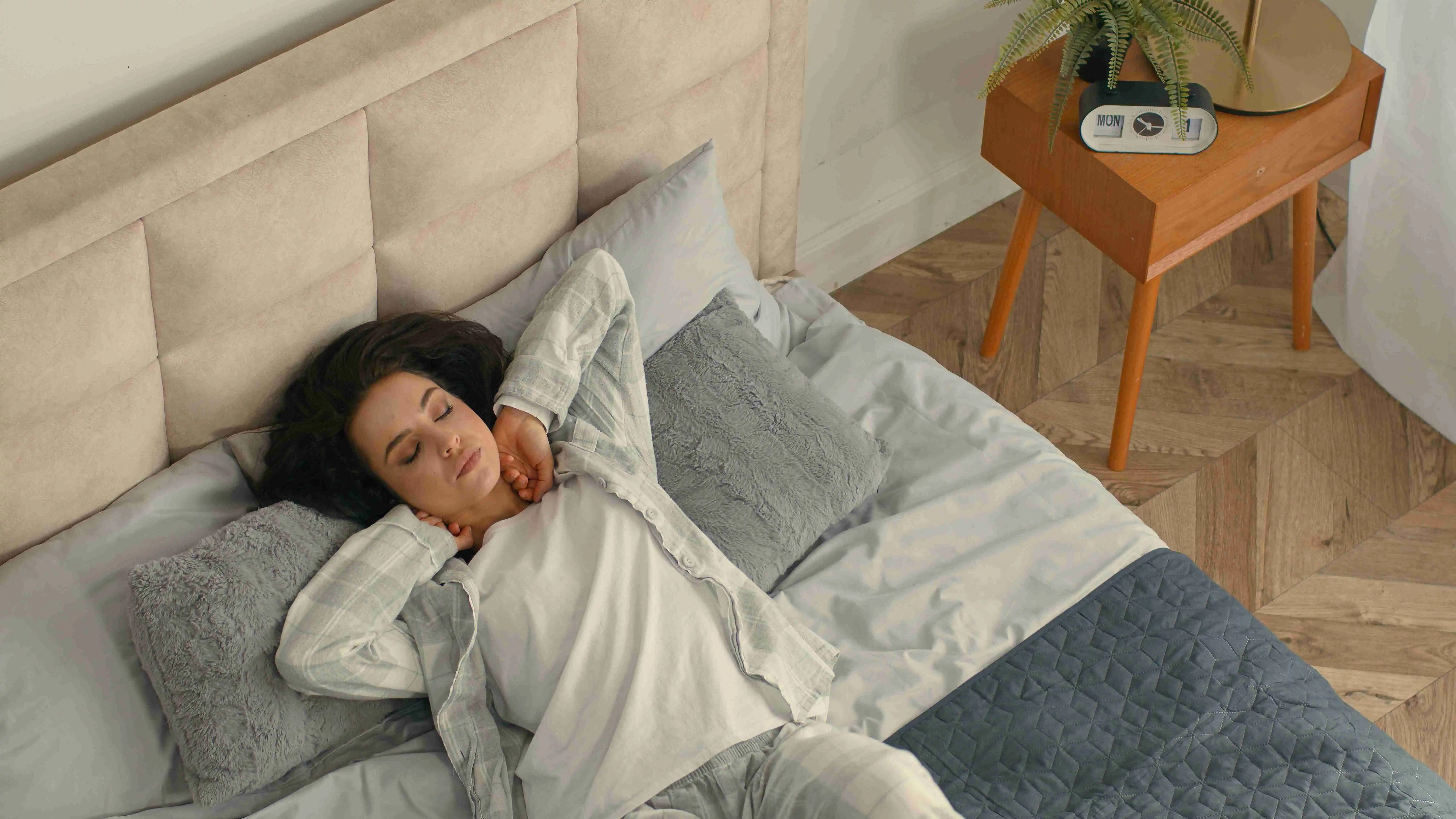
In adults, “restless sleep” is usually a description, not a single diagnosis. One person may mean they woke repeatedly and could not settle. A bed partner may mean they saw kicking, repositioning, gasping or unusual behavior. Someone else may have no memory of the night and use the phrase only because they woke unrefreshed.
Those patterns do not share one cause. The first step is to replace the word “restless” with a precise account of what happened. Movement alone is not enough: a sleeper can change position without having a disorder, while breathing events or brief arousals may disrupt sleep with little visible movement. There is no consumer movement count that separates normal adult sleep from disease 12.
Start with what “restless” means
Ask whether the main problem is:
- trouble falling asleep, repeated waking or difficulty returning to sleep
- too little time available for sleep or trying to sleep at the wrong biological time
- an urge to move the legs while awake, with uncomfortable sensations
- repeated limb movements noticed only after sleep begins
- snoring, choking, gasping, breathing pauses or labored breathing
- pain, reflux, coughing, itching, hot flashes, urination or another symptom that causes waking
- talking, walking, striking out, dream enactment, confusion or another complex behavior
- noise, light, temperature, a child, pet or bed partner repeatedly interrupting sleep
- feeling tired or unrefreshed despite no remembered waking or observed event
More than one can be present. A person with obstructive sleep apnea can also have insomnia. Someone with restless legs syndrome can also have an irregular schedule. A useful assessment does not force every sign into one explanation 34.
Not every restless-looking night is abnormal
A position change, brief startle at sleep onset or short awakening can occur without a sleep disorder. Clinical movement disorders require more than the observation that someone “moves a lot.” The movement pattern, associated sensations, breathing, sleep disruption and daytime effects all matter, as does whether another condition explains the finding 1.
Compare the night with the person's usual pattern. Restlessness after travel, fever, an unfamiliar room or an unusually short night may resolve when the temporary disruption ends. Repeated events, injury, marked sleepiness or a clear change from baseline deserves a closer look.
Check sleep opportunity and timing first
A person who must fit sleep into a short window may toss, wake easily and feel unrefreshed because there was not enough opportunity to sleep. That is insufficient sleep opportunity, not proof of insomnia or a movement disorder.
Circadian mismatch is different. The body may be ready to sleep later or earlier than the required schedule. Someone who struggles and moves around in bed at 10 p.m. but sleeps steadily from 2 a.m. to 10 a.m. may have a timing problem. Shift work, jet lag and large workday-to-weekend changes can produce similar clues.
Record bedtimes, estimated sleep times, wake times, naps and required versus preferred timing for 7 to 14 days. Sleep diaries are part of recommended insomnia assessment and can also show patterns that suggest circadian mismatch 4.
Insomnia can feel like restless sleep
Insomnia involves trouble falling asleep, staying asleep or returning to sleep despite adequate opportunity, together with distress or daytime impairment. The person is often aware of being awake, monitoring time or repeatedly trying to get comfortable. Visible tossing may be a response to wakefulness rather than its cause.
A sleep study is not routinely needed for straightforward insomnia. History and a sleep diary usually lead the assessment. Polysomnography becomes more useful when breathing events, periodic movements, unusual behaviors or another sleep disorder are suspected 43.
Persistent insomnia should be treated directly even when stress, pain or another condition helped start it. Cognitive behavioral therapy for insomnia, or CBT-I, is recommended first-line care for chronic insomnia 43. See our guide to cognitive behavioral therapy for insomnia for what it involves.
Breathing events can fragment sleep
Obstructive sleep apnea can cause repeated arousals that the sleeper may not remember. A witness may notice loud habitual snoring, pauses followed by a gasp, choking, labored breathing or frequent repositioning. The sleeper may report dry mouth, morning headache, unrefreshing sleep or daytime sleepiness.
“Restless sleep” cannot diagnose apnea, and a questionnaire or wearable cannot confirm it. Adults with a concerning pattern need a clinical sleep evaluation followed by an appropriate home sleep apnea test or polysomnogram when indicated 5.
Children can show restless sleep alongside snoring, labored breathing, unusual sleep positions or daytime behavior and attention changes. Pediatric breathing concerns require a child-specific assessment rather than applying adult testing rules 6.
RLS, PLMS and PLMD are different
The names sound similar, but they describe different experiences.
Restless legs syndrome (RLS) is diagnosed mainly from symptoms while the person is awake. Its core pattern is an urge to move the legs, often with discomfort, that begins or worsens during rest, improves at least temporarily with movement, is worse in the evening or at night, and is not better explained by a mimic such as a cramp or positional discomfort 7. A bed partner's report of kicking is not enough to diagnose RLS.
Periodic limb movements of sleep (PLMS) are repetitive, stereotyped limb movements measured during a polysomnogram. They may accompany RLS, untreated sleep apnea, narcolepsy, REM sleep behavior disorder or other conditions. A person can also have PLMS without the movements explaining a sleep complaint.
Periodic limb movement disorder (PLMD) is narrower. It requires a PSG-defined pattern plus clinically important sleep disturbance or daytime dysfunction that another sleep, medical, neurologic or mental health condition does not explain. Reducing a movement count is not a treatment goal by itself, and PLMD should not be inferred from a watch, sheet displacement or a partner's rough count 1.
Parasomnias and seizure-like events need a description
Sleepwalking, confusional arousals, sleep terrors and dream enactment can all be reported as restlessness. Ask what the person did, whether their eyes were open, whether they responded, what they remembered, whether a dream matched the behavior, when in the night it occurred, how long it lasted and whether each event looked the same.
A witness account is often valuable. If it can be done safely and with appropriate privacy and consent, a short home video of a typical event can give a clinician information that the sleeper cannot recall. A video is not a diagnosis, and nobody should provoke an episode or place themselves in danger to record one 8.
Typical, uncomplicated NREM parasomnias can often be assessed from the history. Video polysomnography is more useful when episodes begin in adulthood, are highly stereotyped or violent, cause injury, happen at unusual times, suggest dream enactment or seizures, or remain diagnostically unclear 8.
Pain, medical symptoms and the sleep environment
Pain, stiffness, reflux, coughing, breathing difficulty, itching, hot flashes, urinary symptoms and other physical problems can cause repositioning or repeated waking. The timing is more informative than a generic diagnosis list. Note whether the symptom occurs just before each awakening, whether controlling it changes sleep, and whether restlessness remains on nights when the symptom is quiet 43.
Environmental interruption is also easiest to establish by observation. Record whether noise, light, temperature, bedding, a pet, caregiving or a bed partner actually coincides with waking. A different mattress or perfectly dark room is not a universal remedy for unexplained sleep fragmentation.
New pain, breathing difficulty, weakness, tremor, confusion or another change from baseline should be medically evaluated on its own merits rather than attributed to poor sleep.
Medicines and substances can change sleep or movement
Review any medicine or substance that was started, stopped, increased, reduced or moved to a different time near the onset. Some antihistaminergic, serotonergic and antidopaminergic medicines can worsen RLS symptoms in susceptible people, but effects vary and the medicine may still be necessary. Caffeine, alcohol and untreated sleep apnea are also factors clinicians assess when RLS is active 1.
Alcohol, caffeine, nicotine and cannabis can affect alertness, sleep timing or continuity differently depending on dose, timing, regular use and withdrawal. Disturbed sleep and vivid dreams are common in cannabis withdrawal after frequent use 9. Sudden alcohol cessation after prolonged heavy drinking can cause dangerous withdrawal, including insomnia, tremor, sweating, nausea, seizures and delirium 10.
Do not stop a prescription abruptly or change heavy substance use solely to test a sleep theory. Bring the timeline, exact products, doses and timing to the prescriber or clinician so withdrawal and interaction risks can be considered.
Pediatric restless sleep disorder is a separate concept
Restless sleep disorder (RSD) is a newly defined pediatric sleep-related movement disorder, not a label for every restless adult or child. The consensus criteria were developed for ages 6 through 18 and require all of the following:
- a complaint of restless sleep and observed large muscle movements during sleep
- at least five large muscle movements per hour documented by video polysomnography
- symptoms at least three times a week for at least three months
- clinically meaningful daytime impairment
- no other sleep, medical, mental health, medication or substance explanation
Video polysomnography is therefore part of the diagnosis, not an optional confirmation. The movement threshold is specific to this pediatric consensus disorder. It is not a cutoff for normal adult movement, a wearable target or a reason to suppress every movement 11.
The evidence base is still developing. RSD has mainly been studied in referred children, its underlying biology is not established, and low iron stores are a suspected contributor rather than a complete explanation 12. Evidence and treatment rules for RLS should not automatically be transferred to RSD.
Do not start iron or magnesium simply because a child moves in sleep. A pediatric sleep clinician can first exclude breathing disorders, RLS, PLMD, parasomnias and medical causes, then decide whether video PSG, iron studies or another targeted test is appropriate. Iron treatment requires the right indication, laboratory interpretation and follow-up.
How to document the pattern
A concise diary is more useful than writing “restless” each morning. Include:
- sleep opportunity, bedtime, estimated sleep time, awakenings, final wake time and naps
- whether the report came from the sleeper, a witness, a recording or a device
- what moved, whether it was repetitive or complex, and whether the person was awake
- any urge, discomfort, pain, breathing change, vocalization, dream recall or confusion
- the approximate time, duration, frequency and similarity of events
- recent illness, travel, shift changes, stress, environment changes and pregnancy or menopause symptoms
- medicine, supplement, caffeine, nicotine, alcohol and cannabis timing or recent changes
- morning symptoms, daytime fatigue or sleepiness, concentration, mood and safety effects
A wearable can show a trend worth discussing, but it usually infers sleep and waking from movement and heart-rate signals. The American Academy of Sleep Medicine states that consumer sleep technology is not a substitute for medical evaluation and should not be used to diagnose or treat a sleep disorder unless it has been cleared and validated for that specific purpose 2.
When testing is useful
Not everyone who moves or wakes needs a sleep study or blood test. Testing should answer a specific question:
- suspected adult sleep apnea is evaluated with clinician-directed home sleep apnea testing or polysomnography
- suspected PLMD requires polysomnography because the relevant movements and associated arousals must be measured during sleep
- pediatric RSD requires video polysomnography under its consensus criteria
- atypical, injurious or unclear nocturnal behavior may require video PSG, sometimes with an expanded EEG setup
- straightforward insomnia is usually assessed through history and a diary rather than routine PSG
- suspected RLS is mainly a clinical diagnosis; iron studies help guide treatment when RLS is clinically significant
These routes are not interchangeable 518114. Broad laboratory panels or movement tracking without a clinical question often produce findings that still do not explain the night.
Match the next step to the clue
- Too little opportunity: Protect a realistic sleep window and address the work, caregiving or schedule constraint rather than trying to eliminate normal movement.
- Timing mismatch: Use the diary to stabilize the schedule and seek circadian assessment if sleep remains much better at a later or earlier time.
- Insomnia: Use evidence-based insomnia care, especially CBT-I for a chronic pattern.
- Snoring, gasping or breathing pauses: Arrange sleep-apnea evaluation rather than buying a movement tracker.
- Urge and discomfort while awake: Ask for an RLS assessment and clinician-directed iron studies instead of self-prescribing supplements.
- Repetitive movements only during sleep: Let a sleep clinician decide whether PSG would change care.
- Complex or potentially injurious behavior: Make the sleep area safer and arrange parasomnia or neurologic assessment.
- Pain or another physical symptom: Treat and evaluate that symptom while checking whether a separate insomnia pattern remains.
- Medicine or substance timing: Review the change with a prescriber or qualified clinician rather than stopping abruptly.
- No impairment or concerning associated sign: Occasional repositioning may need observation, not treatment.
The goal is better, safer sleep and daytime function, not a perfectly still body.
When to seek urgent help
Seek urgent medical help for severe breathing difficulty, blue or gray color, chest pain, fainting, inability to wake normally, a first seizure-like event, a prolonged episode, or a nighttime event that causes a serious injury.
Possible alcohol withdrawal after prolonged heavy use also needs prompt medical guidance, especially with tremor, sweating, vomiting, hallucinations, confusion or seizures 10.
Do not drive or perform safety-sensitive work when severe sleepiness makes it unsafe. Drowsy driving causes preventable crashes, and caffeine alone may not overcome serious sleep deprivation 13.
“Restless sleep” becomes useful only after it is translated into observable details. Those details, not a generic movement score, determine whether the next step is more sleep opportunity, schedule work, CBT-I, breathing evaluation, a movement-disorder assessment, medical care or simple observation.