

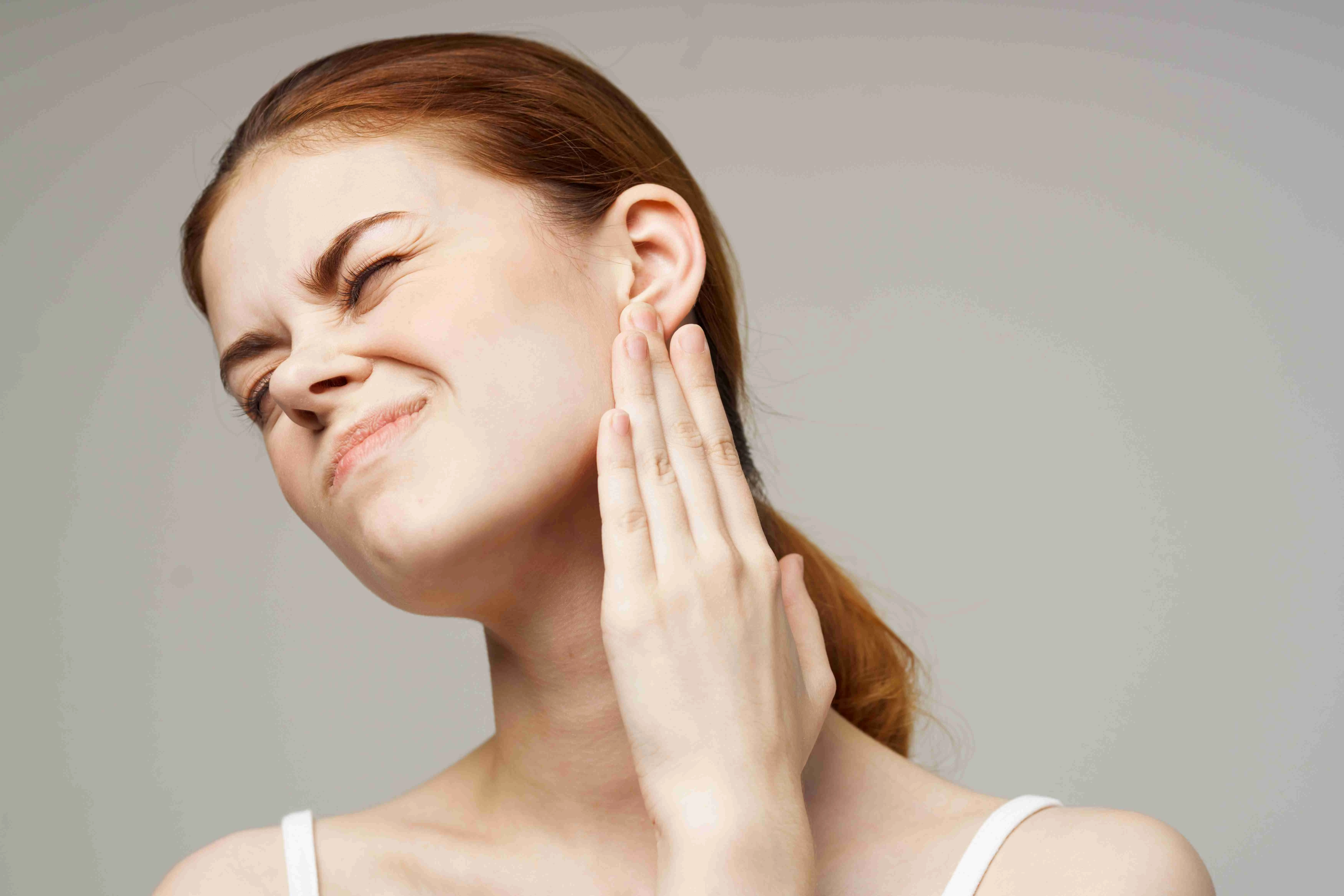
There is no medically established sleep side that closes a ruptured eardrum faster. If a clinician has not given you position-specific instructions, avoid putting direct pressure on a painful injured ear. For one affected ear, that often means lying on your back or on the unaffected side so the injured ear faces up.
Treat this as a comfort measure, not a healing treatment. Clinical guidance focuses on keeping the ear dry, avoiding objects and unapproved drops, treating an infection when indicated, and confirming recovery. It does not prescribe one universal sleep position 12.
Active drainage, injuries affecting both ears, a recent eardrum repair, and trauma that may have damaged other ear structures can change the advice. Follow the position and wound-care instructions from the clinician who examined your ear.
What a ruptured eardrum is
The eardrum, or tympanic membrane, is the thin tissue separating the ear canal from the middle ear. A perforation is a hole or tear in that membrane. It can cause ear pain, drainage that may be clear, bloody, or pus-like, muffled hearing, tinnitus, and dizziness or vertigo 3.
Middle ear infection can create enough pressure behind the membrane to rupture it. Other causes include a cotton swab or another object entering the canal, a slap or direct blow, rapid pressure change during diving, an explosion or very loud impulse noise, and head trauma 32.
These symptoms do not prove that the membrane is perforated. A clinician can examine the ear with an otoscope and arrange hearing testing when needed 3.
The cause matters. An uncomplicated small perforation may be limited to the membrane. A penetrating object, blast, or significant head injury can also damage the middle-ear bones, inner ear, facial nerve, or surrounding structures. Marked hearing loss or severe vertigo after trauma needs prompt ENT assessment because it may signal more than a simple hole in the eardrum 2.
A simple bedtime setup
Use the least complicated position that lets you rest without pressing on the injured ear:
- For one painful ear, start on your back or unaffected side. This keeps the injured ear off the pillow. If another position is more comfortable and your clinician has not restricted it, you do not need to force yourself to remain on one side all night.
- Use normal pillow support. Do not rely on a wedge, extra elevation, or a special ear pillow to seal the membrane or improve circulation to it. Adjust pillow height only for comfort and safe neck support.
- Protect the pillow, not the ear canal. If the ear is draining, place a clean towel over the pillow and gently blot fluid that reaches the outer ear. Do not pack the canal with tissue, cotton swabs, earplugs, or another object. Ask the clinician who evaluated the drainage whether a specific position is needed.
- Keep devices outside the injured ear. Do not sleep with an earbud, in-ear headphone, earplug, or hearing device in the affected canal unless an ear clinician specifically told you to use it.
- Use medication only as directed. Take a prescribed medicine or a clinician-recommended pain reliever according to its instructions. Do not put peroxide, oil, herbal preparations, numbing drops, or leftover antibiotic drops into a perforated ear.
If both ears hurt when side sleeping, lying on your back may be the easiest starting point. That position is still about avoiding pressure, not speeding membrane closure.
What actually supports recovery
Keep water out
Keep the affected ear dry until a clinician confirms that the perforation has healed. Avoid swimming and submerging your head. For showering or hair washing, NHS and clinical guidance describe placing a large piece of cotton wool coated with petroleum jelly at the outer ear opening to block splashes. Use it only as instructed for washing, then remove it rather than leaving anything in the canal overnight 14.
Do not irrigate or syringe the ear. Water entering through the opening can carry contamination into the middle ear 4.
Do not clean or medicate the canal yourself
Do not insert cotton swabs, fingers, tools, or any other object into the injured ear. Do not use over-the-counter earwax products or ear drops unless a clinician who knows the eardrum is perforated says that the exact product is appropriate 13.
A perforation does not automatically require antibiotics. A clinician may prescribe them when an infection is present or an injury was contaminated, but routine self-treatment is not appropriate. Some ear-drop ingredients should be avoided when the eardrum is not intact, which is another reason to use only the exact drops prescribed for this ear 24.
Avoid avoidable pressure and repeat injury
Avoid swimming, scuba diving, forceful ear-popping maneuvers, and activities that could expose the ear to another blow, blast, or major pressure change while it heals. Try not to blow your nose forcefully, because NHS guidance warns that this can damage the healing membrane 1.
A blanket ban on flying is not correct for every perforation. NHS guidance says flying is generally safe with an unrepaired perforated eardrum. The rule is different after myringoplasty, when you should not fly until your surgical team says it is safe 1.
Follow the treatment plan
Use prescribed antibiotics, ear drops, and pain medicine exactly as directed. Do not stop, substitute, or add a product based on a home remedy. If pain, fever, drainage, or hearing changes worsen despite treatment, contact the treating clinician.
Drainage can change the positioning advice
Drainage may come from infection, trauma, or blood and fluid passing through the perforation. Its color alone cannot tell you the cause 3. Do not automatically sleep with the injured ear down to “drain it,” and do not plug the opening to stop fluid reaching the pillow.
Contact a clinician promptly about new, foul-smelling, or pus-like drainage, drainage with fever or worsening pain, or discharge that is not improving. If you were given a drainage-specific position, dressing, or drop schedule after examination, follow that plan instead of general sleep advice.
A perforation, recent repair, and ear tube are not the same
After myringoplasty or tympanoplasty
Myringoplasty and tympanoplasty repair an eardrum perforation. The operated ear may contain packing, a graft, and an incision, so postoperative rules can be stricter than advice for an untreated perforation. Follow the surgeon's written instructions for sleep position, dressings, drops, nose blowing, bathing, activity, and flying. Do not remove or reposition packing yourself 5.
General advice to keep an injured ear up or to let drainage reach a towel does not override postoperative instructions.
With a tympanostomy tube
An ear tube is a small device intentionally placed through the eardrum to ventilate the middle ear. It is not the same as an accidental perforation. For children with tubes, the American Academy of Otolaryngology-Head and Neck Surgery guideline advises against routine prophylactic water restrictions for most patients, with individual exceptions 6.
Do not apply untreated-perforation water or sleep rules to an ear tube. Use the tube-specific plan from the child's clinician. If a tube has come out and a hole remains, the clinician can determine whether it is a persistent perforation that needs follow-up.
Healing and follow-up
Many uncomplicated perforations close on their own, but the course varies with the cause, hole size and location, infection, repeated water exposure, and associated injury. A sleep position cannot predict or guarantee closure. Larger, penetrating, complicated, or persistent perforations may need an ENT procedure or surgical repair 42.
The eardrum should be re-examined if symptoms persist or do not begin to improve as expected. Hearing testing can measure the type and degree of loss. After a traumatic perforation, clinical guidance recommends audiometry to confirm hearing recovery; marked or persistent hearing loss warrants earlier ENT assessment 42.
Ask about follow-up sooner if:
- hearing remains reduced or seems asymmetric
- drainage, pain, or tinnitus persists
- the hole was described as large
- the injury involved a penetrating object, blast, diving, or significant head trauma
- infections recur
- you need clearance to swim, dive, use an in-ear device, or return to an activity with pressure exposure
When to get urgent help
Seek prompt same-day medical assessment for:
- sudden or marked hearing loss 12
- severe vertigo, inability to walk normally, or repeated vomiting 23
- facial weakness or altered sensation on the side of the hearing loss 37
- severe or worsening ear pain 3
- fever, pus-like drainage, or feeling significantly unwell 3
- an object stuck in the ear, a penetrating injury, an explosion or blast injury, or a significant blow to the head 32
Marked hearing loss and severe vertigo after traumatic perforation can indicate middle- or inner-ear injury. Sudden hearing loss that is not fully explained by an outer- or middle-ear problem requires immediate specialist assessment 27.
Call emergency services after a head injury if there is a worsening severe headache, repeated vomiting, a seizure, increasing confusion, slurred speech, weakness or numbness, poor coordination, loss of consciousness, or difficulty waking. These are possible brain-injury danger signs, not symptoms to manage by changing sleep position 8.
The bottom line
If no clinician has given you a different instruction, sleep in a position that keeps pressure off a painful ruptured eardrum. For one injured ear, lying on your back or unaffected side so the injured ear faces up is a reasonable comfort-based starting point. It has not been shown to close the perforation faster.
Keep the ear dry, avoid canal objects and unapproved drops, protect it from further water and pressure trauma, take treatment only as directed, and complete the recommended follow-up. Recent surgery, active drainage, marked hearing loss, severe vertigo, or a complicated injury needs individualized medical guidance.