

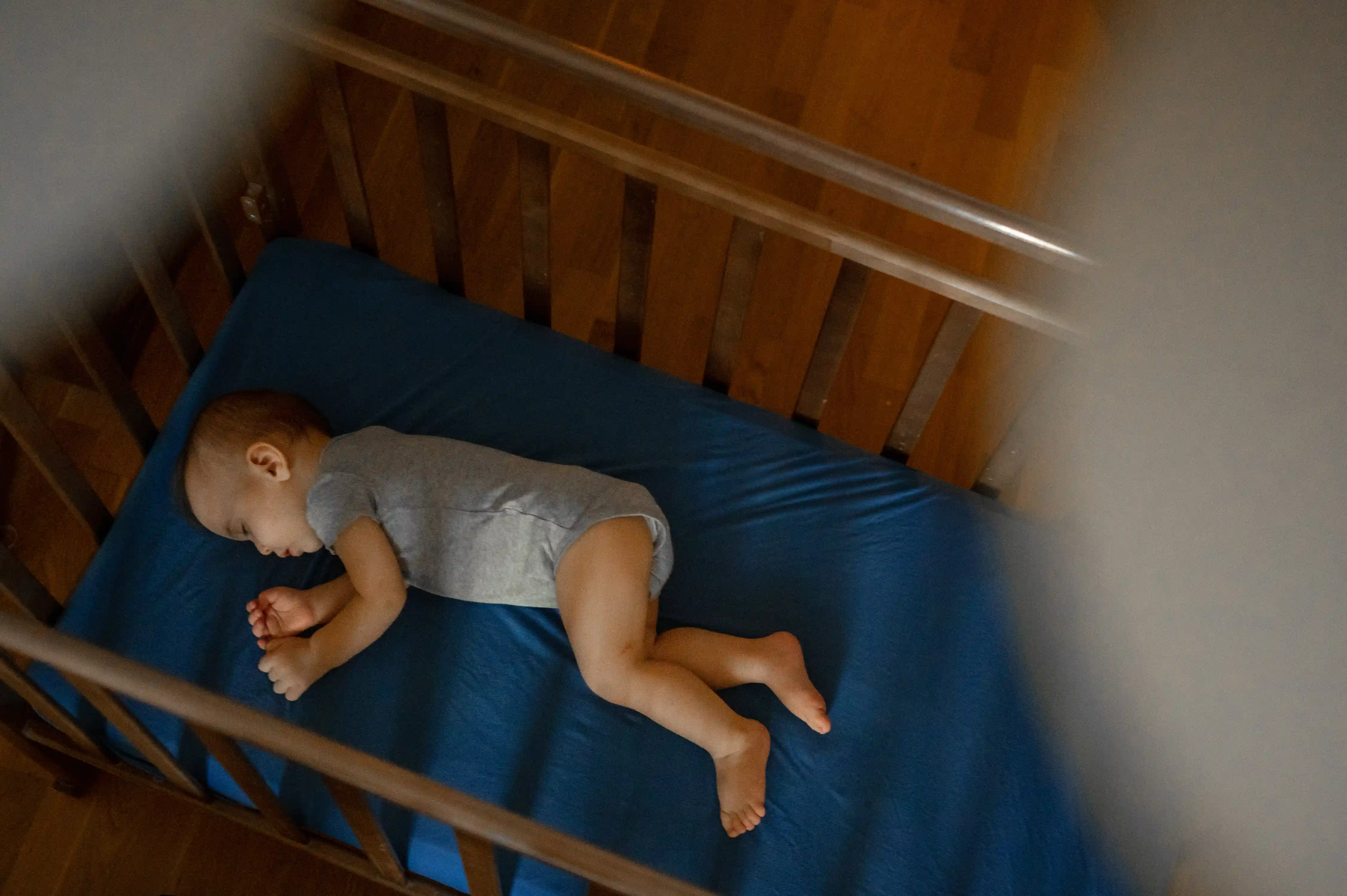
Many babies resist the crib because the conditions there differ from feeding, rocking, movement, or contact with a caregiver. Hunger, developmental waking, sleep timing, separation, a new routine, and physical discomfort can also contribute. This does not mean you have created a bad habit or failed to teach your baby to sleep.
The response depends on the pattern and the baby's age. A newborn who wakes to feed needs a different response from an older infant who is well, growing, and upset mainly during a crib transfer. What should not change is the safe sleep surface: place babies on their backs for every sleep on a firm, flat, noninclined surface made for infant sleep 12.
Check immediate needs before treating it as a crib problem
If the resistance is sudden or your baby seems different from usual, check health and comfort before working on a routine.
- Feeding: Look for the baby's own hunger cues and follow the feeding plan given for their age, growth, and health. Newborns feed frequently, and some need to be awakened until feeding and weight gain are well established. Premature babies and babies with jaundice, low birth weight, illness, or slow gain may have an individualized schedule 3.
- Diaper and clothing: Change a soiled diaper and check for clothing, fasteners, hair, or skin irritation that could be uncomfortable.
- Temperature: Feel the baby's chest or back for sweating or unusual heat rather than relying on cold hands or feet. Use light, well-fitting sleepwear and adjust layers to the room 1.
- Breathing and illness: Notice congestion, cough, fever, labored breathing, a change in color, unusual sleepiness, or a cry that sounds different.
- Pain or feeding discomfort: Repeated distress during or after feeds, forceful vomiting, poor intake, fewer wet diapers, or poor weight gain deserves clinical advice.
Do not start night-weaning because a baby resists the crib. A pediatric clinician can help determine when overnight feeding is no longer medically needed for a particular baby 3.
Identify the pattern
A short note over a few naps and nights can be more useful than applying a generic schedule. Record only what helps answer these questions:
- Does the baby resist all sleep, or sleep well in contact and wake during the transfer?
- Do they wake as soon as their position changes, or after sleeping in the crib for a while?
- Is the same thing happening for every caregiver and at both naps and bedtime?
- Were there clear hunger cues, a shorter or poorer feed, fewer wet diapers, congestion, vomiting, or pain?
- Did the crib attempt begin before the baby seemed sleepy, after a much longer awake period than usual, or at a very different time from recent days?
- Did anything change, such as travel, illness, a move, a caregiver change, a new room, or a developmental skill?
Infant sleep changes quickly and varies widely. A systematic review found that night waking generally decreases and the longest nighttime sleep period grows during the first six months, but reference values differed substantially among studies 4. That variability is why a wake-window chart or named “sleep regression” should not be treated as a diagnosis or a deadline.
A low-pressure way to practice crib sleep
1. Use a short, repeatable lead-in
Choose a few steps you can repeat in the same order, such as feeding if it is due, changing the diaper, lowering light and activity, putting on sleepwear, and singing one song. The routine does not need to last a set number of minutes or happen perfectly.
Keep feeds calm, but do not cut a feed short simply to separate feeding from sleep. For a newborn, falling asleep during feeding or while being held is common. The safety step is transferring the sleeping baby to their own safe surface before the caregiver sleeps.
2. Match the attempt to the baby in front of you
Use the baby's recent pattern and behavior rather than a rigid wake window. If the baby is alert and content, they may not be ready. If crib attempts consistently become harder after a long awake stretch, try beginning the routine a little earlier next time. Change one thing at a time.
3. Place the baby in the safe sleep space
Always start sleep on the back. Use a crib, bassinet, portable crib, or play yard that meets U.S. Consumer Product Safety Commission standards, with its firm, flat mattress and fitted sheet. Keep the surface level and empty 12.
For an older infant, placing them down calm and awake can be one experiment. “Drowsy but awake” is not a safety rule, a developmental milestone, or a test of good parenting. Some babies settle that way and others need more contact before transfer.
4. Respond without a universal timer
If an older infant is calm or making mild settling sounds, a caregiver may pause briefly to see what happens. If the baby is hungry, distressed, escalating, or too young for that approach, respond. You can use touch, voice, picking up, feeding when due, or another response that fits the baby's age and your family plan.
This article does not prescribe extinction, timed checks, or a crying interval. Families who want a formal behavioral approach can discuss readiness, feeding, growth, health, and method options with their pediatric clinician. Responsive care is not a failure.
5. Repeat without promising a deadline
A consistent sequence can make the crib more predictable, but there is no guaranteed one-week transition. Development, illness, feeding changes, travel, and temperament affect the pace. If an attempt is going badly, meet the baby's needs and try again later rather than making the crib a prolonged struggle.
Newborns and older infants need different expectations
Newborn sleep is spread across day and night, and waking for feeding and contact is expected. Sleep cycles do not become more regular until around four months, and there is wide normal variation 54. The early goal is safe sleep and adequate feeding, not independent settling.
As sleep becomes more organized, a repeatable routine and occasional calm-awake crib practice may become more workable. Later in infancy, separation awareness, mobility, teething, illness, and changes in nap timing can temporarily alter settling. None proves that a baby needs a specific training method.
Contact naps, transfers, and sleep during travel
A contact nap is only a contact nap while the adult is fully awake and continuously supervising. Keep the baby's face visible and airway clear. If the adult may fall asleep, transfer the baby to their own safe sleep surface.
Do not use a couch, recliner, armchair, or adult bed as the crib alternative. If you accidentally fall asleep while feeding in an adult bed, return the baby to their crib, bassinet, or play yard as soon as you wake. Never plan a feed or settling session on a couch or recliner when you might doze 1.
Car seats protect babies during travel when correctly installed and used. They are not routine sleep spaces outside the vehicle. If a baby falls asleep in a car seat, stroller, swing, infant carrier, or sling, move them to a firm, flat infant sleep surface on their back as soon as it is safe and practical. In a carrier or sling, keep the head above the fabric, the face visible, and the nose and mouth unobstructed until transfer 1.
Keep the crib safe even if the baby dislikes it
Safe sleep recommendations apply to naps and nighttime sleep through the first birthday:
- Put the baby down on their back for every sleep.
- Use a firm, flat, noninclined mattress in a safety-standard crib, bassinet, portable crib, or play yard, covered only by a fitted sheet.
- Keep out pillows, loose sheets and blankets, quilts, toys, bumpers, nests, pods, loungers, wedges, positioners, and sleep surfaces that are inclined or not made and regulated for infant sleep.
- Do not use weighted blankets, weighted swaddles, weighted sleep sacks, or any other weighted sleep product.
- If swaddling, always place the baby on their back, make sure the hips can move, and stop as soon as the baby shows signs of trying to roll. Never use a weighted swaddle.
- Avoid overheating and head covering. There is no universal room-temperature number. In general, use no more than one additional clothing layer compared with what an adult finds comfortable in the same room 1.
- A pacifier at naps and bedtime is optional. If breastfeeding, wait until feeding is well established. Do not force it, attach it to clothing or bedding, or replace it after the baby falls asleep 1.
- A video, movement, heart-rate, or oxygen monitor does not make an unsafe surface safe or replace these steps. Home monitors have not been shown to prevent sudden infant death syndrome 1.
Room sharing with a separate infant sleep surface near the caregiver's bed can make feeding and responding easier. The AAP recommends this arrangement for at least the first six months because that is the period of highest sleep-related death risk 1.
Reflux does not make inclined or stomach sleep safer
Babies with reflux should still start every sleep on their backs on a flat surface. Back sleeping has not been shown to increase serious choking in healthy infants, including those with reflux. Raising one end of the crib, using a wedge or positioner, or placing a baby prone can create sliding, entrapment, and airway risks 6.
Ask the pediatrician about repeated painful feeds, forceful vomiting, blood, green vomit, feeding refusal, breathing trouble, or poor growth. These are not problems to solve by changing the sleep angle.
Avoid feeding and sleep-aid shortcuts
Do not add cereal to a bottle to make a baby sleep longer. It does not help babies sleep through the night and can add feeding risks unless a clinician has recommended a specific thickening plan for a medical reason 7.
Do not give an infant melatonin, antihistamines, herbal products, essential oils, or another medicine or supplement to induce sleep unless the baby's own clinician has directed its use for a diagnosed reason. In particular, the U.S. Food and Drug Administration warns that cough and cold products containing an antihistamine or decongestant can cause serious and potentially life-threatening effects in children younger than two 8.
If exhaustion or crying is becoming too much
Put the baby on their back in the empty crib, bassinet, portable crib, or play yard and step away to calm down. Ask another safe adult to take over if possible. The Centers for Disease Control and Prevention advises that it is okay to place a crying baby in a safe place and walk away briefly when frustration is rising. Never shake, throw, or hit a baby 9.
If you are afraid you may hurt the baby or yourself, place the baby safely down, move away, contact a trusted adult, and call local emergency services or an urgent crisis service.
When to call a clinician or get urgent help
Contact the baby's pediatric clinician promptly for a new sleep change with poor feeding, fewer wet diapers, repeated vomiting, worsening pain, unusual irritability or lethargy, or concern about growth. A baby aged three months or younger with a rectal temperature of 100.4°F (38°C) or higher needs immediate medical evaluation, even if there are no other symptoms 10.
Call local emergency services or go to emergency care for:
- difficult or labored breathing, pauses with distress, or ribs pulling in;
- blue, purple, or gray lips, tongue, face, or skin;
- a baby who is unresponsive, unusually floppy, or very difficult to wake;
- seizure-like stiffening or repeated rhythmic jerking with reduced responsiveness;
- a serious fall, head injury, or other significant injury;
- signs of severe dehydration, such as very little urine with marked lethargy or inability to feed;
- repeated vomiting that prevents feeding, blood in vomit, or green vomit;
- severe or rapidly worsening pain, swelling, or illness behavior.
These signs need medical assessment, not a different settling method 111213.
The bottom line
Crib resistance is often a mismatch between what helps a baby settle and what a safe crib feels like, sometimes combined with feeding, timing, development, or discomfort. Identify the pattern, meet immediate needs, use a brief repeatable routine, and practice the crib without a rigid timer or promised deadline.
The baby's response can guide how much help you give. It should not change the safe sleep surface.