


How we reviewed it
One tester used eXciteOSA for three months and kept a daily-use journal alongside SnoreLab tracking. The record supports this tester’s comfort, usability, and snoring experience, but it is not a controlled AHI study and cannot predict another patient’s medical outcome.
eXciteOSA is a daytime therapy device designed to reduce snoring and improve mild obstructive sleep apnea by using neuromuscular electrical stimulation (NMES) to train the tongue while you are awake. Instead of wearing equipment at night, you complete a short daily session during the day. Over time, the goal is that improved tongue muscle function helps keep the airway more open during sleep, which can reduce snoring and support easier breathing.
Our tester used eXciteOSA for three months and tracked snore scores and sleep health trends alongside a running journal. Below is what it was like to use, what changed over time, and who we think the device is best for.
Design and setup
What’s in the box

The package includes the essentials to start therapy right away:
-
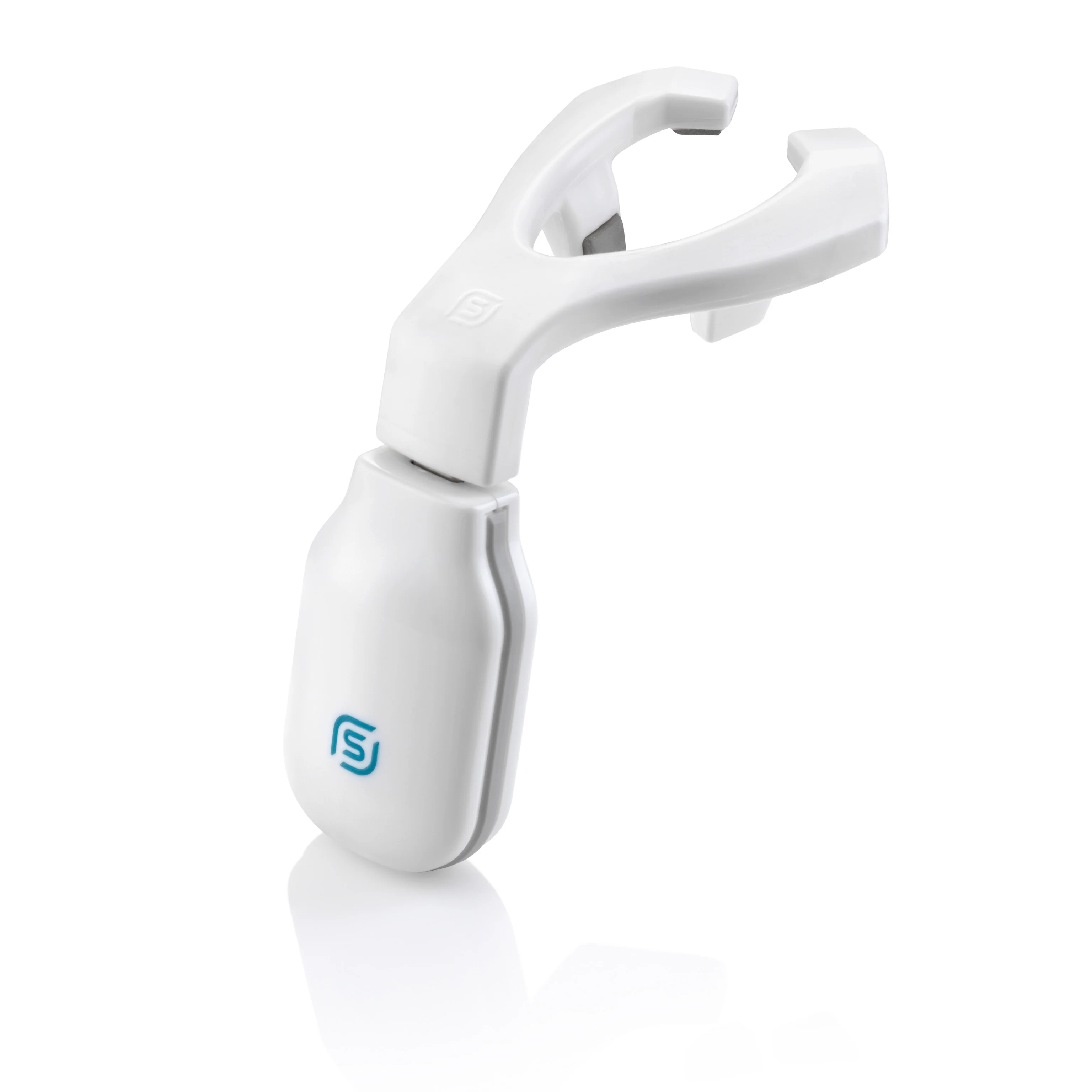
eXciteOSA device (controller): The main unit that powers and controls stimulation.
-
Mouthpiece: The intraoral component that delivers stimulation to the tongue. The manufacturer recommends replacing it after three months from first use.
-
Connection cable (device-to-mouthpiece): This lets you connect the controller to the mouthpiece using a cable rather than attaching the mouthpiece directly. We found this genuinely helpful because it kept saliva away from the main device during sessions, which made the routine feel cleaner and less fussy.
-
Charging cable: Used to recharge the controller.
Who it suits
Consider it if
eXciteOSA may be a strong match if you:
-
Snore consistently and want an option that does not require wearing a mask or oral appliance during sleep.
-
Prefer daytime therapy and can commit to a short, consistent daily routine.
-
Have mild obstructive sleep apnea and are exploring options with guidance from a sleep professional.
Keep looking if
You may want to consider other options if you:
-
Have moderate or severe obstructive sleep apnea, or suspect you do. eXciteOSA is not intended for AHI 15 or higher. 1
-
Want a one-time purchase with minimal ongoing expenses.
The daytime routine
How eXciteOSA works
During each session, eXciteOSA delivers neuromuscular stimulation to the tongue through an intraoral mouthpiece. The stimulation is meant to activate and train tongue muscles. In theory, better tongue tone reduces the chance of the tongue relaxing backward during sleep and contributing to airway narrowing and vibration, which can influence snoring and breathing quality.
The manufacturer’s protocol is 20 minutes once daily, and improvements are expected to build gradually over several weeks.
Setup and comfort
The first sessions felt intense
In the beginning, the electrical stimulation could be uncomfortable at higher intensity levels. Our tester described the sensation as strong enough that it took some experimentation to find a tolerable level.
Over the following weeks, that changed in a noticeable way. Our tester could use higher intensity levels more comfortably, and settings that initially felt intense became barely noticeable over time. For us, this was one of the clearest signs that the experience becomes easier with consistency.
Salivation was the biggest early hurdle
The other major early adjustment was salivating. During the first stretch of use, our tester needed a napkin on hand and sometimes paused to dry the mouthpiece and keep the session comfortable.
By around the two-month mark, the salivation issue eased substantially. Sessions could be completed without tissues and without frequent pauses. That improvement made the overall routine feel far more manageable.
Our Results After 3 Months
We tracked snore scores throughout the testing period. Here is the broad pattern from our testing journal.2

Pre-therapy starting point
- Starting snore score: 63
This served as our initial reference point for comparison.
Mid-therapy update: a spike during illness
In November and December, we saw a rise in snore scores:
- Snore score rose to: 97 and 111
This period included about two weeks when our reviewer had the flu, which likely affected breathing comfort and snoring due to congestion and irritation. We think it is important context for interpreting the temporary spike.
Final results: noticeable improvement
After that period, the snore score dropped significantly:
- Snore score later dipped to: 40
Compared to the starting point of 63, ending at 40 reflects a 23-point reduction, or about a 37% improvement. We also saw the improvement line up with our tester’s notes describing easier breathing during sleep and fewer disruptive snoring nights.
What we liked
Daytime therapy model
For people who dislike nighttime equipment, the simple fact that you use eXciteOSA while awake is a real advantage. It can feel easier to build into a routine than something you must wear during sleep.
The experience improved as we stuck with it
Intensity tolerance improved steadily, and the early salivation issue faded with time. By later weeks, sessions felt more predictable and less disruptive.
Measurable snoring improvement by the end of the trial
Even with an illness-related spike mid-way through, the later score drop to 40 was the most important marker for us, and it matched the subjective reports of better breathing comfort during sleep.
Helpful cable design
We appreciated having a connection cable that allowed the mouthpiece to be used without saliva directly contacting the main controller. In day-to-day use, that detail made sessions feel cleaner and helped reduce the need to constantly wipe down the device.
Ownership and tradeoffs
Mouthpiece replacement can raise total cost over time
The mouthpiece is recommended to be replaced after three months from first use.
In our experience, the mouthpiece still looked and functioned like new with careful maintenance, but the replacement schedule still applies. Over the long term, that could significantly increase the total cost of ownership, which may be a drawback for some shoppers.
App timing can feel strict
The app limited sessions to once per day, which became inconvenient if a session happened after midnight and you wanted to use the device again later the next day. It is not a deal-breaker, but it is a real-world friction point that can affect routine consistency.
Final verdict
In our three-month test, eXciteOSA delivered the main outcome we were hoping for. Snoring improved by the end of the trial, and our tester reported easier breathing during sleep. The learning curve was real at first, especially with sensation strength and salivation, but those issues improved with time and did not remain the defining part of the experience.
For adults with snoring or mild obstructive sleep apnea who want a daytime routine and can commit to consistent sessions, eXciteOSA may be worth considering. It is less compelling for anyone who needs maximum flexibility or is sensitive to ongoing replacement costs.