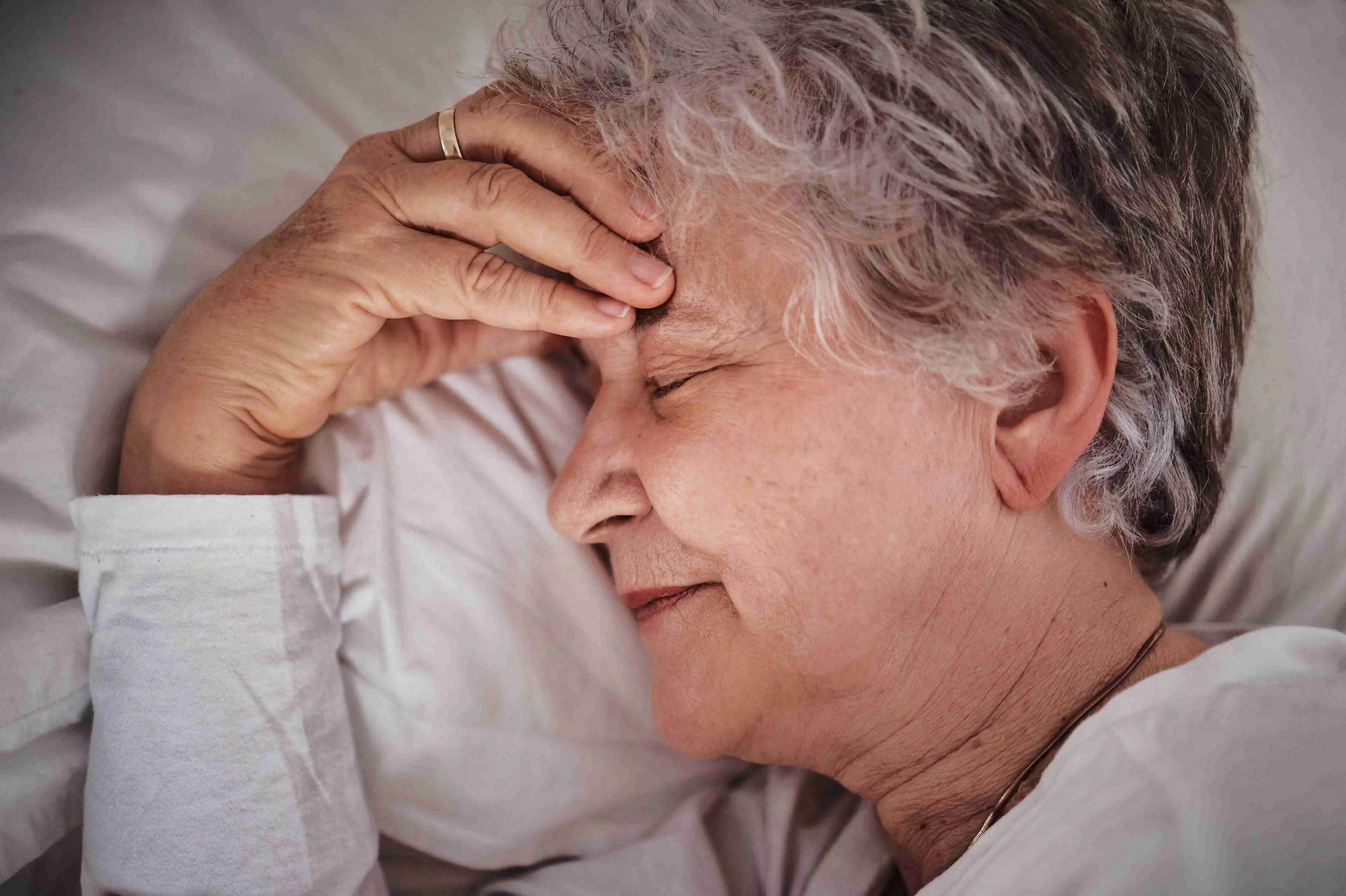


Sleep often changes with age, but poor sleep is not an unavoidable part of getting older. Many adults begin to feel sleepy and wake earlier. Sleep may also become lighter and easier to interrupt. Even so, regularly lying awake for hours, gasping during sleep, acting out dreams, or struggling to stay awake during the day calls for attention.
Older adults still need substantial sleep. The National Institute on Aging advises about seven to nine hours a night, roughly the same range as for other adults 1. Individual needs vary, and a nap may contribute to total sleep, but aging does not usually reduce sleep need to only a few hours.
What commonly changes with age?
There is no single “older adult” sleep pattern. Health, activity, medications, light exposure, caregiving, work, and living arrangements can matter as much as age. Still, several trends are common.
Sleep timing may move earlier
Many older adults become sleepy earlier in the evening and wake earlier in the morning. This reflects changes in circadian timing, the internal system that helps place sleep and wakefulness within the 24-hour day. An earlier schedule is not a disorder if it fits the person's life and allows enough sleep.
An extreme, persistent, and unwanted shift is different. If early evening sleepiness is hard to resist and waking happens much earlier than desired, a clinician may consider advanced sleep-wake phase disorder rather than normal preference.
Sleep may become lighter and less continuous
Objective sleep research shows that, across adulthood, deep slow-wave sleep tends to decrease and wakefulness after sleep onset tends to increase. Sleep efficiency, the proportion of time in bed actually spent asleep, also tends to decline 2.
This does not mean every awakening is a problem. Brief awakenings can occur at any age, and people may remember them more when sleep is lighter. The concern is repeated or prolonged waking that reduces total sleep, causes distress, or affects daytime function.
Sleep need does not disappear
Some people sleep a little less at night and nap more during the day. Others continue to sleep in one long nighttime period. A useful target is not a perfect number on a tracker. It is enough sleep to support alertness and function without regularly needing to fight sleep.
Needing much more or much less sleep than before can be clinically useful information. A major change may reflect illness, depression, medication effects, sleep apnea, or another sleep disorder rather than aging itself.
Why sleep problems become more common
Aging changes sleep biology, but it also increases exposure to conditions that can disrupt sleep.
Health conditions and pain
Arthritis, back pain, reflux, breathing problems, heart disease, neurologic conditions, and symptoms related to menopause can all interrupt sleep. Pain may make it difficult to fall asleep or return to sleep after waking. Treating the condition and adjusting nighttime symptom control may help more than adding a sleep aid 1.
Nocturia
Nocturia means waking from sleep to urinate. It can be related to late fluid intake, caffeine, alcohol, certain medicines, urinary tract problems, kidney or heart disease, prostate enlargement, or obstructive sleep apnea 3.
Repeated trips deserve assessment, especially when they are new, accompanied by pain or swelling, or creating a fall risk. Do not sharply restrict fluids without advice, particularly if dehydration or low blood pressure is a concern.
Medications and supplements
A medicine may increase alertness, cause daytime sedation, worsen leg symptoms, affect breathing, or increase nighttime urination. Taking several medicines also raises the chance of interactions.
Bring every prescription, over-the-counter product, and supplement to a clinician or pharmacist for review. Include products marketed for nighttime pain, allergies, or sleep. The American Geriatrics Society identifies benzodiazepines, “Z-drug” sleep medicines, and strongly anticholinergic first-generation antihistamines as potentially inappropriate for many older adults because harms can include confusion, falls, fractures, and other adverse effects 4. That does not mean stopping a prescribed medicine suddenly. Ask the prescriber how to reduce or stop it safely 5.
Mood, stress, and changing routines
Depression, anxiety, grief, loneliness, retirement, caregiving, and less daily structure can change both sleep and time in bed. Depression may appear as early waking, loss of interest, low energy, or sleeping much more than usual. Mood symptoms deserve care in their own right, not just another bedtime strategy.
Less daylight and physical activity
Less time outdoors and lower daytime activity can weaken the signals that separate day from night. Illness, limited mobility, unsafe neighborhoods, or institutional routines can all contribute. A 2025 meta-analysis of 50 randomized trials found that exercise programs improved self-reported sleep quality and produced small average gains in objectively measured sleep time and efficiency in older adults, although effects varied and daytime sleepiness did not clearly improve 6.
Sleep problems that should not be dismissed
Chronic insomnia
Insomnia is more than an occasional bad night. It involves difficulty falling asleep, staying asleep, or waking too early despite adequate opportunity for sleep, along with daytime distress or impairment. A chronic pattern typically occurs at least three nights a week for at least three months.
Cognitive behavioral therapy for insomnia (CBT-I) is the recommended first-line treatment for chronic insomnia in adults. It combines several methods that retrain the relationship between bed, wakefulness, and sleep. The American Academy of Sleep Medicine gives multicomponent CBT-I a strong recommendation and advises against using sleep-hygiene education by itself as treatment 7.
Obstructive sleep apnea
Warning signs include loud habitual snoring, witnessed pauses in breathing, choking or gasping, morning headache or dry mouth, and excessive daytime sleepiness. Insomnia and repeated nighttime urination can also occur. Not everyone who snores has sleep apnea, and some people with sleep apnea do not report classic snoring 8.
Suspected sleep apnea warrants evaluation. Diagnosis usually requires a home or laboratory sleep study.
Restless legs and sleep-related movements
Restless legs syndrome causes an urge to move the legs, often with crawling, aching, or pulling sensations. Symptoms begin or worsen during rest, improve temporarily with movement, and are usually worse in the evening or at night 9.
Repeated leg jerks during sleep may be noticed by a bed partner. They are not the same as restless legs symptoms while awake, and movements alone do not prove a disorder. Evaluation can identify medication effects, iron deficiency, kidney disease, or another contributor.
Punching, kicking, shouting, or falling from bed while acting out dreams is also not normal aging. Dream enactment can cause injury. Make the area safer immediately and discuss the episodes with a clinician 1.
Excessive daytime sleepiness
Fatigue and sleepiness are not identical. Fatigue is low energy; sleepiness is difficulty staying awake. Dozing during conversation, meals, driving, or other active situations is a warning sign. Possible causes include insufficient sleep, sleep apnea, sedating medicines, depression, and neurologic or medical illness.
A new pattern of sleeping far longer than usual also deserves review. More sleep is not necessarily the cause of poor health. It can be a marker of an underlying condition.
What sleep duration can and cannot tell you about health
Studies often find that very short and very long self-reported sleep are associated with poorer cognition in older adults 10. Other reviews find associations between sleep duration and cardiovascular disease 11.
These findings do not mean that one unusual night causes dementia, diabetes, or heart disease. Much of the evidence is observational. Pain, depression, sleep apnea, frailty, medication use, and existing disease can affect both sleep and health outcomes. Long sleep, in particular, may be a sign of illness rather than its cause.
The practical goal is to protect adequate, regular sleep and investigate meaningful changes, not to force one exact duration in hopes of preventing a specific disease.
Practical steps that are worth trying
Keep a stable wake time and enough time for sleep
Choose a wake time that fits daily responsibilities and keep it reasonably consistent. Work backward to allow a realistic sleep opportunity. Going to bed much earlier than sleepiness arrives can create more time awake in bed, while staying up late despite strong sleepiness can cut total sleep if the body still wakes early.
Use daylight and activity to strengthen daytime
Get outdoor light during the day when it is safe to do so. Stay physically active at a level that fits mobility and medical guidance. Walking, resistance exercise, balance work, chair-based exercise, and supervised programs can all count. Social and mentally engaging daytime activities may also reduce unplanned dozing.
Adjust naps based on their effect
Naps are not automatically harmful. A planned nap may restore alertness, especially after a short night. If falling asleep at night becomes difficult, try moving naps earlier, shortening them, or avoiding unplanned evening dozing. Track what changes rather than assuming one nap rule fits everyone.
Reduce avoidable sleep disruptors
- Keep the bedroom dark, quiet, and comfortably cool.
- Use supportive pillows or other clinician-recommended positioning for pain.
- If caffeine affects sleep, move it earlier or reduce the amount.
- Avoid using alcohol as a sleep aid. It can fragment sleep and worsen breathing problems.
- Discuss evening fluid and diuretic timing with a clinician rather than risking dehydration.
- Use a clear, safe path and low-level lighting for nighttime bathroom trips to reduce falls.
Keep a simple sleep diary
For one to two weeks, record bedtime, estimated sleep time, awakenings, final wake time, naps, caffeine, alcohol, exercise, and medication timing. Include how sleepy or alert you felt during the day. A diary helps a clinician distinguish insomnia, insufficient sleep, circadian timing, and possible medication effects. Consumer trackers can add context, but their sleep-stage estimates are not diagnostic.
Get targeted treatment
Healthy habits support sleep, but they do not replace treatment for sleep apnea, chronic insomnia, depression, pain, nocturia, or restless legs syndrome. If insomnia persists, ask specifically about CBT-I. If a medicine may be contributing, ask for a medication review instead of changing doses alone.
When to seek an evaluation
Arrange a medical visit when:
- sleep trouble happens repeatedly for several weeks or affects mood, memory, balance, or daily function
- loud snoring, breathing pauses, choking, or gasping occurs during sleep
- sleepiness makes driving, cooking, walking, or medication management unsafe
- leg discomfort creates an evening urge to move, or repeated kicking disrupts sleep
- dream enactment includes shouting, punching, kicking, or falling from bed
- nighttime urination is frequent, new, painful, or associated with swelling or excessive thirst
- sleep duration or timing changes substantially without a clear reason
- depression, anxiety, confusion, or cognitive changes accompany the sleep problem
Seek urgent help for chest pain, severe trouble breathing, sudden confusion, a fall with injury, or thoughts of self-harm. Do not drive when you are struggling to stay awake.
The bottom line
Earlier timing, less deep sleep, and more brief awakenings can accompany healthy aging. Severe or persistent sleep disruption, however, is not something an older adult simply has to accept. Most still need about seven to nine hours of sleep, and daytime function matters as much as the clock.
Start with a two-week sleep diary, a medication review, and practical adjustments to light, activity, naps, and the sleep environment. Bring warning signs such as gasping, restless-leg symptoms, dream enactment, or excessive sleepiness to a clinician. Treating the actual cause is more useful than labeling every sleep problem “normal aging.”