

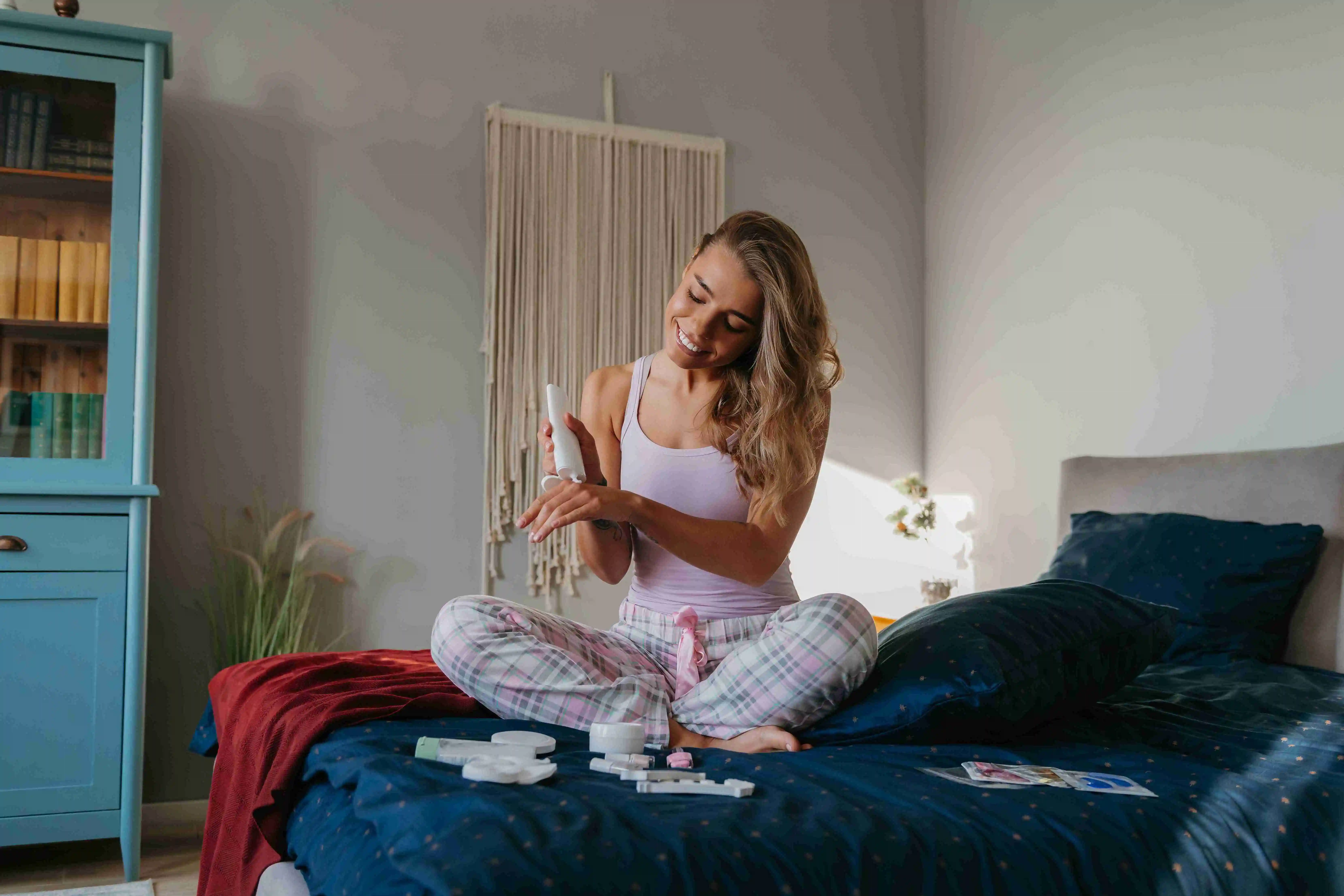
A useful bedtime routine is a short sequence you can repeat on most nights. Start with the time you need to wake, protect enough opportunity for sleep, and choose a few low-effort actions that move you from daytime demands toward bed. Lower the light and stimulation as sleep approaches, but go to bed when you are sleepy rather than forcing an exact minute.
The routine does not have to include a bath, book, journal, meditation, stretch, tea, scent, or supplement. Those are options, not requirements. The best sequence is one that fits your health, household, culture, work, and caregiving responsibilities well enough to be repeated.
Build the schedule before the ritual
A routine cannot replace time reserved for sleep. Begin with the wake time your work, school, medication schedule, or caregiving duties actually require. Then count back far enough to allow for your sleep need and the time you usually spend settling down.
The American Academy of Sleep Medicine and Sleep Research Society recommend that adults sleep at least seven hours per night on a regular basis to support health. Individual need still varies, and illness, pregnancy, recovery from sleep loss, and other circumstances can change it 1.
Treat the result as a target window, not an appointment you can fail. A steady wake time often gives the day a more reliable anchor, while bedtime can respond to genuine sleepiness. If the proposed bedtime arrives but you feel alert, simply lying in bed longer does not create more sleep.
This calculation is different for shift workers. Anchor the routine to the main sleep period, not to a conventional clock time. Light exposure after a night shift can also have a different effect from morning light after a daytime schedule, so people trying to shift their body clock may benefit from individualized guidance rather than copying a daytime worker's routine.
Choose a sequence that is easy to repeat
A practical starting routine has a beginning cue, a short transition, and a clear end point. For example:
- Finish the last necessary task and switch the main room to softer light.
- Complete essential care, such as washing, dental care, changing clothes, or preparing a medical device.
- Do one quiet activity you already like.
- Get into bed when you feel sleepy.
The activity can be reading, listening to something familiar, talking quietly with a partner, doing a simple craft, praying, or another low-stimulation choice. It does not need to be traditionally "relaxing." If a breathing exercise makes you monitor sleep more closely, or a book keeps you awake for another chapter, it is not serving the routine.
Put essentials before extras. Charging a medical device, setting out medication, locking the door, preparing a child's supplies, or arranging morning transport may reduce more bedtime friction than adding another wellness activity. The relaxation and wind-down guide covers optional relaxation methods. This guide is about making the sequence workable.
Create a minimum version for difficult nights. It might be only essential care, dimmer light, and one familiar cue before bed. A minimum routine helps after a late shift, social event, caregiving interruption, or pain flare without turning one unusual night into a reason to abandon the routine.
Use light as context, not as a cure
Light is one of the signals that helps time the circadian system. A systematic review of studies in community-dwelling adults found that brighter morning light was generally associated with earlier sleep timing, while brighter evening light was generally associated with later timing. The studies varied substantially, so they do not define one ideal dose or schedule for everyone 2.
For someone who sleeps at night and wakes in the morning, this suggests a simple contrast: seek ordinary daylight after waking when practical, then make indoor light less bright as bedtime approaches. You do not need total darkness during the routine. Keep enough light to move safely, read comfortably, administer medication, and care for children or pets.
Morning light is context for the next evening, not a quick fix after a poor night. If your desired sleep period is unusually early, unusually late, or rotates with work, the timing of bright light matters. A clinician experienced in circadian sleep disorders can help when sleep timing is persistently misaligned with required hours.
Screens are more than blue light
Evening screens can affect sleep through several routes. The screen emits light, the activity can continue past the intended bedtime, messages and news can raise alertness, and notifications can interrupt sleep. In a small controlled crossover study, prolonged evening reading on a light-emitting e-reader delayed circadian timing and sleep onset compared with reading a printed book. That result demonstrates a possible light effect under specific laboratory conditions, not a universal rule for every device or brief use 3.
A large cross-sectional study of adults also found that routine screen use before bed was associated with later bedtimes, slightly shorter sleep, and more reports of poor sleep quality. Because the study was observational, it cannot show that screens alone caused those differences 4.
Instead of assuming every screen must disappear at a fixed hour, identify what the device is doing:
- If it delays bedtime, set an end cue, use an app limit, or move the charger out of reach.
- If brightness feels alerting, lower the display and room light or switch to audio.
- If the content winds you up, choose something familiar or stop interactive work earlier.
- If alerts wake you, use do-not-disturb settings while keeping emergency contacts available.
- If the device is needed for accessibility, work, caregiving, or health monitoring, reduce the disruptive feature rather than removing the tool.
Blue-light filters may change the display, but they do not stop an engaging activity from consuming the sleep window. The screen and blue-light guide examines the evidence in more detail.
Fit food, substances, exercise, and medication around sleep
These factors do not all need a place in the routine. Adjust the ones that plausibly affect your sleep or make the sequence hard to follow.
| Factor | A flexible way to test it |
|---|---|
| Caffeine | If you are not sleepy at the intended time or sleep feels lighter, move the last caffeinated drink earlier or reduce its dose. Caffeine content, metabolism, pregnancy, smoking status, medicines, and individual sensitivity all affect timing. A systematic review found that caffeine reduced subsequent sleep on average, with larger and later doses generally more disruptive, but individual response varied 5. |
| Nicotine | Nicotine is stimulating, while overnight withdrawal can also disturb sleep. Notice whether smoking, vaping, nicotine pouches, or replacement products cluster around sleep problems. A clinician or pharmacist can help adjust cessation treatment without undermining the quit plan. |
| Alcohol | Drowsiness after alcohol is not the same as protected sleep. A systematic review found changes in sleep architecture, including less REM sleep, even at lower studied doses 6. If alcohol is part of the evening, compare nights with different amounts or timing rather than treating it as a sleep aid. |
| Meals and fluids | Aim for physical comfort. A large late meal may worsen fullness or reflux, while going to bed hungry can also keep some people awake. Spread fluids earlier if bathroom trips are a problem, but do not restrict fluids needed for health, heat, exercise, breastfeeding, or medication without clinical advice. |
| Exercise | Evening exercise does not appear to impair sleep for most healthy adults. A meta-analysis found possible disruption when vigorous exercise ended very close to bedtime, but the overall evidence did not support avoiding all evening activity 7. If a late workout leaves you alert, move it earlier or add more transition time. |
| Medication | Some prescription and nonprescription medicines can be stimulating, sedating, or increase urination. Do not change a dose or schedule on your own. Ask a prescriber or pharmacist whether timing is flexible and whether alcohol, caffeine, food, or supplements interact with it. |
Supplements, herbal drinks, and aromatherapy are not necessary parts of a bedtime routine. "Natural" does not guarantee that a product is effective, safe, or compatible with medications, pregnancy, or a medical condition.
Make the routine fit the household
A routine that depends on silence, solitude, and full control of the clock will fail many people. Work with the constraint that actually exists.
Caregiving: Use a routine that can pause. Complete essential self-care early, keep the final cue short, and plan a dim, safe way to handle expected awakenings. Caregiver fatigue can require practical support, not a more elaborate ritual.
Pain or limited mobility: Put comfort measures and prescribed treatment where they work best. Keep water, mobility aids, and safe lighting accessible. If getting out of bed at night is unsafe, do not follow generic advice that increases fall risk.
A partner with a different schedule: Separate light and sound when possible. A reading light, eye mask, headphones designed for safe use, separate blankets, or advance preparation can reduce conflict without requiring identical bedtimes.
Shift work: Repeat the same small sequence before the main sleep period even when it occurs during daylight. Blackout measures and sound control may matter more than a conventional evening ritual. Frequent rotation, severe sleepiness, or difficulty sleeping at the required time may need a shift-work-specific plan.
An unpredictable evening: Protect the wake plan where possible and use the minimum version of the routine. Resume the usual sequence the next night instead of trying to compensate with a much earlier bedtime when you are not sleepy.
What to do when you are not sleepy
Do not use the routine as a countdown that ends with forced sleep. If you are clearly alert when the usual sequence starts, keep the light low and delay the final step with a quiet activity. Check for a practical reason: a late nap, caffeine, a stimulating task, pain, hunger, worry, an unusually inactive day, or a schedule that placed bedtime too early.
If you are in bed awake and becoming frustrated, leave the bed when it is safe to do so. Do something quiet in dim light, then return when sleepiness increases. There is no need to watch the clock or wait for an exact number of minutes. This resembles stimulus control, one component used in evidence-based insomnia treatment 8.
Adapt that advice if standing or walking raises the risk of a fall, if leaving the room would wake a child, or if another condition limits movement. A safe seated activity or a change in attention may be more appropriate. Never remain in a position where you could fall asleep while cooking, smoking, driving, supervising a child near water, or operating equipment.
Adjust the routine after several nights
Give a new sequence several ordinary nights before judging it, unless it is clearly unsafe or unworkable. One poor night may reflect stress, illness, noise, pain, or chance rather than the routine.
Keep the record small:
- when the routine started and ended
- whether you felt sleepy when you got into bed
- a rough sense of how the night went
- how alert and functional you felt the next day
- the main unusual factor, if there was one
A sleep diary can help when the pattern is hard to see. Consumer tracker scores are optional and should not outrank how the night and next day actually felt.
Then change one part:
- You are rarely sleepy at the endpoint: The routine may start too early, contain an alerting activity, or follow late caffeine, naps, or bright light. Test the most likely factor first.
- The sequence is often skipped: Remove a step or build a shorter minimum version.
- You fall asleep before completing it: Move essential care earlier and shorten the final transition.
- You have too little time for sleep: The problem is the protected sleep window, not the choice of wind-down activity.
- You fall asleep but wake repeatedly: Look beyond the routine. Noise, temperature, pain, reflux, alcohol, medication effects, sleep apnea, restless legs, and other conditions can affect sleep maintenance.
Review another several nights after the change. The goal is a repeatable pattern that supports sleep, not a nightly search for the perfect combination.
A routine is not treatment for chronic insomnia
Bedtime cues and broad sleep hygiene habits can support sleep, but they are not a complete treatment for chronic insomnia. The American Academy of Sleep Medicine recommends multicomponent cognitive behavioral therapy for insomnia, or CBT-I, and specifically advises against using sleep hygiene alone as treatment for chronic insomnia 8.
CBT-I is more than a calming routine. It can include stimulus control, carefully planned changes to time in bed, cognitive strategies, relaxation methods, and sleep education. The plan should account for medical and psychiatric conditions, medicines, shift work, pregnancy, fall risk, and safety. Simply copying a sleep-restriction schedule from the internet can be inappropriate for some people.
Talk with a healthcare professional if difficulty falling asleep, staying asleep, or waking too early persists and affects daytime life despite enough opportunity to sleep. Evaluation is also important for loud snoring or gasping, uncomfortable urges to move the legs, severe pain, marked mood changes, or sleepiness that affects driving or other safety-sensitive work. A routine can remain part of the plan, but the underlying problem deserves its own assessment.