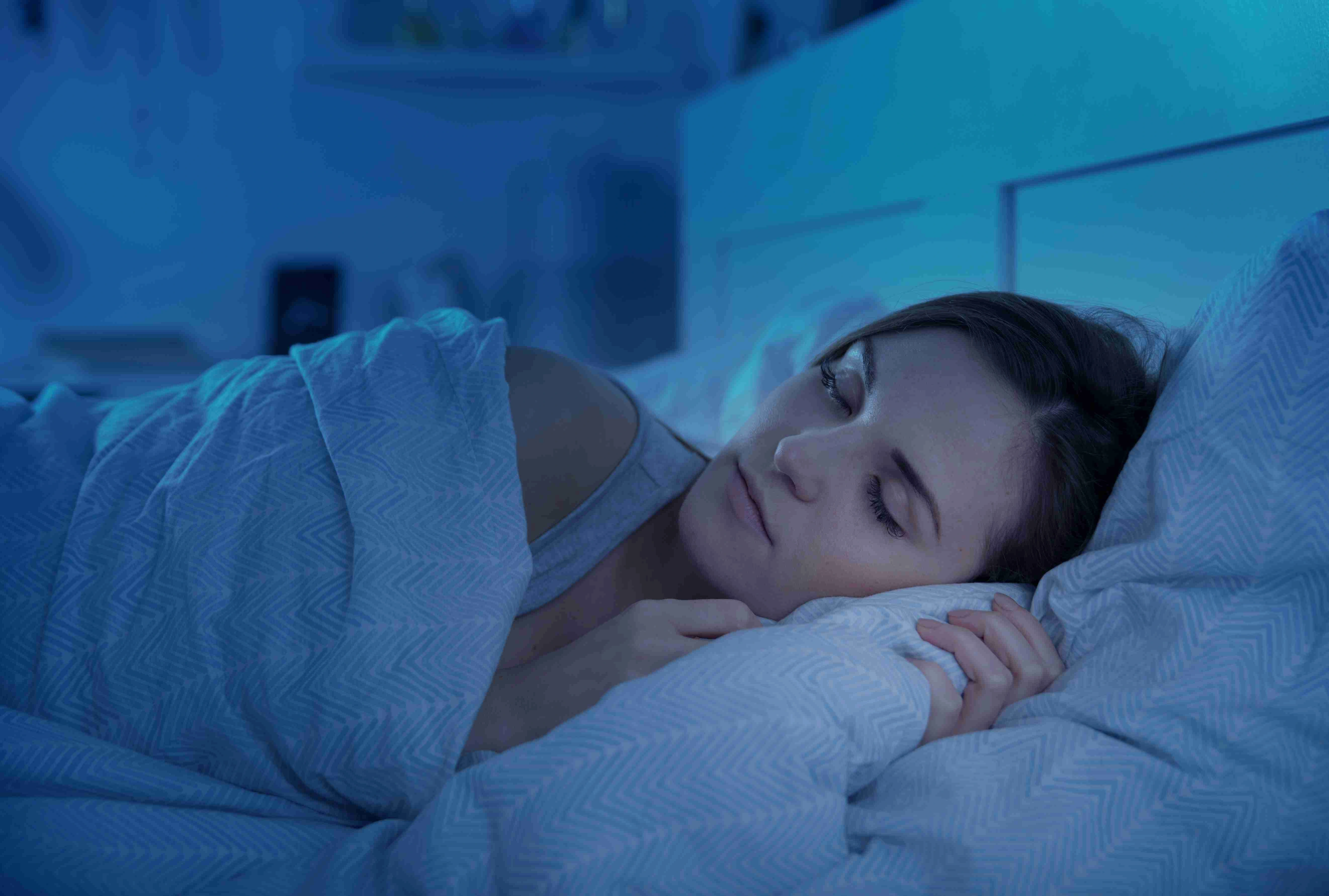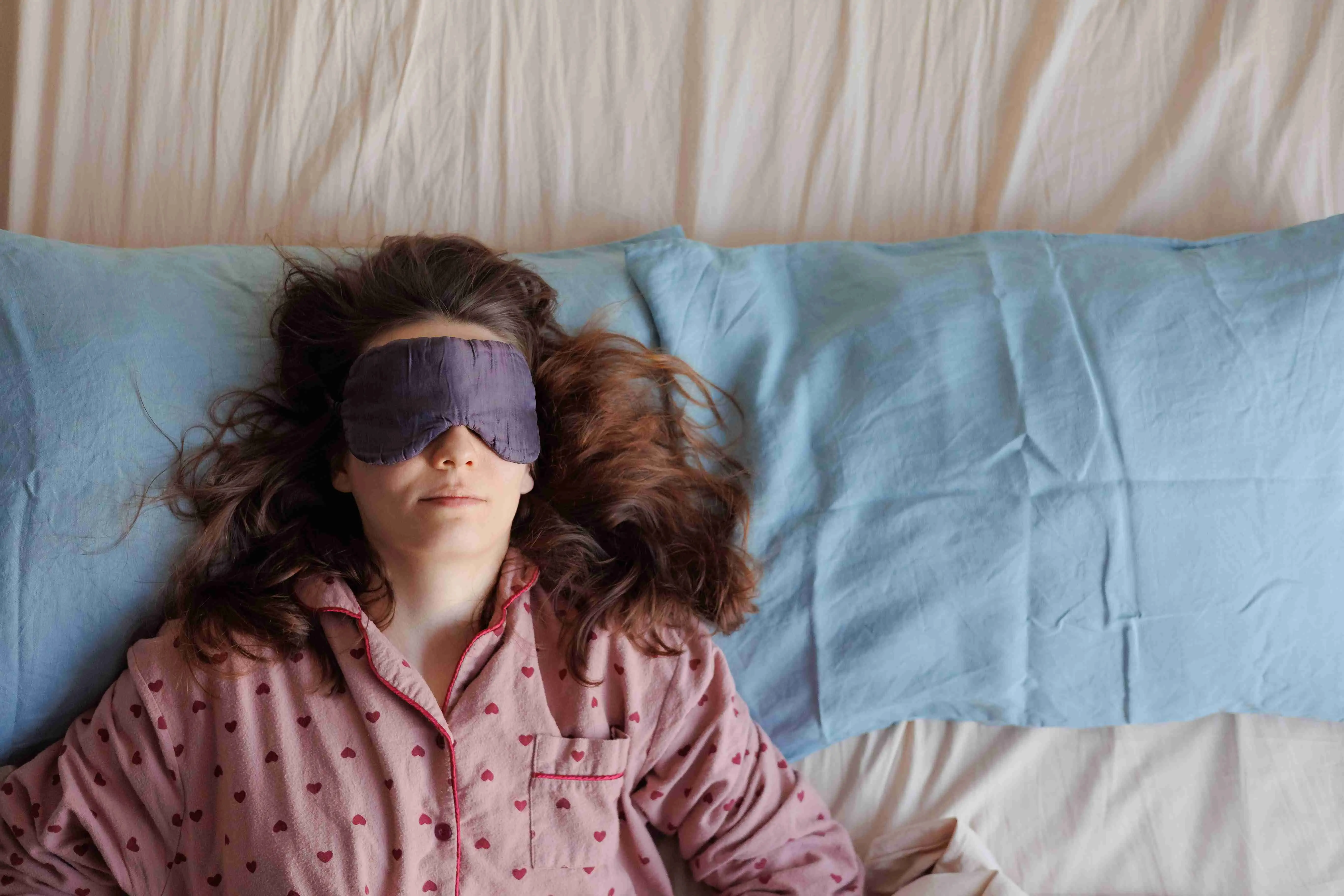

Adequate sleep helps you stay alert, learn, regulate emotions, respond to pain, and perform physical tasks. It also supports immune, metabolic, and cardiovascular regulation. Those benefits come from getting enough sleep regularly, not from treating one long night as a cure for chronic sleep loss.
Sleep health is broader than a nightly hour count. Researchers also consider sleep timing, regularity, continuity, daytime functioning, and whether a sleep disorder is disrupting rest 1. A person can spend eight hours in bed and still have poor sleep health if they repeatedly wake, sleep at a time that conflicts with their body clock, or remain sleepy during the day.
What counts as enough sleep?
Sleep needs change with age. A 2026 review of 133 meta-analyses upheld the National Sleep Foundation's age-based ranges, while also finding gaps in the evidence for some outcomes 2.
| Age | Recommended sleep per 24 hours |
|---|---|
| Birth to 3 months | 14 to 17 hours |
| 4 to 11 months | 12 to 15 hours |
| 1 to 2 years | 11 to 14 hours |
| 3 to 5 years | 10 to 13 hours |
| 6 to 13 years | 9 to 11 hours |
| 14 to 17 years | 8 to 10 hours |
| 18 to 25 years | 7 to 9 hours |
| 26 to 64 years | 7 to 9 hours |
| 65 years and older | 7 to 8 hours |
For babies and young children, the daily total includes naps. These are ranges, not pass-fail cutoffs. Genetics, health, recent sleep loss, medication, activity, and life stage can all affect how much sleep a person needs.
Most adults function best within the seven-to-nine-hour range, but more than nine hours can be appropriate for some young adults, people recovering from sleep loss, and people who are ill 3. How you function matters alongside the number. Waking reasonably refreshed and staying alert through routine daytime activities are useful signs that your sleep opportunity may be meeting your needs.
What the research can and cannot prove
Sleep studies answer different questions:
-
Controlled sleep-restriction experiments can show that cutting sleep causes a near-term change in a measured outcome. Many use small groups of healthy young adults and unusually strict schedules, so the size of the effect may not match everyday life.
-
Observational studies can follow large groups for years and find associations between sleep patterns and disease. They cannot fully separate sleep from health conditions, medication, work schedules, stress, or other influences.
-
Studies of clinical sleep disorders describe the effects of conditions such as obstructive sleep apnea or chronic insomnia. Those findings should not be treated as proof that an occasional short night produces the same outcome.
This distinction matters most for long-term claims. Experiments strongly support some immediate benefits of adequate sleep. Evidence that a particular sleep duration prevents a heart attack, diabetes, depression, or another disease is usually less direct.
Alertness, judgment, and safety
The clearest benefit of adequate sleep is reliable daytime alertness. In a controlled study, healthy adults limited to four or six hours in bed for 14 nights developed accumulating lapses in attention and declines in working memory. Participants' own sleepiness ratings did not keep pace with their objective deterioration, which means people may feel they have adapted when their performance has not 4.
Slower reaction time and brief, unintended episodes of sleep can make driving and safety-sensitive work dangerous. If you are fighting to keep your eyes open, drifting from your lane, or missing parts of a drive, do not rely on willpower to continue. Stop driving and arrange a safer way to travel 5.
Learning and memory
Sleep supports both taking in new information and retaining it. A systematic review of 39 reports found that restricting sleep to 3 to 6.5 hours, compared with 7 to 11 hours, produced a small overall impairment in memory formation 6. The studies varied in when sleep was restricted and which memory tasks they used, so the result does not mean every skill or fact depends on one specific sleep stage.
For a student or worker, the practical point is modest but useful: studying or practicing longer by repeatedly cutting sleep can trade away some of the attention and memory needed to benefit from that extra time.
Mood, emotional response, and pain
Experimental sleep loss consistently changes emotional functioning. A meta-analysis covering more than 50 years of experiments found that total sleep deprivation, partial restriction, and disrupted sleep reduced positive emotion. Sleep loss also increased anxiety symptoms and blunted emotional responses, while results for depressed mood and general negative emotion were less consistent 7.
Adequate sleep can therefore help protect everyday emotional regulation, but it is not a stand-alone treatment for anxiety, depression, bipolar disorder, or trauma. Mental health symptoms can also disturb sleep, so a persistent problem may need care in both directions.
Sleep and pain have a similar two-way relationship. A systematic review of 38 experiments found that sleep deprivation, restriction, and fragmentation can change pain sensitivity, although the effect differed by the kind of sleep disruption and pain test used 8. Better sleep may remove one factor that amplifies pain. It does not replace evaluation or treatment for an injury or chronic pain condition.
Immune response
Sleep affects immune signaling, but "boosts immunity" is too broad a promise. An updated meta-analysis of experiments in healthy adults found that one night of total or partial sleep deprivation did not consistently change circulating inflammatory markers. Several nights of partial sleep restriction were associated with higher levels of two markers, IL-6 and C-reactive protein 9.
In a separate viral-challenge study, 164 healthy adults had their sleep measured for a week before exposure to a common-cold virus. Shorter sleep was associated with a greater chance of developing a cold 10. This carefully designed study strengthens the connection, but it was not a trial that assigned people to different sleep durations. Adequate sleep supports immune regulation without making anyone infection-proof.
Appetite, glucose regulation, and weight
Controlled studies support a short-term effect of sleep loss on glucose regulation. A systematic review of randomized trials found that sleep restriction reduced insulin sensitivity when measured with several common tests, although results differed by the type of sleep manipulation and measurement method 11. Lower insulin sensitivity means the body needs more insulin to manage glucose.
Sleep can also influence food intake. In a two-week trial of 80 adults with overweight who usually slept less than 6.5 hours, a sleep-extension intervention reduced average energy intake compared with continuing habitual sleep 12. The study involved a specific group and did not establish lasting weight loss.
Sleep is one part of metabolic health, not a weight-loss treatment. Claims that a certain bedtime or sleep stage will reset appetite hormones, burn fat, or guarantee weight loss go beyond the human evidence.
Blood pressure and cardiovascular health
Sleep duration, timing, regularity, and continuity are all associated with cardiovascular health. Some short-term causal evidence also exists. In a small crossover trial, 20 healthy young adults completed nine nights with either four or nine hours of sleep opportunity. The restricted condition raised 24-hour blood pressure, with a larger response among the women in the study 13.
That severe laboratory schedule shows that sleep restriction can affect cardiovascular physiology. It does not tell us how much one ordinary short night changes a person's risk of a heart attack or stroke. Most evidence connecting long-term sleep patterns with cardiovascular events is observational, and the American Heart Association has called for more trials to test whether improving multiple dimensions of sleep changes clinical outcomes 1.
Physical performance and recovery
Adequate sleep helps protect physical performance from avoidable impairment. A meta-analysis found that acute sleep loss reduced performance across endurance, strength, power, speed, and skill-based tasks. Effects varied substantially between studies and were often larger later in the day 14.
This evidence is strongest for what happens after acute sleep loss. It does not establish that extra sleep builds muscle, repairs every tissue, or improves every athlete's performance. Training, nutrition, injury, fitness, and the person's starting sleep pattern also shape recovery.
Common claims that need more caution
"Sleep detoxes the brain"
The brain has fluid-transport pathways involved in moving metabolic waste, and sleep may influence them. A systematic review found human evidence linking sleep with cerebrospinal-fluid circulation, but the studies used varied and indirect measurements and much of the underlying mechanism was developed in animal research 15. "Detoxes the brain" turns an active research question into a proven consumer benefit. It also does not support products, sleep positions, or special routines marketed as a brain cleanse.
"Sleep repairs every cell and balances every hormone"
Sleep interacts with many maintenance, immune, metabolic, and endocrine processes. That does not make universal cellular-repair or hormone-balance claims measurable medical outcomes. The effect depends on the process, population, amount of sleep loss, time of day, and test used.
"More sleep is always healthier"
Longer is not automatically better. Sleep needs have a range, and regular long sleep can sometimes reflect recovery or illness 3. When it is a change or remains unrefreshing, it can also be a reason to review medication effects or look for an underlying health or sleep problem 16. Associations between long sleep and poor health do not prove that the extra sleep caused the problem. Deliberately cutting sleep is not a treatment for those associations.
Claims about beauty, guaranteed creativity, effortless weight loss, or protection from disease should be treated with the same caution. Feeling and functioning better after enough sleep is meaningful without turning sleep into a cure-all.
When sleepiness or long sleep deserves evaluation
Talk with a healthcare professional if you regularly allow enough time for sleep but still:
-
feel sleepy during routine daytime activities
-
wake unrefreshed most mornings
-
sleep well beyond the range for your age and still do not feel rested
-
need much more sleep than you used to without a clear reason
-
snore loudly, gasp, choke, or stop breathing during sleep
-
have sleepiness that interferes with driving, work, school, or caring for someone
A clinician can review your schedule, medications, physical and mental health, and symptoms of sleep disorders. A sleep diary may help, and some people need testing for conditions such as sleep apnea or narcolepsy 16.
The goal is not to hit a perfect number every night. It is to make enough room for sleep, keep the timing reasonably regular when life allows, and pay attention to how safely and effectively you function during the day.