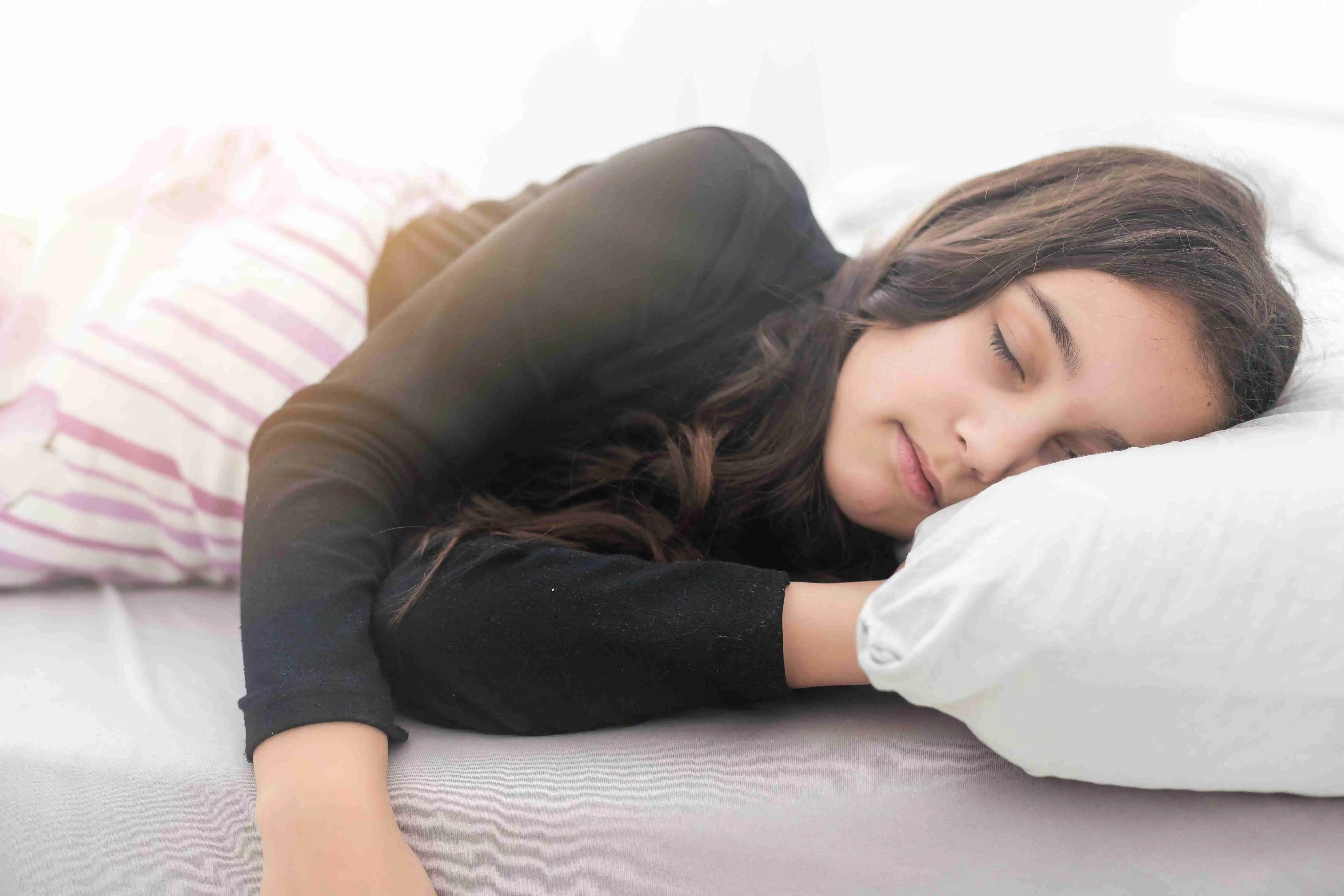


Children's sleep changes quickly. A newborn's sleep is spread across day and night. A preschooler may be leaving naps behind. A teenager may not feel sleepy until late even when school requires an early start.
This means there is no single bedtime routine or schedule that works for every age. A useful plan starts with enough opportunity to sleep, then accounts for the child's development, health, temperament, school day, caregiving arrangements, and household realities.
How much sleep do children need?
The American Academy of Sleep Medicine recommends the following amounts for healthy children. The ranges for children younger than 6 include naps. They are population recommendations, not proof that a child has a problem when one night falls outside the range 1.
| Age | Recommended sleep in 24 hours |
|---|---|
| Birth to 3 months | No formal AASM range because normal variation is wide and evidence is limited |
| 4 to 12 months | 12 to 16 hours, including naps |
| 1 to 2 years | 11 to 14 hours, including naps |
| 3 to 5 years | 10 to 13 hours, including naps |
| 6 to 12 years | 9 to 12 hours |
| 13 to 18 years | 8 to 10 hours |
Sleep need varies within each range. Look at the whole pattern: whether the child wakes reasonably refreshed, stays alert for age-appropriate activities, and can function without regularly sleeping far longer on free days.
For infants younger than 4 months, sleep is often fragmented and irregular. Feeding needs, prematurity, illness, and development can all affect the pattern. Safe sleep matters more than trying to force a young baby onto a clock-based schedule.
How sleep changes with age
Infants
Newborns do not yet have a mature day-night rhythm. Sleep occurs in several periods, often around feeding. Longer nighttime stretches usually emerge gradually rather than on a fixed deadline.
As an infant grows, daytime light, ordinary household activity, and a simple evening sequence can provide timing cues. Naps usually consolidate and become fewer, but the timing differs among babies. Night waking remains common, especially around feeding, illness, developmental changes, or separation awareness.
A baby's sleep arrangement must follow infant safe-sleep guidance every time, including naps. Comfort advice that is appropriate for an older child may be unsafe for an infant.
Toddlers and preschoolers
Young children often test limits, ask for another story, or need reassurance at bedtime. This is not automatically insomnia. A short sequence such as washing, pajamas, two books, and a goodnight phrase can make the transition predictable.
Many toddlers move from two naps to one, and many preschoolers stop napping. There is no exact age at which every child should drop a nap. A nap may still be useful if the child becomes very sleepy or dysregulated without it. If a late or long nap repeatedly pushes sleep far past bedtime, try an earlier or shorter nap before removing it.
For bedtime resistance, check timing before adding stricter rules. A child who lies awake for a long time may be offered bed before enough sleep pressure has built. Temporarily moving bedtime closer to the child's usual sleep time, then shifting it earlier in small steps, is called bedtime fading and can reduce long struggles.
School-age children
School, homework, sports, transport, and family schedules begin to compete with sleep. Work backward from the required wake time and protect a realistic sleep window within the 9-to-12-hour range.
A school-age child who needs to be repeatedly awakened, falls asleep in class or on short rides, or sleeps several extra hours whenever given the chance may not be getting enough sleep. Unusual daytime sleepiness can also signal a sleep disorder or another health problem and deserves assessment if it persists 2.
Most children this age no longer need a routine nap. An occasional short nap after a poor night or illness is different from needing daytime sleep most days.
Adolescents
Puberty shifts sleep timing later. Many teenagers genuinely become sleepy later and prefer to wake later. This biological change can collide with early school starts, homework, activities, social life, and morning transport 3.
Later school start times are associated with longer sleep and better overall sleep outcomes, although much of the evidence comes from observational or natural-experiment studies and results vary by school context 4. When the school schedule cannot change, focus on the parts the family can adjust:
- keep the wake time reasonably stable, including on most weekends
- get outdoor or bright daytime light, especially after waking
- reduce bright light and highly engaging media late in the evening
- protect the final part of the evening from avoidable homework or activity spillover
- avoid driving when dangerously sleepy
Sleeping somewhat later on weekends can repay part of a sleep debt, but very large shifts can make Sunday night and Monday morning harder. A teenager who cannot fall asleep until very late for months, then cannot wake for school despite a real effort, may have a circadian rhythm disorder rather than poor motivation.
A sleep routine that can survive family life
Consistency helps when it means a recognizable pattern, not a flawless schedule. A workable routine usually has:
- A stable morning anchor. Wake time and morning light help set the body clock. The exact time can differ on school and free days, but repeated multi-hour swings can make sleep timing harder.
- Enough time in bed. Choose a target range from the table, then allow for the time it normally takes the child to settle.
- A short wind-down. Use the same few steps in the same order when possible. Quiet play, reading, conversation, or music can work. The routine does not need special products.
- A clear end point. A consistent final cue, such as lights out and a goodnight phrase, makes the boundary easier to understand.
- A plan for setbacks. Travel, illness, exams, caregiving changes, and celebrations disrupt routines. Return to the normal anchors over the next few days without treating one difficult night as failure.
A shared bedroom does not prevent healthy sleep. Families can use staggered bedtimes, one quiet light for the child who stays up later, or a different room for homework and calls. If shift work, housing, culture, disability, or multiple caregivers make an idealized routine impossible, protect the most reliable cues the household can sustain.
Light, screens, caffeine, and activity
Light and timing
Light is a strong cue for the body clock. Daytime light, especially in the morning, supports an earlier sleep schedule. Bright evening light can push timing later, with adolescents particularly vulnerable to a mismatch between late biological timing and early obligations 3.
The goal is not total darkness after dinner. Use ordinary bright light during the day, dim unnecessary light as bedtime approaches, and keep the sleep space dark enough for the child to rest. A small night-light is reasonable when it helps a child feel secure.
Screens and stimulating content
Screen advice should consider what the child is doing, when they are doing it, and what the activity replaces. Current AAP guidance does not reduce digital life to one universal daily minute limit. Media can delay sleep by displacing the bedtime routine, extending social interaction, delivering alerts, or keeping the brain engaged. Light from a device is only one part of the picture 5.
Practical changes include:
- move exciting games, emotionally intense videos, and active group chats earlier
- silence notifications and charge devices outside the sleep area when feasible
- agree on a stopping point before the child is already overtired
- make a separate plan for required schoolwork rather than treating all screen use alike
- ask what is happening online if a child suddenly resists bedtime or seems distressed
A rigid screen cutoff may be unrealistic for every family. The useful test is whether media is repeatedly delaying sleep, waking the child, or exposing them to distressing content.
Caffeine and energy drinks
Caffeine can remain active for hours and make it harder to fall asleep. Coffee, tea, soda, chocolate, pre-workout products, and some medicines may all contribute. A 2025 consensus from national pediatric and nutrition organizations recommends that children and adolescents avoid beverages containing caffeine and other stimulants 6.
Energy drinks are not a safe fix for morning tiredness. If an older child already uses caffeine daily, discuss a gradual reduction to limit withdrawal headaches and irritability, and start by removing afternoon and evening use. Persistent reliance on caffeine to function is a reason to look at sleep opportunity and possible sleep or health problems.
Daytime activity
Regular movement and outdoor time support health and give the day a clear active period. Choose activity the child enjoys and can do safely. Exercise does not need to be exhausting to count, and it should not become a punishment for a difficult night. If late intense training leaves a particular child alert, move it earlier when the schedule allows.
Safe sleep for every infant
For babies up to 1 year old, follow the AAP safe-sleep recommendations for every sleep 7:
- place the baby on their back on a firm, flat, noninclined sleep surface approved for infant sleep
- use a fitted sheet and keep pillows, loose blankets, bumpers, stuffed toys, and other soft objects out of the sleep space
- give the baby a separate sleep surface near the caregiver's bed, ideally for at least the first 6 months
- do not use wedges, sleep positioners, inclined sleepers, weighted swaddles, weighted sleep sacks, weighted blankets, or other weighted objects
- move a baby who falls asleep in a sitting device, such as a car seat, stroller, swing, or carrier, to an appropriate sleep surface as soon as practical
- stop swaddling when the baby shows signs of trying to roll
An infant who rolls from back to stomach independently does not need to be turned back repeatedly, but the sleep space should remain empty and the baby should still be placed down on their back. Home breathing or heart-rate monitors do not replace safe-sleep practices unless a clinician prescribed monitoring for a medical reason.
Responding to bedtime resistance and night waking
The American Academy of Sleep Medicine recommends behavioral approaches as the first option for healthy children with bedtime resistance or night waking 8. That category includes several strategies. It does not require leaving a child to cry alone.
A low-conflict plan can include:
- confirm that bedtime matches the child's current sleep timing
- use a brief positive routine that the child can predict
- offer limited choices, such as which pajamas or which two books
- make one gradual change at a time
- reduce caregiver presence in steps if that fits the child and family
- calmly return a mobile child to bed with little discussion
- notice and reinforce the behavior being practiced, such as staying in bed after the final check
Children with anxiety, trauma, pain, neurodevelopmental differences, sensory needs, or medical conditions may need an adapted plan. If an approach causes escalating distress or is not workable for the family, stop and seek individualized help. The goal is a sustainable sleep skill, not compliance at any cost.
Night waking can also come from hunger in young infants, illness, eczema, reflux symptoms, asthma, pain, medication effects, breathing problems, or a schedule mismatch. Do not assume every waking is behavioral.
Nightmares, night terrors, and sleepwalking
A child who wakes from a nightmare is usually alert enough to recall the frightening dream and seek comfort. Reassure them, keep the response calm, and discuss recurring fears during the day rather than conducting a long investigation at night.
Sleep terrors and sleepwalking are different. They tend to arise from deep non-REM sleep. The child may look frightened or move around but remain confused, be hard to console, and remember little the next morning. Trying to force the child fully awake can prolong the episode.
For occasional events:
- protect enough sleep, since sleep loss can make episodes more likely
- secure stairs, doors, windows, and sharp or breakable objects
- guide a sleepwalking child back to bed without confrontation
- tell babysitters and other caregivers what usually happens
Frequent, injurious, prolonged, or unusual episodes deserve medical review. So do events with stiffening, repeated jerking, breathing changes, injury, daytime spells, or features that raise concern for seizures 2.
When sleep symptoms need medical evaluation
Arrange a pediatric appointment when a sleep problem is persistent, worsening, or impairing the child or family despite a realistic sleep opportunity. Bring a one- or two-week record of bedtime, estimated sleep time, waking, naps, caffeine, medicines, and key symptoms if possible.
Specific reasons to seek assessment include:
- habitual snoring, gasping, labored breathing, or witnessed breathing pauses
- morning headaches, bedwetting that has returned, or behavior and learning changes alongside snoring
- unusual daytime sleepiness, falling asleep in class, or sleep attacks
- an urge to move the legs with uncomfortable sensations that start at rest, improve with movement, and are worse in the evening
- insomnia that lasts for weeks, causes distress, or interferes with school or family life
- a major change in sleep together with persistent low mood, anxiety, withdrawal, agitation, or falling school performance
- frequent or dangerous sleepwalking, night terrors, or other unusual nighttime events
Snoring alone does not diagnose obstructive sleep apnea, and the absence of dramatic pauses does not rule it out. A clinician considers the full history and examination and may order a sleep study. Our guide to sleep apnea in children explains this evaluation in more detail 9.
Restless legs syndrome is not the same as ordinary fidgeting or vague "growing pains." The clinician should confirm the symptom pattern and may check iron studies. The 2025 AASM guideline supports iron treatment for children with confirmed RLS and low iron stores, but the pediatric evidence is limited and iron should not be started blindly because too much can be harmful 10.
Melatonin, sleep medicines, and supplements
Do not treat melatonin as a harmless bedtime sweet. It may help with specific circadian or developmental sleep problems, but timing matters, supplement content can differ from the label, and it does not fix an unsuitable schedule, sleep apnea, restless legs syndrome, anxiety, or late-night media use.
The AASM advises families to talk with a pediatric health professional before giving melatonin or another sleep supplement. If melatonin is appropriate, the clinician can help choose the timing and amount for the specific problem 11.
Keep melatonin, antihistamines, prescription medicines, and all supplements locked or otherwise out of children's sight and reach. CDC surveillance estimated about 11,000 U.S. emergency department visits for unsupervised melatonin ingestion among children age 5 and younger from 2019 through 2022, often involving flavored products such as gummies 12.
Do not use an adult sleep medicine, sedating antihistamine, cannabis product, herbal blend, or "natural" sleep aid for a child unless their clinician specifically recommends it. If a child takes an unknown or excessive amount of any medicine or supplement, seek urgent advice from the local poison service or emergency medical service rather than waiting for symptoms.
When to get urgent help
Seek emergency care for severe trouble breathing, blue or gray lips, prolonged unresponsiveness, a suspected first seizure, a seizure that does not stop or repeats without recovery, serious injury during a nighttime event, or a medication or supplement ingestion with concerning symptoms.
Sleep can change when a child is struggling with mental health. If a child or teenager talks about suicide, self-harm, or not wanting to live, or cannot be kept safe, stay with them and contact local emergency or crisis services now. Do not wait for a routine sleep appointment.
Most family sleep problems do not need a perfect routine. They need a plan that matches the child's age, protects enough time for sleep, fits the household, and recognizes when a medical or emotional problem may be getting in the way.