Research has not shown that moon phases have a reliable, predictable effect on most people's sleep. Some studies have found later sleep, shorter sleep, or changes in sleep stages at particular points in the lunar month. Other large studies and direct reanalyses have found no effect. A recent review of 17 studies described the findings as fragmented and inconclusive 1.
This does not prove that every person is unaffected. It means the research cannot currently tell you to expect poor sleep on a full moon, or identify a lunar phase as the cause of insomnia. Any average difference may also be too small to notice in daily life.
What sleep studies have found
Researchers have studied lunar phase with sleep diaries, wrist movement monitors, consumer trackers, and polysomnography (PSG), the laboratory or home test that measures brain activity and other signals during sleep. The results do not form one consistent pattern.
| Evidence | Design | Main finding | What it can tell us |
|---|---|---|---|
| Cajochen and colleagues, 2013 | Retrospective analysis of laboratory PSG in 33 adults | Around the full moon, participants took about 5 minutes longer to fall asleep, slept about 20 minutes less, and had lower deep-sleep EEG activity 2 | The controlled, dark laboratory reduced moonlight and expectation as explanations, but the sample was small and the lunar analysis was devised after data collection. |
| Cordi and colleagues, 2014 | Reanalysis of three larger sleep datasets | The researchers did not reproduce the earlier full-moon findings and identified mostly unpublished null results 3 | Failed replication weakens confidence in a general effect and raises the possibility that positive findings are more likely to be published. |
| Haba-Rubio and colleagues, 2015 | One night of home PSG in 2,125 adults | Subjective sleep, sleep duration, other PSG measures, EEG spectral measures, and cortisol did not differ significantly by lunar phase 4 | This large population sample found no meaningful full-moon effect, though each person was recorded for only one night. |
| Chaput and colleagues, 2016 | 33,710 accelerometer nights from 5,812 children in 12 countries | Sleep was about 5 minutes shorter around the full moon than the new moon, with no meaningful activity differences 5 | A large sample can detect a very small association. The authors questioned whether a 1% sleep difference was clinically meaningful. |
| Casiraghi and colleagues, 2021 | Repeated wrist actigraphy in Toba/Qom communities, plus data from 464 Seattle students | Sleep tended to start later and be shorter 3 to 5 nights before the full moon. The pattern appeared across communities with different access to electricity and in the Seattle sample 6 | This supports a possible longitudinal pattern, especially around early-evening moonlight, but actigraphy estimates sleep from movement and the cohorts differed in location, culture, season, and electric-light exposure. |
| Benedict and colleagues, 2022 | One night of home PSG in 852 adults | Sleep was shorter during the waxing half of the lunar cycle; some continuity measures differed more in men than women 7 | This was a sizeable PSG study, but it was cross-sectional. Different people represented different phases, so the association does not establish a lunar cause or a repeatable effect within one person. |
| Nguyen and colleagues, 2024 | Two consumer-device datasets covering more than 357,000 users and 177 million nights | Adjusted analyses found no evidence of a meaningful moon-phase effect on estimated total sleep time 8 | The scale and two independent datasets are useful, but this is a conference abstract rather than a full paper, and consumer devices do not measure sleep like PSG. |
Taken together, these studies allow a narrower conclusion than either “the moon controls sleep” or “the moon can never be associated with sleep.” Small group-level associations have appeared, but they differ by study, outcome, population, and phase definition. The evidence does not establish a dependable effect that predicts an individual's sleep.
Moon phase is not the same as moonlight exposure
A moon phase describes how much of the Moon's Earth-facing side appears illuminated. It does not tell researchers how much moonlight reached a person's eyes or bedroom.
Actual exposure depends on several conditions:
- whether the Moon was above the horizon while the person was awake
- cloud cover and local geography
- season and the timing of sunset and moonrise
- time spent outdoors
- windows, curtains, and bedroom orientation
- electric lighting and screen use
These distinctions matter because the relevant window may not be the night marked “full moon” on a calendar. In the Toba/Qom study, sleep was latest and shortest several nights before the full moon, when bright moonlight was available in the early evening. The investigators calculated early-night moonlight availability rather than treating illumination percentage alone as exposure 6.
Even that study did not isolate one explanation. Similar timing appeared in communities with electric light and among Seattle students, whose schedules, indoor lighting, and social routines differed from those of the rural groups. Natural moonlight, artificial light, behavior, and culture can move together in ways an observational study cannot fully separate.
Is there a biological lunar clock?
No human mechanism has been established.
Light is the most direct possibility because light exposure can affect circadian timing and behavior 6. But a phase association found in a windowless laboratory would require another explanation, and those laboratory findings have not replicated consistently 2 3.
The Moon's effect on ocean tides does not show that lunar gravity alters human sleep. A 2026 preprint reported correlations between sleep or activity timing and calculated lunisolar gravitational variation across human cohorts and captive titi monkeys. The paper has not been peer reviewed, and its observational time-series models do not demonstrate that people sense lunar gravity or that gravity caused the timing differences 9.
Claims about lunar changes in Earth's magnetic field, melatonin, cortisol, dreams, or “energy” should not be treated as explanations unless a study directly measures the proposed pathway and the result is independently reproduced. One small study reported lower melatonin around the full moon, while the much larger population PSG study found no phase difference in cortisol 2 4. Those isolated findings do not establish a general hormonal mechanism.
Why the findings conflict
Lunar-sleep research has several recurring problems.
Many analyses were not designed to test the Moon
Several influential papers assigned existing sleep recordings to lunar phases after the original study had ended. This can be useful, and it can prevent participants from changing their behavior because they expect a lunar effect. It also means the lunar question, primary outcome, and analysis window were not always set before researchers saw the data.
A stronger confirmatory literature would declare the main outcome and phase window in advance, follow the same people across several lunar cycles, measure actual light exposure, and reproduce the result independently. The current evidence is not a mature series of preregistered replications 1.
Phase windows and outcomes vary
“Around the full moon” might mean one night, several nights on either side, the waxing half of the month, or the period when moonlight is present soon after dusk. Studies also test many outcomes, including sleep onset, duration, efficiency, awakenings, sleep stages, EEG power, hormones, and subgroups.
Trying many definitions and comparisons increases the chance of finding at least one statistical association. A result is more convincing when the same outcome appears with the same timing in a new sample, not when each study finds a different pattern.
Statistical significance is not always practical significance
The international children's study found a statistically detectable difference because it included tens of thousands of nights. The average change was about 5 minutes, which is unlikely to explain substantial insomnia by itself 5.
Null results may be less visible
Studies with an intriguing positive result can be easier to publish than studies finding no difference. Cordi and colleagues described this as a “file drawer” problem after their three datasets failed to replicate the 2013 laboratory findings and they located additional unpublished null analyses 3. This makes isolated positive studies look more settled than they are.
Could the Moon affect your sleep even if the average effect is small?
It is possible for an individual pattern to exist even when a group average is close to zero. The current research does not provide a reliable way to identify “moon-sensitive sleepers,” however. A few memorable bad nights near a full moon are not enough to distinguish a lunar pattern from normal night-to-night variation.
Expectation can also shape what you notice. If you check the lunar calendar after a poor night, a nearby full moon may stand out. Poor nights at other phases, and good nights near a full moon, are easier to forget. This is one reason a personal test works better when you record sleep before looking at lunar dates.
A simple way to test your own pattern
If you are curious, treat the following as a personal observation exercise, not a diagnostic test:
- Before you begin, choose one or two outcomes, such as estimated sleep onset and morning-rested rating. Decide what you mean by a full-moon window.
- As a practical default, record every night for at least three lunar cycles. Do not check the Moon's phase while collecting the data.
- Also note bedtime, wake time, caffeine and alcohol timing, stress, illness, travel, weekday or weekend, screen use, and whether outdoor or bedroom moonlight was visible.
- After collection, ask someone else to add the lunar dates, or reveal them only after you have finished. Compare the chosen full-moon window with the rest of your nights, including good nights and bad nights.
- Look for a repeated difference of a size you would actually notice, not one matching night. If the pattern changes when you alter the phase window, it is not robust.
A diary may be more useful than a detailed consumer sleep-stage score. Watches, rings, and under-mattress devices can help show trends, but their sleep estimates and proprietary algorithms have limitations. The American Academy of Sleep Medicine advises that consumer sleep technology should not replace clinical evaluation or validated diagnostic testing 10.
Stop the exercise if it makes you anxious or encourages you to expect a bad night. Do not change medication or delay medical care based on a lunar pattern.
What to do if moonlight seems to bother you
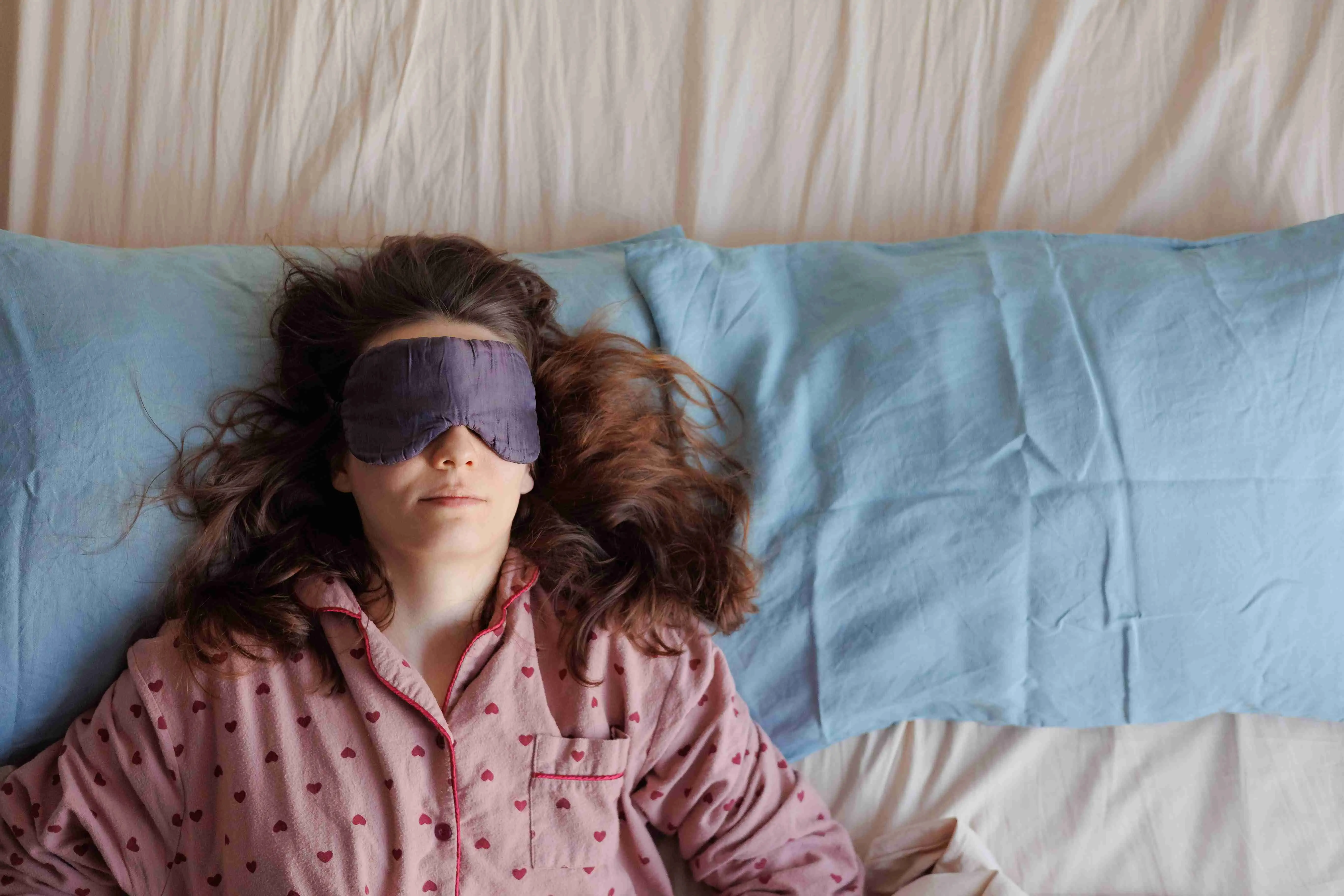
If visible light enters your room, test the simplest explanation first. Close curtains, use a comfortable eye mask, and keep your sleep schedule and evening lighting consistent. These steps address light exposure without assuming a hidden lunar mechanism.
Persistent difficulty falling or staying asleep, significant daytime sleepiness, loud snoring, gasping, or other ongoing symptoms deserve ordinary clinical assessment regardless of the Moon's phase. A lunar calendar cannot diagnose or treat insomnia, sleep apnea, a circadian disorder, or another health condition 10.
Common questions
Does a full moon cause insomnia?
Research has not established that a full moon causes insomnia. Some studies report small sleep differences near the full or waxing moon, while larger population and replication studies report no meaningful difference.
Does the Moon affect dreams?
There is no reliable evidence that a particular lunar phase directly causes vivid dreams or nightmares. Dream recall can change when sleep is interrupted, but a lunar cause has not been demonstrated.
Do moon phases affect children's sleep?
A large 12-country study found that children slept about 5 minutes less around the full moon than the new moon. The researchers questioned whether such a small average difference mattered clinically, and activity did not meaningfully change 5. A child's persistent sleep problem should be assessed on its usual sleep, health, schedule, and environment rather than attributed to the Moon.
Should you plan sleep or treatment around the lunar calendar?
No. Moon phases are not a medical diagnosis or treatment schedule. If actual moonlight enters your room, reducing that light is reasonable. Otherwise, focus on the factors that can be measured and changed, and seek care for ongoing symptoms.