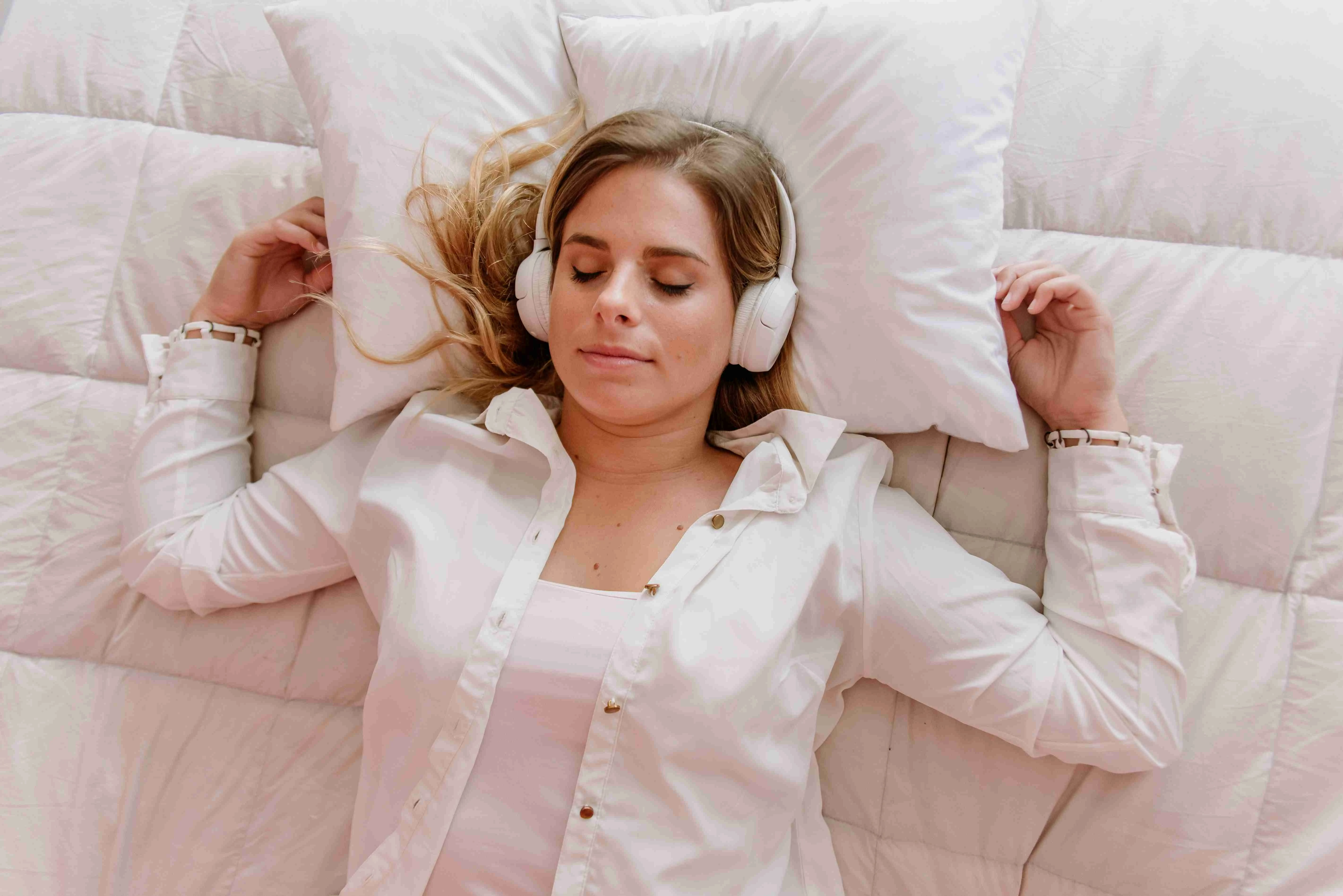


Yawning is a common involuntary action, usually involving a wide mouth opening and a long, deep breath. It often appears when a person is sleepy or tired. More yawning than usual is not automatically a sign of disease 1.
There is also no single count that tells every person when yawning is “excessive.” Even a scientific scoping review had to define increased yawning without a cutoff because the available research was too limited to supply one 2. For an individual, a new change, repeated clusters, interference with daily life, and the symptoms that occur with the yawns are more useful than comparing the total with an online number.
The most common place to start is sleepiness and sleep opportunity. Medicines, substances, boredom, migraine, and the warning phase before a faint can also be relevant. Neurological and other medical associations exist, but they are much less common, and a yawn by itself cannot identify the cause.
First, identify what is actually happening
People often use “yawning,” “sleepy,” “tired,” and “short of breath” for overlapping experiences. Separating them helps narrow the next step.
- A typical yawn includes the familiar urge, a wide mouth opening, and a deep inhalation followed by an exhalation.
- Sleepiness means difficulty staying awake and alert, an irresistible need to sleep, or unintended dozing. It is distinct from fatigue, although both can occur together 3.
- Fatigue is low energy, exhaustion, or reduced capacity. A person can feel drained without being likely to fall asleep.
- Shortness of breath feels like breathing is difficult, uncomfortable, too fast, or insufficient. Repeatedly opening the mouth to get air is not necessarily yawning, especially if the movement does not have the usual yawn sensation or does not relieve the breathing problem.
- Other mouth or jaw movements may be stretches, jaw-opening movements, medication-related movements, or tics. If the movement lacks a typical yawn, feels uncontrollable, or comes with facial or limb movements, describe or record the event for a clinician rather than assuming it is excessive yawning.
This distinction also matters for safety. Someone who is yawning but fully alert has a different immediate problem from someone who is fighting sleep.
Common reasons for repeated yawning
Too little sleep or true daytime sleepiness
A short night, an irregular schedule, shift work, or repeated awakenings may increase daytime sleepiness and make yawning more noticeable. The key question is whether there has been enough realistic time to sleep and whether sleepiness improves after several adequate nights 3.
Repeated yawning plus unintended dozing, trouble staying awake in quiet situations, or sleepiness despite adequate sleep opportunity deserves more attention. Obstructive sleep apnea may cause loud snoring, breathing pauses, gasping, daytime sleepiness, dry mouth, morning headache, and frequent nighttime urination 4.
Narcolepsy causes persistent daytime sleepiness and may involve sleep attacks. Other clues can include sleep paralysis, vivid experiences while falling asleep or waking, disrupted nighttime sleep, and, in type 1 narcolepsy, brief muscle weakness triggered by emotion. Diagnosis requires a clinical sleep assessment and specialized testing, not a yawning count 5.
Insufficient sleep is common, and sleep apnea and narcolepsy are only two possible causes of sleepiness. A clinician may also consider insomnia, circadian timing, restless legs, medical illness, mood symptoms, and medicines based on the full history.
Medicines and substances
A medicine can increase yawning directly, increase sleepiness, or do both. For example, one current escitalopram label lists yawning as an adverse reaction and also reports somnolence. That does not mean every antidepressant or every person has the same effect 6.
Medicines and substances that cause drowsiness may make a person sleepy enough to yawn more. A change after starting a medicine, increasing or decreasing a dose, missing doses, or adding alcohol or another substance is useful information for the prescriber 3.
Yawning can also occur during opioid withdrawal, usually as part of a broader pattern that may include a runny nose, tearing, sweating, aches, nausea, diarrhea, restlessness, and temperature changes 7. Do not use yawning alone to diagnose withdrawal.
Review prescription medicines, over-the-counter products, supplements, caffeine, alcohol, nicotine, cannabis, and other substances with a clinician or pharmacist. Do not abruptly stop a prescribed medicine to see whether the yawning disappears. Some medicines require a planned taper or other safety steps.
Migraine
Some people with migraine notice repetitive yawning before or during an attack. In a cross-sectional study of 339 people with migraine, 45.4% reported repetitive yawning in the premonitory phase or during the headache 8.
That result came from a selected clinical group using questionnaires and diaries. It does not make yawning a reliable migraine test. The clue is a repeatable personal pattern with other familiar migraine features, such as light or sound sensitivity, nausea, neck discomfort, or a typical headache. New neurological symptoms or a sudden severe headache should not be assumed to be migraine.
The warning phase before a faint
Yawning can occur during the prodrome, or warning phase, of a vasovagal faint. Other symptoms may include warmth, sweating, nausea, weakness, dizziness, or dimming vision, often after prolonged standing, pain, emotional stress, or seeing blood 9.
If these symptoms begin, sit or lie down in a safe place to reduce the chance of injury. A first faint, a faint during exertion, recurrent episodes, chest symptoms, palpitations, injury, or prolonged confusion needs medical assessment. Yawning without the rest of this pattern does not establish a vasovagal cause.
Boredom and temperature-related physiology
Yawning can cluster during low-stimulation situations, and clinicians may ask whether boredom or activity level changes the pattern 1. This is a context clue, not proof that the person is disinterested or unwell.
Temperature-related physiology has also been studied. A focused review reported that yawning frequency varied with ambient-temperature conditions in human and animal research, supporting a thermoregulation hypothesis 10. However, researchers still do not agree on yawning's main function, and the evidence does not make repeated yawning a personal test of brain temperature 2.
Less common neurological or medical causes
A neurological review describes pathological yawning in association with stroke, epilepsy, Parkinson disease, and several less common neurological conditions. Much of this literature consists of case reports, small studies, and observations in people who already had other neurological findings 11.
The practical meaning is limited but important: a new neurological change matters. Repeated yawning without weakness, altered awareness, a seizure, speech or vision change, severe headache, or another neurological symptom does not point to one of these diagnoses.
Other medical problems can contribute indirectly through sleep disruption, medication effects, pain, or fatigue. A long disease list is less helpful than the timing, associated symptoms, and examination.
What science does and does not explain about yawning
Researchers have proposed roles in arousal, temperature regulation, airway physiology, motor coordination, and social behavior. None provides one settled explanation for every spontaneous or contagious yawn 2.
Yawning is not a dependable response to low oxygen. In two small experiments with college-age participants, breathing pure oxygen, breathing gas mixtures with more carbon dioxide, and exercising enough to double the breathing rate did not significantly change yawning. The study was limited, but it directly challenged the idea that ordinary yawning primarily corrects low oxygen 12. Breathing difficulty still needs to be assessed on its own rather than dismissed as a yawn.
Contagious yawning does not prove empathy. A critical review found inconsistent and inconclusive evidence linking individual differences in contagious yawning with empathy. Attention and social inhibition may confound the results 13. Yawning after another person, or not doing so, is not a personality test.
A useful pattern check
If the yawning is new or disruptive, record enough detail for several days to reveal a pattern:
- when it starts, whether it comes in clusters, and what you are doing at the time
- bedtime, wake time, nighttime awakenings, naps, and realistic sleep opportunity
- whether you are fighting sleep, unintentionally dozing, or only feeling low in energy
- snoring, witnessed breathing pauses, gasping, dry mouth, or morning headache
- a headache, light or sound sensitivity, nausea, dizziness, sweating, dimming vision, or palpitations
- new medicines, dose changes, missed doses, and changes in caffeine, alcohol, cannabis, opioids, or other substances
- weakness, numbness, altered awareness, unusual movements, speech trouble, vision change, or confusion
A short phone video can help if the event looks unlike a typical yawn, provided it can be recorded safely. Do not delay emergency care to make a recording.
What to do next
If yawning follows a clearly short or disrupted night and there are no concerning symptoms, restore adequate sleep opportunity for several nights and see whether both yawning and sleepiness improve. A regular wake time and fewer avoidable interruptions may make the pattern easier to interpret.
Arrange a routine medical appointment when yawning is unexplained, persistent, worsening, disruptive, or accompanied by marked daytime sleepiness. The clinician may review sleep, medicines, substances, headache or fainting patterns, and neurological symptoms, then examine you. Tests should follow the findings. Not everyone with frequent yawning needs brain imaging, an electroencephalogram, blood tests, or a sleep study.
If you are struggling to stay awake while driving or doing hazardous work, stop the activity. Pull over somewhere safe if you are already driving and arrange another way to travel or rest before continuing. Caffeine alone may not overcome serious sleep deprivation, and brief microsleeps can occur without warning 14.
When yawning needs urgent care
Yawning alone is usually not an emergency. Call local emergency services if it occurs with:
- sudden weakness or numbness, especially on one side
- a new facial droop, trouble speaking, confusion, loss of balance, or sudden vision change
- a sudden severe headache with no known cause
- chest pain or pressure, severe breathing difficulty, or fainting
- a seizure, prolonged altered awareness, or another sudden neurological change
Sudden weakness, speech trouble, confusion, vision change, loss of balance, and a sudden severe headache are recognized stroke warning signs and require immediate action, even if they improve 15. Chest discomfort and shortness of breath can be heart attack warning signs 16. Severe breathing difficulty, fainting, and sudden changes in mental status are also recognized medical emergencies 17.
The bottom line
There is no universal daily yawn limit. The useful questions are whether the pattern is new, whether it interferes with life, whether true sleepiness is present, and what happens before and after each cluster.
Start with sleep opportunity and a medication and substance review. Look for sleep apnea or narcolepsy clues when sleepiness is persistent, and note repeatable migraine or fainting patterns. Rare neurological associations matter mainly when yawning appears with other new symptoms. The yawn is one piece of the history, not a diagnosis.