
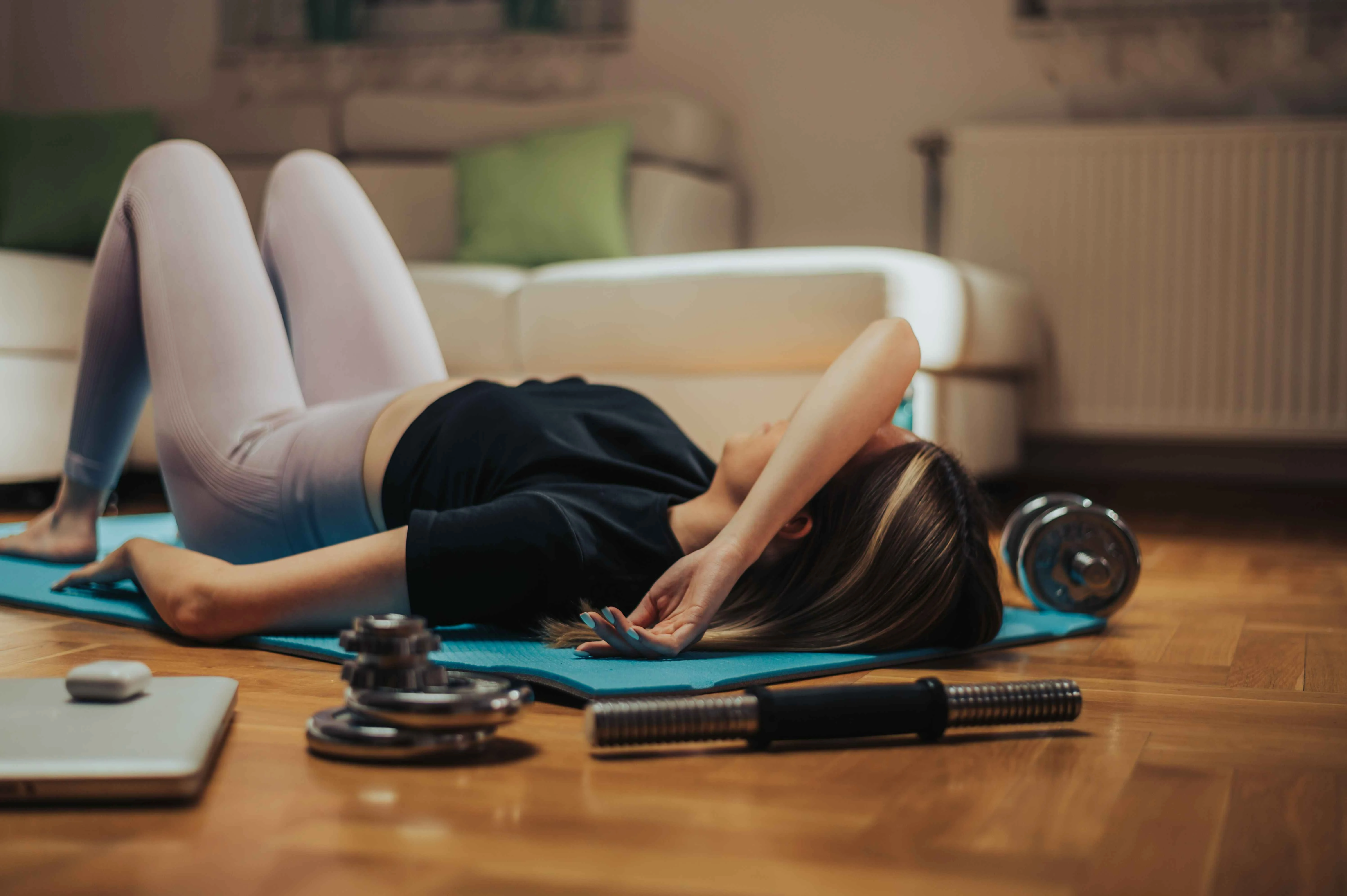
Regular exercise can modestly improve perceived sleep quality and insomnia symptoms for many adults. It is best treated as an addition to insomnia care, not a replacement for cognitive behavioral therapy for insomnia (CBT-I) or an evaluation when sleep problems persist 1 2.
One workout may affect that night's sleep, but repeated activity over weeks is more relevant to a lasting routine. There is no proven sleep-optimal exercise, weekly dose, or time of day for everyone. The practical goal is to find an activity you can repeat safely, then use your own sleep and daytime function to adjust it.
Is it insomnia or an occasional bad night?
A difficult night after stress, travel, pain, illness, or a late workout is not automatically chronic insomnia. Chronic insomnia involves trouble falling asleep, staying asleep, or returning to sleep despite adequate opportunity, together with daytime effects. The pattern generally occurs at least three nights a week for at least three months 1.
This distinction matters because exercise may be a useful health habit after an occasional bad night, while chronic insomnia deserves a broader treatment plan. That plan may need to address sleep-related worry, time spent awake in bed, medication effects, pain, depression or anxiety, a circadian rhythm problem, sleep apnea, or restless legs.
CBT-I remains the recommended first treatment for chronic insomnia. It combines targeted behavioral and cognitive methods rather than simply listing sleep-hygiene tips. Exercise can support that work, but it should not delay access to CBT-I or replace a clinical assessment 1.
What the exercise research actually shows
Exercise trials use two broad kinds of outcomes:
-
Subjective outcomes describe the person's sleep experience. They include insomnia severity questionnaires, sleep-quality scales, and sleep diaries.
-
Objective outcomes estimate sleep from polysomnography or actigraphy. Polysomnography records brain and body signals in a sleep laboratory. Actigraphy estimates sleep and wake from movement over multiple nights.
The two do not always change together. That is not proof that a reported improvement is imaginary. Insomnia is diagnosed largely through the person's night and daytime experience, so feeling less impaired or distressed by sleep is clinically meaningful. Objective measures answer a different question.
A 2024 meta-analysis of 19 controlled exercise studies found average improvements in both subjective and objective sleep measures. The subjective effects were larger, however, and results varied substantially among studies. Most included trials had a high risk of bias, and follow-up data were usually unavailable, so the review could not define a precise long-term exercise prescription 2.
An earlier, stricter review included six small studies of adults with insomnia and found improvement in reported insomnia severity and sleep quality, but not in pooled polysomnography or actigraphy outcomes. The participants and exercise programs differed widely 3. Taken together, the reviews support a modest symptom benefit for many adults, not a guarantee of longer, deeper, or uninterrupted sleep.
One workout versus a repeated routine
Acute exercise
Acute exercise means one session. In a small trial of 48 adults with chronic insomnia, one moderate-intensity aerobic session improved several sleep measures that night and reduced presleep anxiety. The high-intensity aerobic and moderate resistance sessions did not produce the same pattern in that experiment 4.
This is useful evidence that a single session can matter, but it is too small to prove that moderate aerobic exercise is always best. The result may differ with fitness, health, exercise duration, time of day, and the person's insomnia pattern.
Repeated exercise
Most practical benefits are studied through programs repeated for several weeks or months. Regular activity gives the body time to adapt and makes it possible to judge a pattern across many nights instead of attributing the next morning's sleep to one workout.
Repeated exercise still does not work like a sleeping pill. Sleep may improve gradually, remain unchanged, or fluctuate while other parts of insomnia treatment do the more direct work.
Is one kind of exercise best for insomnia?
Aerobic activities, resistance training, and mind-body movement have all been studied. Examples include walking, jogging, cycling, strength exercises, yoga, and Tai Chi.
A 2026 network meta-analysis compared 22 randomized trials and found promising results for yoga, Tai Chi, and walking or jogging on different sleep outcomes. Most comparisons were based on low-certainty evidence, however, and only four trials were judged to have a low risk of bias. Some rankings also relied on indirect comparisons between separate trials rather than head-to-head testing 5.
This means the research does not justify a universal “best exercise” list. A reasonable choice is one that:
-
fits your mobility, balance, pain, and current fitness
-
is available without creating financial or travel strain
-
feels sustainable enough to repeat
-
does not worsen an injury, medical condition, or eating-disorder recovery plan
Aerobic activity raises heart rate and breathing for a sustained period. Resistance activity works muscles against a load, including weights, bands, body weight, or some seated movements. Yoga and Tai Chi combine movement with other elements such as breathing, attention, and balance. When a mind-body program helps, a trial often cannot show which component produced the change.
Does exercising at night cause insomnia?
Evening exercise is not automatically harmful. A meta-analysis of single evening sessions in healthy adults found that evening exercise generally did not worsen sleep. Vigorous exercise ending within about an hour of bedtime was the main pattern associated with poorer sleep onset, duration, or efficiency 6.
A later study followed 14,689 physically active adults using a wrist-worn device. Later and more strenuous sessions were associated with later sleep, shorter sleep, and lower estimated sleep quality. Lighter sessions farther from sleep had much smaller associations 7. This was an observational study of active device users, not a trial in people with insomnia, so it cannot prove that a particular late workout caused poor sleep.
These findings support an individual timing plan rather than a universal cutoff. Consider:
-
Intensity and duration: A long, hard session can require more recovery than a gentle walk or mobility routine.
-
Temperature and alertness: If you still feel hot, breathless, hungry, or highly alert at bedtime, the session may be too demanding or too close to sleep for you.
-
Chronotype: A workout at 8 p.m. may be close to bedtime for a morning-oriented person and several hours from sleep for an evening-oriented person.
-
Routine: A time you can repeat without shortening sleep may be more useful than a theoretically ideal time that forces an early alarm or is regularly skipped.
-
Individual response: Two people can sleep differently after the same session.
If an evening workout fits your life and sleep remains stable, there is no evidence-based reason to ban it. If a late session repeatedly leaves you alert or delays sleep, try lowering the intensity, shortening the session, adding more recovery time, or moving the harder part earlier. Change one feature at a time so the result is easier to interpret.
A simple progressive plan
This plan is a starting framework, not a medically proven insomnia dose.
1. Start from your current ability
Choose an activity that feels physically manageable. A person who is currently inactive might begin with a brief easy walk, seated aerobic routine, water-based activity, light resistance movement, or accessible yoga practice on a few days each week. Start below the point that causes substantial pain or exhaustion.
2. Build one part at a time
Add a little duration, an additional day, or modest intensity only when the current routine feels manageable. Increasing all three at once makes injury and sleep disruption harder to trace.
A simple way to recognize moderate aerobic effort is the talk test: breathing is faster, but you can still speak in sentences. This is a practical guide, not a medical limit. Heart-rate targets may be inappropriate with some medicines and health conditions.
3. Protect sleep opportunity
Do not schedule exercise by cutting a needed hour from sleep. If an early workout requires a much earlier alarm but bedtime does not move, the routine may work against the reason you started it.
4. Track the pattern briefly
For a couple of weeks, note the activity, approximate effort, finishing time, bedtime, estimated time to fall asleep, major awakenings, wake time, and daytime energy. A paper diary is enough. A consumer wearable can add estimates, but its sleep-stage labels should not be treated as proof of deeper sleep.
Look for a repeated pattern, not a perfect score every morning. If sleep worsens, adjust one variable such as timing or intensity and observe again.
5. Keep general health targets in perspective
U.S. public-health guidance recommends that adults work toward 150 to 300 minutes of moderate-intensity aerobic activity each week, or an equivalent amount of vigorous activity, plus muscle-strengthening activity on at least two days. It also advises inactive adults to start with small amounts and build over time 8.
Those targets support general health. They are not a proven prescription for insomnia, and some people need a modified goal because of disability, pregnancy, illness, pain, or a medical condition. A smaller amount of suitable activity can be a valid starting point.
When exercise can work against sleep or recovery
A hard workout can occasionally leave someone too alert, hot, sore, hungry, or uncomfortable to sleep. More exercise is not the automatic solution.
Reduce the training load and review recovery if insomnia occurs alongside persistent fatigue, falling performance, mood change, repeated illness, or recurrent injury. These symptoms are not specific enough to diagnose overtraining syndrome at home. A sports medicine consensus notes that overtraining is an exclusion diagnosis and that no single hormone, laboratory marker, or symptom confirms it 9.
Do not explain every difficult night as “high cortisol.” That claim cannot identify the cause or tell you how much training is safe. Pain, inadequate recovery, an illness, stimulant use, a late competition, travel, mood symptoms, or an unrelated sleep disorder may be more useful leads.
Stop the session rather than pushing through a new injury, sharp or increasing pain, dizziness, faintness, or acute illness. Fever, vomiting, dehydration, a significant injury, or medical instability calls for recovery and appropriate care, not a workout intended to force sleep.
Important safety adjustments
Heart or lung conditions
Ask a clinician how to begin or progress if you have an unstable heart or lung condition, unexplained fainting, chest discomfort with activity, severe breathlessness at low effort, or a recent major medical event. Stop and seek urgent medical help for chest pain, fainting, unusual severe shortness of breath, confusion, or a fast or irregular heartbeat with concerning symptoms 10.
Heat
Hot or humid conditions add physical strain. Choose a cooler time or indoor option, reduce effort, start gradually, and drink according to your health needs. Stop activity and move to a cool place if you feel faint or weak. Confusion, collapse, or suspected heat stroke is an emergency 11.
Pregnancy
Exercise is safe and beneficial for many uncomplicated pregnancies, but the activity may need to change as pregnancy progresses. Discuss the plan during prenatal care, especially with a medical or obstetric complication. Stop and contact the obstetric care team for vaginal bleeding, fluid leakage, regular painful contractions, dizziness or faintness, chest pain, breathing difficulty before exertion, or calf pain or swelling 12.
Eating disorders or compulsive exercise
If exercise feels compulsory, is used to compensate for eating, or conflicts with an eating-disorder treatment plan, do not add more activity as an insomnia remedy. NICE advises people with an eating disorder who are exercising excessively to stop, so decisions about restarting or changing activity belong with the eating-disorder treatment team 13.
After very poor sleep
Light activity may feel manageable after one poor night, but sleep loss can impair attention, reaction time, and judgment. Avoid unfamiliar, technically demanding, or high-risk exercise if you feel unsteady or cannot stay alert. Exercise is not a substitute for sleep and should not be used to prove that you can function safely 14.
Do not drive to a gym, trail, work, or home if you are struggling to stay awake. If drowsiness begins while driving, pull over safely rather than relying on open windows, loud music, or exercise to restore alertness 14.
When insomnia needs more than an exercise plan
Seek an insomnia assessment when difficulty sleeping is persistent, affects daytime function, or continues despite reasonable changes. Get evaluated sooner if there is loud snoring or gasping, an irresistible urge to move the legs, unusual nighttime behavior, severe mood symptoms, medication or substance concerns, or sleepiness that makes driving or work unsafe.
An exercise routine can continue if it is safe and useful, but it should sit alongside the appropriate care. For chronic insomnia, that usually means CBT-I. For another sleep disorder, medical condition, pain problem, or medication effect, treatment needs to address that cause.
FAQs
How long does exercise take to help insomnia?
One small trial found changes after a single moderate aerobic session, while most evidence comes from routines repeated for weeks or months. There is no reliable deadline. Judge the trend across several weeks rather than expecting every workout to improve that night's sleep.
Is walking enough?
Walking is a reasonable, accessible aerobic option and has been included in insomnia trials. The useful starting amount depends on current ability. A shorter walk you can repeat safely is more practical than a demanding plan that worsens pain, fatigue, or sleep.
Should I exercise in the morning for insomnia?
Morning exercise is one option, not a requirement. Choose it if it fits your chronotype and schedule without shortening sleep. Afternoon or evening exercise can also work when it does not leave you too alert or physically uncomfortable at bedtime.
Can too much exercise cause insomnia?
A high training load with inadequate recovery can accompany sleep disturbance, fatigue, mood change, and reduced performance. These symptoms have many possible causes. Scale back and seek medical or sports-medicine advice if they persist instead of assuming a cortisol problem or training harder.