

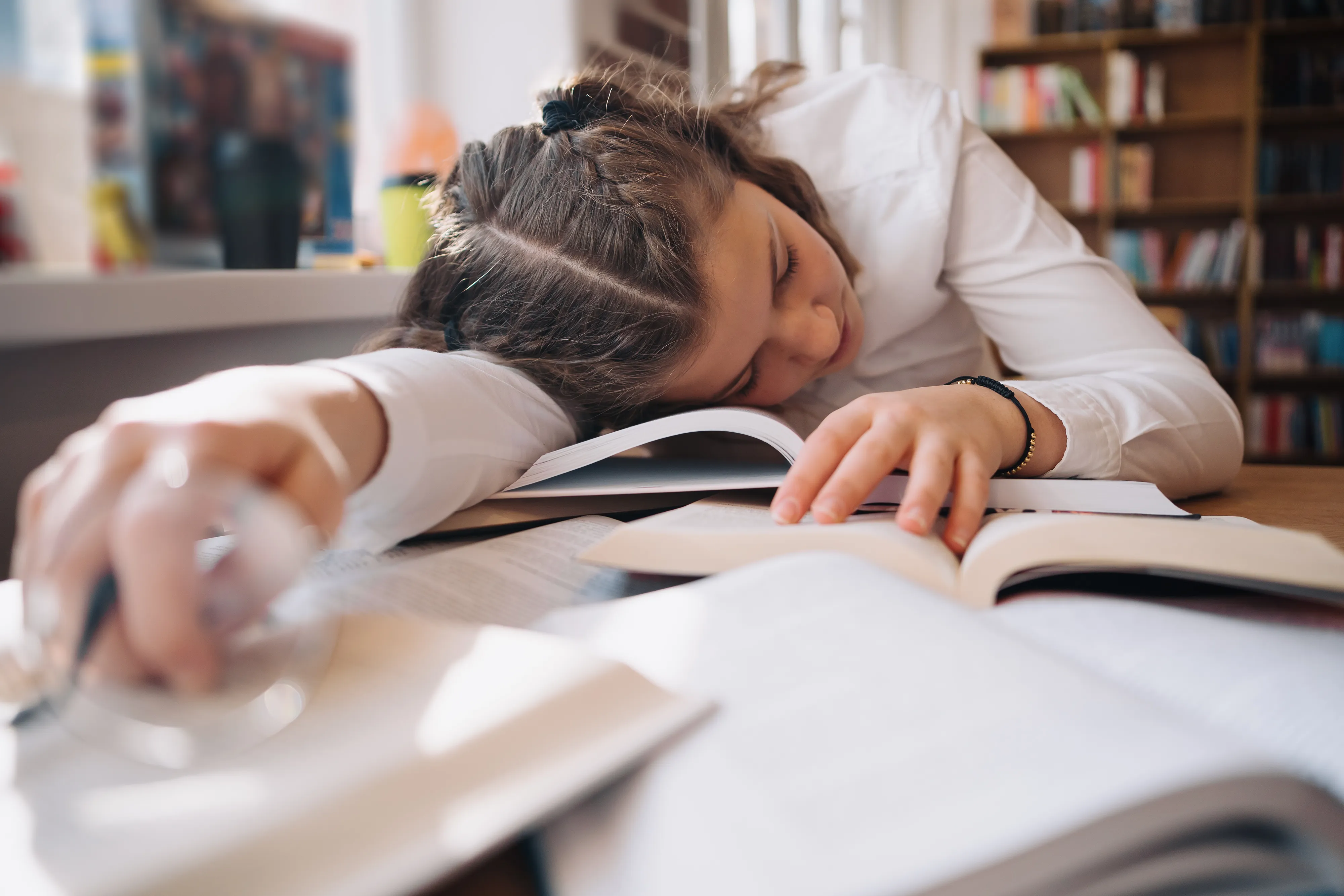
Trading most or all of a night's sleep for extra studying is usually a poor trade. The extra hours add study time, which may feel valuable when material is unfinished. However, total sleep deprivation makes it harder to learn new information and, on average, impairs attention, working memory, processing speed, and other abilities needed during an exam 1 2.
Sleep also helps stabilize material after it has been learned. A meta-analysis found that depriving people of a full night of sleep either before or after learning harmed later memory, although the size of the effect varied and many included studies were small 1.
These are group averages from controlled tasks, not promises about a grade. An exam score also depends on prior knowledge, study quality, question difficulty, anxiety, health, and many other factors. One imperfect night does not erase weeks of preparation. In one observational college chemistry course, sleep over the previous week and month was associated with performance, while sleep on the single night before a test was not. The study cannot prove cause and effect, but it is a useful reason not to treat one rough night as a ruined exam 3.
How sleep fits into learning and exam performance
Sleep is one part of the preparation process. It helps to separate five issues that are often blended together:
-
Learning before sleep: You still need enough time with the material. Practice tests, flashcards that require recall, and solving problems from memory are usually more useful than repeatedly rereading the same pages. Distributed practice and practice testing have broad evidence across learning settings 4.
-
Memory consolidation during sleep: Sleep after studying helps new material become more stable. It cannot create knowledge that was never learned, and it does not guarantee that every detail will be remembered 1.
-
Retrieval during the exam: To use what you know, you need to sustain attention, hold information in working memory, read accurately, and resist careless responses. Acute sleep deprivation can weaken these abilities on average 2.
-
Circadian timing: Alertness changes across the biological day. An early exam may fall at a difficult time for someone whose schedule has shifted late. Puberty also tends to shift sleep timing later, which can make early starts especially difficult for teenagers 5.
-
Sleep inertia: Waking does not always produce instant alertness. Temporary grogginess can slow thinking, memory, and reaction time, especially after sleep loss or when waking during the biological night. Leave a wake-up buffer before driving, using equipment, or sitting the exam 6.
This distinction prevents two common mistakes. More study time is not automatically better if exhaustion makes the work ineffective, but sleep is not a substitute for learning the material. The goal is to protect enough sleep while using the available study time on the highest-value gaps.
How much sleep should you aim for during finals?
Use age-based recommendations as a general planning range, not a test-night formula. Teenagers ages 13 to 18 are generally advised to get 8 to 10 hours of sleep per 24 hours. Adults are generally advised to get about 7 to 8 hours. Individual needs vary, and illness, sleep debt, medications, and other factors can change how rested someone feels 7.
There is no universal bedtime that produces a better score. There is also no reliable way to calculate the ideal wake time by counting exact 90-minute "sleep cycles." Sleep stages and cycle lengths vary within and between people. A more practical target is enough time in bed for your usual sleep need, with a wake-up time that leaves you able to travel and become fully alert.
If caregiving, shift work, multiple exams, housing conditions, pain, or another constraint makes the general range unrealistic, protect the largest sleep opportunity you can. A workable plan is more useful than feeling guilty about an ideal schedule.
A realistic plan for the week before finals
Several days to one week before
-
Put every fixed commitment in one place. Include exam times, travel, work, caregiving, religious commitments, meals, medication times, and any required laboratory or practical sessions.
-
Work backward from wake time. Protect a realistic sleep window on most nights. If an exam is much earlier than your current routine, shift sleep and wake times earlier in small steps when possible instead of expecting one unusually early bedtime to work.
-
Triage the material. Separate topics into secure, uncertain, and not yet learned. Spend most of the remaining time retrieving uncertain high-value material and learning essential gaps. Do not keep polishing familiar notes because it feels easier.
-
Use spaced retrieval. Answer questions without looking, solve representative problems, explain a concept aloud, then check the answer. Revisit errors later rather than doing one long rereading session 4.
-
Practice near the exam time when practical. This is not a requirement, but it can show whether an early start leaves you too groggy to think clearly. Adjust the wake-up buffer, breakfast, travel, or normal caffeine routine before exam day rather than testing a new strategy that morning.
For several exams close together, allocate time by urgency, weighting, and the size of each knowledge gap. Set a stop point for each subject so that one exam does not consume the sleep opportunity needed for the next. If a work shift or caregiving duty can be exchanged, ask early. If disability, illness, or a documented sleep condition affects exam timing, contact the school's accessibility or student-support service before the deadline for accommodations.
The final day of study
Use the last day for active recall, representative problems, and a short list of errors or facts to revisit. New material may still deserve time if it is essential, but be selective. A long, unfocused review can consume hours without resolving the most important gaps.
Decide in advance when intensive study will stop. Pack identification and permitted materials, check the route, set alarms, and write down the few items worth reviewing in the morning. These steps reduce the number of practical decisions left for bedtime.
Eat familiar meals that are comfortable for you, and drink enough during the day that thirst is not distracting. There is no special exam food, magnesium snack, or hydration target that guarantees sleep or concentration. Light or moderate exercise is reasonable if it is already part of your routine, but the night before an exam is not the time for an unusually intense workout that leaves you sore or wired.
The night before
Stop studying at the planned point and go to bed near a time your body recognizes. Going to bed several hours earlier than usual can leave you awake and frustrated. Keep the last part of the evening simple: lower the lights, prepare the room, and choose a quiet familiar activity.
Screens are not governed by a magic two-hour cutoff. In studies of people ages 16 to 25, nighttime digital-media use was associated with later bedtimes, sleep difficulty, and daytime tiredness, but most of the evidence was observational and could not establish a one-way cause 8. The practical risks are lost time, bright light, notifications, and arousing or stressful content. Set a stopping alarm, dim the display, silence notifications, and move to paper or audio if that helps you disengage.
Avoid trying a new supplement, sedative, high-dose caffeine plan, or substance combination. Familiarity is not proof of safety, but an exam night is an especially poor time to experiment with something that may cause agitation, nausea, oversedation, or next-morning impairment.
The morning of the exam
Allow time for sleep inertia, travel, and an ordinary meal you tolerate well. Bright light, washing, and gentle movement may help you feel more awake. Review only the compact error list or key material you selected the night before. Starting a new chapter in the final minutes often adds stress without providing enough time to learn it.
If you normally use caffeine, a familiar moderate amount is easier to predict than a large new dose. Bring water if allowed, but do not force excessive fluid just before the exam. If anxiety rises, slow your breathing and focus on the next concrete task, such as reading the instructions or answering one question. The aim is to make the situation manageable, not to force yourself to feel perfectly calm.
What to do if you cannot fall asleep
A clock can turn a normal delay into repeated calculations about how many hours remain. Turn the display away and stop checking it. Do not keep studying in bed, and do not stay there fighting for sleep while frustration builds.
If you are awake and increasingly tense, get out of bed for a quiet activity in dim light, then return when sleepy. If leaving bed is not safe or practical, sit up, listen to familiar quiet audio, or do another low-stimulation activity without reopening the study session. These steps reflect stimulus-control principles used in cognitive behavioral therapy for insomnia, or CBT-I 9.
Do not start an aggressive sleep-restriction program during exam week without clinical guidance. Full CBT-I is a structured treatment, not a list of quick sleep-hygiene tips. If anxiety or insomnia is persistent, a clinician or qualified therapist can help choose an appropriate approach 9.
Naps, caffeine, and other common exam-season shortcuts
Naps
A nap can temporarily improve alertness, but it does not replace adequate nighttime sleep 7. If a nap usually helps you, keep it brief enough that it does not take over the study period or make the next sleep opportunity harder. Any nap can be followed by sleep inertia, so leave time to become fully alert before an exam, commute, laboratory, or other safety-critical task 6.
If you slept poorly the night before an afternoon exam, a planned nap may be more useful than repeatedly nodding off over notes. If you have never been able to wake reliably from naps, exam day is not the time to test that strategy.
Caffeine and energy drinks
Caffeine can increase alertness, but dose and timing matter. For most healthy adults, the U.S. Food and Drug Administration cites 400 milligrams per day as an amount not generally associated with negative effects. This is an upper reference, not a target. Sensitivity varies, and too much can cause insomnia, anxiety, jitters, nausea, increased heart rate, or palpitations 10.
There is no universal afternoon cutoff. In a small crossover trial of 23 healthy young men, 100 milligrams did not significantly affect sleep when taken four hours before bed, while 400 milligrams disrupted sleep even when taken 12 hours before bed. The study does not define a safe schedule for every person, but it shows why a high dose early in the day can still matter 11.
Check labels because coffee and energy-drink caffeine content varies. Do not stack coffee, energy drinks, caffeine pills, and pre-workout products without totaling the dose. The FDA notes that medical experts advise against energy drinks for children and teenagers 10. If you are pregnant, have a heart condition, take interacting medication, or are very caffeine sensitive, ask a clinician what is appropriate for you.
Nicotine and prescription stimulants
Do not start or increase cigarettes, vaping, or nicotine pouches to study longer. Nicotine is highly addictive, and exposure can harm the developing brain of adolescents and young adults 12.
If a stimulant is prescribed to you, take it exactly as directed. Do not borrow, share, double, or take extra doses to extend a study session. The FDA warns that misuse of prescription stimulants can cause anxiety, nervousness, sleep deprivation, addiction, overdose, and death. Higher doses and nonmedical routes increase risk 13.
Sedatives and melatonin
Do not borrow a sleeping pill or take extra doses because sleep has not started quickly. Benzodiazepines can cause dependence and withdrawal, and combining them with alcohol, opioids, or other sedating substances can cause severe respiratory depression and death 14. If one is prescribed, follow its instructions and do not abruptly stop or change the dose without the prescriber.
Melatonin helps regulate sleep timing; it is not a guaranteed way to switch off exam anxiety. Products can vary in their actual content. The American Academy of Sleep Medicine advises parents to discuss melatonin with a health professional before giving it to a child or teenager because dose and timing depend on the sleep problem 15. Adults should also check for medication interactions and avoid stacking it with other sedating products unless a clinician or pharmacist has confirmed the combination is appropriate 16.
Alcohol and cannabis
Alcohol may make someone feel sleepy, but that sedation is not the same as reliable, restorative sleep. A systematic review found that alcohol altered sleep architecture and reduced REM sleep, with greater disruption at higher doses 17. Do not combine alcohol with sleep medication.
Cannabis can impair reaction time, coordination, and decision-making, and its effects vary by product, dose, and person. It is not a dependable exam-night sleep strategy. Do not drive or perform a dangerous task while impaired 18.
If you slept very little
Do not spend the morning calculating a guaranteed score from the number of hours you slept. One short night does not erase your knowledge, and panic can consume attention that is still available. Shift from optimizing to managing:
- Use your compact review list instead of trying to relearn the course.
- Eat and drink normally rather than forcing a large meal or excessive water.
- Use only a familiar caffeine amount if it is safe for you.
- Leave extra time for travel and sleep inertia.
- Tell a classmate, friend, or family member if you need a ride or practical help.
- After the exam, use a brief nap if it is safe and helpful for you, or protect the next reasonable sleep opportunity. Do not try to "detox" from sleep loss or stay awake to punish yourself back onto a schedule.
If another exam follows, review what is most likely to change the next result, then protect a sleep opportunity. After a severely short night, passive rereading can look productive even when attention repeatedly drops. Short active-recall blocks make it easier to notice when studying has stopped being effective.
Safety and when to get help
Do not drive if you are struggling to keep your eyes open, drifting out of your lane, missing signs, or unable to remember the last part of the trip. Pull over somewhere safe and arrange a ride, public transit, or another place to sleep. Caffeine, loud music, and an open window do not make severe drowsiness safe. Sleep is the only actual correction for fatigue 19.
The same boundary applies to laboratory equipment, power tools, clinical duties, and machinery. Fatigue increases errors and injury risk, especially during long or irregular schedules 20.
Call local emergency services for chest pain, fainting, a seizure, serious trouble breathing, inability to wake normally, severe agitation or confusion, a suspected overdose, or a dangerous reaction after a stimulant, sedative, supplement, alcohol, cannabis, or other substance. Severe panic that feels medically dangerous also needs urgent assessment because symptoms such as chest pain or breathing difficulty should not be assumed to be anxiety.
If you are thinking about suicide or may harm yourself, tell a trusted person now and seek urgent crisis or emergency support. Do not stay alone if there is immediate danger.
Arrange a routine medical or sleep evaluation if trouble falling or staying asleep continues after finals, daytime sleepiness is persistent, you fall asleep unintentionally, or others notice loud snoring, gasping, or pauses in breathing. A clinician can look for insomnia, sleep apnea, medication effects, mental health conditions, circadian problems, narcolepsy, and other causes. A school counselor or accessibility service can also help when anxiety, illness, disability, shift work, or caregiving is interfering with exams.