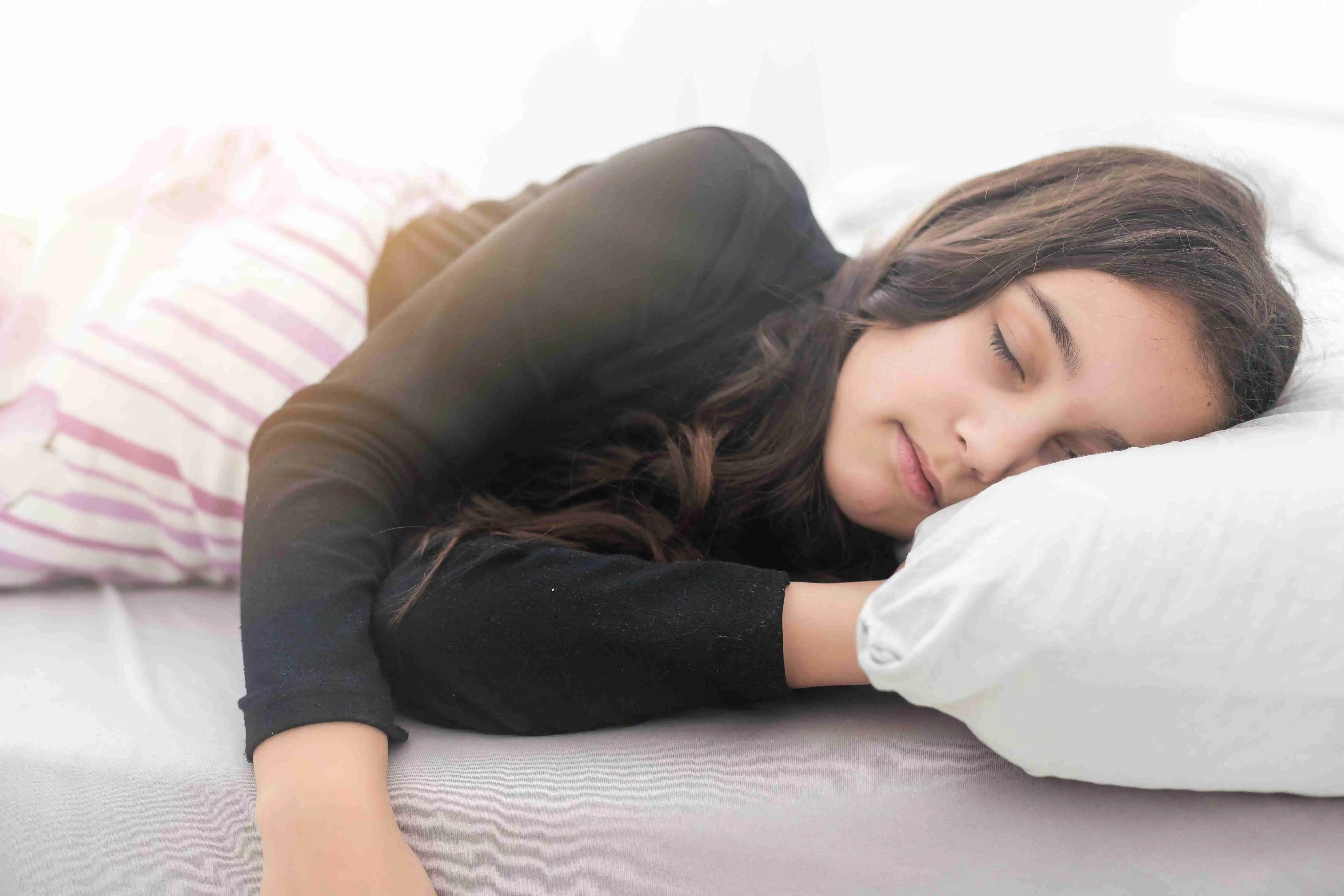

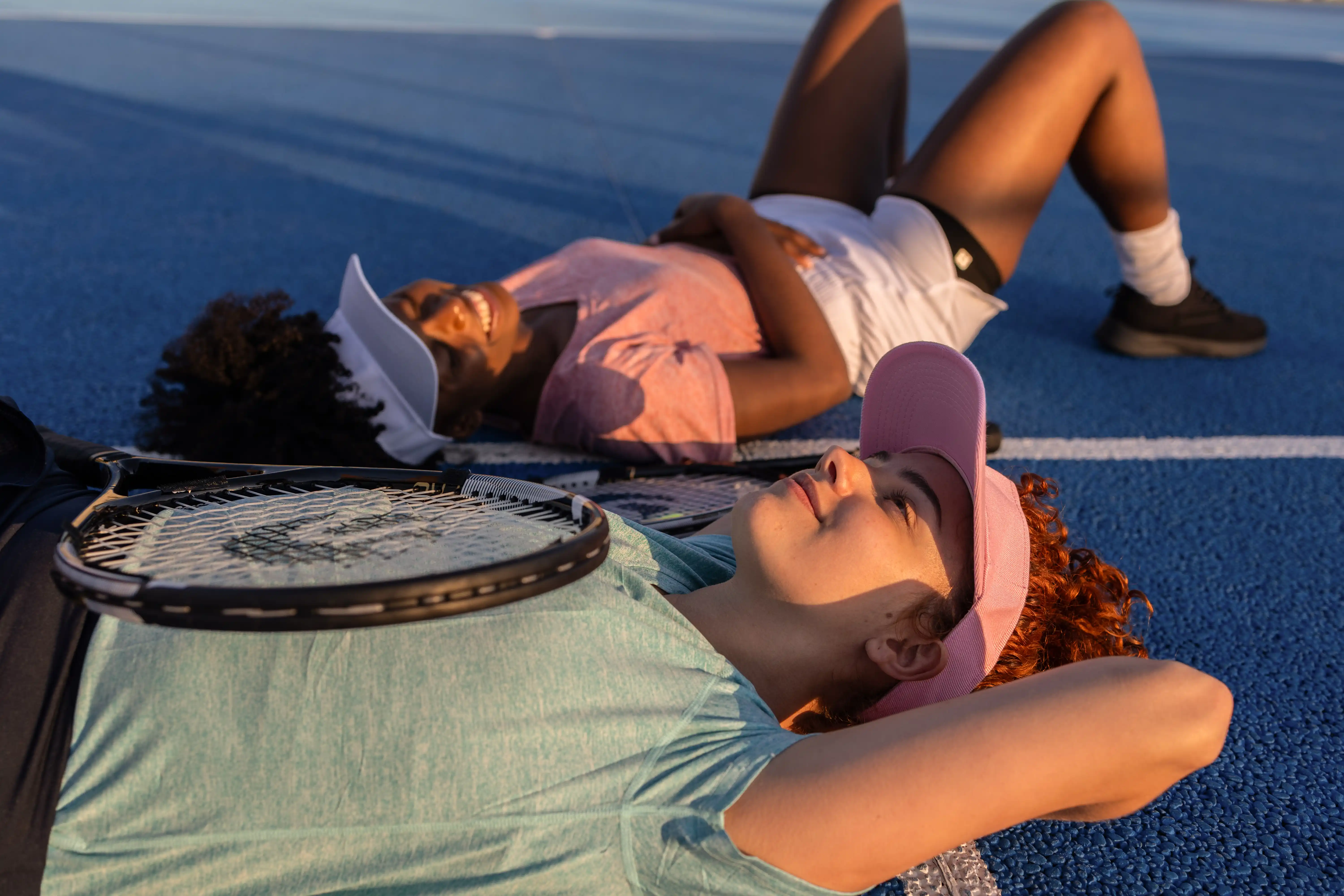
Student athletes do not have one evidence-based sleep number. Age provides the starting point: teenagers ages 13 to 18 should regularly get 8 to 10 hours per 24 hours, while adults should get at least 7 hours a night on a regular basis. Some adults, especially young adults recovering from sleep loss, may appropriately sleep longer 1 2.
Sport can increase recovery demands and make extra sleep opportunity useful. It does not create a proven rule to add one, two, or three hours after a hard session. The 2021 athlete-sleep consensus specifically favors an individualized approach over a single target for every athlete 3.
The most useful question is therefore not only, "How many hours should I sleep?" It is, "Does my schedule give me a realistic chance to meet my age-based need, and am I alert, functioning, and recovering well?"
Start with age, not sport
The American Academy of Sleep Medicine recommendations apply whether a student competes in a varsity sport, club sport, or no organized sport:
- Ages 13 to 18: 8 to 10 hours per 24 hours on a regular basis. This total can include a nap 1.
- Ages 18 and older: at least 7 hours per night on a regular basis. The adult statement does not set an upper limit, and it notes that more than 9 hours may be appropriate for some young adults and people recovering from sleep debt 2.
These are health recommendations, not promises of a particular race time, strength gain, grade, or injury outcome. They also describe sleep obtained, not merely time in bed.
A student who needs to wake at 5:15 a.m. for practice cannot obtain eight hours by getting into bed at 9:15 p.m. if it usually takes 30 minutes to fall asleep and another 20 minutes are lost to awakenings. The plan needs to include enough sleep opportunity for the likely sleep obtained.
Do athletes need more sleep?
They may, but research has not established a universal athlete add-on.
Training load, growth, injury, illness, travel, and prior sleep loss can all affect how much recovery and sleep opportunity an individual needs. Athletes also differ by age, health, sport, season, chronotype, and schedule. The expert athlete-sleep consensus concludes that a one-size-fits-all recommendation is unlikely to be ideal 3.
Sleep-extension studies offer a reason to test a longer opportunity when an athlete is regularly short on sleep or still sleepy. They do not establish a required number. A systematic review found only two eligible controlled studies of sleep extension in athletes. The interventions added about 26 to 106 minutes of sleep, outcomes varied, and the evidence ranged from very low to moderate quality 4.
A broader 2023 review found that sleep extension and naps were the most frequently helpful interventions for physical or cognitive performance. It also emphasized the limited supply of high-quality evidence and the variation among studies 5.
A practical approach is to start with the age recommendation, make sure the athlete has enough opportunity to meet it, and then adjust according to:
- daytime sleepiness and alertness
- ease of waking without repeated alarms
- concentration in class and during practice
- mood and motivation
- sleep quality and repeated awakenings
- training and competition load
- illness, injury, pain, and recovery from prior sleep loss
Feeling exhausted does not always mean the athlete simply needs more hours in bed. If poor recovery or daytime sleepiness continues despite adequate sleep opportunity, use the symptom sections below to identify when an assessment is appropriate.
What sleep can and cannot do for performance
Sleep supports learning, attention, mood, and physical function. Experiments and athlete studies suggest that severe sleep loss can impair some endurance, reaction-time, cognitive, and sport-specific outcomes. The size and consistency of the effect vary by task, timing, type of sleep loss, and study population 3 6.
That evidence does not justify claims that one poor night will ruin every performance or that a certain number of hours will guarantee faster recovery. Studies of complete sleep deprivation also do not perfectly represent the more common student-athlete pattern of losing one or two hours across many nights.
Injury research needs similar care. Reviews of adolescent studies have found associations between chronic short sleep and sports injuries, but much of the evidence is observational. Sleep may be one part of a larger picture that includes training load, prior injury, competition exposure, nutrition, stress, and health 7. Improving sleep is sensible, but it does not replace safe training progression, protective equipment, treatment, or rehabilitation.
Audit the schedule before adding sleep tips
Generic advice cannot create hours that the timetable does not contain. Record seven to 14 typical days, including both training and nontraining days. For each day, note:
- required wake time and why it was required
- time in bed, estimated time to fall asleep, awakenings, final wake time, and time out of bed
- naps and whether they caused grogginess or made nighttime sleep harder
- practice, lifting, games, treatment, travel, classes, study, and paid work
- caffeine and energy drinks, including amount and time
- pain, illness, menstrual changes, medication, and relevant supplements
- daytime sleepiness, mood, concentration, and perceived recovery
Estimates are enough. There is no need to watch the clock overnight or accept a wearable's sleep stages as a diagnosis.
Next, separate the problem into four parts:
- Opportunity: Was there enough time available for sleep?
- Sleep obtained: How much of that opportunity was probably spent asleep?
- Timing and regularity: Did early practices, late games, travel, or weekends repeatedly shift sleep?
- Quality and symptoms: Was sleep fragmented, unrefreshing, or affected by pain, breathing problems, uncomfortable legs, stress, or another concern?
This distinction prevents the wrong fix. A student with only six available hours needs a schedule change, not an insomnia label. A student who allows nine hours but lies awake for long periods needs assessment of the sleep difficulty, not simply an earlier bedtime.
Fix the schedule bottleneck
Early practices
Early training often moves wake time earlier without moving sleep onset by the same amount. If the log shows repeated short sleep before morning sessions, ask whether the session can start later, rotate among athletes, occur less often, or move to another day. Include dressing and travel time, not only the scheduled practice.
Going to bed much earlier may help some athletes, but it is not always immediately possible, especially for teenagers whose body clocks tend to run later. A plan that depends on falling asleep hours before the athlete is sleepy may only add awake time in bed 3.
Late games and practices
Count the full route home: competition, treatment, travel, food, showering, schoolwork, and winding down. If a late event makes the usual sleep target impossible, protect the next morning where possible. A rigid early recovery session can compound the loss.
Postgame alertness does not prove that sleep is unnecessary. It may take time for physical discomfort, emotion, light exposure, food, and caffeine effects to settle. Use the individual log to find which factors actually delay sleep.
Travel
Bus departures and flights can create both early wakes and late arrivals. Plan assignments, meals, transport, and the following day's training before the trip. For travel across time zones, individualized light and sleep timing may help, but a sports-medicine or sleep professional should design the plan for major trips. Do not start melatonin or another sleep aid solely from an online travel schedule 3.
Academics and paid work
Put training, travel, classes, study, deadlines, and work shifts on one weekly calendar. Look for predictable collisions rather than treating each late night as a personal failure. Academic advisers, teachers, coaches, employers, and family may be able to move tutoring, deadlines, transport, or practice tasks when they can see the conflict early.
Caffeine and energy drinks
Caffeine can increase alertness temporarily, but it does not replace sleep and can make later sleep harder. Record the product, dose, and time instead of using labels such as "pre-workout" or "one coffee." Products differ greatly in caffeine content.
The FDA notes that medical experts advise against energy drinks for children and teenagers. It also cautions that sensitivity to caffeine varies and that some medicines and health conditions can change its effects 8.
Do not respond to a late game or early practice by automatically adding caffeine and then a sedative. Student athletes should review performance supplements with an appropriate sports dietitian, athletic trainer, pharmacist, or clinician because ingredients, interactions, contamination risk, and sport rules vary.
Naps and recovery days
A nap can add sleep or reduce sleepiness when nighttime opportunity is limited. There is no single correct nap length or clock time for every athlete. Longer naps may produce more sleep but also more sleep inertia, while late naps may make nighttime sleep harder for some people.
Test a nap only when the schedule allows it. Record how long it took to feel alert afterward and whether nighttime sleep changed. Do not use a nap to make a chronically impossible training schedule appear sustainable.
Recovery days can allow somewhat more sleep after a difficult week. Large swings between weekday and weekend timing, however, may make early wake times harder. The long-term answer to repeated weekday sleep loss is more protected opportunity across the week, not an expectation that one long morning will erase it.
What coaches, schools, and families can change
Student athletes do not control every part of their schedules. A useful sleep plan assigns changes to the people who can make them.
- Coaches and athletic departments can review early starts, late finishes, travel departures, recovery sessions, and consecutive high-load days.
- Schools and colleges can coordinate academic support and make competition-related arrangements before travel.
- Families can help protect transport, meals, a quiet sleep opportunity, and medical follow-up.
- Athletes can report sleepiness, symptoms, caffeine use, and schedule conflicts honestly without being treated as less committed.
Sleep education alone is unlikely to solve a structural shortage. In a large collegiate sample, about one-quarter screened as having a clinically meaningful sleep problem, which supports making sleep screening part of athlete care rather than relying only on willpower 9.
When sleepiness may point to another problem
Ask a healthcare provider or sports-medicine clinician for help when sleep difficulty or sleepiness is persistent, worsening, or interfering with school, sport, mood, or safety.
Insomnia and circadian problems
Trouble falling asleep, staying asleep, or getting good-quality sleep despite a suitable opportunity can be insomnia 10. A student who cannot fall asleep until very late but sleeps well on a later schedule may instead have a circadian timing problem. These patterns need different plans. Repeatedly forcing an earlier bedtime is not a diagnosis or a complete treatment.
Sleep apnea
Loud habitual snoring, breathing that stops and starts, gasping, morning headaches, or marked daytime sleepiness warrant evaluation. Sleep apnea can occur in athletes, including athletes with large necks or body size, and fitness does not rule it out 11.
Restless legs
An urge to move the legs that begins or worsens at rest, improves temporarily with movement, and is worse in the evening or at night can suggest restless legs syndrome. A clinician may review iron status, medicines, and other possible causes. Do not start high-dose iron without testing and medical guidance 12.
Low energy availability and eating concerns
Persistent fatigue and poor recovery are not always sleep problems. Relative Energy Deficiency in Sport, or REDs, can affect athletes of any sex when energy intake is inadequate relative to exercise demands. Possible concerns include recurrent injuries, declining performance, menstrual changes, low libido, frequent illness, feeling cold, food or weight preoccupation, restrictive eating, and compulsive extra exercise. No single symptom proves REDs, and diagnosis requires clinical assessment 13.
Bring these concerns to a sports-medicine clinician and a sports dietitian. Eating-disorder symptoms, purging, severe restriction, fainting, chest symptoms, or rapid physical decline need prompt care.
Pain, injury, and concussion
Pain can fragment sleep, while poor sleep can make pain and fatigue harder to manage. New or worsening symptoms after injury should be assessed rather than treated by simply adding rest.
After a bump, blow, or jolt to the head or body, remove an athlete from play if concussion is suspected. The CDC advises no same-day return and no return to sport until a healthcare provider clears and supervises the process 14. Worsening headache, repeated vomiting, seizure, increasing confusion, weakness, unequal pupils, loss of consciousness, or unusual difficulty waking requires emergency evaluation 14.
Mood, medicines, and safety
A major change in mood, panic, loss of interest, severe irritability, hopelessness, self-harm thoughts, or behavior that feels unsafe deserves prompt mental health support. Immediate danger requires emergency care.
Do not borrow a teammate's stimulant, sleep medicine, antihistamine, pain medicine, or supplement. Do not change a prescription because it seems to affect sleep without speaking to the prescriber. Both sedating and stimulating substances can alter sleep, alertness, and sport safety.
Severe sleepiness is a stop signal. Do not drive, operate machinery, train alone in water, climb, lift heavy weight without safe support, or participate in contact drills when you cannot stay alert. The National Highway Traffic Safety Administration warns that caffeine or energy drinks alone may not prevent microsleeps in a seriously sleep-deprived driver 15.
A useful target is one you can test
Start with the age-based recommendation. Build enough opportunity to obtain it, then use one or two weeks of sleep and schedule notes to find the real barrier. If the athlete remains sleepy or poorly recovered despite adequate opportunity, extend the opportunity modestly and look for symptoms rather than inventing a universal athlete number.
The best sleep plan is not the plan with the strictest bedtime or the largest hour target. It is the plan that accounts for school and sport, protects safety, responds to the athlete's actual pattern, and brings in medical or organizational help when the problem is bigger than a bedtime habit.