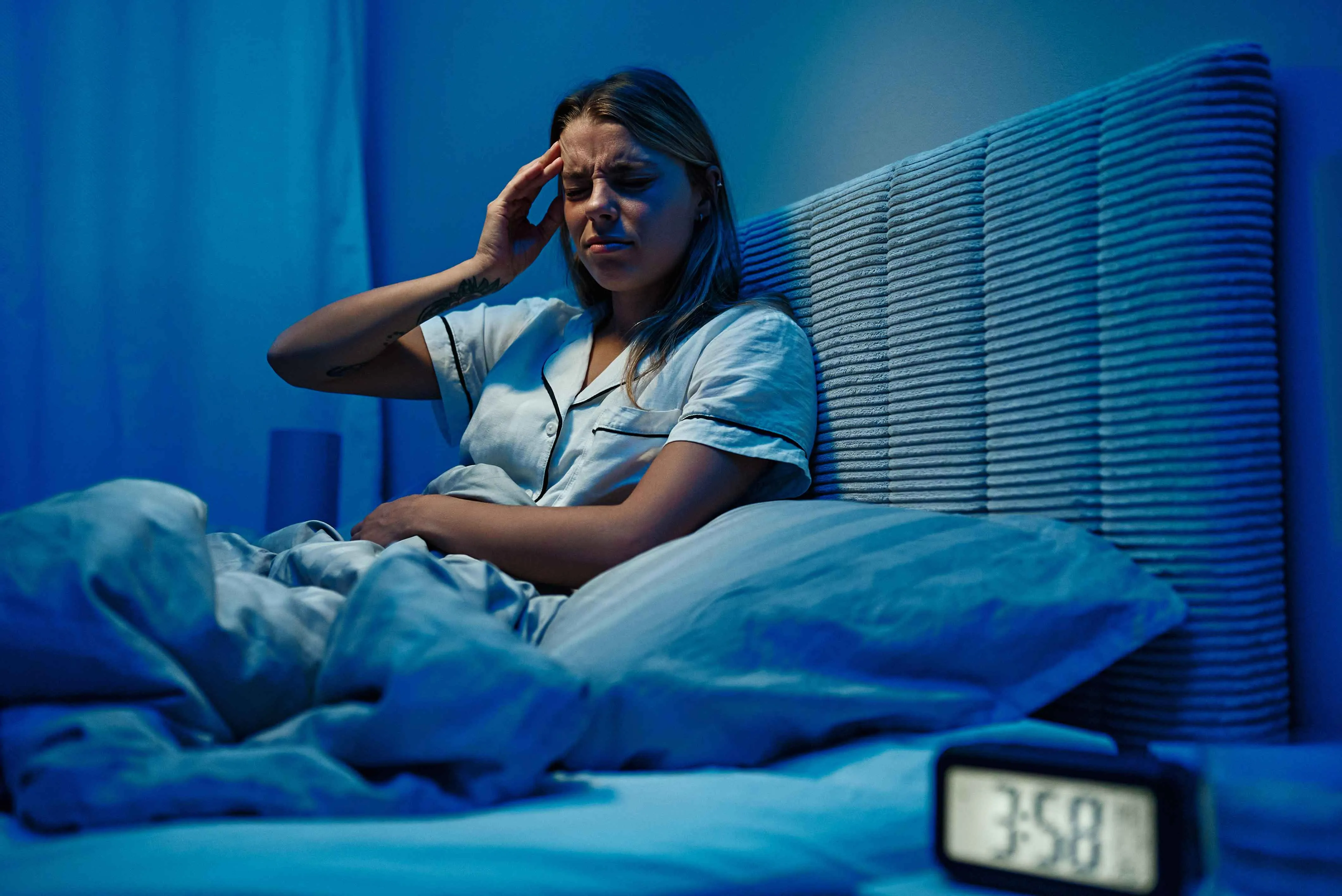


Sleep itself is generally safe after a suspected concussion. The important step is to assess whether the person could have a more serious brain or neck injury before simply putting them to bed. Sleep should never replace action on danger signs.
A concussion is a type of mild traumatic brain injury. Symptoms can include headache, dizziness, nausea, light or noise sensitivity, slowed thinking, memory trouble, irritability, fatigue, and sleeping more or less than usual. Some symptoms begin immediately, while others become noticeable hours or days later 1.
The concern after a head injury is not that sleep causes a person to deteriorate. It is that increasing drowsiness, confusion, or inability to wake can be mistaken for ordinary tiredness while a more serious injury is developing.
Get emergency help for danger signs
Call local emergency services or go to an emergency department now if an adult or child develops any of these signs after a blow or jolt to the head or body:
- a headache that keeps getting worse or does not go away
- repeated vomiting
- a seizure or convulsion
- new weakness, numbness, poor coordination, or trouble walking
- slurred speech or trouble speaking
- increasing confusion, agitation, unusual behavior, or inability to recognize people or places
- one pupil larger than the other, double vision, or another new major visual change
- increasing drowsiness, inability to stay awake when expected, or inability to wake
- loss of consciousness after the initial injury or another clear decline in responsiveness
- clear fluid or blood leaking from an ear or the nose, or signs of an open or depressed skull injury
- severe neck pain or tenderness, especially with weakness, numbness, or a high-impact mechanism 123
An infant or young child also needs emergency care if they cannot be consoled or will not nurse or eat after the injury 1.
Do not delay emergency care to keep the person awake or perform repeated home tests. If a neck injury is possible, avoid unnecessary movement and follow the emergency dispatcher's instructions.
Some situations need a lower threshold for assessment
Not every minor bump requires an emergency department visit or a CT scan. Appropriate assessment means considering the symptoms, mechanism, alertness, medicines, health history, and whether reliable observation is available. Depending on those details, the next step may be emergency care, urgent clinical or telephone assessment, or home monitoring under a specific discharge plan.
Seek prompt professional advice after a head injury when the person:
- takes an anticoagulant or antiplatelet medicine, or has a current bleeding or clotting disorder
- is an older adult, particularly after loss of consciousness or amnesia
- was intoxicated, because alcohol or drugs can obscure a change in consciousness
- lost consciousness, cannot remember the injury or events around it, or has ongoing amnesia
- was injured in a dangerous mechanism, such as a high-speed crash, ejection, being struck as a pedestrian or cyclist, or a substantial fall
- has no reliable adult available to observe them
- is a baby, young child, or someone whose usual communication or cognition makes a change difficult to assess 2
These features do not prove that bleeding is present and should not be used as a home scoring system. A clinician should decide whether examination, observation, imaging, or another step is appropriate. CT can identify injuries such as bleeding or a skull fracture, but it is not routinely used merely to confirm a concussion 24.
Any child with a suspected concussion should be evaluated by a healthcare professional. An athlete with a suspected concussion should be removed from play immediately and should not return that day 56.
Do you need to keep someone awake?
No blanket rule requires a person with a concussion to stay awake. If the person has no danger signs and the assessment or discharge advice supports care at home, it is reasonable to let them sleep 37.
Many head-injury discharge plans call for a responsible adult to stay with the person during the first 24 hours. That observer should know the person's usual behavior, have the written instructions, and be ready to seek help if symptoms worsen 2.
A clinician may sometimes recommend overnight observation or scheduled waking checks because of the injury pattern, symptoms, timing, or local discharge protocol. If that happens, follow the exact instructions about how often to check, what response is expected, how long monitoring should continue, and which finding requires emergency care. Do not create a routine of waking every few hours without that instruction 3.
For children and teens without danger signs, CDC guidance says they can sleep uninterrupted rather than being automatically awakened every few hours 7.
Normal fatigue versus difficulty waking
Fatigue, grogginess, sleeping more than usual, sleeping less than usual, and trouble falling asleep can occur after a concussion. A sleeping person who wakes to a voice or gentle touch, responds appropriately for their age, recognizes the caregiver, and moves normally is different from someone whose responsiveness is deteriorating 1.
Get emergency help if the person becomes progressively harder to wake, cannot be awakened, cannot keep their eyes open during a time they would normally be awake, answers incoherently, develops new confusion, or has weakness on one side. Do not repeatedly shake a child or adult in an attempt to prove they are awake.
How to rest during the first days
Current guidance favors relative rest, not prolonged bed rest or isolation in a dark room. During the first 24 to 48 hours, allow sleep and quiet daily activities. Short walks and other light activity may be reasonable if they do not significantly worsen symptoms. After one or two days, activity should gradually increase below the level that causes more than a mild, brief symptom increase 89.
Use screens, reading, bright light, noise, and social activity according to symptoms. Reduce or pause an activity if it clearly worsens headache, dizziness, nausea, vision trouble, or mental fatigue. There is no need to force complete darkness or ban all screens when they are tolerated 97.
Choose a comfortable sleep position unless the clinical team gave instructions for another injury. Back sleeping and head elevation should not be used as a treatment for brain pressure or swelling. If there is concern about a neck injury, follow the movement and positioning instructions from the emergency or trauma team.
Avoid alcohol and recreational drugs during recovery. Do not add a sleeping pill, sedating antihistamine, tranquilizer, opioid, cannabis product, or other sedating substance unless the treating clinician has specifically cleared it. Sedation can worsen balance and make changes in alertness harder to recognize. Do not abruptly stop a prescribed medicine; ask the prescriber how to handle it 10.
Return to school, work, driving, and sport
Recovery is based on symptoms and function, not a fixed number of days.
- School and work: A short absence may be useful at first, but extended complete rest is not routinely recommended. Many people can begin a gradual return after one or two days with breaks, reduced workload, less screen exposure when provoking, or other temporary adjustments 84.
- Driving and hazardous work: Do not drive, cycle in traffic, operate machinery, work at heights, or perform another safety-sensitive task while dizziness, slowed reactions, vision problems, significant headache, or drowsiness could impair safety. Follow the clinician's return instructions 11.
- Sport: A suspected concussion means no same-day return to play. Return first to regular non-sport activities, then use a healthcare-supervised stepwise return-to-sport progression. Contact or collision risk comes last, after the required symptom and medical-clearance steps 69.
If an activity causes more than a mild or brief increase in symptoms, stop and return to the last tolerable level. A new hit to the head, a fall, or any danger sign needs fresh assessment.
Guidance for parents and caregivers
A child who has been assessed and has no danger signs can sleep. Do not force the child to stay awake, make them sleep, or isolate them in a dark room all day. When awake, offer calm activities and gradually reintroduce normal routines according to symptoms 7.
Follow the child's written discharge plan and keep a responsible adult available during the initial observation period. Watch for changes from the child's baseline, including unusual irritability, inconsolable crying, refusal to feed, worsening balance, repeated vomiting, abnormal drowsiness, or loss of a skill 12.
Many children can start returning to school within one or two days, even if mild symptoms remain, with temporary supports as needed. Return to sports is separate and must follow the staged protocol after the child is back to regular non-sport activities 74.
When to follow up
Seek earlier review if symptoms are worsening, new symptoms appear, sleepiness is increasing, or gradual activity repeatedly causes substantial symptoms. Contact the treating clinician if headache, dizziness, concentration problems, mood changes, or sleep disruption are not steadily improving or interfere with school, work, or daily life.
Recovery time varies. Older adults, young children, and people with a previous brain injury may recover more slowly. Persistent symptoms may need a clinician experienced in concussion or traumatic brain injury rather than more complete rest on one's own 82.
Sleep is allowed after a concussion when the person is safe for home care and has no danger signs. The practical safeguards are appropriate initial assessment, a reliable observer when advised, a clear discharge plan, and immediate action if alertness or other symptoms worsen.