
A "light sleeper" is someone who wakes easily or is more aware of waking during the night. It is an informal description, not a sleep-disorder diagnosis. It also does not prove that you spend too much time in N1 or N2 sleep, miss deep sleep or REM sleep, or have a particular health problem.
The more useful questions are what wakes you, how long you stay awake, whether you can return to sleep, and how you function the next day. Those details help separate normal brief awakenings from disrupted sleep that needs attention.
Waking easily is not the same as having "light sleep"
People can mean several different things when they call themselves light sleepers:
- Low awakening threshold: A sound, movement, temperature change, or touch wakes you readily.
- Strong memory of waking: You remember awakenings that another person might forget.
- Poor sleep continuity: You wake repeatedly or stay awake for long periods.
- Unrefreshing sleep: You sleep for an adequate amount of time but still feel tired or impaired.
- A tracker report: A device estimates that you had little "deep" or REM sleep.
These experiences can overlap, but they are not interchangeable. A person may notice one short awakening and feel well the next day. Another may have many breathing-related arousals without remembering them. Someone else may remember a long period awake because pain, worry, or a partner's movement kept interrupting sleep.
Brief awakenings are part of normal sleep. The National Heart, Lung, and Blood Institute notes that people may wake briefly as they move through repeated sleep cycles 1. Those awakenings are not always stored in memory. In a preliminary home study of 39 healthy adults, the time awake needed for morning recall varied from 30 seconds to 10 minutes, with an average a little over four minutes. The study used wrist actigraphy rather than brain-wave measurements, so the number is not a diagnostic cutoff 2.
What sleep stages do and do not tell you
Sleep cycles through three non-REM stages and REM sleep. N1 is the transition from wakefulness into sleep. N2 is established sleep, not an inferior or useless stage. N3 is slow-wave sleep, and REM sleep becomes more prominent later in the night. A typical night includes repeated cycles, with more N3 earlier and more REM later 1.
No single stage is the only "restorative" one. The stages differ in brain activity and physiology, and normal amounts vary across the night and across a person's life. N3 generally decreases with age, for example 1.
Feeling easy to wake does not reveal how much time you spent in each stage. Measuring sleep stages requires signals such as brain activity and eye movements in a sleep study. A consumer watch or ring estimates stages indirectly, and its display cannot establish a stage deficiency or explain why you woke. The American Academy of Sleep Medicine states that consumer sleep technologies should not be used to diagnose or treat sleep disorders 3.
Use a tracker, if you enjoy one, to notice broad patterns such as bedtimes or estimated sleep duration. Do not chase a nightly deep-sleep percentage or make health decisions from one stage score.
Why you may wake easily or often
There is no single light-sleeper cause. Start with what happens around each awakening rather than assuming your brain is failing to reach deep sleep.
Your surroundings and responsibilities
Intermittent traffic, neighbors, light, a warm room, a partner moving or snoring, pets, and a child or family member who needs care can all break sleep. Shift work, travel, and an irregular schedule can also place sleep at the wrong time for your body clock. NHLBI identifies noise, light, uncomfortable temperatures, schedule changes, shift work, and caregiving interruptions among factors that can disturb sleep 4.
Stress and learned alertness
Stress, grief, anxiety, nightmares, and post-traumatic stress can make the mind and body more alert at night. Worrying about sleep itself can add another layer. Clock-checking after every awakening may turn a short interruption into a longer period of monitoring and mental calculation. NHLBI lists stress and worry about getting enough sleep as insomnia risk factors 4.
Sleep opportunity and timing
Too little time reserved for sleep can cause daytime sleepiness even if the sleep you do get is continuous. Spending much longer in bed than you can sleep may create more opportunities to notice wakefulness. An irregular schedule, long naps, or a mismatch between your sleep window and body clock can also make sleep less stable.
Substances and medicines
Caffeine and nicotine can promote alertness. Alcohol may make sleep onset feel easier but can contribute to later disruption. Changes in cannabis use are also worth recording. A systematic review found that sleep difficulty is a common feature of cannabis withdrawal, while the underlying studies varied substantially and had important limitations 5. Prescription medicines, over-the-counter products, and supplements can also cause alertness, sedation, urination, movement symptoms, nightmares, or breathing changes. Do not stop a prescribed medicine abruptly. Ask a clinician or pharmacist whether timing, dose, interactions, or a safer alternative should be reviewed.
Physical and hormonal symptoms
Pain, reflux, coughing, congestion, itching, hot flashes, night sweats, and frequent urination can wake you without being sleep disorders themselves. Pregnancy and menopause can also change sleep. Thyroid conditions, mood disorders, and other medical problems may contribute. A clinical evaluation considers symptoms, health history, medicines, substance use, pregnancy or menopause, and whether testing for another condition is appropriate 6.
Sleep disorders
Repeated awakenings can be part of insomnia, obstructive sleep apnea, restless legs syndrome, periodic limb movements, circadian rhythm disorders, parasomnias, or nightmare disorder.
Loud habitual snoring, witnessed breathing pauses, gasping, morning headaches, frequent nighttime urination, and marked daytime sleepiness can point toward sleep apnea. Not everyone who snores has apnea, and apnea can occur without a person remembering awakenings 7.
An uncomfortable urge to move the legs that begins or worsens during rest, is temporarily relieved by movement, and is worse in the evening fits the core pattern of restless legs syndrome. Periodic limb movements are involuntary jerks during sleep and may be noticed first by a bed partner 8.
Sleepwalking, dream enactment, confused behavior, screaming, or movements that risk injury are not explained by simply being a light sleeper. They deserve clinical attention, especially when new in adulthood or becoming more frequent. REM sleep behavior disorder, for example, can cause potentially injurious dream enactment and may be related to a medicine or another medical or neurological condition 9.
What about sleep spindles and sensitivity to noise?
Sleep spindles are brief patterns of brain activity seen on an electroencephalogram, or EEG, during non-REM sleep. One small laboratory study exposed 12 healthy adults to sounds during sleep. People with higher spontaneous spindle rates generally needed louder sounds before the EEG showed an arousal 10.
This is an interesting group association, not a personal test or treatment plan. The study did not show that everyone who wakes easily has too few spindles, that spindle rate explains awakenings from pain or breathing problems, or that a person can train spindles to become a deeper sleeper. You cannot infer your spindle activity from a consumer tracker or from how alert you feel at night.
When is light sleeping harmless, and when is it insomnia?
Waking easily may be harmless when awakenings are brief, you return to sleep without much difficulty, you have a reasonable opportunity for sleep, and you feel rested and function well during the day.
Insomnia involves persistent difficulty falling asleep, staying asleep, or returning to sleep despite adequate opportunity and circumstances for sleep, together with distress or daytime impairment. The label depends on the pattern and its effect on your life, not on a sleep-stage score.
Consider an evaluation when the problem is persistent or worsening, or when you notice:
- difficulty returning to sleep and significant distress about it
- sleepiness, fatigue, concentration problems, mood changes, or reduced function
- loud snoring, breathing pauses, gasping, or waking short of breath
- strong leg urges, repeated jerking, or painful nighttime sensations
- unusual movements, dream enactment, sleepwalking, or injuries
- pain, reflux, hot flashes, frequent urination, medication effects, or another symptom that repeatedly wakes you
A sleep study is not routinely needed just because you identify as a light sleeper. Clinical history and a sleep diary often come first. Polysomnography is more useful when symptoms suggest another sleep disorder, such as sleep apnea or a movement disorder, or when insomnia has not responded to appropriate treatment 11.
A focused way to find what helps
Avoid changing five things at once. A short, one-variable experiment is more likely to reveal what matters.
- Define the problem. For one to two weeks, record bedtime, estimated sleep onset, awakenings you remember, how long you were awake, final wake time, and next-day sleepiness or function. Note obvious events such as noise, pain, heat, bathroom trips, nightmares, breathing symptoms, leg discomfort, caffeine, alcohol, and medicine changes. NHLBI recommends a one-to-two-week sleep diary to help connect sleep problems with habits and symptoms 6.
- Protect enough sleep opportunity. Keep a reasonably consistent wake time and reserve enough time for sleep. If your schedule is the main constraint, sound masking will not replace the missing hours.
- Choose one likely trigger. Move late caffeine earlier, address a recurring noise, discuss a medicine with a pharmacist, manage room temperature, or seek care for a physical symptom. Keep the rest of the routine stable for several nights when practical.
- Judge the result by function. Look for easier return to sleep, fewer remembered disruptions, and better daytime alertness. Do not require a tracker to report more deep sleep.
- Escalate when the pattern points elsewhere. A trigger experiment should not delay evaluation of breathing pauses, severe sleepiness, dangerous behaviors, persistent pain, or chronic insomnia.
Make the room less disruptive without blocking safety signals
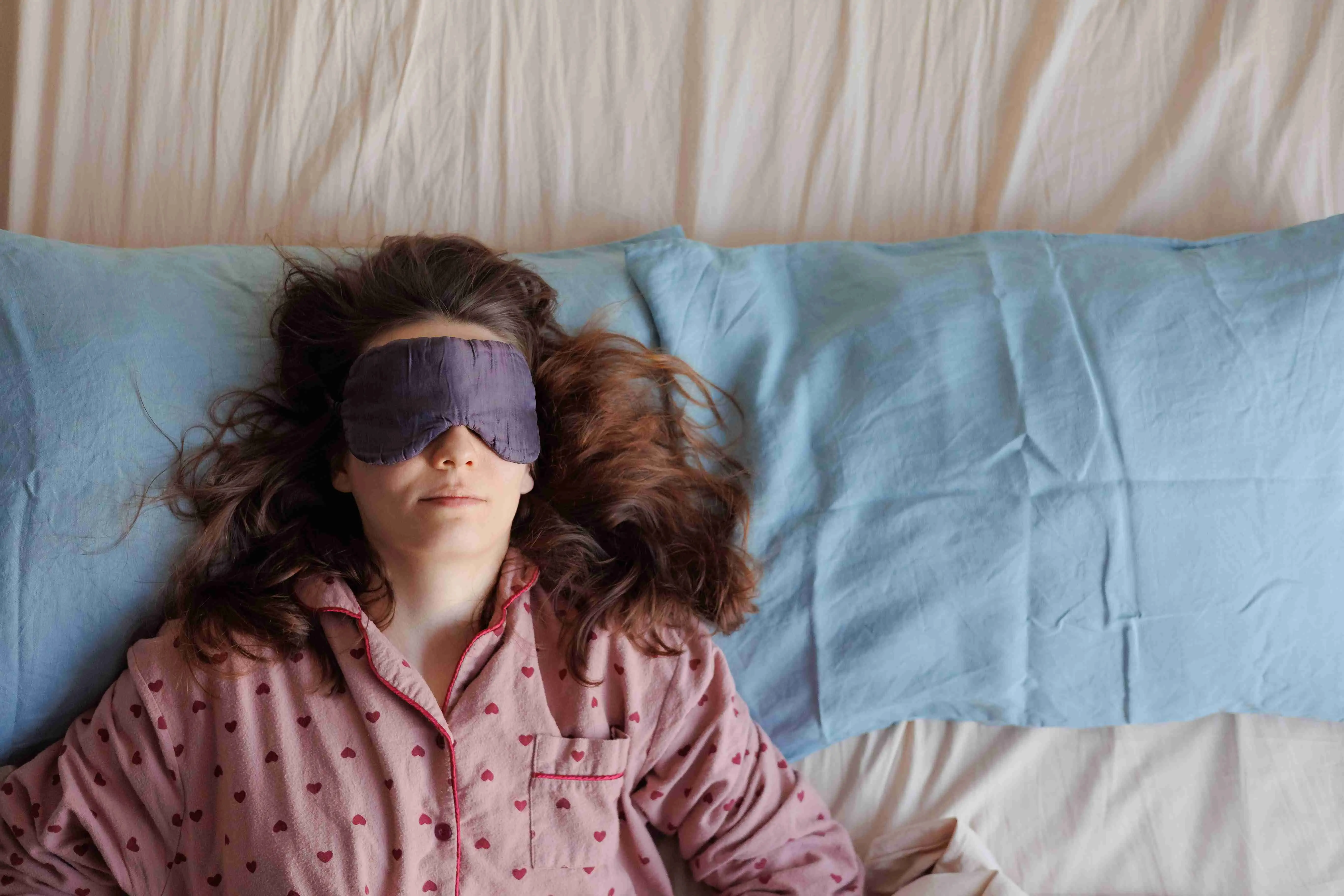
A dark, quiet, comfortably cool room is a reasonable starting point. Blackout shades or an eye mask can reduce light. Soft earplugs, a fan, or steady sound may make intermittent noise less noticeable 12.
Evidence for continuous noise as a sleep aid is mixed. A systematic review found substantial differences among studies and concluded that better research was needed before continuous noise could be broadly promoted for sleep. It also raised the possibility of sleep or hearing harms 13.
Treat sound masking as an individual trial, not a promise that white, pink, or brown noise will improve sleep. Use the lowest volume that makes the disturbing sound less noticeable, keep speakers away from your head, and stop if the sound is irritating or leaves your ears ringing.
Earplugs and masking sound must not prevent you from hearing a smoke or carbon monoxide alarm, a child, a person you care for, or a required medical alert. Test the actual setup from the bed. If you need to hear certain sounds, reduce the masking level or use an alert system designed for that need.
Treatment depends on the actual problem
If the main issue is chronic insomnia, cognitive behavioral therapy for insomnia, or CBT-I, is the leading treatment. It combines behavioral and cognitive methods to reduce the patterns that keep insomnia going. The American Academy of Sleep Medicine gives multicomponent CBT-I a strong recommendation for adults with chronic insomnia 14.
Sleep hygiene alone is not a complete treatment for chronic insomnia. Sleep apnea, restless legs syndrome, pain, reflux, menopause symptoms, nightmares, and medication effects need their own evaluation and management. Sedatives, supplements, alcohol, and cannabis should not be used simply to force more "deep sleep" on a tracker.
Do not drive when you are struggling to stay awake. Drowsiness impairs performance and raises crash risk, and caffeine alone may not make serious sleep deprivation safe 15.
Seek urgent medical help for severe or sudden breathing difficulty, chest pain, a new seizure, sudden weakness or confusion, or a rapidly worsening neurological or respiratory change. Those symptoms are not ordinary light sleeping.