
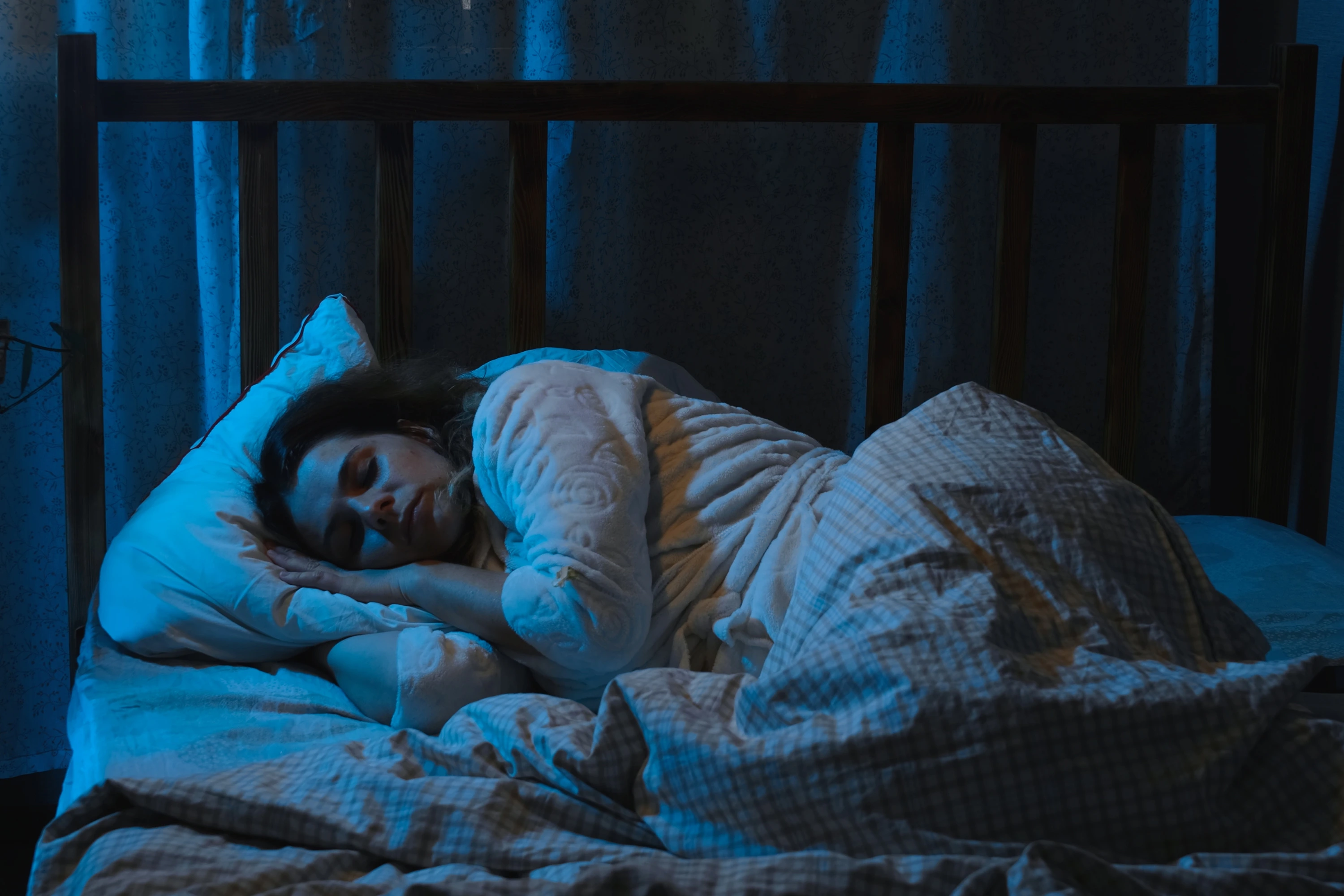
A warm room, heavy bedding, or heat-trapping sleepwear can cause ordinary sweating. Night sweats are more concerning when they recur in a comfortably cool room, wake you, or soak clothing or bedding. Medical definitions are not fully consistent, so the pattern and accompanying symptoms matter more than a single damp night 12.
Perimenopause and menopause are common causes in women, but sweating should not be assumed to be hormonal. Pregnancy and postpartum changes, medicines, low blood sugar, hyperthyroidism, infection, obstructive sleep apnea (OSA), and other conditions can produce a similar symptom. Most people who report persistent night sweats in primary care do not have a serious underlying disorder, but objective fever, unexplained weight loss, enlarged lymph nodes, or other specific findings deserve evaluation 1.
First, separate overheating from recurrent night sweats
Before looking for a medical cause, note the room temperature, bedding, sleepwear, a heated mattress pad, and whether a bed partner is also too warm. If reducing the heat load stops the sweating, the response was likely environmental. If you still wake drenched in a comfortable room, record the episode rather than repeatedly changing products or trying to mask it with antiperspirant.
The amount of sweat does not identify the cause by itself, and evidence has not established that severity alone reliably identifies a high-risk cause. Frequency, timing, associated symptoms, and changes from your usual pattern are more useful 12.
Causes that matter most in women
Perimenopause and menopause
Vasomotor symptoms are episodes of heat, flushing, and sweating that can happen during the day or at night. They often begin during perimenopause, when menstrual timing or flow is changing, and can continue after the final menstrual period. Not every person has the same frequency, intensity, or duration.
In an otherwise healthy woman aged 45 or older, new vasomotor symptoms plus menstrual-cycle changes usually identify perimenopause clinically. NICE advises against routine ovarian hormone or imaging tests to confirm it in this setting because hormone levels fluctuate and the tests do not improve the diagnosis. Testing is more likely to be useful when symptoms start younger, the pattern is atypical, or another cause is suspected 3.
A sudden wave of heat followed by sweating or chills fits a vasomotor pattern better than continuous dampness all night. Drenching sweats that begin after menopausal symptoms had been stable, occur without a heat episode, or arrive with fever, weight loss, swollen nodes, cough, or another new symptom should not automatically be labeled menopause.
Pregnancy and postpartum
Nighttime hot flashes and sweating are reported during pregnancy and after delivery. A prospective study followed 429 women through pregnancy and the first postpartum year and found self-reported nighttime hot flashes in both periods. It did not establish a universal trimester pattern or prove that every drenching sweat during pregnancy is a normal hormonal event 4.
Tell the obstetric clinician about new, recurrent, or drenching episodes, especially when the cause is not obvious. During pregnancy and for a year after delivery, sweating with a measured fever, trouble breathing, chest pain, a fast or irregular heartbeat, fainting, a severe or worsening headache, severe abdominal pain, or foul-smelling vaginal discharge needs immediate medical attention 5.
Medicines
A medication can cause sweating directly, alter temperature regulation, trigger a hot flash, or lower blood glucose. Relevant examples include some antidepressants, opioids, corticosteroids, thyroid hormone, insulin and some other diabetes medicines, and treatments that reduce or block estrogen. The timing of a new medicine, dose change, missed dose, or taper can be more informative than the drug name alone 16.
Do not stop an antidepressant, hormone medicine, opioid, steroid, or other prescription abruptly to test whether it caused the sweating. Ask the prescriber or pharmacist whether the timing fits and whether a dose, schedule, or alternative can be adjusted safely. Some SSRIs and SNRIs reduce menopausal vasomotor symptoms but can also increase sweating in some users. The prescriber should choose based on the symptom pattern, other conditions, and prior response 67.
Hyperthyroidism
An overactive thyroid can cause generalized sweating and heat intolerance. Clues include a rapid or irregular heartbeat, tremor, weight loss despite appetite, frequent bowel movements, anxiety or irritability, and trouble sleeping. These features make thyroid testing more useful than sweating alone 8.
Low blood sugar
Nighttime hypoglycemia is particularly relevant for people using insulin or medicines that make the pancreas release insulin. It can cause sweating sufficient to damp pajamas or sheets, nightmares or crying out, and tiredness, irritability, or confusion on waking 9.
If this pattern fits, check glucose or review continuous glucose monitor data according to the diabetes plan, and discuss recurring episodes promptly with the diabetes clinician. Severe confusion, loss of consciousness, or a seizure may be severe hypoglycemia and needs immediate treatment and emergency help 9.
Infection and inflammatory illness
Acute fever from a respiratory, urinary, breast, pelvic, or other infection can produce sweating as temperature falls. Longer-lasting infections, including tuberculosis or HIV, belong in the differential only when symptoms, exposure, travel, immune status, or other risk factors make them plausible. Fever or chills, persistent cough, localized pain or swelling, painful urination, a new rash, or feeling markedly unwell helps direct the evaluation 1.
Autoimmune and inflammatory diseases can also cause systemic symptoms, but night sweats alone do not identify one. Joint swelling, persistent rash, unexplained pain, or other organ-specific symptoms are more useful than a broad autoimmune test panel 1.
Obstructive sleep apnea
Night sweats can accompany OSA. In an Icelandic cohort, frequent nocturnal sweating was reported more often by people with untreated OSA than by controls and decreased among those using positive airway pressure consistently. The study shows an association and treatment response in that cohort, not that sweating diagnoses OSA 10.
Ask about OSA when sweating occurs with loud snoring, witnessed breathing pauses, gasping, morning headaches, or persistent daytime sleepiness. A clinician can determine whether a home sleep apnea test or laboratory study is appropriate. Do not drive when sleepiness makes it difficult to stay alert 11.
What about cancer?
Lymphoma and some other cancers can cause drenching night sweats, but night sweats are rarely their only presenting feature. Objective fever, unexplained weight loss, enlarged lymph nodes, unusual bruising or bleeding, or persistent unexplained fatigue make medical review more important. Night sweats alone are not a cancer diagnosis or a reason to assume the worst 12.
Keep up with the cancer screening recommended for your age and history. Additional imaging or a biopsy should be driven by the examination, blood results, a persistent enlarged node, or another specific concern rather than sweating alone 1.
What to record before an appointment
A short log can turn a vague symptom into a useful clinical history. Record:
- whether sleepwear or bedding was damp or needed changing
- room temperature, bedding, sleepwear, and any measured body temperature
- whether a wave of heat, flushing, chills, panic, nightmare, snoring, or gasping came first
- menstrual pattern, the date of the last period, and pregnancy or postpartum status
- all medicines and supplements, including recent starts, dose changes, missed doses, and hormone or cancer treatment
- glucose readings when relevant, plus alcohol, nicotine, and other substance use
- weight change, fever, cough, pain, swollen nodes, palpitations, tremor, bowel changes, bruising, or bleeding
- how often sleep is interrupted and whether daytime alertness or safety is affected
The log is not a test, and it does not need to continue indefinitely. A representative pattern and an accurate medication list are enough to start.
How clinicians evaluate recurrent night sweats
There is no single blood panel that explains night sweats, and published diagnostic algorithms have limited direct evidence. The history and examination should determine the first tests 21.
- A typical perimenopause pattern at age 45 or older often needs no confirmatory hormone test 3.
- Possible nocturnal hypoglycemia is evaluated with glucose data during the typical period, not with a guess based on sweating alone 9.
- Heat intolerance, tremor, palpitations, or weight loss may lead to thyroid-stimulating hormone and thyroid-hormone testing 8.
- Fever, exposure, travel, cough, immune status, or examination findings may guide a blood count, inflammatory markers, cultures, HIV or tuberculosis testing, or chest imaging 1.
- Snoring, gasping, witnessed pauses, and daytime sleepiness may lead to an OSA evaluation 11.
- Enlarged nodes, abnormal blood counts, unexplained weight loss, or other focal findings determine whether cancer-focused testing is warranted 1.
If the initial evaluation is reassuring and no serious cause is suspected, monitoring the pattern is reasonable. More testing is not automatically better 1.
Relief while the cause is being clarified
A cooler room, lighter layered bedding, breathable sleepwear, and dry clothes within reach can reduce heat load and make an episode less disruptive. These are comfort measures, not treatments for menopause, infection, thyroid disease, hypoglycemia, or OSA.
Do not assume spicy food, caffeine, or another single item is a universal trigger. If the log shows a repeated personal link, a limited change can test it. Evidence does not support broad trigger avoidance or cooling techniques as reliable treatments for menopausal vasomotor symptoms 7.
Replacing fluid after heavy sweating can address thirst, but extra water does not correct the underlying cause. When sweating is generalized, an underarm antiperspirant does not address the reason it is happening.
Evidence-based treatment for menopausal night sweats
Treatment is reasonable when vasomotor symptoms are bothersome or disrupting sleep. The choice should reflect symptom severity, medical history, current medicines, preferences, and whether contraception is still needed.
Menopausal hormone therapy
Systemic menopausal hormone therapy is the most effective treatment for vasomotor symptoms, including menopause-related night sweats 123. A woman with a uterus generally needs a progestogen with systemic estrogen to protect the uterine lining; estrogen alone is usually used after hysterectomy 3.
This is not a blanket recommendation to start hormones. Eligibility and risk depend on age, time since menopause, route, dose, duration, whether a progestogen is used, and personal history. Unexplained vaginal bleeding, estrogen-sensitive cancer, blood clots, stroke, coronary heart disease, and liver disease can change the choice or make systemic therapy unsuitable. A clinician should select and periodically review the regimen 12.
Established nonhormonal options
Evidence-supported nonhormonal choices include menopause-focused cognitive behavioral therapy (CBT), certain SSRIs or SNRIs, gabapentin, fezolinetant, and in selected cases oxybutynin. They are alternatives when hormones are not wanted or appropriate, not interchangeable sleep aids 7.
Selection still requires tradeoffs. An antidepressant may cause sweating or other adverse effects in one person even when it reduces hot flashes in another. Gabapentin can impair alertness, and oxybutynin has anticholinergic adverse effects 67. Fezolinetant has a boxed liver warning and requires liver testing before and during treatment under its current U.S. label 13. Ask about drowsiness and do not drive until you know how a new medicine affects you.
CBT can reduce how disruptive vasomotor symptoms feel and can support sleep without implying that the symptoms are imagined 73. Herbal products and dietary supplements have not shown consistent enough benefit to replace established treatment 7.
When to seek medical care
Arrange a medical review when drenching sweats recur in a comfortable room, repeatedly disrupt sleep, begin after a medication change, or remain unexplained. Seek review sooner when they accompany measured fever, unexplained weight loss, enlarged nodes, persistent cough, unusual bruising or bleeding, palpitations, tremor, or symptoms of low blood sugar. There is no evidence-based number of nights that everyone should wait.
Seek emergency help for chest pain or discomfort or severe shortness of breath, particularly when it occurs with weakness, lightheadedness or fainting, or a cold sweat 14. If low blood sugar is possible, severe confusion, loss of consciousness, or a seizure needs immediate treatment and emergency help 9. During pregnancy or within a year after delivery, a measured fever, breathing difficulty, chest pain, severe or worsening headache, severe abdominal pain, or foul-smelling discharge also needs immediate attention 5.
The practical takeaway
Night sweats in women are a symptom with several possible explanations, not a diagnosis of menopause or cancer. First rule out simple overheating, then use the pattern, reproductive context, medicines, and accompanying symptoms to guide the next step. Menopause-related vasomotor symptoms have effective hormone and nonhormone treatments, while recurrent unexplained sweating deserves a cause-specific evaluation rather than a home remedy.