

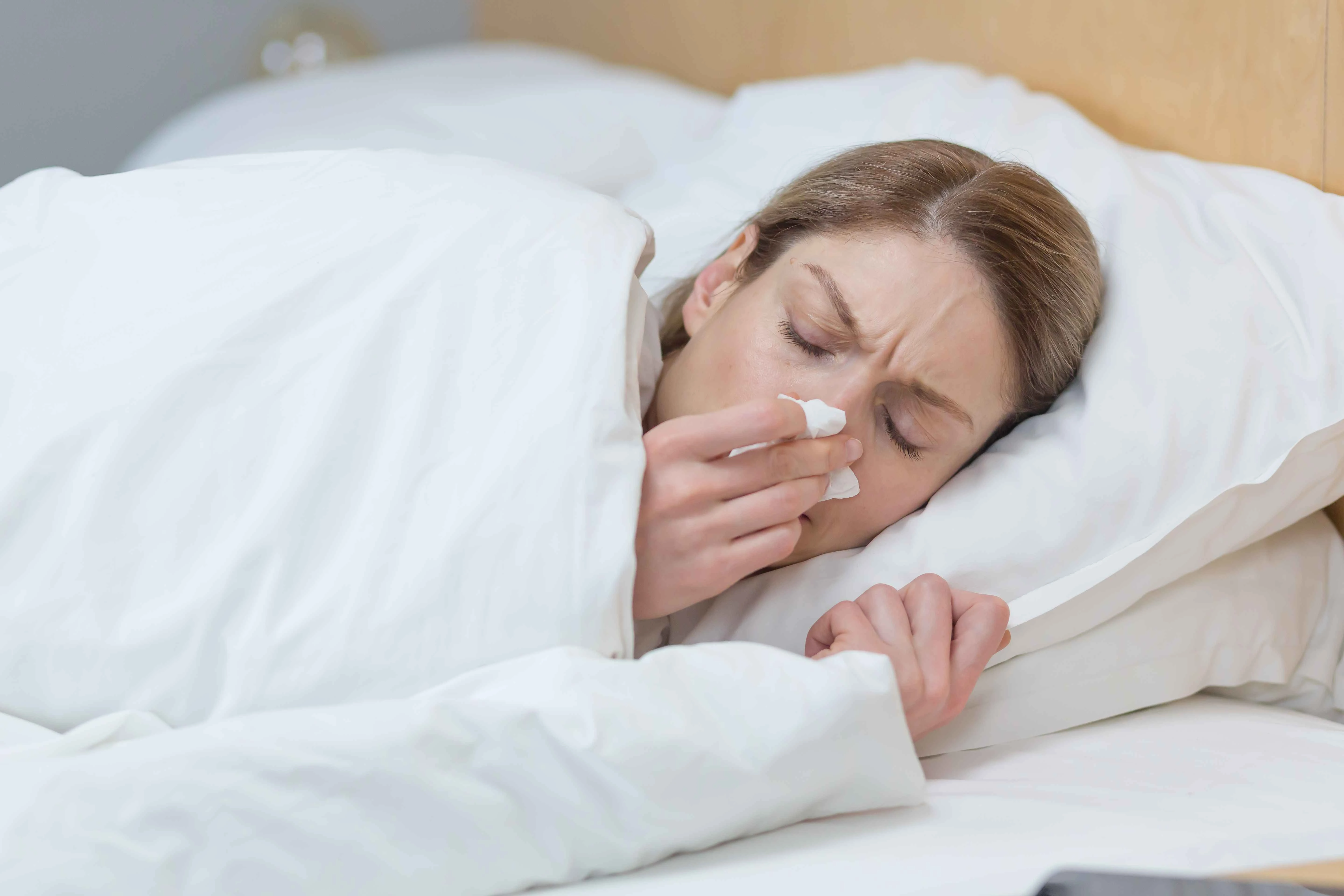
If you wake with an active nosebleed, sit up, lean forward, and pinch the soft part of your nose firmly for a full 15 minutes. Use a timer and do not release the pressure early to see whether the bleeding has stopped 12.
A nosebleed noticed during sleep or on waking is still a nosebleed, medically called epistaxis. Sleep is usually the timing, not the diagnosis. The bleeding may have started because the nasal lining was dry, inflamed, rubbed, picked, or exposed to a medicine or breathing device. Sometimes the reason is not obvious. What matters first is stopping active bleeding, then looking for a cause if the problem keeps returning.
How to stop an active nosebleed
- Sit upright and lean forward. Keep your mouth open. Do not lie flat or tilt your head back because blood can run into the throat and be swallowed.
- Pinch the soft part of the nose. Use your thumb and finger to close both nostrils just above their openings, below the firm bony bridge.
- Hold steady pressure for 15 uninterrupted minutes. Breathe through your mouth. Spit out blood that reaches the mouth rather than swallowing it. Do not peek after a few minutes because releasing pressure can disrupt the clot 12.
- Check once when the timer ends. If the nose is still actively bleeding after correct pressure, seek urgent medical care. Get help sooner if the flow is heavy, breathing is affected, or you feel weak, dizzy, or faint 1.
Do not stuff tissue, cotton, or loose gauze into the nostril. Material can irritate the bleeding area and disturb the clot when removed. Nasal packing used in medical care is a different procedure 23.
An ice pack is optional, not the main treatment. NHS guidance notes that evidence for ice on the nose is weak. Continuous pressure in the correct place matters more 1.
If a clinician has already given you an individualized plan that includes a nasal medicine, follow that plan. Do not improvise with decongestant sprays, essential oils, or other substances inside an actively bleeding nose.
What if the bleeding already stopped while you slept?
A small dried stain on a pillow or dried blood around one nostril may be all that remains of a minor bleed. Gently clean the outside of the nose and face. Do not probe the nostril, pull out a clot, or forcefully blow the nose to find the source.
For the next 24 hours, avoid nose picking, blowing the nose, pulling at scabs, heavy lifting, strenuous exercise, hot drinks, and alcohol. NHS guidance also advises not lying completely flat during this short aftercare period 1. This is meant to reduce early rebleeding. A special pillow or permanent sleep position does not treat the underlying cause.
If the blood clearly came from coughing, vomiting, the mouth, or an injury elsewhere rather than the nose, do not manage it as a routine nosebleed. The source and urgency may be different.
Why can a nosebleed appear at night?
Most ordinary nosebleeds begin near the front of the nasal septum, the wall between the nostrils. This area contains small surface blood vessels that can bleed when the lining is dry, inflamed, or mechanically irritated 3.
Dryness and local irritation
Dry indoor air can contribute to crusting and irritation. Rubbing or picking the nose, scratching a dry area, and blowing the nose forcefully can then open a small vessel. A nighttime bleed may simply go unnoticed until blood reaches the skin, throat, or bedding.
Dryness is a plausible clue, not proof. There is no medically established bedroom-humidity percentage that prevents nosebleeds for everyone, and a fan, pillow, or sleep side should not be blamed without a clearer pattern.
Colds, allergies, and nasal medicines
A cold, upper respiratory infection, sinus symptoms, or allergic rhinitis can make the lining more inflamed and lead to more sneezing, rubbing, or blowing. The irritation, rather than sleep itself, can make bleeding more likely 4.
Medicines sprayed into the nose can also contribute, particularly when they dry or repeatedly strike the septum. If bleeding began after starting a prescribed nasal spray, do not assume you must stop needed treatment. Ask a pharmacist or clinician to review the product, dose, and technique 3.
CPAP and nasal oxygen
Airflow from continuous positive airway pressure (CPAP) and oxygen delivered through nasal prongs can dry or irritate the nose in some users. The nosebleed guideline includes CPAP and nasal oxygen among factors clinicians should ask about, and notes that device humidification may help some people with recurrent dryness 3.
Do not stop CPAP or prescribed oxygen, change oxygen flow, or attach an improvised humidifier. Tell the sleep, respiratory, or equipment team about the bleeding so they can check fit, settings, approved humidification, and nasal care. If you use home oxygen, avoid petroleum or oil-based products because they create a fire risk around oxygen; ask the care team or pharmacist for a compatible alternative 5.
Medicines that affect bleeding
Anticoagulants and antiplatelet medicines can make a nosebleed last longer or recur. Examples include warfarin, apixaban, rivaroxaban, dabigatran, clopidogrel, and aspirin. This does not mean the medicine should be stopped at home.
The clinical guideline recommends using first-line nosebleed treatments before reversing or withdrawing anticoagulant or antiplatelet treatment when bleeding is not life-threatening. Any decision to hold, change, or reverse one of these medicines belongs with the clinician managing the bleeding and the condition the medicine protects against 3.
Tell a clinician about prescription medicines, over-the-counter pain relievers, supplements, nasal sprays, and drugs used through the nose. The timing of a new product, dose change, or missed dose can help, but a nosebleed alone cannot prove that a medicine caused it.
Less common local and systemic causes
Trauma, recent nasal or sinus surgery, a foreign object, a structural problem, an abnormal blood vessel, or, rarely, a nasal growth can cause recurrent bleeding. Persistent bleeding from one side, especially with blockage, pain, or foul discharge, deserves medical assessment rather than repeated home treatment 34.
A bleeding disorder becomes more relevant when recurrent nosebleeds occur with easy or unexplained bruising, gum bleeding, heavy menstrual bleeding, prolonged bleeding from small cuts, excessive bleeding after dental work or surgery, or a family history of similar problems. These are recognized clues to conditions such as von Willebrand disease, but they do not establish the diagnosis without a clinical evaluation and appropriate blood tests 6.
High blood pressure and nosebleeds are associated in some studies, but the nosebleed guideline found that a cause-and-effect relationship is not established. A nosebleed is not a reliable way to diagnose high blood pressure or prove that one elevated reading caused the bleeding 3.
How to reduce recurrent nighttime nosebleeds
Prevention should match the likely source rather than rely on a long list of bedtime remedies.
- Reduce direct trauma. Avoid picking, rubbing, forceful blowing, and pulling at crusts. Treat a recurrent itch or blockage instead of repeatedly disturbing the same area.
- Address clear dryness. Nasal saline spray or saline gel may help keep a dry nasal lining moist. A properly maintained room humidifier may be reasonable when the air is clearly dry. Evidence supporting moisturizers and humidifiers is limited, so there is no need to chase a precise humidity target or assume one product will work for everyone 3.
- Review allergy or infection symptoms. A clinician can help distinguish allergic inflammation from infection, structural blockage, or irritation caused by treatment. Ask for a technique check if you use a nasal spray.
- Review CPAP or oxygen-related dryness. Use only the humidification and nasal products approved for the equipment. Do not alter prescribed therapy to prevent a nosebleed.
- Review medicines without stopping them. A prescriber or pharmacist can weigh the benefit of the medicine against the bleeding pattern and decide whether any change is appropriate.
Do not place essential oils or undiluted home remedies inside the nose. Petroleum jelly is not a universal nosebleed treatment, and oil-based products are specifically unsafe around home oxygen 35.
When recurrent bleeding needs an assessment
Arrange a medical appointment if nosebleeds keep returning, interfere with sleep, repeatedly take a long time to stop, always come from one side, or occur after nasal surgery. Also seek review if you take a medicine that affects clotting, have a known bleeding disorder, or have signs of anemia such as unusual paleness, shortness of breath, or a racing heartbeat 1.
A clinician may:
- inspect the front of the nose for a dry area, crust, injury, prominent vessel, spray irritation, or foreign body
- review bleeding frequency, duration, side, first-aid technique, medicines, CPAP or oxygen, other bleeding symptoms, and family history
- order a blood count or clotting tests when bleeding is severe or recurrent or the history suggests a bleeding disorder
- refer for nasal endoscopy when bleeding repeatedly comes from one side or returns despite prior packing or cautery
A single small, self-limited nosebleed usually does not require a panel of blood tests. The pattern and accompanying signs determine what is useful 34.
Children and pregnancy
Nosebleeds are common in children and often reflect minor trauma or an irritated nasal lining. Use the same forward-leaning position and firm pressure over the soft nose. A nosebleed in a child younger than 2 years is unusual and should be medically assessed. Frequent episodes together with easy bruising, gum bleeding, prolonged bleeding after cuts or procedures, or a family history of bleeding also warrant review 14.
Nosebleeds can become more common during pregnancy because of hormonal changes and can occur during sleep. The first-aid steps remain the same: sit or stand, lean forward, and pinch the soft nose for 10 to 15 minutes 7. Pregnancy does not remove the usual urgent-care thresholds for heavy or uncontrolled bleeding, breathing difficulty, or faintness.
When to get urgent or emergency help
Seek urgent medical care now if:
- bleeding continues after 15 minutes of firm, uninterrupted pressure in the correct place
- the flow is heavy or the amount of blood seems excessive
- a large amount of blood runs into the throat, makes you vomit, or interferes with breathing
- the bleeding began after a blow to the head, major facial trauma, or a possible broken nose
- you feel weak, dizzy, faint, or unusually short of breath
These warning signs are drawn from NHS and pediatric clinical guidance 124.
Call local emergency services rather than driving yourself if bleeding is severe, breathing is difficult, you faint, or major trauma is involved. Keep sitting forward and maintain pressure while help is arranged if you can do so safely.
If the bleeding stops but you take an anticoagulant, have a clotting disorder, are repeatedly waking with blood, or have other abnormal bleeding, contact a clinician promptly. Do not solve the problem by skipping prescribed medicine.