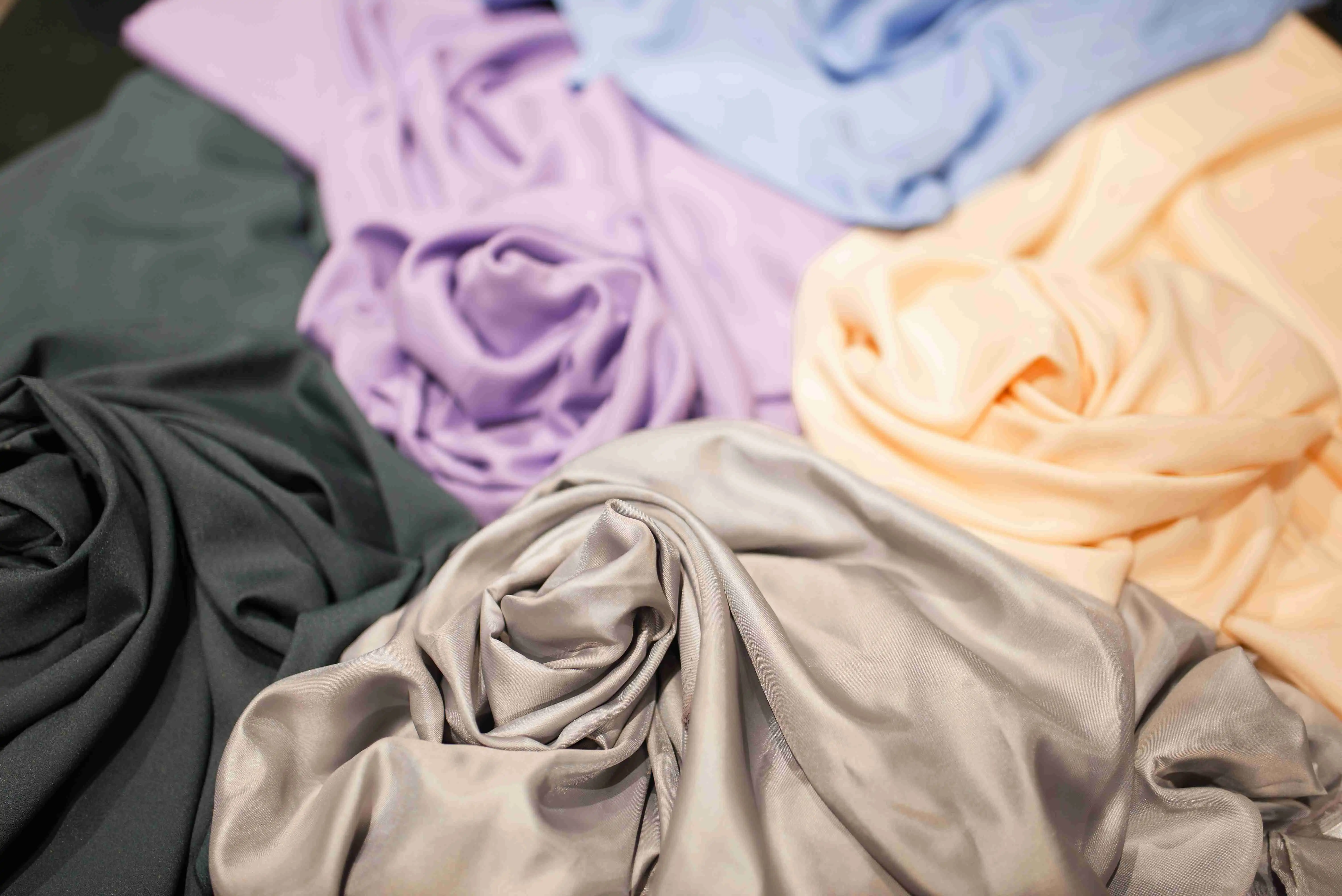

A pillowcase material name gives only part of the answer. Cotton, linen, silk, polyester, lyocell, and rayon identify fibers. The finished fabric can still feel crisp, slick, fuzzy, light, dense, absorbent, or slow to dry depending on how the yarn is made, how the fabric is woven or knitted, and which finishes are applied.
This is why there is no reliable overall ranking. A light cotton percale and a heavy cotton sateen do not behave alike, even though both labels say 100% cotton. A polyester satin can feel smoother than a textured silk fabric. Compare the complete product rather than assuming that one fiber name settles comfort, temperature, skin feel, or durability.
Start with the fiber label
In the United States, most textile products must identify their fiber content, country of origin, and the manufacturer or other responsible business. That required information is more useful than a collection name such as “silky,” “cooling,” or “hotel luxury.” Check the percentages when the fabric is a blend. A small amount of a second fiber may change stretch or care, but the marketing name may not make that clear. 1
Several common pillowcase terms describe different levels of the fabric:
- Cotton, flax or linen, silk, polyester, lyocell, and rayon or viscose name fibers.
- Satin or sateen describes a weave with longer yarn floats that produces a smoother face. Satin is not another word for silk. It can be made from silk, polyester, nylon, or another filament yarn.
- Percale usually describes a plain-weave bedding fabric. Its over-one, under-one structure differs from sateen, but the fiber content, yarn size, weight, and finish still change the result.
- Jersey is a knit construction. It tends to stretch more than a woven pillowcase made from the same fiber.
- Flannel is a fabric with a raised surface. Cotton and polyester blends are both common, so the fiber label still matters.
- Microfiber refers to very fine manufactured fibers, not one chemical composition. Many microfiber pillowcases are polyester, but the label is the way to confirm it.
What “bamboo” usually means
Bamboo can identify the plant used as a cellulose source, but it does not automatically identify the finished fiber. The Federal Trade Commission says a textile can be called bamboo only when it is made directly from actual bamboo fiber. Soft fabrics made by dissolving bamboo-derived cellulose and regenerating it as fiber should be labeled “rayon made from bamboo” or “viscose made from bamboo.” Direct mechanical processing produces a different bamboo fiber and is much less common in soft bedding. 23
Lyocell and rayon are both regenerated-cellulose manufactured fibers, but the regulated definitions are not identical. Under the U.S. fiber rule, “lyocell” may be used when cellulose is precipitated from an organic solution without substitution of its hydroxyl groups or formation of chemical intermediates. Read the actual label rather than treating “bamboo,” “eucalyptus,” “wood pulp,” “viscose,” and “lyocell” as interchangeable fiber names. 4
A bamboo plant source does not prove that the finished rayon retains the plant's antimicrobial properties. The FTC specifically requires reliable evidence for antimicrobial claims about finished bamboo-derived textiles. The same principle applies to “hypoallergenic” and “odor resistant” marketing: look for evidence tied to the finished pillowcase, not a story about the raw plant. 3
What changes how a pillowcase performs
Weave, knit, yarn, and fabric weight
Construction controls how tightly yarns sit together, how much surface area touches the skin, and how readily the fabric bends. A light plain weave may allow more air movement than a dense sateen made from the same fiber. A knit may feel softer and more elastic but can also change shape more readily. These are tendencies, not guarantees, because yarn size, twist, fabric weight, and finishing differ from one product to another.
Thread count is a count of lengthwise and crosswise yarns in a woven fabric. ASTM D3775 describes how to measure those warp ends and filling picks. It does not turn a higher number into a comfort or quality grade. Thread count also does not describe a knit in the same way. If available, consider thread count alongside fabric weight, yarn construction, weave, and a real trial rather than using a single threshold. 5
Moisture transport and drying
Absorption, wicking, and drying are related but separate. Absorption is liquid entering the material. Wicking is liquid moving through the yarn and fabric. Drying depends on how much water the fabric holds and how readily that water can evaporate under the actual temperature and airflow.
AATCC's moisture-management method evaluates the finished fabric, not the fiber name in isolation. Its results depend on water resistance, repellency, and absorption as well as fabric geometry, internal structure, and the wicking behavior of fibers and yarns. A “moisture-wicking” claim is more useful when the seller provides a named test method and results for the specific product. 6
Temperature feel
A pillowcase can feel cool during first contact yet feel different after body heat and moisture build up. All-night comfort depends on the complete bedding system, including the pillow protector, pillow fill, contact area, room temperature, humidity, and airflow.
ISO 11092 measures thermal and water-vapor resistance of finished fabrics and multilayer assemblies under controlled steady-state conditions. The standard explicitly says its test conditions do not represent specific comfort situations and do not set physiological-comfort performance grades. Even a valid laboratory result needs context. A fiber name or a cool first touch cannot guarantee cooler sleep. 7
Surface friction and finishes
Fiber is only one contributor to friction. Skin hydration, pressure, fabric roughness, yarn structure, weave, moisture, and finishes can all change how fabric moves against the face or hair. Research on skin-textile friction supports assessing the complete contact surface rather than assuming that every fabric with one fiber label has the same friction. 8
Calendering, brushing, peaching, softeners, wrinkle-resistant treatments, coatings, dyes, and prints can alter feel and moisture behavior. These details are not always disclosed. If sensitivity or texture is a concern, inspect the finished surface and seams, wash it as directed before judging the final feel, and use the return period when possible.
How the main materials differ
Cotton
Cotton pillowcases span one of the widest ranges. Percale can feel crisp, sateen can feel smoother, jersey can feel stretchy, and flannel can feel brushed and warm. Cotton absorbs moisture, but a dense or heavy cotton fabric may hold more water and take longer to dry than a lighter construction.
Cotton is a practical starting point when you want many weave, weight, price, and care options. It is not automatically cool, soft, or low-maintenance. Check whether the product is prewashed, whether shrinkage is discussed, and what the care label permits.
Linen or flax
Linen is the common fabric name for flax fiber. Many linen pillowcases begin with a crisp or textured hand and become more relaxed through use and laundering, although finishing can make a new product feel soft immediately. Wrinkling is common and may be part of the intended look.
Linen can work for someone who likes a drier, textured surface and does not require a polished finish. It should not be declared the coolest option without product-specific evidence. A tightly constructed or heavy linen case can behave differently from a light one, and blends need to be assessed by their full fiber percentages.
Silk
Silk is a protein fiber that can form fine, smooth filament yarns. Many silk pillowcases use a satin weave, but silk and satin are not synonyms. Fabric weight, silk quality, weave, seam construction, and finishing affect smoothness and strength.
Silk is worth considering when a smooth surface is the main preference and its care instructions fit your routine. It may snag or abrade under conditions that a sturdier fabric tolerates, while some silk products are washable and others require more restricted care. Follow the specific label instead of applying one rule to every silk pillowcase.
Polyester microfiber
Polyester microfiber can produce a light, smooth, closely woven fabric. Polyester absorbs little water into the fiber itself, and many microfiber products dry readily after washing. The finished fabric can still move liquid poorly if its construction is very dense or if its finish does not support wicking.
Pilling, static, surface slickness, and heat perception vary by yarn, weave, finish, and laundering. Microfiber is not automatically breathable, allergy-safe, or low quality. Confirm the fiber content, inspect the surface and seams, and understand the return terms before laundering. Avoid relying on the word “microfiber” as a performance grade.
Lyocell
Lyocell is a regulated regenerated-cellulose fiber name. Finished lyocell fabrics are often smooth and absorbent, but the fiber label alone does not state the weave, weight, finish, or drying rate. Brand names for lyocell fibers also do not certify the performance of every fabric made with them.
Check whether the pillowcase is 100% lyocell or a blend, then compare the fabric construction and care instructions. A product-specific moisture-management or thermal test is more informative than a general claim that all lyocell sleeps cool.
Rayon or viscose made from bamboo
Rayon or viscose made from bamboo can have a soft hand and fluid drape. Those qualities belong to the manufactured yarn and finished fabric, not to an intact bamboo fiber. Construction and finishing determine how the pillowcase handles moisture, friction, laundering, and wear.
Look for the full regulated fiber description and percentages. Do not assume that “bamboo” proves natural antimicrobial activity, hypoallergenic performance, organic certification, or a particular environmental profile.
Blends
A blend may combine the surface feel of one fiber with the strength, stretch, price, or care behavior of another. That can be useful, but the blend name does not reveal which fiber dominates. Compare exact percentages and remember that a certification may cover only a stated component or claim.
What pillowcases can and cannot do for skin, hair, and allergies
A smooth surface may reduce tugging or feel more comfortable than a rough one. That makes surface texture a reasonable feature to trial. It does not prove that an ordinary silk or satin pillowcase prevents facial wrinkles, stops hair breakage, treats acne, or controls eczema.
The distinction matters because friction research measures mechanical contact, not cosmetic or medical outcomes. In a large randomized trial, adding specialist silk garments to standard care did not improve eczema severity in children with moderate to severe eczema. The study evaluated therapeutic clothing, not pillowcases, but it shows why broad treatment claims should not be inferred from softness or fiber alone. 89
Friction, trapped heat, and sweat can aggravate acne mechanica in susceptible skin. Reducing rubbing may help with that specific mechanism, but the American Academy of Dermatology does not present a particular pillowcase fiber as acne treatment. Persistent or painful acne needs appropriate skin care and, when needed, assessment by a dermatologist. 10
Allergy control also requires the right product for the problem. If dust mites are a known asthma trigger, the Centers for Disease Control and Prevention recommends an allergen-proof pillow cover as part of a broader control plan. A decorative cotton, silk, or microfiber pillowcase is not automatically an allergen barrier. Use a purpose-designed encasement under the pillowcase and follow the care instructions for both layers. 11
How to use textile certifications
Certification can answer a defined question, but no single label proves every quality a shopper may want.
OEKO-TEX STANDARD 100 means the certified textile article and its components were tested against the program's limits for harmful substances. Bed linens fall under its direct-skin-contact product class. Check the QR code or certificate number in OEKO-TEX's Label Check. The certification does not by itself establish organic fiber content, cooling, durability, softness, or medical suitability. 12
Global Organic Textile Standard, or GOTS, covers certified organic fiber content and defined processing, environmental, product-safety, and social criteria across the textile supply chain. Under Version 8.0, the “Organic” grade requires at least 95% certified organic fiber content, while “Made with organic materials” requires at least 70%. A retail claim should identify the approved certifier and certification number. GOTS does not rank temperature feel, surface smoothness, or durability. 13
Match the certification to the claim you care about and verify the finished product, not just the yarn supplier or factory.
A practical decision path
- Read the sewn or attached label. Record each fiber and percentage. Translate “bamboo” marketing into the regulated fiber description.
- Identify the construction. Look for woven or knit, percale, sateen or satin, jersey, flannel, fabric weight, and any disclosed finish. Treat thread count as one construction detail, not a grade.
- Name the comfort problem precisely. For heat, compare finished fabric weight, airflow, and any product-specific thermal or water-vapor testing. For sweat, separate absorption, wicking, and drying. For hair or facial comfort, inspect smoothness, seams, and changes after washing.
- Check care before buying. Follow the exact product label for water temperature, cycle, detergent restrictions, drying, ironing, and dry cleaning. There is no universal schedule or temperature that is right for every cotton, linen, silk, polyester, lyocell, or rayon case.
- Verify only the certifications that matter to you. Confirm the certificate number and scope. Do not use a harmful-substance test as proof of organic content, or an organic-textile label as proof of cooling.
- Use the trial and return terms. Your pillow protector, room, laundry routine, skin, hair, and preferences create the final experience. A return policy can be more useful than a universal material ranking.
The most defensible choice is the pillowcase whose label is clear, construction fits the intended use, care is realistic, and claims match the evidence supplied for that finished product.