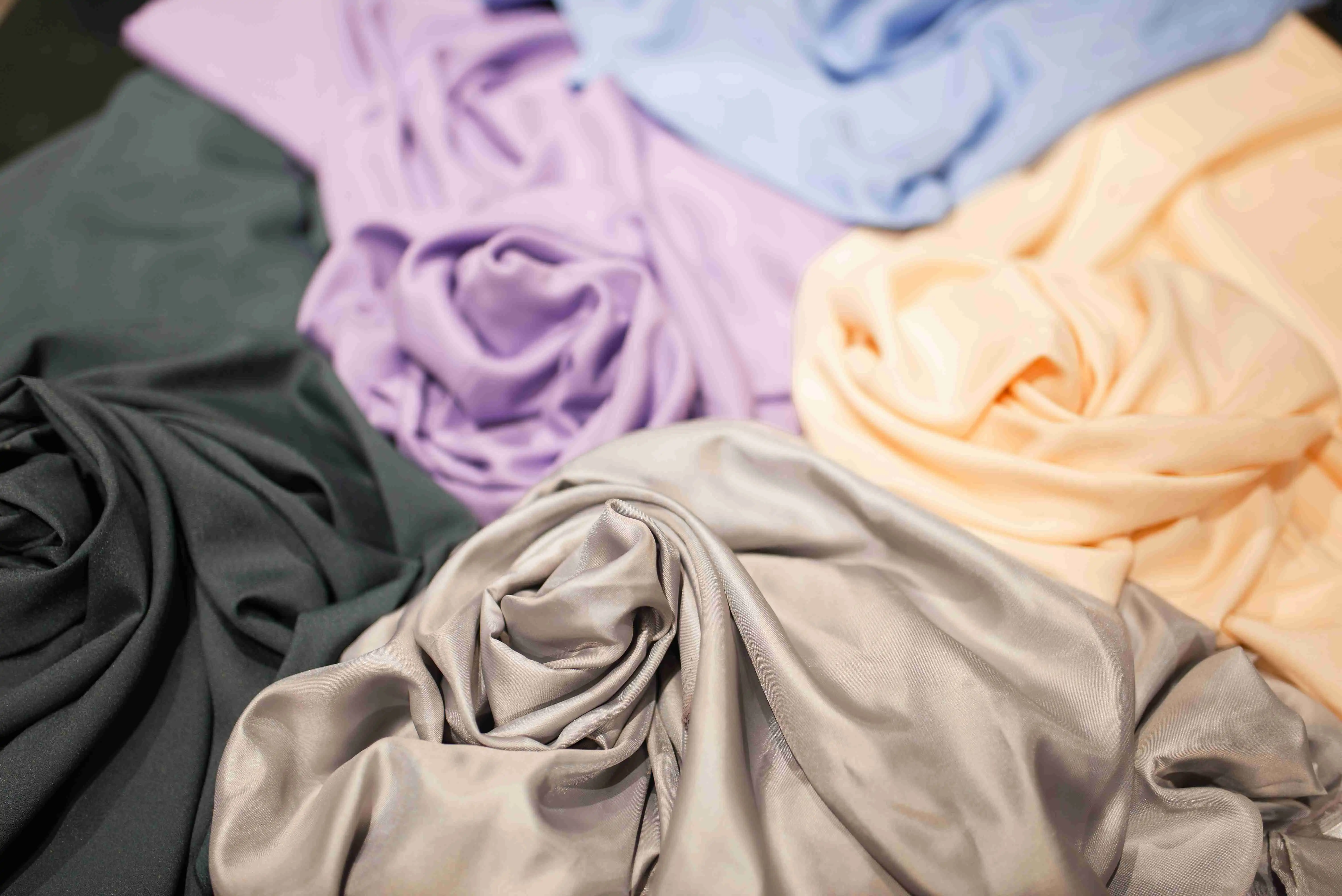


Thread count is one textile specification, not a standalone quality grade. For a woven sheet, it describes the number of lengthwise warp yarns and crosswise weft yarns in a stated area. It does not, by itself, establish softness, cooling, durability, luxury, fiber authenticity, allergy performance, or whether you will like the fabric 12.
A useful comparison starts with the actual thread-count method, then moves through the fiber content, yarn construction, weave, finish, fabric weight and hand, laundering instructions, product testing, and seller policies.
What thread count measures
In woven fabric, the warp yarns run lengthwise and the weft, also called filling, runs across them. ASTM D3775 measures the end count in the warp direction and pick count in the filling direction. It notes that these counts may be reported per centimeter or per inch, depending on the system being used 2.
A consumer thread-count figure commonly adds the warp and weft counts within one square inch. For example, 150 warp yarns per inch plus 150 weft yarns per inch produces an advertised total of 300. That total hides the two directional figures, so ask for both when you need a close comparison.
ISO 7211-2 describes three ways to determine the number of threads per unit length: taking apart a measured section and counting the yarns, using a counting glass, or using a traversing thread counter. The standard gives the dissection method priority in a dispute because it has fewer limitations for complicated structures 3.
Thread count is therefore a measured construction detail. It is not a laboratory score that combines every property of the finished sheet.
How yarn ply can change the advertised number
A yarn used in the weave may be a single yarn or a plied yarn made by twisting two or more yarns together. Those components are plies. A two-ply yarn is still one yarn occupying one woven position, but an advertised number can be much higher if each component ply is counted separately.
Suppose a fabric has 150 warp yarns and 150 weft yarns per inch, and every yarn is two-ply:
- Counting the woven yarns gives 300.
- Counting both component plies gives 600.
The second figure does not mean the fabric has twice as many woven yarn positions. It reflects a different counting convention.
This issue reached the Federal Trade Commission in 2002. A textile trade group asked the agency to declare counting component plies deceptive and argued that ASTM D3775 treats each plied yarn as one yarn. The FTC did not issue that requested ruling. It said instead that thread count is an objective product claim that needs a reasonable basis and that relevant consensus test procedures or widely accepted industry practices would receive substantial weight in evaluating support for the claim 4.
That distinction matters. Do not assume every high number is false, and do not assume two advertised numbers were calculated the same way. Ask the seller:
- Is the figure based on woven yarns or component plies?
- What are the separate warp and weft counts?
- Is the unit one inch or one centimeter?
- Was the finished sheet tested, and under which method?
- Is the yarn single-ply, plied, or made from multiple parallel yarns?
Single-ply is not automatically good and multi-ply is not automatically bad. Ply tells you how the yarn is constructed. Transparent, comparable counting is the issue.
Read thread count alongside the other specifications
| Specification | What it helps describe | What it does not prove |
|---|---|---|
| Thread count | Warp and weft yarn density in a stated area | Overall quality, comfort, cooling, durability, or authenticity |
| Weave | How the warp and weft interlace | One universal feel or performance outcome |
| Fiber content | Which fibers make up the product by weight | Yarn quality, finish, or how the sheet will feel |
| Yarn construction | Ply, yarn fineness, spinning, and other disclosed construction details | A universal ranking without the finished fabric |
| Fabric mass | Weight per unit area, often reported as GSM or ounces per square yard | Softness, breathability, or durability by itself |
| Finish | Treatments applied after the fabric is formed | How the treatment performs after repeated laundering |
| Care and test results | How a named product was washed or evaluated under stated conditions | Every household's result or the complete product lifespan |
No item in the table is a universal quality grade. Together, they provide a more useful description than thread count alone.
Percale and sateen describe different weaves
Percale and sateen are not thread-count tiers. Percale is a plain-weave fabric, built with an alternating over-and-under pattern. Sateen is a variation of satin weave in which yarns travel over several crosswise yarns before interlacing, creating longer exposed sections called floats 5.
Those structures can produce visibly and tactually different surfaces, but the name alone does not guarantee a particular temperature, softness, wrinkle level, or lifespan. Fiber content, yarn size and construction, spacing, finishing, laundering, and the exact product still matter.
Marketing often describes percale as crisp or matte and sateen as smooth or lustrous. Treat those words as starting descriptions. If feel matters, handle a sample or an opened display set. A washed sample is more informative than a new sample when the seller can provide one.
Jersey sheets are knitted from loops rather than constructed from the same warp-and-weft system as a woven sheet. A woven thread-count figure is therefore not the right like-for-like comparison for jersey. Compare its fiber content, fabric weight, hand, stretch and recovery, construction, and care instructions instead 25.
Check the full fiber label
In the United States, the FTC's textile rules cover sheets and most other bedding. The label generally must identify the fiber content, country of origin, and the manufacturer or another responsible business by name or Registered Identification Number 6.
Read that required label rather than relying on a large material word in the product title. For a blend, compare the percentages by weight. A thread-count number does not tell you whether the sheet is cotton, polyester, rayon, linen, a blend, or something else.
Treat named cotton claims as identity claims, not proof of superiority. FTC guidance says that a cotton type named on a label or in advertising must be truthful. If a sheet contains Egyptian cotton and another kind of cotton, the label cannot call it 100% Egyptian cotton and must disclose the named cotton's share when it names that type 7.
Terms such as long staple, extra-long staple, combed, ring-spun, or mercerized describe other aspects of the material or processing. They can be useful when clearly defined and supported, but none turns thread count into a complete quality score.
Weight, opacity, hand, and finish need separate checks
Two sheets with the same thread count can use yarns of different thicknesses, have different warp-to-weft balances, or receive different finishes. As a result, they can differ in weight, opacity, drape, surface feel, and response to laundering.
Fabric mass is a separate measurable property. ISO 3801 provides methods for reporting mass per unit length and mass per unit area in woven fabric 8. If a seller gives GSM or ounces per square yard, use it to compare weight within a similar product category. Do not convert a heavier or lighter number into an automatic quality verdict.
For opacity, hold a sample against light if possible. For hand, which means how the material feels and moves in your hand, compare the face and back, rub the surface gently, flex it, and look for coatings, loose fibers, pulled yarns, uneven areas, or a finish that changes what you feel.
Ask the seller to identify material finishes that matter to you, such as wrinkle-resistant treatment, brushing, calendaring, or mercerization. A finish is neither automatically beneficial nor harmful. You need to know what it is intended to do, how it affects care, and whether its effect is expected to change with washing.
Thread count does not predict wear or laundering results
End and pick count, fabric weight, abrasion, pilling, breaking strength, tearing strength, and other properties have separate ASTM methods. This is a practical reminder that one construction number cannot stand in for every wear measure 9.
Shrinkage is separate as well. AATCC TM135 tests dimensional changes after home-laundering procedures under stated wash temperatures, agitation cycles, and drying procedures. The standard also cautions that laboratory procedures may not reproduce every household practice 10.
If a seller makes durability or easy-care claims, ask what was tested and under what conditions. Useful disclosures may include:
- Length and width change after a stated number of wash and dry cycles
- Pilling or surface-change testing
- Abrasion, tearing, or breaking results
- Color change or dye transfer after laundering
- Seam, elastic, and fitted-pocket performance
A result for one fabric, finish, color, or production version should not be transferred to another without support.
Thread count does not establish health or allergy performance
A high count does not show that a sheet is hypoallergenic, antimicrobial, free of a particular finish, or able to block an allergen. It also does not measure sleep quality or show that a fabric will keep every sleeper cooler.
If a health-related feature matters, look for the exact claim, test method, tested product, result, and limitations. Check the full fiber and finish disclosures. Do not use thread count as a substitute for medical advice or for a product-specific allergen-barrier test.
Verify certification claims separately
Thread count does not prove that a textile is organic, sustainably produced, or certified. Each claim needs its own evidence and scope.
For example, GOTS tells shoppers to look for the exact label grade on the product or packaging, find the certified entity's licence number, and verify it in the public database 11. A company's general certification or an organic-sounding product name does not necessarily certify the particular sheet set in front of you.
A certification also should not be stretched beyond the attributes it covers. Check the named standard, version, certifier, product scope, and licence or product identifier.
A practical way to compare sheets
Use this sequence instead of starting with the largest number:
- Confirm the product and fit. Check set contents, finished dimensions, fitted-pocket depth, elastic construction, and whether measurements are before or after laundering.
- Read the sewn-in or package label. Record the fiber percentages, country of origin, and responsible company or RN.
- Identify the construction. Is the fabric woven, knitted, brushed, or otherwise constructed? If woven, is it percale, sateen, twill, or another weave?
- Interrogate the thread count. Ask for the separate warp and weft counts, unit, yarn-versus-ply convention, test method, and tested production version.
- Compare the rest of the fabric. Look at yarn disclosures, weight, opacity, hand, drape, finish, seams, elastic, and visible consistency.
- Read the care instructions before buying. Check wash temperature, detergent and bleach limits, drying method, ironing, and whether those instructions fit your routine.
- Ask for relevant test results. Give more weight to named methods and conditions than to words such as premium, luxury, cooling, durable, hotel quality, or hypoallergenic.
- Handle a sample if available. A sample cannot predict years of use, but it can reveal a surface or weight you already dislike.
- Check returns before washing. Find out whether opened or laundered bedding can be returned, who pays shipping, and whether a comfort guarantee differs from the defect warranty.
- Save the disclosures. Keep the product page, label photographs, care instructions, receipt, warranty, and any written answer about thread-count calculation.
There is no universal best thread-count range for every sheet. Compare numbers only when the material, weave, unit, yarn-counting convention, and test basis are clear. Then choose from the complete specification and the feel you prefer, not from thread count alone.