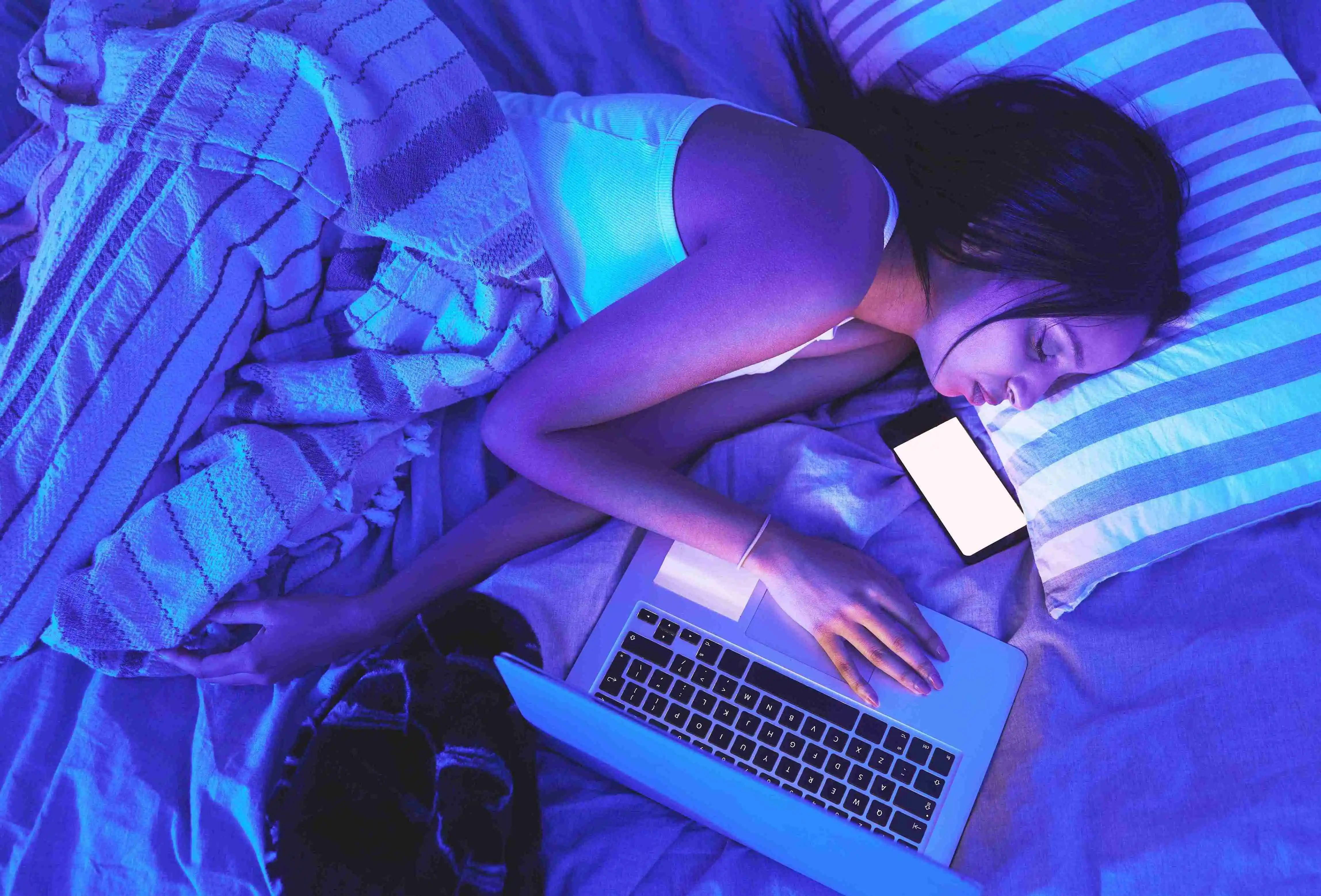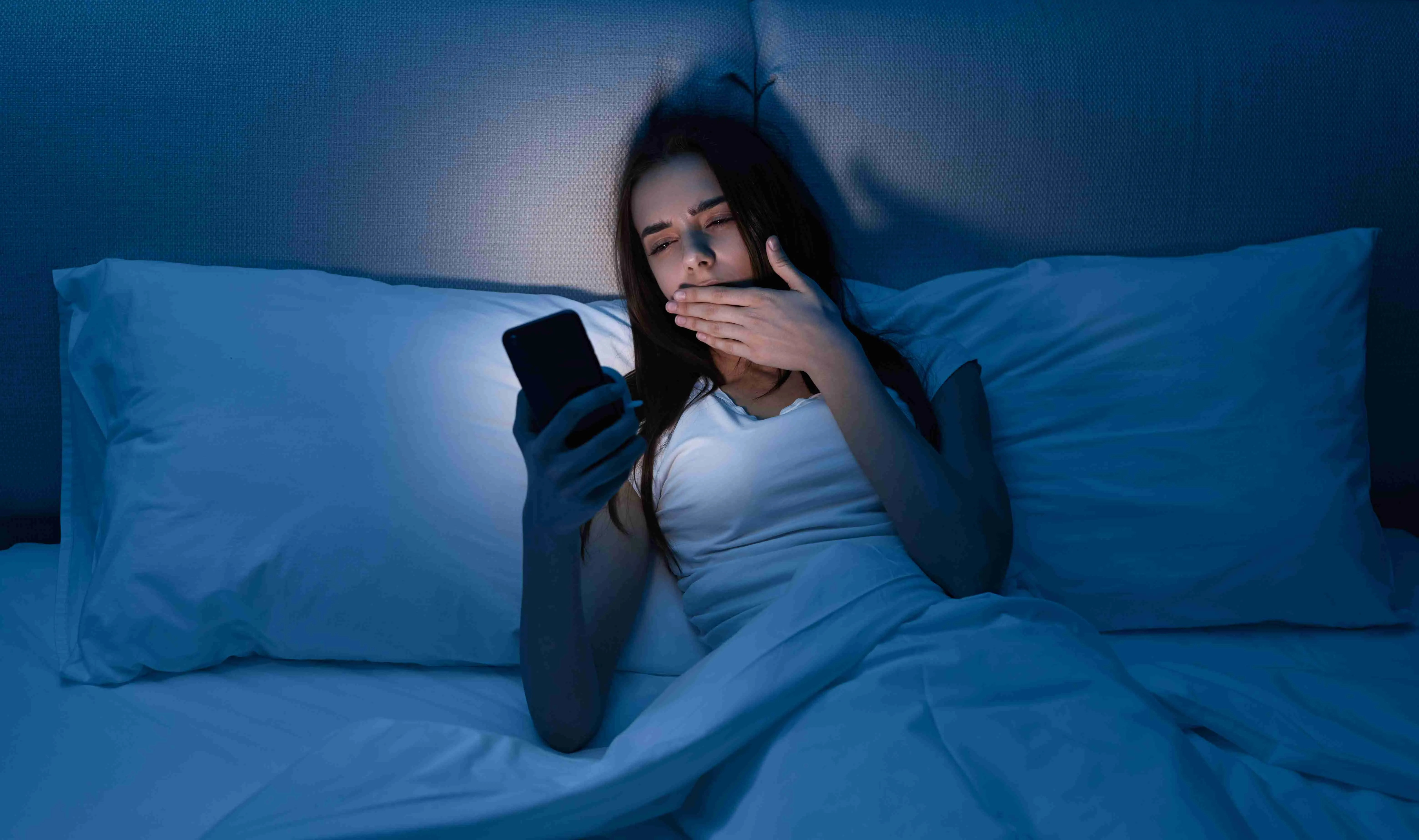

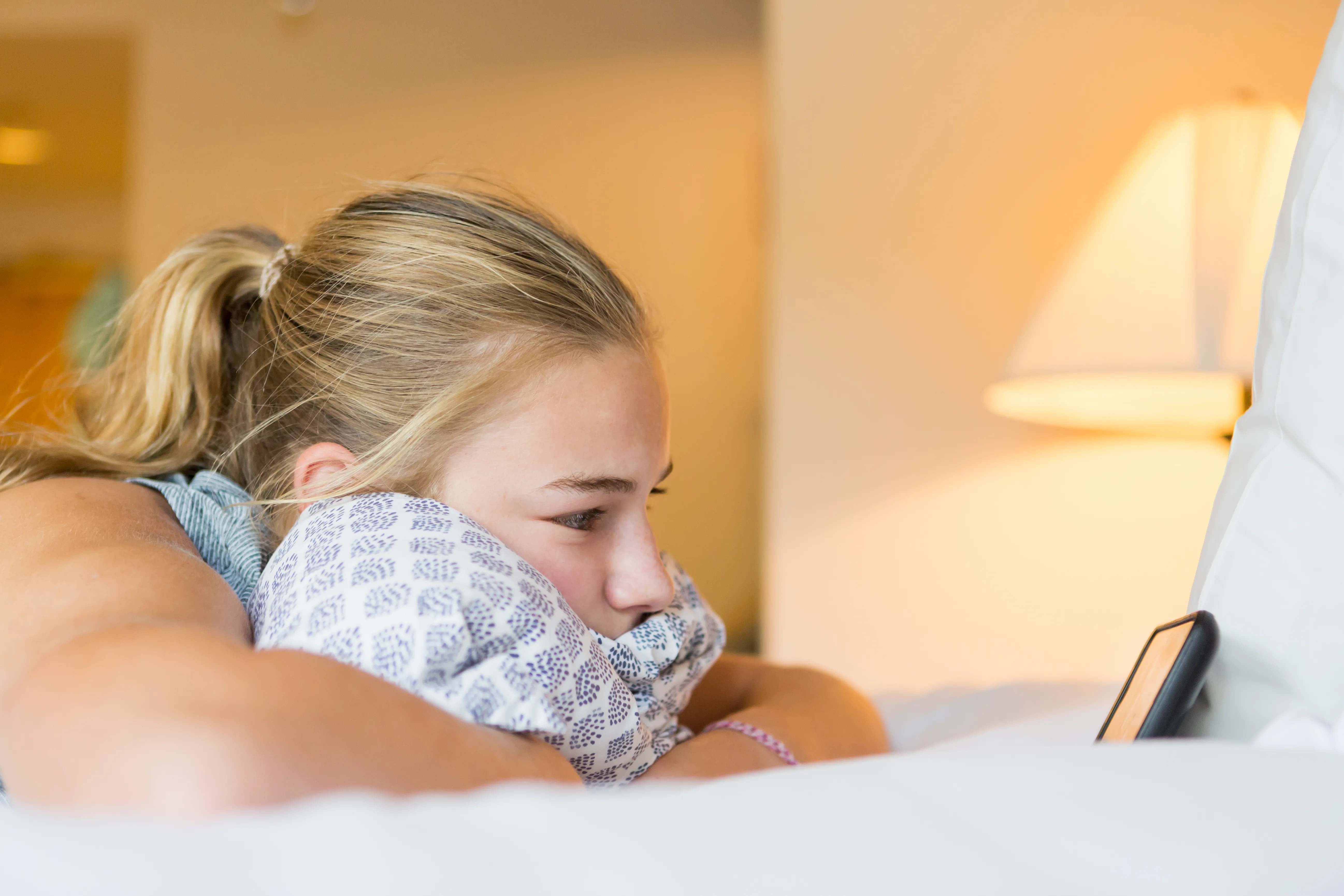
Evening screen use can make sleep later or harder for some teenagers, but it is rarely a complete explanation for insomnia. The clearest problem is often lost sleep opportunity: a game, video, assignment, or conversation continues into time that was meant for sleep. Content, social pressure, notifications, and light at the eyes can also matter. Their effects depend on the teen, the activity, the timing, and what else is happening 12.
This is why a single screen-time total cannot diagnose the problem. A teenager may also reach for a phone because anxiety, pain, loneliness, a delayed body clock, or insomnia has already left them awake. Taking away the device may remove one source of stimulation without treating the reason they could not sleep 2.
What does the research actually show?
Studies often find that adolescents who report more screen use also report later or poorer sleep. That is an association. It does not show that screens caused the difference. Stress, mental health, school demands, family circumstances, and a natural preference for later timing can influence both screen habits and sleep.
A 2023 systematic review examined 28 longitudinal and experimental studies of interactive device use in adolescents. General device and social-media findings were inconsistent, while problematic use, pressure to remain available, and cybervictimization showed more consistent links with worse sleep. The authors judged the methods generally weak and cautioned against simple causal conclusions 1.
A 2026 systematic review and meta-analysis took a different approach. It pooled 25 studies in which young people were compared with themselves across different days. More screen use than usual had a small association with later sleep onset, but not with total sleep time, time needed to fall asleep, sleep efficiency, waking after sleep onset, or subjective sleep quality. The participants ranged from ages 3 to 25, and the later-onset result was sensitive to possible publication bias, so it should not be treated as a precise estimate for every teenager 2.
One smaller study measured both screen behavior and sleep rather than relying on recall. Among 79 healthy young people ages 11 to 14.9, screen use during the two hours before bed was not associated with most sleep measures that night. Screen use after getting into bed, especially gaming and multitasking, was associated with later sleep attempts and less sleep. This repeated-measures cohort can clarify timing, but it was observational, short, and limited to a narrow age range 3.
Together, these findings support a practical conclusion: focus on the screen behavior that is actually competing with sleep rather than assuming every evening minute is equally harmful.
Five ways screens may become part of the problem
1. The activity takes the place of sleep
Time displacement is the most direct pathway. If the required wake time stays fixed, another video, round, message, or piece of homework can shorten the sleep window. Screens may also delay the moment a teen tries to sleep even when they got into bed earlier 23.
This pattern is insufficient sleep opportunity, not automatically insomnia. A teen who falls asleep readily once the device is put down but simply starts too late has a different problem from a teen who remains unable to sleep during an adequate opportunity.
2. Content keeps attention active
A suspenseful show, competitive game, upsetting post, argument, or endless recommendation feed may make it harder to stop. The National Sleep Foundation consensus panel concluded that screen content before sleep can impair sleep health, but content, context, and individual response vary. The evidence does not establish one universally safe or harmful category 4.
A quiet video or audio track may feel calming to one teen and become a two-hour autoplay session for another. The relevant question is whether that specific use helps the teen disengage or repeatedly moves sleep later 2.
3. Social pressure keeps the teen available
Messages can carry friendship, support, school coordination, and belonging. They can also create pressure to reply immediately or monitor what others are saying. The adolescent evidence is more consistent for this type of pressure, problematic use, and cybervictimization than it is for general device use 1.
Treating all nighttime communication as bad can remove a source of support without addressing the stressful part. A better target may be silencing selected group chats, creating an emergency-contact exception, or agreeing that friends do not need an immediate reply overnight.
4. Notifications interrupt attempts to sleep
A sound, vibration, or visible alert can invite another check. Even without waking a teen from established sleep, notifications can keep the phone psychologically active while they are trying to disengage. The American Academy of Pediatrics includes turning off autoplay and notifications among the options families can discuss in a personalized media plan 5.
5. Light can affect circadian signaling
Short-wavelength light can suppress evening melatonin and promote alertness under controlled conditions. In a crossover experiment involving 13 healthy male teenagers, blue-blocking glasses reduced melatonin suppression and alerting effects during LED screen exposure, but they did not change the measured sleep stages that night. The small, all-male sample and controlled exposure do not show that a filter treats insomnia in everyday life 6.
Brightness at the eyes, viewing distance, duration, timing, and the full light spectrum all affect exposure. Room lighting also contributes. Blue light is therefore one possible pathway, not the sole reason screens and sleep may be related 46.
Night mode is not a complete solution. It cannot recover time spent scrolling, stop a stressful conversation, silence an alert, or treat an underlying sleep disorder.
Teen biology and school schedules also matter
Teenagers ages 13 to 18 generally need 8 to 10 hours of sleep per 24 hours on a regular basis 7. That range is a starting point, not a promise that every teen will feel the same after the same number of hours.
During adolescence, circadian timing tends to shift later and sleep pressure builds more slowly across the day. These developmental changes can make earlier sleep harder, while an early school or bus time fixes the morning end of the sleep window 8.
Screens can interact with that later timing, but they did not create the whole conflict. Homework, long commutes, sports, jobs, caregiving, household responsibilities, social needs, stress, and early classes may all occupy the same evening. A plan that ignores those demands is unlikely to last.
Consider which pattern fits best:
- Too little opportunity: The schedule leaves less time than this teen needs within the 8-to-10-hour range, and the teen generally sleeps when given a later or longer window.
- A later body clock: The teen sleeps well on a later schedule but repeatedly cannot fall asleep or wake at the required times.
- Possible insomnia: There is repeated trouble falling asleep, staying asleep, or feeling restored despite adequate opportunity, with a meaningful effect during the day.
- Possible sleep disruption: Snoring, breathing pauses, restless legs, pain, nightmares, substances, medicines, or another condition repeatedly interrupts rest.
More than one pattern can occur at the same time.
Try one collaborative change at a time
Start with a calm conversation when nobody is being asked to put a device down. Ask the teen what keeps them online, what they think affects sleep, and which change seems realistic. The AAP recommends a family media plan that fits the household, is discussed with children, includes adults, and is revised as needs change 5.
First, map the real evening
For several ordinary school and non-school nights, note:
- the required wake time and the available sleep window
- when the teen gets into bed and when they actually try to sleep
- the activity and device used, not only total minutes
- homework, practices, work, caregiving, and commute demands
- overnight alerts and social pressure to respond
- caffeine, naps, mood, snoring, breathing pauses, and daytime sleepiness
This is a practical pattern check, not a diagnostic test. It can show whether the main issue is a late sleep attempt, inability to sleep after trying, repeated waking, or a schedule that never allowed enough time.
Then choose the smallest useful experiment
Options include:
- end gaming, social media, or multitasking once the teen gets into bed
- turn on do-not-disturb while allowing selected urgent contacts
- silence one active group chat or remove autoplay
- charge the phone out of reach, across the room, or outside the bedroom if that is workable
- lower brightness and use a warmer display late in the evening
- switch from visual, interactive content to audio with the screen off and a stop timer
- prepare school items or start one recurring homework task earlier
There is no scientifically established cutoff that every teenager must follow. A household may choose a time boundary, but it should be based on the needed wake time, the teen's sleep window, and the activity that is causing the delay. Treat the boundary as a testable plan, not a moral rule 23.
Keep accessibility, medical, and safety needs in the plan. Some teens use a phone for glucose monitoring, hearing or communication support, medication reminders, an alarm, or urgent family contact. In those cases, limiting selected apps or alerts may be more appropriate than removing the device.
After enough ordinary nights to judge the pattern, ask:
- Did the teen begin trying to sleep earlier?
- Did the available sleep window increase?
- Was falling asleep easier, unchanged, or harder?
- Was morning or daytime alertness any better?
- Did the change create a school, accessibility, safety, or mental health problem?
Keep a change that helps without causing a larger problem. If it does not help, do not simply intensify the restriction. Revisit the likely cause.
What if homework requires a screen?
Separate required use from open-ended use. A teen may need a laptop late because assignments, work shifts, or activities leave no earlier window. The practical target could be finishing the most interactive work before getting into bed, closing messaging and entertainment tabs, silencing nonessential alerts, and allowing a brief transition after the assignment ends.
If school demands repeatedly make an adequate sleep window impossible, the problem is not a failure of willpower. Discuss the workload, deadlines, early practices, transportation, or needed accommodations with the school. Our guide to school and sleep covers these structural constraints in more detail.
Should the phone leave the bedroom?
Moving a phone can be useful when reach, alerts, or habitual checking is the clearest problem. It is not required for every teen, and it is not a cure for insomnia. Try the least disruptive location that removes the cue while preserving an alarm, accessibility feature, medical function, or urgent contact if needed.
If moving the phone changes nothing, look beyond the phone. A teen who lies awake with worry, pain, breathing symptoms, restless legs, or a strongly delayed schedule needs a different response.
When screen changes are not enough
Arrange a healthcare evaluation when trouble falling or staying asleep persists despite adequate opportunity, regularly impairs school or daily functioning, or creates major distress. Cognitive behavioral therapy for insomnia, adapted for adolescents, has evidence from randomized trials. A 2024 meta-analysis of eight trials found improvement in insomnia symptoms and several sleep measures, although the amount and durability of benefit varied 9.
Seek help sooner for:
- persistent sadness, anxiety, irritability, withdrawal, loss of interest, major behavior change, or thoughts of self-harm
- cyberbullying, threats, stalking, coercion, or sharing of private or sexual images
- loud habitual snoring, mouth breathing, gasping, or breathing that stops and starts
- repeated falling asleep in class, uncontrollable sleep episodes, or sleepiness that makes driving unsafe
Sleep changes can be part of depression or another mental health condition. NIMH advises teenagers with persistent low mood, loss of interest, meaningful changes in sleep or functioning, or thoughts of self-harm to tell a trusted adult and seek professional help 10. An immediate risk of self-harm or violence needs emergency help now.
Do not respond to cyberbullying only by taking away the teen's access. Preserve messages or screenshots, block and report the account where appropriate, and involve a trusted adult, the platform, and the school. StopBullying.gov advises reporting threats of violence, stalking, hate crimes, and certain sexual-image violations to law enforcement 11.
Snoring and breathing pauses are not screen-time problems. NHLBI lists snoring, mouth breathing, breathing that starts and stops, morning headaches, attention problems, and sleepiness among possible signs of sleep apnea in children and adolescents. Diagnosis requires medical assessment and appropriate testing 12.
A teen who is struggling to stay awake should not drive. NHTSA advises teenagers to delay driving until they are well rested because sleepiness impairs attention, reaction time, judgment, and decision-making 13.
Common questions
Can screen time cause teen insomnia?
It can contribute, particularly by delaying the attempt to sleep or keeping an interactive activity in bed. The evidence does not show that screens alone cause every case. Insomnia, a delayed body clock, mental health, pain, another sleep disorder, and too little sleep opportunity can all produce similar complaints.
How long before bed should a teen stop using screens?
There is no universal evidence-based interval. Start with the needed sleep window and target the activity that repeatedly pushes sleep later. Some families may choose a screen-free transition, while others may focus on ending interactive use once the teen gets into bed.
Is night mode enough?
No. A warmer, dimmer display changes only one part of the exposure. It does not address time displacement, engaging content, social pressure, or notifications. Treat it as one setting, not as insomnia treatment.
What if a screen helps the teen relax?
Notice what happens afterward. If a familiar audio track with the screen off helps the teen disengage and does not shorten the sleep window, it is different from an open-ended feed, game, or conversation. Use a timer, disable autoplay, and reassess the actual sleep pattern rather than assuming the effect.
Should parents use app limits?
Limits can support an agreed plan, especially when autoplay or habitual checking defeats the teen's intention to stop. They work best when the teen understands the goal, essential contacts and functions remain available, and the family reviews whether the limit actually improved sleep.