

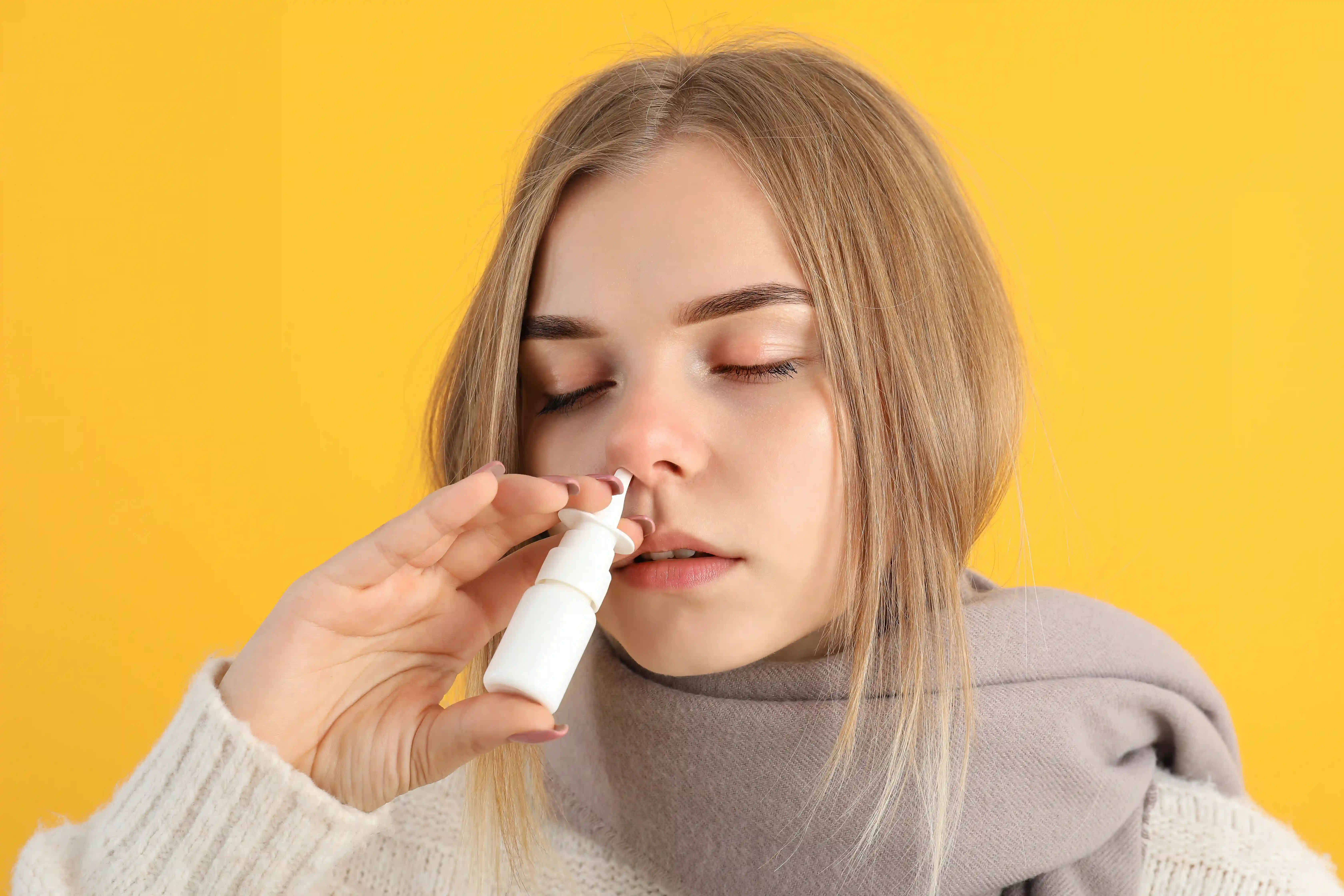
The safest first step for a blocked nose tonight is usually a saline nasal spray. If you use a squeeze bottle, neti pot, or another rinse device, use a prepared saline mixture with distilled, sterile, or previously boiled and cooled water 1. Remove any obvious trigger, such as smoke or a strong fragrance. A humidifier may make dry air more comfortable, but it is not a universal decongestant and a dirty or overused unit can create new problems 2.
Medicines need a little more thought. A steroid nasal spray can control allergic or nonallergic inflammation, but it is not an instant fix 34. A topical decongestant can work quickly, but using it beyond its short product-specific limit can cause rebound congestion. Oral decongestants can interfere with sleep and are unsafe for some people 56.
Do not tape your mouth shut while your nose is blocked 7. Do not lean over a bowl of boiling water 8 or put essential oils inside or beneath the nostrils 910. Get urgent help for severe breathing difficulty, sudden tongue or throat swelling, serious facial trauma, or eye and neurological symptoms with suspected sinusitis 111213.
A practical plan for tonight
If you can still breathe comfortably through your mouth and have no emergency signs:
- Use saline first. A simple saline mist is the easiest option. For a full rinse, follow the device instructions and use only distilled, sterile, or boiled and cooled water. Tap water that is safe to drink is not necessarily safe to force through the nose 1.
- Remove a likely trigger. Move away from smoke, aerosol sprays, perfume, incense, or cleaning fumes. If symptoms reliably start around a pet or another known allergen, reduce that exposure rather than buying vaguely labeled "hypoallergenic" products 3.
- Treat dry air only when it is actually dry. If heating or air conditioning has made the room dry, a humidifier may ease dryness. Empty, dry, and refill a portable unit daily, clean it every third day, and stop if nearby surfaces become damp. Excess moisture and contaminated tanks can promote or disperse microorganisms and allergens 2.
- Choose medicine by cause and label. Check the active ingredient, age limit, dose, and interactions. Avoid stacking an all-in-one cold remedy with another product containing the same decongestant, pain reliever, or antihistamine 14.
- Change position for comfort, not as a cure. A modestly raised upper body or a different side may feel easier. The normal nasal cycle can make one side feel more open than the other, so a side change may simply shift the sensation. It does not treat inflammation or a fixed obstruction 15.
Saline is reasonable, but expectations should stay realistic. A Cochrane review found that saline irrigation may reduce allergic-rhinitis symptoms compared with no saline, but the evidence was low quality and did not establish the best volume, concentration, or schedule 16. A cold usually improves on its own, and saline can help with symptom comfort without curing the virus 17.
What is most likely causing the blockage?
Nighttime does not point to one diagnosis. The bedroom may contain a trigger, dry air may be more noticeable, PAP airflow may irritate the nose, or lying on one side may change which nostril feels narrow. The surrounding symptom pattern is more useful than the time on the clock.
A cold or another viral infection
A recent sore throat, cough, runny nose, or feeling generally unwell favors a viral respiratory infection. Most colds improve without antibiotics. Seek medical advice if symptoms last more than 10 days without improving, improve and then worsen, or come with dehydration, prolonged fever, or a worsening chronic condition 17.
Allergic rhinitis
Repeated sneezing, an itchy nose, clear discharge, or itchy and watery eyes point more toward allergy, especially when symptoms track pollen, dust mites, mold, or an animal. Persistent allergic rhinitis is usually treated with regular anti-inflammatory therapy and targeted trigger reduction, not a rotating list of home remedies 3.
If the trigger is unclear, an allergy clinician can interpret the history and decide whether testing would change what you do. A positive test alone does not prove that an allergen is causing symptoms in a particular room.
Nonallergic rhinitis, irritants, or dry air
Smoke, fragrance, temperature changes, and other irritants can cause rhinitis without an allergy. Itching and eye symptoms are often less prominent. A very dry room may add burning, crusting, or a dry throat. In this pattern, removing the exposure matters more than adding a scented product to the air 3.
Rebound from a decongestant spray
If a vasoconstrictor spray gives brief relief but the nose feels more blocked as it wears off, check how long and how often you have used it. Oxymetazoline, for example, should not be used for longer than three days under United States labeling because longer or more frequent use can make congestion return or worsen 5. Other products and countries may give a different short limit, so follow the exact label rather than treating all nasal sprays as interchangeable.
Steroid, antihistamine, saline, and decongestant sprays are different medicines. Long-term use of a prescribed steroid spray is not the same as repeated use of a topical vasoconstrictor.
A structural obstruction
A nostril that is persistently blocked on the same side, especially after an injury, is more suggestive of a deviated septum or another fixed obstruction. Alternating blockage through the day is more consistent with the normal nasal cycle. If appropriate medical treatment does not help a persistent one-sided problem, an ear, nose, and throat clinician can look for septal deviation, swollen turbinates, polyps, or another cause 15.
Sinusitis
Facial pressure and colored mucus do not automatically mean a bacterial infection. NICE advises that acute sinusitis commonly lasts two to three weeks and usually improves without antibiotics. Medical review is more useful when symptoms persist without improvement, worsen rapidly, or make you systemically very unwell 13.
Pregnancy rhinitis
Pregnancy can bring persistent nasal inflammation that is not an infection, and pre-existing allergies may also change during pregnancy. Saline spray is considered safe, but every medicated spray, antihistamine, or decongestant should be checked with a doctor or pharmacist who knows about the pregnancy 18.
Which treatments fit which cause?
Steroid nasal sprays
Intranasal corticosteroids are a preferred treatment for persistent allergic rhinitis and can also be used for some nonallergic rhinitis. They reduce inflammation rather than rapidly shrinking blood vessels 3. They need regular use. Budesonide, for example, may take a few days to start helping and several weeks to reach its full effect 4.
Technique affects both delivery and irritation:
- gently clear the nose first
- tilt the head slightly forward
- use the opposite hand for each nostril
- aim outward toward the ear, away from the center septum
- breathe in gently rather than sniffing hard
- wipe the nozzle and replace the cap
Follow the instructions for the specific device. Aiming at the septum can cause irritation or bleeding, while sniffing hard pulls medicine into the throat 19.
Antihistamines
An antihistamine fits sneezing, itching, clear discharge, and other allergy symptoms better than isolated blockage from a cold or crooked septum. The rhinitis practice parameter favors newer, less-sedating oral antihistamines over older first-generation drugs for ongoing use because older products can impair performance and sleep quality and have anticholinergic effects 3.
Intranasal antihistamines are another option for allergic or nonallergic rhinitis. A pharmacist or clinician can help choose between an antihistamine, a steroid spray, or a combination when symptoms persist.
Topical decongestant sprays
These sprays can provide rapid short-term relief by narrowing blood vessels in the nose. They are not a nightly maintenance treatment. Follow the exact active-ingredient label and stop within its short limit. Do not share the dispenser, and clean the tip after use 5.
Ask a pharmacist or doctor before using a decongestant if you are pregnant, take other medicines, or have high blood pressure, heart or circulation disease, glaucoma, hyperthyroidism, diabetes, kidney or liver disease, or an enlarged prostate or difficulty urinating. Some antidepressant combinations can cause a dangerous blood-pressure rise 14.
Oral decongestants
Pseudoephedrine may reduce congestion, but it can cause nervousness, a fast or pounding heartbeat, and trouble sleeping. A bedtime dose can therefore trade a clearer nose for a more restless night. It should not be combined with a monoamine oxidase inhibitor, including one stopped within the previous two weeks. High blood pressure, heart disease, glaucoma, diabetes, thyroid disease, urinary difficulty, pregnancy, breastfeeding, and other medicines all warrant a pharmacist or clinician check 6.
If you use PAP for sleep apnea
People using PAP may experience a stuffy or runny nose, dryness, or nosebleeds, and mask leak can be a separate comfort problem. Keep using prescribed PAP for all sleep and contact the treating team about heated humidification, mask fit, nasal treatment, or settings rather than changing the pressure or abandoning therapy on your own 20.
A quieter night does not prove that obstructive sleep apnea is controlled. Follow-up, PAP data, and sometimes a repeat sleep study are used to check whether treatment is working 20. Treating nasal blockage may improve comfort and adherence, but it is not a substitute for apnea treatment.
What not to do
Do not tape your mouth shut
Mouth taping removes an alternative route for airflow while the nose is obstructed. A 2025 systematic review found only 10 small, varied studies and little reliable evidence for the broad claims made online. The authors specifically raised safety concerns for people with nasal obstruction 7. Do not use mouth tape as a congestion remedy or sleep-apnea treatment.
Do not use a bowl or kettle for steam inhalation
There is no good evidence that leaning over a container of scalding water treats the cause of congestion, and burn services report serious spills, hospital admissions, skin grafts, and scarring in adults and children 8. Avoid this method even if the steam feels briefly soothing.
Do not put essential oils in or beneath the nose
Peppermint, eucalyptus, and similar oils do not correct swollen tissue, infection, allergy, or a structural blockage. Safety data are insufficient for putting peppermint oil inside the nose, and topical use can irritate skin 9. Essential-oil sprays and diffusers have also been linked to eye and upper-airway irritation, cough, and breathing difficulty, particularly in people with respiratory disease 10. A strong cooling smell is not proof that airflow has improved.
Extra boundaries for children and after nasal surgery
Do not adapt an adult cold-medicine plan for a child. The NHS advises against decongestants for children under 6 and limits use in children aged 6 to 11 to no more than five days with pharmacist advice 14. Use age-appropriate saline only as directed, and ask a pediatric clinician or pharmacist before giving a medicated product.
A young child with persistent one-sided, foul-smelling, pus-like, or bloody discharge may have placed an object in the nose. Do not make repeated blind attempts to remove it. A suspected button battery or paired magnets require immediate emergency assessment because they can rapidly injure nasal tissue 21.
After nasal or sinus surgery, blockage from swelling, packing, or crusting may be expected, but aftercare instructions vary by operation. Use only the rinses, sprays, nose-blowing technique, and timing given by the surgical team. Do not restart a usual nasal spray or improvise a rinse unless the surgeon has cleared it 22.
When to arrange medical assessment
Arrange a primary-care, allergy, or ENT assessment when:
- blockage repeatedly disrupts sleep or daily function despite correct saline and appropriate treatment
- the same side stays blocked, particularly after an injury
- symptoms keep returning after a decongestant spray
- allergy symptoms persist and the trigger or treatment choice is unclear
- sinus symptoms do not improve, or improve and then become worse
- you have recurrent nosebleeds, reduced smell, facial pain, or visible tissue in the nose
- PAP-related congestion or leak keeps you from using the device
- loud snoring, witnessed pauses, gasping, morning headaches, or excessive daytime sleepiness raise concern for sleep apnea
When it is urgent
Call local emergency services for severe or rapidly worsening breathing difficulty. Sudden tongue or throat swelling, noisy breathing, wheezing, collapse, or difficulty swallowing can be anaphylaxis. Use prescribed emergency adrenaline if available and call for help immediately 11.
Seek emergency assessment for:
- eye swelling, a displaced eye, double vision, reduced vision, a severe frontal headache, neck stiffness, confusion, or a focal neurological symptom with suspected sinusitis 13
- a major facial or head injury, especially with a nose that has changed shape, uncontrolled bleeding, severe headache, vision changes, or clear watery fluid from the nose 12
- a suspected button battery or paired magnets in a child's nose 21
- a severe headache, fever, confusion, or vomiting after a nasal rinse, particularly if nonsterile water was used 1
A blocked nose is usually uncomfortable rather than dangerous. The safest route is to use low-risk comfort measures, identify the pattern, and choose a treatment that fits the cause instead of escalating through unproven remedies.