


Compare the four camping mattresses
These are thick vehicle-camping mattresses. Their packed dimensions and weights matter just as much as their feel because all four take up meaningful cargo space.
| Mattress | Open size shown | Packed size | Weight | Thickness | R-value | Construction | Main practical tradeoff |
|---|---|---|---|---|---|---|---|
| Therm-a-Rest MondoKing 3D Large | 77 by 25 inches | 26 by 10.3 inches | 4 lb 6 oz | 4.25 inches | 7.0 | Self-inflating foam and air | Deepest surface here, but a long packed roll |
| EXPED MegaMat MW | 72 by 25.6 inches | 26 by 8 inches | 5 lb 6 oz | 4 inches | 8.1 | Self-inflating foam and air | Highest R-value among the adjustable picks, with substantial bulk |
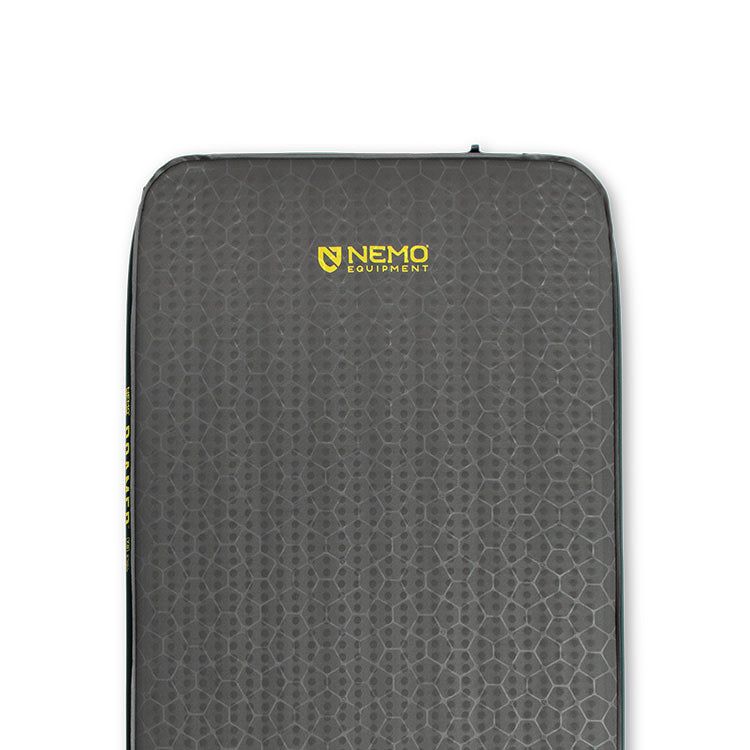
| NEMO Roamer Single Wide | 80 by 30 inches | 16 by 10 inches | 5 lb 8 oz | 4 inches | 7.0 | Self-inflating foam and air | Shorter packed roll, but a wide tent footprint |
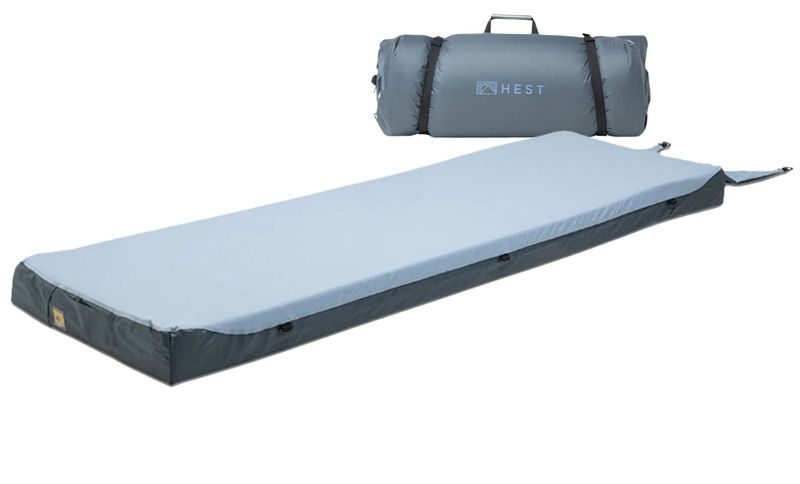
| HEST Foamy Regular | 78 by 25 inches | 25 by 15 inches | About 13 lb | 3.9 inches | 8.8 | Solid foam | No inflation or puncture risk, but very heavy and bulky |
Check the exact size before buying. Several models have wider or double versions whose open and packed dimensions differ substantially from the configurations above.
Start with the trip, then choose the feel
A car-camping mattress can prioritize comfort because the vehicle carries it. A backpacking pad has a different job: it must keep weight and pack volume low enough to carry for miles. None of these four belongs in a backpacking pack.
For a roomy basecamp, MondoKing offers the deepest adjustable surface. MegaMat is the stronger route when ground insulation is the priority. Roamer makes sense when cargo length is tight but you still want a broad four-inch bed. Foamy works best when eliminating pumps, valves and overnight air loss matters more than weight or packed volume.
| Camping need | Best starting point | Why |
|---|---|---|
| Broad comfort for most car camps | MondoKing 3D | Deep cushioning, two widths and adjustable air pressure |
| Colder-ground trips | EXPED MegaMat | Highest R-value among the self-inflating picks |
| Limited cargo length | NEMO Roamer | Packs into the shortest roll in this group |
| No inflation routine | HEST Foamy | Solid foam has no air chamber, pump or valve |
| Small two-person tent | Measure before choosing | A 30-inch-wide solo pad can consume more than half the floor |
R-value measures insulation, not comfort
R-value describes resistance to heat moving through the pad toward the ground. ASTM F3340 gives sleeping-pad makers a standardized laboratory method, making the listed values more useful for comparison than untested warmth labels. It does not turn an R-value into a guaranteed temperature rating. 1
The rest of the sleep system still matters. The sleeping bag, shelter, clothing, ground conditions, moisture and overnight weather all affect warmth. The National Park Service includes both a sleeping bag and a sleeping pad on its basic camping checklist because the two do different jobs. 2
Stacking insulated pads can increase total resistance to ground heat loss, but the setup must remain stable and fit the shelter. A thick pad can still feel cold if it is underinflated enough for the hip to approach the ground or if the rest of the sleep system is not suited to conditions.
Measure the tent and vehicle before ordering
Use the pad's inflated width and length, not the size name. Then compare those measurements with the tent's usable floor after allowing for sloped walls, a partner's pad and gear that must remain inside. NEMO's tent-fit guidance follows the same basic approach: add the pad widths and compare the total with the shelter floor. 3
Repeat the exercise for packed size. A 26-inch roll may fit easily across an SUV cargo area but awkwardly in a small trunk already holding a cooler, chairs and bins. Roamer's shorter roll solves length, not overall weight, and Foamy requires the most generous cargo plan.
Tune an air-and-foam pad at home first
Self-inflating means the expanding foam draws in much of the air. It does not always mean the mattress reaches your preferred firmness without a top-up. Open the valves at home, allow the foam to expand, add air in small amounts and lie down in your usual position.
Side sleepers generally need enough give for the shoulder and hip while keeping the hip away from the ground. Back sleepers often prefer slightly more pressure. More air is not automatically better: an overfilled pad can feel hard and transmit more movement. Once the pressure feels right, leave the pad inflated long enough to check for slow leakage before the trip.
Pack the maker's repair materials for any inflatable design. Learn which valve controls inflation, adjustment and rapid deflation before arriving after dark. Solid foam avoids puncture failure, but it still needs to be kept dry and protected from sharp or dirty surfaces.
Store the mattress for the next trip
Dry the top, underside and valves before storage. Follow the model's care instructions and, when space permits, store self-inflating foam uncompressed with the valves open rather than leaving it tightly rolled for months. Before the next trip, inflate it at home, inspect the seams and valves, and confirm that the repair kit is complete.
Frequently asked questions
What R-value should a camping mattress have?
There is no single value for every trip. Match the pad, sleeping bag and shelter to the expected conditions, and build in margin when cold ground is likely. Use ASTM-tested R-values for comparison, not as guaranteed temperature ratings.
Can these camping mattresses be used for backpacking?
No. Every ranked configuration is too heavy and bulky for a normal backpacking load. They are intended for car camping, vans, overlanding, canoe-access camps or other trips with very short carries.
Do the R-values of two stacked pads add together?
Thermal resistance can be combined when pads are stacked, but the real setup also has to remain stable, dry and large enough for the sleeper. Confirm that both pads fit the tent and do not slide apart.
Why am I bottoming out on a four-inch camping mattress?
The pad may be underinflated for your body and position, or your hip may be concentrated over one area. Add air gradually while lying in your usual position. If added pressure removes cushioning before it prevents bottoming out, the design may not suit you.
Should two campers use a double mattress or two singles?
Two singles allow separate firmness adjustment and limit the effect of one puncture. A double removes the center seam but uses one shared surface and requires a larger uninterrupted tent floor. Measure before choosing.
How should a self-inflating camping mattress be stored?
Clean and dry it, then follow the maker's instructions. When practical, self-inflating foam is commonly stored unrolled with valves open so it is not held under compression. Check inflation and leaks at home before each trip.
What should be in a camping-mattress repair kit?
Carry the repair materials specified for the pad, along with any valve tool or adhesive the maker requires. Know how to locate a leak and use the kit before relying on it outdoors.
The bottom line
MondoKing 3D is the best all-around car-camping mattress in this group because it combines the deepest surface with adjustable pressure and useful width choices. Choose MegaMat when colder-ground insulation leads the decision, Roamer when a shorter packed roll makes loading easier, and Foamy when you want a consistent solid-foam bed with no inflation system.
The final check is physical fit. Confirm the open pad fits the tent, the packed pad fits the vehicle, and the total sleep system suits the expected weather. That prevents the most common mismatch: buying the most comfortable pad on paper and discovering that it does not fit the trip.