


How we reviewed it
This was not an unboxing test. I slept with the Micro 510 repeatedly and traveled with it for more than a month, moving between several hotels and repeatedly packing, unpacking, connecting, and using the machine in real travel conditions.
I used the included six-foot TransFlex hose and a nasal pillows mask. The specific mask is not particularly important to this review because the Micro 510 uses a standard 22 mm mask connection, which gives it broad compatibility with conventional CPAP masks rather than locking the machine into a proprietary mask ecosystem.
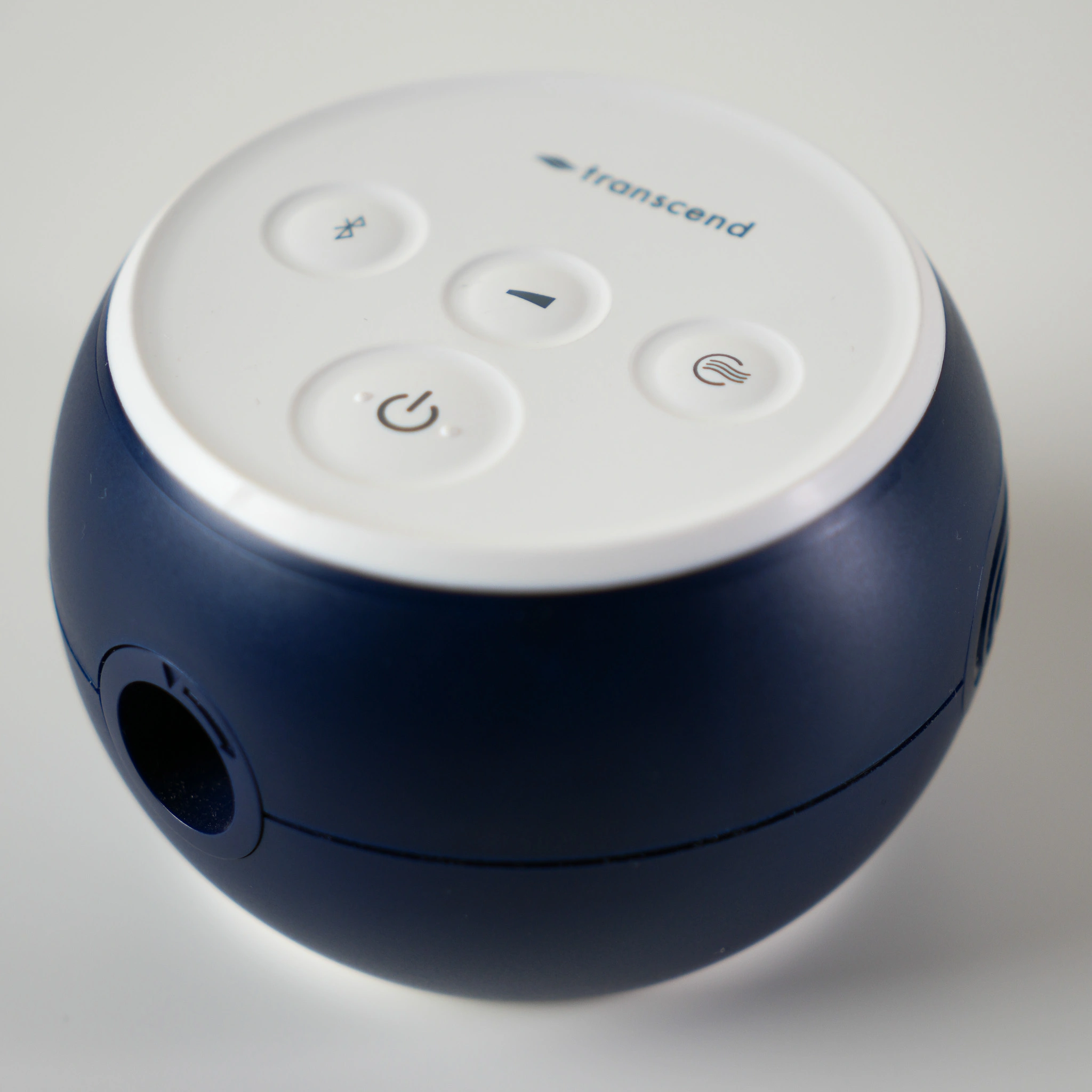
I also deliberately tested features that are easy to mention in a review without actually evaluating. I cycled through all four AirRelief settings, used GentleRise at different durations, tested the Micro with and without the WhisperSoft muffler, slept with the AirMist HME, recorded multiple nights in SnoreLab, used SleepStart and automatic stopping, ran Drying Mode, paired and synchronized MySleepDash, and installed the Windows desktop software.
The PowerAway battery is the significant accessory I did not test. I therefore do not make any firsthand claims about its real-world runtime. Transcend advertises up to 17.5 hours1, with runtime depending on therapy conditions. That is a manufacturer claim, not a result from my testing.
Design and travel
Why I kept packing it
After more than a month of overnight use and travel, the Micro 510 has become my benchmark for what a travel CPAP should accomplish. Its size is genuinely useful rather than merely impressive on a specification sheet, and once it was configured appropriately under my physician's guidance, I did not feel as though the therapy experience had been compromised to achieve that portability. The biggest compromises are elsewhere: there is no conventional heated water humidifier, the power adapter is disproportionately large next to such a tiny machine, and the software ecosystem is less polished than the hardware.
Most importantly, the Micro 510 changed my behavior. It was small enough that I brought CPAP on trips where I might otherwise have been tempted to leave a larger setup behind. That matters more to me than winning a contest over a few ounces or cubic inches. Travel already introduces long flights, jet lag, unfamiliar beds, and disrupted routines. A travel CPAP succeeds when it makes continuing therapy easier under exactly those circumstances.
Specifications
| Specification | Transcend Micro 510 |
|---|---|
| Device weight | 0.49 lb (223.4 g), per the current user manual |
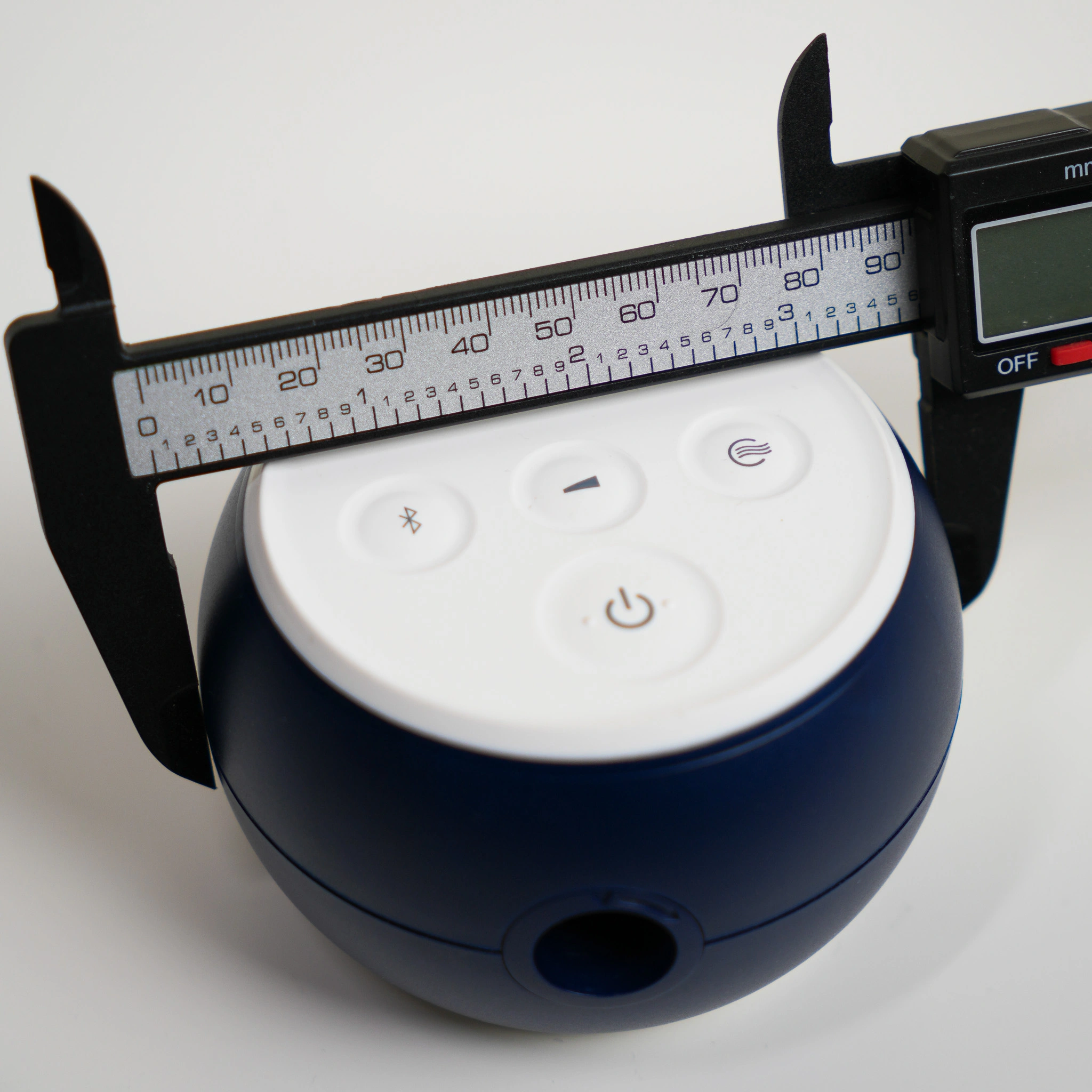
| Dimensions | 3.6 x 3.6 x 2.4 in |
| Pressure range | 4 to 20 cmH₂O |
| Therapy | CPAP and Auto CPAP |
| Manufacturer sound pressure | 31 dBA ±2, standardized test; 27 dBA ±2, supplemental typical-use test |
| Humidification | AirMist HME |
| Mask connection | Standard 22 mm |
| Ramp | GentleRise, up to 45 minutes |
| Exhalation relief | AirRelief |
| Power supply | 100 to 240 VAC input, 19 VDC / 2.1 A output |
| Battery | Optional PowerAway battery |
| Warranty | 3 years |
The specifications above come from the Micro 510 user manual2 and Lofta’s product listing3. We checked the manual on September 30, 2026 and Lofta’s listing on October 1, 2026. The manual lists 0.49 lb (223.4 g), while Lofta lists 0.48 lb. Neither figure includes the power supply, hose, mask, or optional battery. The two sound figures use different test methods; neither predicts exactly what you will hear beside your bed.
Build quality
The first thing that distinguishes the Micro 510 is simply how small it is. At less than half a pound and 3.6 inches across, the machine is small enough that the power adapter can look almost comically large beside it.
The low weight did not make it feel cheap. The sides use a solid, good-quality plastic, while the top has a more rubberized feel. The controls are straightforward, the LEDs never became distracting in normal use, and the rounded enclosure looks more considered than a generic piece of medical equipment.
A rectangular machine might technically use luggage space a little more efficiently, but the Micro is small enough that I never found its round shape to be a meaningful packing disadvantage. It slips easily between clothes or into the corner of a backpack.
I was also impressed by the included TransFlex hose. During sleep it was occasionally compressed under a pillow or caught beneath my arm as I moved around, but it retained its shape well enough that this never became a practical problem. The connection at the machine is also unusually satisfying to use. The hose aligns with the outlet and twists into place, while the WhisperSoft muffler can be inserted between the machine and hose using the same basic locking arrangement.
Packing and hotel setup
This is the area where the Micro 510 made the strongest case for itself.
During more than a month of travel, hotel setup became routine. I could take the machine out, connect power, attach the hose and mask, and have the CPAP ready without reorganizing the bedside table or unpacking a substantial medical-device bag. The same simplicity mattered the next morning because there was very little to repack.
The benefit was not just that my luggage weighed slightly less. The Micro lowered the amount of friction involved in traveling with CPAP. That is a more meaningful form of portability than machine dimensions alone.
The included hard-shell case reflects the same philosophy. It fits the Micro very closely, to the point that I sometimes had to press the machine slightly into place before closing the zipper. That makes the case excellent for protecting the device from scratches and knocks without adding much volume.
It is not an all-in-one travel organizer. The power supply, mask, HME and other accessories have to go elsewhere. I initially wished the case had room for everything, but there is a reasonable tradeoff here. A larger molded case would force the entire CPAP kit into one fixed shape. Keeping the power adapter and mask separate allowed me to fit them into gaps between clothing, which can actually use luggage space more efficiently.
I eventually stopped seeing the case as essential for every trip. When the machine was already surrounded by clothing inside my luggage, it did not need much additional protection. For a backpack or less protected bag, however, the case makes considerably more sense.
Power and the complete travel kit
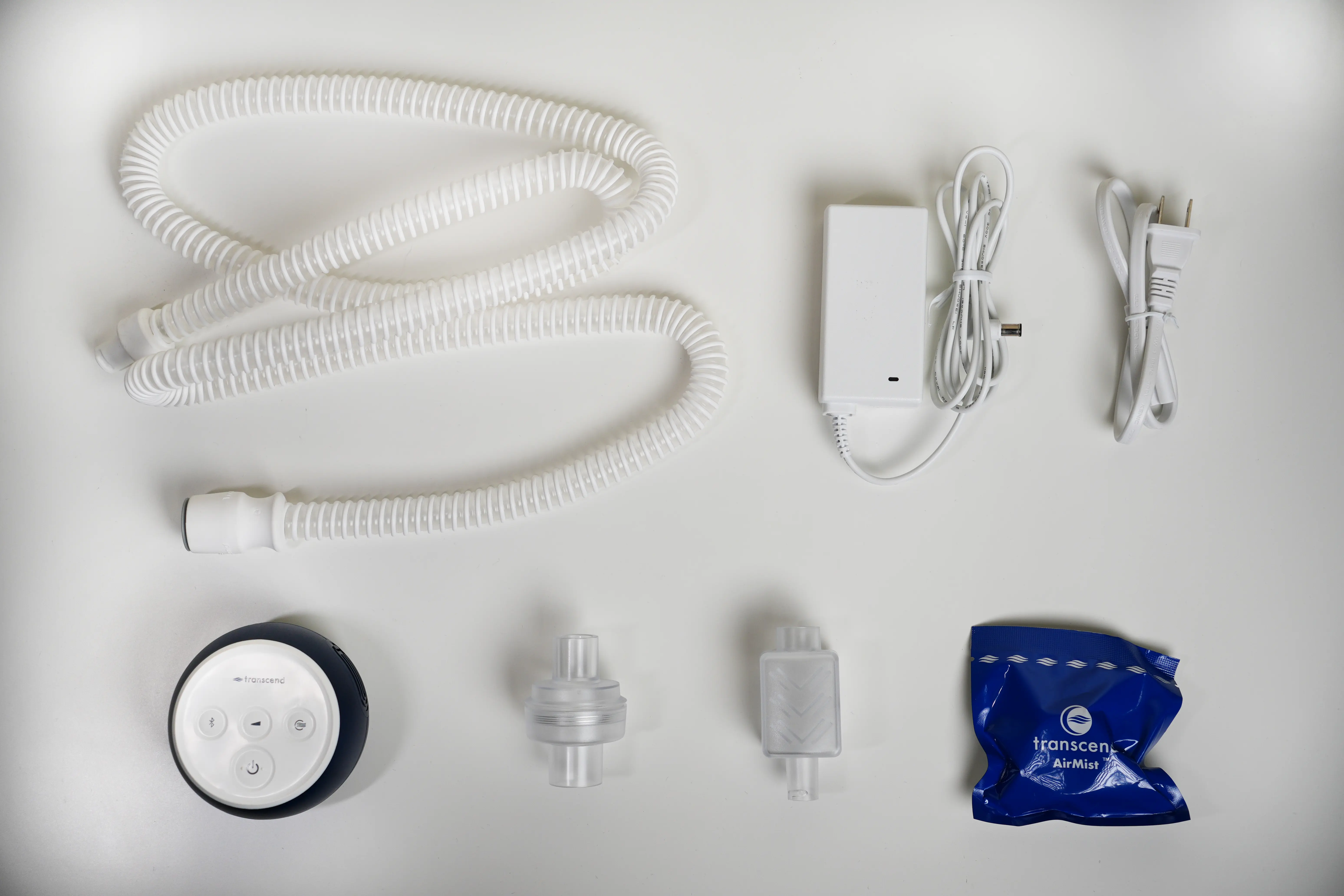
The Micro 510 itself is extraordinarily small. The complete system is not quite as tiny as photographs of the machine alone suggest.
You still need the power adapter, hose, mask, and potentially the AirMist HME and WhisperSoft muffler. The supplied AC adapter outputs 19 V at 2.1 A and accepts 100 to 240 V input, so it is suitable for international voltage ranges, although a physical plug adapter may still be required depending on the country.
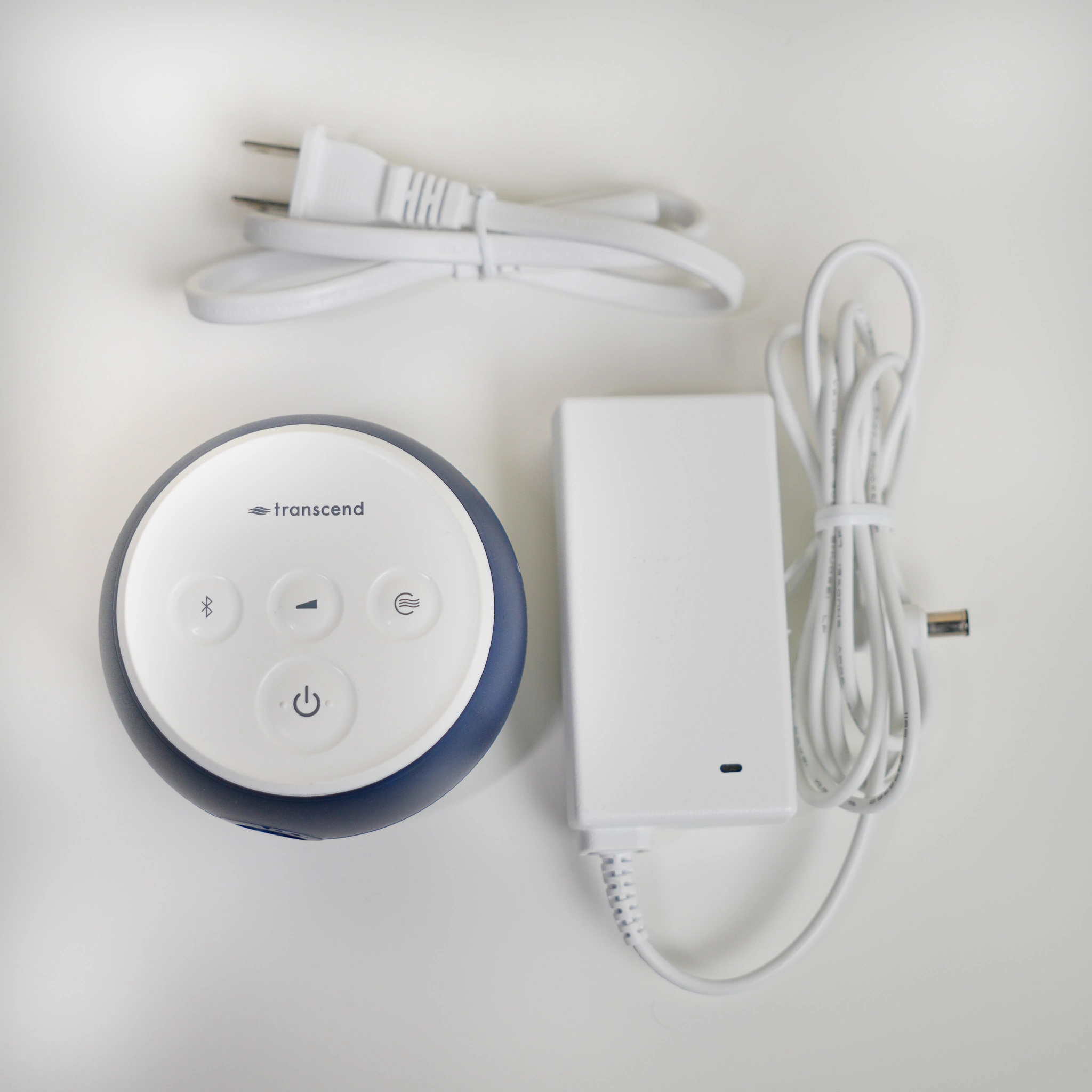
The power brick was the accessory that most undermined the elegance of the machine for me. It is not enormous by normal electronics standards, but beside a CPAP this small it feels disproportionately substantial. Once the CPAP itself has been reduced to roughly the size of a baseball, the charger becomes a much larger percentage of the total packed volume.
A future version with native USB-C Power Delivery would make the Micro considerably more appealing to me. Being able to share a compact USB-C charger with a phone, tablet, or laptop could reduce the actual travel kit rather than only the CPAP body.
That is a wish for a future design, not an assertion that adding USB-C would be trivial. A prescription medical device has electrical, reliability, and certification requirements that make its power system more complicated than that of a typical consumer gadget. Still, in 2026, carrying a dedicated 19 V power brick feels like one of the clearest areas where the travel experience could improve.
There is an optional PowerAway battery for situations where wall power is unavailable. Transcend lists a weight of about one pound and a 71 Wh capacity1, so adding it changes the weight of the complete setup but adds off-grid capability.
Comfort and noise
Therapy experience
The Micro 510's size creates an obvious question: does shrinking a CPAP this far make the actual therapy feel compromised?
In my experience, no. Once the machine was configured appropriately, there was nothing about the airflow that constantly reminded me I was using an unusually small CPAP. Pressure felt stable, breathing felt normal, and I could sleep with it without thinking about the machine's size.
I deliberately do not want to turn that observation into a pseudo-laboratory comparison with full-size CPAP machines. Auto-adjusting CPAP algorithms can differ in how they respond to obstruction, flow limitation, leaks, and other breathing patterns, and a proper algorithm comparison requires controlled testing.
What I can say is that the Micro 510 did not feel compromised during normal use. My prescribed settings were adjusted with my physician's guidance to a minimum pressure of 5 cmH₂O and a maximum of 7.3 cmH₂O, with AirRelief at 1 and GentleRise beginning at 5 cmH₂O. Those are my settings, not recommendations for someone else. CPAP pressure should be configured according to the individual's prescription and clinical needs.
The initial configuration felt much too aggressive for me, which made proper setup particularly important. Once that was resolved, the experience changed substantially. This is worth keeping in mind with any CPAP review because comfort with a machine cannot be separated entirely from whether the therapy has been configured appropriately for the person using it.
GentleRise
GentleRise is one of my favorite features on the Micro 510. It is Transcend's ramp system, allowing therapy to begin at a lower pressure and gradually rise toward the prescribed therapy pressure while you fall asleep. The user manual2 specifies ramp durations up to 45 minutes.
I normally use 20 or 30 minutes because that roughly corresponds with how long I expect to take to fall asleep. Rather than immediately experiencing the full therapy pressure while still awake, I can put the mask on and settle into bed while the pressure increases gradually.
This is exactly the kind of feature that matters more in use than it does on a specifications table. Once I had GentleRise set appropriately, I rarely thought about it. It simply made the transition from being awake to sleeping with CPAP more comfortable.
AirRelief
AirRelief reduces pressure during exhalation. There are four settings: Off, 1, 2, and 3, with progressively greater relief as the setting increases.
I tested all four and could easily feel the difference between them. Level 1 became my preference, with level 2 occasionally comfortable as well. Level 3 reduced the pressure too much for my preference and gave me an unpleasant sensation of not having enough pressure available.
I also occasionally noticed the transition as the machine moved from exhalation relief back toward inhalation pressure. It was not disruptive enough to stop me sleeping, but the machine did not always disappear completely into my breathing rhythm.
That distinction is important. CPAP is not intended to breathe for someone in the way a ventilator does. Its purpose in obstructive sleep apnea is to maintain positive airway pressure so that the airway remains open. AirRelief is a comfort feature layered onto that therapy, not a breath-delivery mode. I would therefore describe what I felt as a perceptible pressure transition rather than evidence that the machine was failing to "sync" correctly.
Automatic start, stopping, and leaks
The automatic behavior of the Micro 510 worked particularly well in my testing. SleepStart activates therapy when the machine detects breathing through the mask, and I found it extremely reliable. I could put the mask on, take a breath, and the machine would begin therapy without requiring me to reach for the power button.
The user guide2 notes that mask configuration can affect SleepStart. Excessive leaks also need troubleshooting, so it is not guaranteed to behave identically with every setup.
Mask removal was also detected reliably. When I took the mask off and left it off, the machine recognized the large leak and eventually stopped therapy automatically. It is useful to distinguish this from leak compensation. The Micro 510 also monitors and compensates for leaks during therapy, while Auto-Off is the separate convenience feature that shuts therapy down after the mask has been removed.
These features sound minor until they work consistently. In normal use, I rarely need to operate the machine itself after going to bed. That is exactly what I want from a CPAP interface.
Noise
Noise is one of the more difficult aspects of a CPAP to review well because a decibel specification does not describe the entire experience.
The current Micro 510 user manual2 distinguishes two acoustic tests. At a fixed pressure of 10 cmH₂O, it reports 31 dBA ±2 for standardized sound-pressure testing and 27 dBA ±2 for an internal test intended to represent a more typical use environment. The latter is supplemental information, not the standardized result. Neither is my measurement. Frequency, airflow noise, pressure, mask venting, and room acoustics all influence what reaches the sleeper.
For my own testing, I recorded multiple nights with SnoreLab, including nights with CPAP and without CPAP, and listened back to sections where the machine was clearly audible. SnoreLab consistently categorized the CPAP sound within its quiet range.
What the recordings provide is a useful real-world check of whether the machine was producing conspicuous overnight noise in the environment where I was actually sleeping.
Subjectively, I like the sound of the Micro 510. It has a relatively steady white or pink-noise character that I find relaxing, and I never found the pitch irritating. Someone who requires an almost silent bedroom could reasonably react differently, particularly because compact CPAP machines have less physical space for acoustic insulation.
WhisperSoft muffler
The WhisperSoft muffler produced one of the more surprising results of my testing.
It is designed to reduce sound transmitted through the breathing circuit, and the Micro 510 package currently includes it.
I could not detect a meaningful reduction in overall loudness, either by ear or when comparing my SnoreLab recordings. What changed more noticeably was the character of the sound. The muffler altered the frequency profile slightly, but it did not make the Micro suddenly seem dramatically quieter.
That does not mean the muffler does nothing. Its effect may depend on pressure, mask, hose configuration, hearing sensitivity, and which component of the system's noise bothers a particular sleeper. In my setup, however, I would describe the difference as tonal rather than a major reduction in volume.
AirMist humidification
The Micro 510 does not have a heated water chamber. Instead, it can use the AirMist heat and moisture exchanger, or HME, positioned near the mask. The HME captures some of the heat and moisture in exhaled air and returns it during inhalation.
The AirMist made a meaningful difference for me. When I used it, I was less likely to wake with a dry throat, and that improvement was large enough that I consider it a worthwhile part of the travel setup rather than an accessory included only for completeness.
An HME should not be confused with a conventional heated humidifier. A heated humidifier actively adds moisture from a water chamber and generally offers more control over humidity. An HME is passive. Its advantage is that it requires no water tank, no distilled water, and no additional electrical heating system. For travel, those are significant benefits.
AirMist cartridges are replaceable consumables, but that is not a peculiar flaw of the Micro 510. Disposable HME media are common in waterless travel-CPAP humidification systems. What differs substantially is their service life. The current Micro 510 manual2 says to discard an HME cartridge after 3 to 7 days of use, while its Quick Guide4 says seven days of use. Follow the instructions supplied with your cartridges and plan to carry replacements on a longer trip. By comparison, ResMed specifies 30 days after opening for HumidX5.
That makes replacement frequency a characteristic of the AirMist system worth budgeting for, rather than a reason to criticize the Micro simply because it uses a consumable HME. The tradeoff is straightforward: AirMist removes the water tank and most of the hassle associated with traveling with conventional humidification, but you have to carry replacement cartridges on longer trips.
For me, that is a favorable exchange. I would rather put a few tiny cartridges in my luggage than find distilled water, empty a humidifier chamber before moving hotels, and devote more luggage space to a heated humidification system.
Setup and software
First-time setup
One weakness I found when getting started was that the information I wanted existed, but it was spread across manuals, software documentation, support pages, and videos. The physical setup itself is straightforward once the sequence is clear. The steps below summarize the manufacturer instructions4; read the full manual and use the prescribed setup. Place the machine on a firm, flat surface with its air intake clear, and keep mask exhalation vents unobstructed.
-
Check the filter and connect power. Make sure the intake filter is installed, then connect the 19 V power supply to the Micro 510 and plug the adapter into the wall. The machine should enter standby.
-
Connect the breathing circuit. The TransFlex hose can connect directly to the Micro 510. If you want to use WhisperSoft, insert the muffler into the machine first, twist it clockwise until seated, then connect the TransFlex hose to the muffler.
-
Add the AirMist HME if you want humidification. The HME belongs near the mask rather than beside the CPAP. The practical order is Micro 510, WhisperSoft if used, hose, AirMist HME, then mask.
-
Connect your mask. The Micro 510 works with CPAP masks using the standard 22 mm connection, so you are not required to switch to a proprietary Transcend mask.
-
Install MySleepDash. Enable Bluetooth on your phone and CPAP, create or sign into your MySleepDash account, and register the Micro 510. Current instructions use the QR code on the underside of the machine during device registration. A blue Bluetooth LED indicates Bluetooth is enabled, and it turns green when the connection is active.
-
Review the prescribed settings and comfort features. MySleepDash allows you to view device settings and adjust supported comfort controls such as GentleRise and AirRelief. Prescription pressure settings should be handled through the appropriate clinical workflow with your healthcare provider.
-
Set GentleRise for how you actually fall asleep. I generally use 20 or 30 minutes. The appropriate duration is personal, but the purpose is simply to make the beginning of therapy more comfortable while you are still awake.
-
Experiment with AirRelief for comfort. Off, 1, 2, and 3 feel noticeably different. More relief is not automatically better. I prefer level 1 because it makes exhalation easier without making the pressure change feel excessive.
-
Start therapy. You can press the power button, or put the mask on and breathe through it to activate SleepStart. If SleepStart does not trigger, check the mask and circuit for excessive leaks or simply start therapy manually.
-
After therapy, run Drying Mode when appropriate. The manufacturer recommends using the 30-minute drying cycle after each therapy session to dry the hose and connected accessories. Follow the separate cleaning instructions for the mask, hose, HME adapter, filters, and other components.
The most important distinction for a first-time owner is between therapy settings and comfort settings. GentleRise and AirRelief are there to change how therapy feels. Minimum pressure, maximum pressure, and other prescribed therapy parameters determine how the device delivers treatment and should be configured with the appropriate clinical guidance.
Hose and mask connections
These three clips show the physical hose and mask connections.
MySleepDash and therapy data
The Micro 510 connects to the MySleepDash app over Bluetooth. My pairing experience was excellent. The app detected the machine immediately, registration worked normally, and I did not encounter the repeated pairing or reconnection problems that have affected some older user reports.
The app provides considerably more than a simple compliance-hours display. It can show therapy usage, events per hour, mask leak, mask removals, pressure information, MySleepScore, and reports across different time periods. Reports can also be downloaded or shared with a healthcare provider. Important reports can be exported rather than relying solely on later access to the app.
Comfort settings are also accessible from the app. Transcend's patient app documentation6 lists supported comfort adjustments such as ramp and pressure relief, while prescribed therapy pressure settings remain subject to clinical access controls.
I found the app useful but visually dated. It gives me the information I actually want from a travel CPAP, and Bluetooth was reliable in my testing, but the software does not have the same level of refinement as the physical machine. The publisher's App Store notes7 describe a major update intended to improve usability, performance, device connectivity, and therapy-data visibility, but I still think the hardware feels more polished than the software.
Desktop software and clinical settings
Software was the most frustrating part of my initial setup.
The official desktop software page8 lists Windows 10 and 11. The Micro 510 connects using a USB data cable, and the manufacturer also provides separate driver installation resources for connection problems. There is still no equivalent native Mac desktop application listed in the current support documentation.
As a Mac user, that was inconvenient. I had to find a Windows computer whenever I needed access to the desktop configuration workflow. The installer also failed during my first attempt. Running it as administrator eventually got it working, but that was something I discovered through troubleshooting rather than a clear instruction that solved the problem immediately.
There is an important 2026 update to this story. The FDA cleared MySleepDash under K252338 on April 17, 20269, with patient and healthcare-professional functions. Its cleared indications specifically state that users can view therapy information and adjust comfort settings, while healthcare professionals can use the application to configure Transcend CPAP settings.
That makes older reviews describing Windows as the only possible route for deeper clinical configuration incomplete. At the same time, the manufacturer's current consumer-facing MySleepDash documentation still tells patients that prescribed therapy pressure settings cannot be changed through the normal app interface.
I also tried accessing the clinician workflow that had been reported for the newer app and could not get it to work. I therefore would not tell buyers that they can simply change prescription pressures from their phone. The more accurate description is that MySleepDash now has an FDA-cleared healthcare-professional configuration capability, while the ordinary patient interface continues to separate comfort controls from prescribed therapy settings.
That is a much fairer criticism than saying the app should simply let everyone change their pressure. Prescription controls exist for a reason. My complaint is primarily about polish and accessibility of the software ecosystem, particularly for Mac users, not about the existence of clinical safeguards.
Care and ownership
Drying mode and maintenance
The Micro 510 includes a dedicated Drying Mode that runs the blower at low speed for 30 minutes after therapy. The Micro 510 user manual2 recommends running it after each therapy session to help dry the attached hose and accessories. Drying Mode does not replace cleaning.
I tested it after cleaning the tubing, mask, and connectors, and it worked well. It is one of those unusually practical features that makes sense on a travel device because drying CPAP equipment in a hotel room is not always convenient.
My problem was remembering to use it. There is no complicated procedure involved. I simply did not consistently remember to press the button after waking up. When I did use it, I liked having it.
The Micro 510 still requires ordinary CPAP maintenance. The hose and reusable HME adapter need cleaning, while the HME cartridge itself is not washable and must be replaced. The current user manual also treats the intake filters as disposable rather than washable. The current manual2 is not perfectly consistent about which filter is supplied: its components list names a premium hypoallergenic filter, while the filter-replacement section says a standard filter is supplied. That is a good reason to check the actual package rather than assume every Micro 510 bundle contains exactly the same filter.
Price, warranty, and returns
The final cost depends on the seller and bundle, including whether a mask, spare HME cartridges, and the optional battery are included. Check the current offer and the seller's opened-device return rules before purchasing a prescription device.
Transcend's limited warranty2 covers the new Micro 510 machine for three years for the original purchaser buying from Transcend or an authorized dealer, subject to its terms. Accessory and battery coverage are shorter. A warranty is not a trial period or a guarantee that an opened CPAP can be returned.
Owner resources
Download the Micro 510 user manual or the Quick Guide. The official MySleepDash help page explains app functions, and the desktop software page provides Windows software and connection resources.
Other travel CPAPs
The AirMini is a relevant alternative for comparison. ResMed's specifications5 describe its size, mask setups, and HumidX replacement interval. The AirMini weighs about 300 grams and measures approximately 5.4 by 3.3 by 2.1 inches, compared with 223.4 grams in the current Micro manual and 3.6 by 3.6 by 2.4 inches for the Micro 510. Both are genuinely compact, but the Micro is lighter and occupies a noticeably smaller footprint.
The larger difference is ecosystem design. The Micro 510 works with masks using a standard 22 mm connection. The AirMini relies on proprietary tubing and compatible mask setups because its ActiveAir and HumidX systems are integrated into that breathing circuit.
The AirMini has an advantage in HME longevity. HumidX cartridges are designed to be replaced 30 days after opening, while AirMist cartridges are generally specified around one week. For someone who uses a travel CPAP continuously for weeks at a time, that difference could matter.
The Z2 Auto was another important compact alternative, with standard-mask compatibility and its own HME system, but Breas has discontinued the Z Sleep travel CPAP line10. Existing devices and accessories remain supported for a period, but I would not treat the Z2 as an equivalent current-platform purchase in 2026.
I have not personally slept with those competing machines, so I am not going to manufacture a firsthand comparison that I did not perform. Based on the Micro 510's actual travel performance in my testing and the current differences in size, mask compatibility, humidification, and ecosystem design, it is the travel CPAP I would choose for my own priorities.
Frequently asked questions
Can you use your normal CPAP mask with the Transcend Micro 510?
Yes, provided the mask uses a standard 22 mm CPAP connection. This is one of the Micro 510's most useful advantages because it avoids forcing users into a proprietary mask system.
Does the Transcend Micro 510 have a humidifier?
It does not have a heated water chamber. It uses the optional AirMist HME, which recaptures moisture from exhaled air and returns some of it during inhalation. I found it noticeably reduced throat dryness.
How long does an AirMist HME cartridge last?
The current manual says 3 to 7 days of use, while the Quick Guide says seven days of use. I would pack enough replacements for that interval and follow the instructions supplied with the cartridges I purchase.
Is the Transcend Micro 510 loud?
The current manual reports 31 dBA ±2 under standardized testing and 27 dBA ±2 in a separate typical-use test. I found it quiet enough to sleep with comfortably, and my SnoreLab recordings consistently categorized its sound within the app's quiet range. The SnoreLab portion of my testing should be understood as a real-world recording comparison, not a calibrated acoustic measurement.
Does the WhisperSoft muffler make it quieter?
That is its intended purpose, but I did not hear a substantial reduction in overall loudness in my setup. I noticed a greater change in the character and frequency of the sound than in its apparent volume.
Does the Transcend Micro 510 start automatically?
Yes. SleepStart can begin therapy when you breathe through the mask. It worked extremely reliably for me. The manufacturer notes that mask configuration and excessive leaks can affect its operation.
Can you change pressure from the MySleepDash app?
The normal patient interface allows supported comfort adjustments such as GentleRise and AirRelief but does not expose prescribed therapy pressure changes. A 2026 FDA clearance added clinician-mode functionality that allows healthcare professionals to configure Transcend CPAP settings through MySleepDash.
Does the Transcend software work on Mac?
The current desktop software documentation specifies Windows 10 and 11. I could not find an official native Mac desktop version in the current support materials.
Can the Micro 510 run from a battery?
Yes. The optional PowerAway battery is compatible with the Micro 510. The manufacturer advertises up to 17.5 hours, although runtime varies with therapy conditions. I did not test the battery myself.
Can you use the Transcend Micro 510 on an airplane?
Transcend lists the Micro 510 as meeting FAA requirements. Check your airline's use and power requirements before flying; the manual directs you to disable Bluetooth and use the machine's Start/Stop button aboard the plane. Its AC supply accepts 100 to 240 V, although local plug adapters may still be necessary.
Final verdict
Who it suits
This is a prescription device for obstructive sleep apnea in adults weighing over 66 lb (30 kg), according to the user manual2. A clinician needs to confirm that CPAP or Auto CPAP is appropriate for your treatment; this review does not establish suitability for someone prescribed a different therapy.
The Micro 510 makes the most sense for someone who travels frequently and wants the smallest practical CPAP kit without giving up their preferred standard-connection mask. It is particularly compelling for hotel-to-hotel travel, carry-on packing, and situations where dealing with a water chamber and distilled water would be inconvenient.
It can also make sense as more than an occasional travel machine. Nothing in my experience made it feel inherently unsuitable for regular use once it was configured correctly. The manufacturer supports both CPAP and Auto CPAP therapy across a 4 to 20 cmH₂O range, and the machine includes many of the comfort and convenience features expected from a modern CPAP.
There are still good reasons to prefer a larger bedside machine. Someone who depends heavily on heated humidification may find an HME insufficient. A highly noise-sensitive sleeper may prefer the acoustics of a larger device with more room for sound isolation. People who want a more mature software ecosystem or a more integrated power solution may also find the Micro less polished than its excellent hardware suggests.
Those are real tradeoffs, but they are sensible consequences to evaluate rather than evidence that the Micro is merely a compromised miniature CPAP.
My conclusion
The Transcend Micro 510 gets the most important part of a travel CPAP right: it makes continuing CPAP therapy while traveling substantially less burdensome.
Its tiny size would be much less interesting if the rest of the machine were frustrating to use. Instead, I found the physical design excellent, the TransFlex hose durable, SleepStart exceptionally convenient, GentleRise genuinely useful, AirRelief clearly adjustable, Bluetooth pairing reliable, and AirMist effective enough to make waterless humidification worthwhile for me. Once my prescribed therapy was configured appropriately, sleeping with the Micro felt normal rather than like accepting inferior therapy in exchange for a smaller bag.
There are areas I would improve. The dedicated power brick now feels like the largest missed opportunity in an otherwise exceptionally compact design. AirMist cartridges need relatively frequent replacement compared with AirMini's HumidX system. The software experience, despite recent updates, still does not feel as refined as the hardware. WhisperSoft also made much less difference to perceived loudness in my testing than its name might suggest.
None of those issues changed the reason I came to value the Micro 510. Over weeks of moving between hotels, I stopped thinking of CPAP as a substantial additional piece of luggage. The machine was small enough to pack almost automatically, quick enough to set up that changing hotels was not irritating, and comfortable enough that its size stopped being relevant once I was asleep.
For my priorities, that makes the Transcend Micro 510 the strongest travel CPAP option I would choose today. Not because it wins every individual specification, and not because it reproduces every feature of a full-size bedside machine, but because its compromises are concentrated in areas I can accept while its biggest advantage, exceptional portability, has a direct effect on whether I actually bring CPAP with me.
That is ultimately the standard I think a travel CPAP should be judged by.