
You can often change how a mattress feels, but the right method depends on what is wrong. A topper can add cushioning or create a somewhat firmer surface. Correcting an unsuitable foundation can restore even support. Some dual-sided, modular, or adjustable-air mattresses can be changed more directly.
A topper cannot repair a sagging support core, broken coils, split foam, or a failing bed frame. If the mattress has structural damage, address the warranty or replacement need instead of covering the problem with another layer.
Firmness and support are not the same
Firmness is the immediate soft-to-hard feel when you lie down. Support is how well the whole sleep system keeps your body from sinking unevenly. The mattress, foundation or base, bed frame, and center supports all contribute.
A mattress can feel plush and still support you evenly. A hard surface can still be unsupportive if the frame bows or the mattress has a deep dip. This is why “make it firmer” is not always the right fix for feeling stuck, tilted, or uneven.
Firmness labels also vary between manufacturers. Research does not establish one best firmness for every sleeper. A systematic review of controlled trials found the most favorable pattern with mattresses described subjectively as medium-firm or adjusted by the user, but the included designs and populations varied 1. Personal comfort, body size, sleep position, mobility, and any health condition still matter.
Start with a 10-minute mattress check
Strip the bed down to the mattress, then work through these checks before buying anything:
-
Look at the mattress with no one on it. Check for a lasting dip, ridge, collapsed edge, torn seam, split foam, or protruding coil.
-
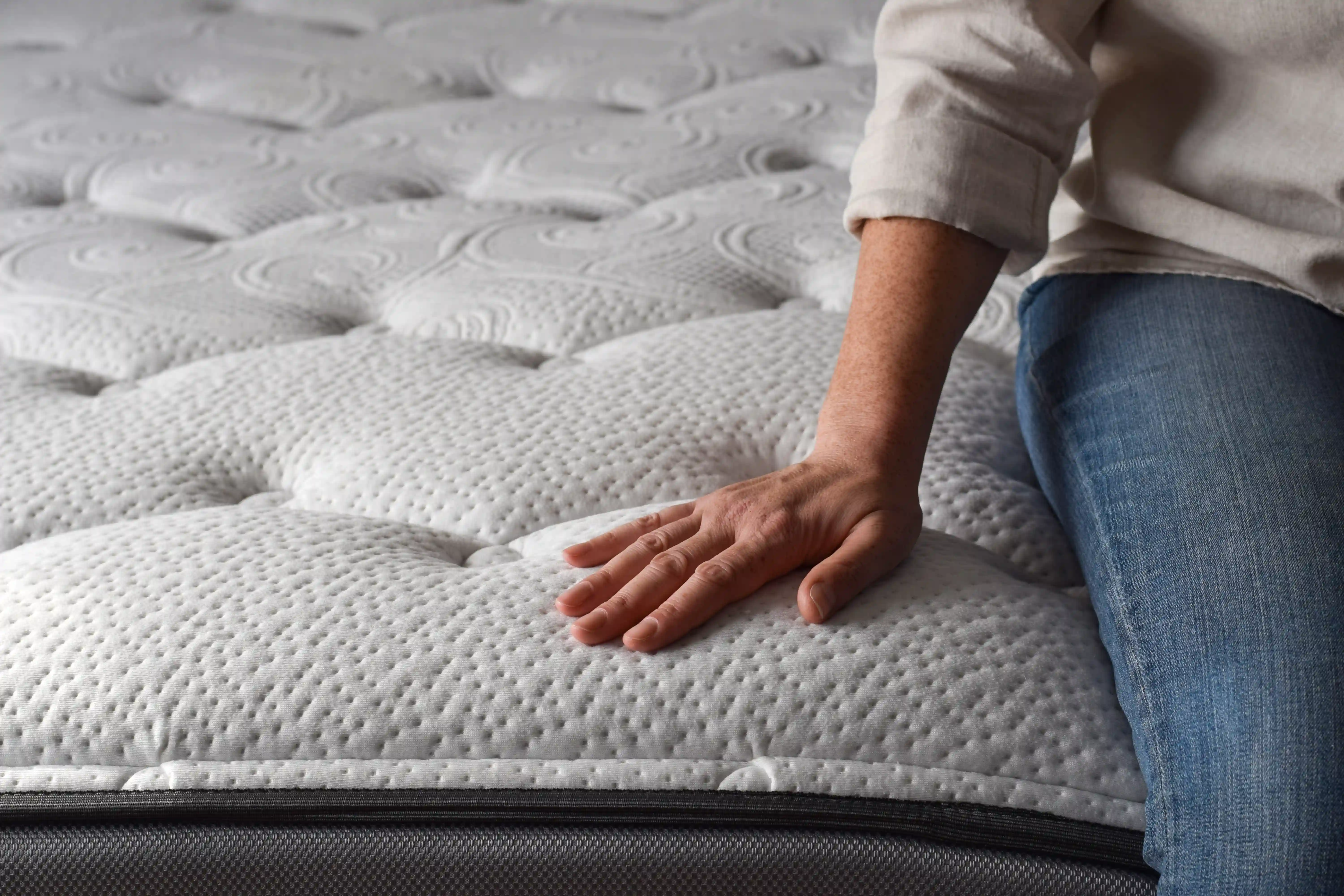
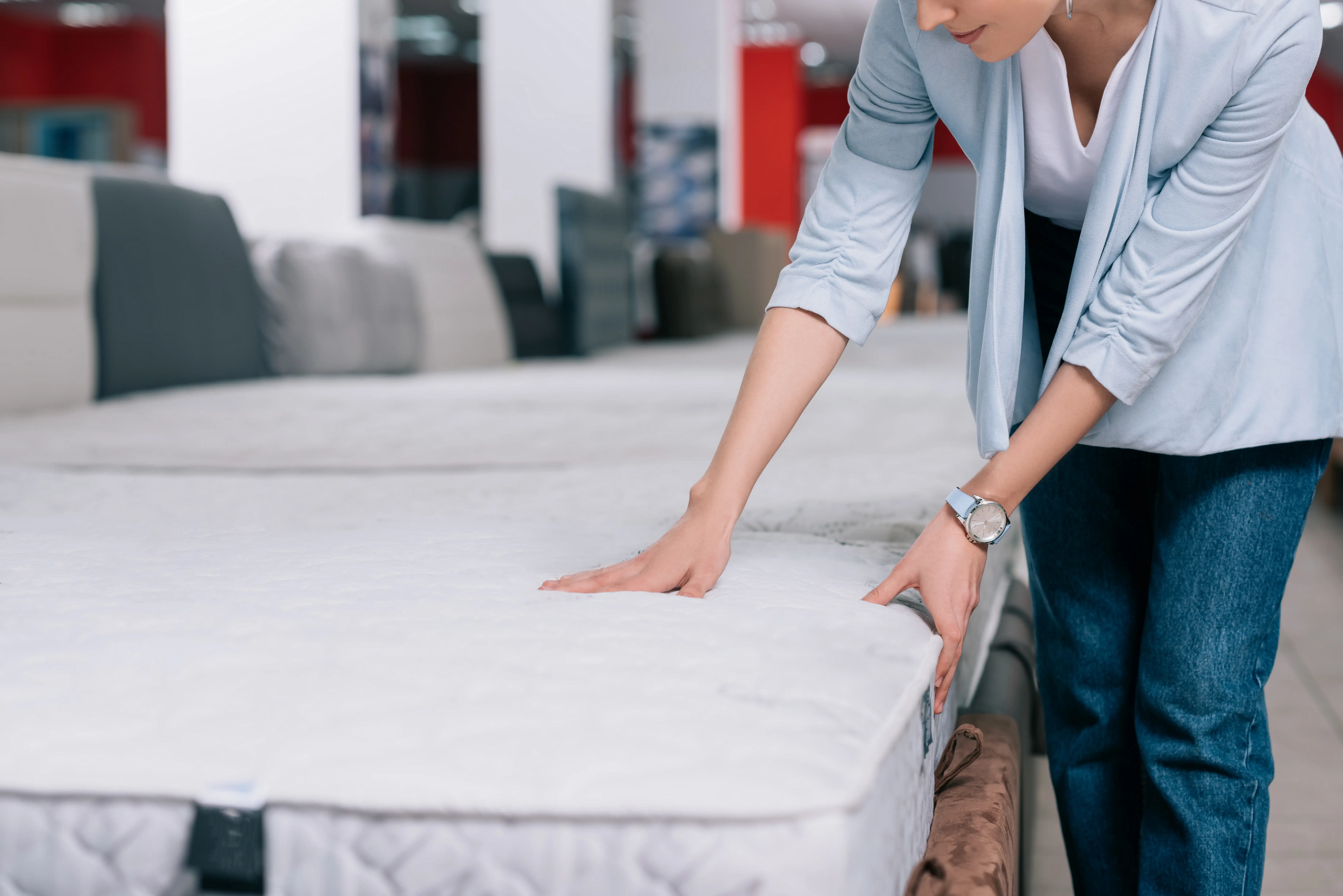
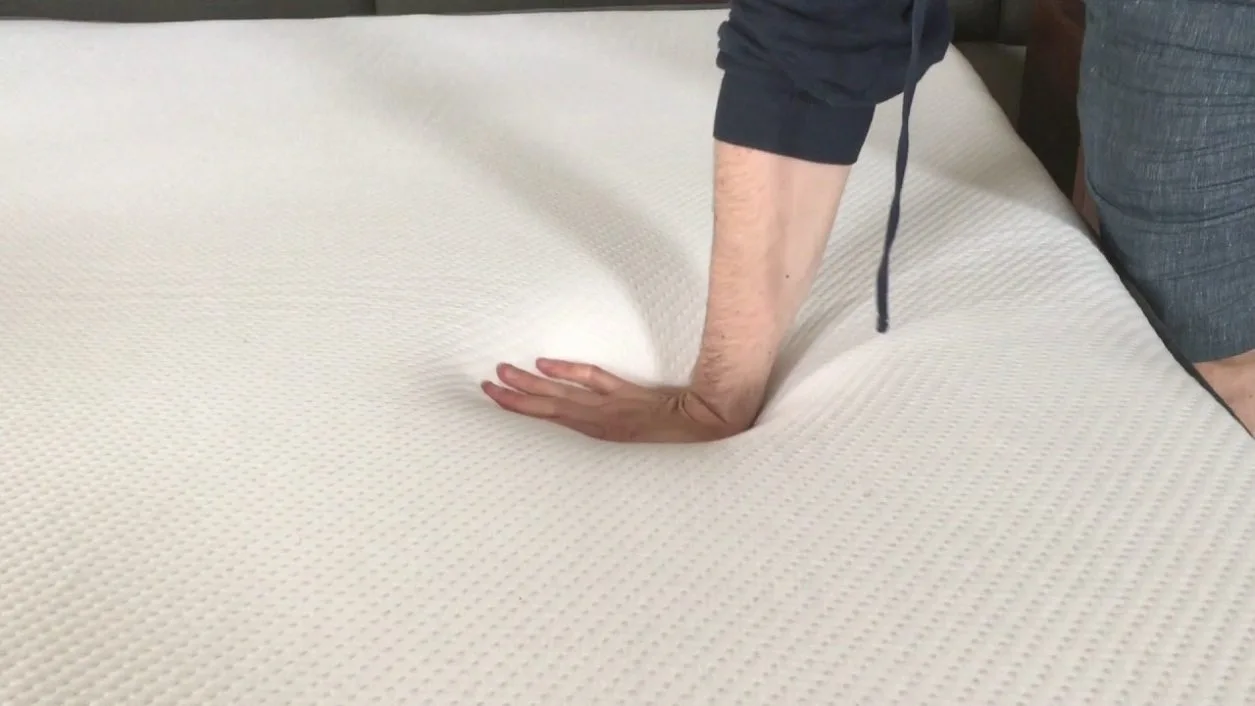
Press across the surface. Compare the usual sleeping area with the center and unused areas. A localized hollow or sharp difference can point to wear rather than the original firmness.
-
Inspect the support underneath. Look for bowed or broken slats, a dropped center beam, loose legs, a damaged box spring, or a base that does not meet the mattress maker's requirements.
-
Check the care label and instructions. Confirm whether the mattress can be rotated, flipped, opened, or used with its current foundation.
-
Find the receipt, trial terms, and warranty. A new mattress may still be exchangeable, while visible sag or a material defect may qualify for a claim.
Do not place the mattress on the floor or add plywood as a universal test. Support and ventilation requirements differ, and an unapproved surface can damage the mattress or affect its warranty. Tempur-Pedic, for example, requires a solid, elevated, structurally suitable surface and specifically says that plywood and direct floor placement are not recommended for its mattresses 2.
First fix the support system
If the foundation or frame is damaged, undersized, or missing required center support, fix that before judging the mattress. A suitable base may make the surface feel more even and prevent further sagging, but it will not reverse material that has already failed.
Follow the exact mattress warranty for:
- the allowed foundation or adjustable base;
- maximum distance between slats;
- required center beam and number of legs;
- whether a box spring, bunkie board, or solid panel is allowed; and
- the total load the frame and base must support.
Do not assume that closer slats, a board, or a harder foundation is always better. Some manufacturers require a solid panel for particular models, while others warn against an improvised board. The approved support is the safe default.
How to make a mattress feel softer
Add a soft topper
A mattress topper is the most direct reversible way to add surface cushioning. A thicker topper usually changes the feel more than a thin pad, but material and construction matter too.
A topper can reduce how much you feel a firm comfort layer underneath. It cannot change the mattress's deep support system, and it may make movement or edge sitting less stable if it is very thick or soft.
Check the topper's own trial and return policy. Then make sure your fitted sheet can hold the combined mattress and topper depth without pulling the corners up.
Distinguish a topper from a pad
A topper is a substantial comfort layer intended to change surface feel. A mattress pad is usually thinner and used mainly for light cushioning or protection. A plush pad may take the edge off a firm surface, but it is unlikely to transform the mattress.
Allow only the stated break-in period
Some new foam mattresses soften during their initial use. Follow the manufacturer's stated adjustment period rather than assuming every mattress needs the same number of nights.
Trial terms can depend on where you bought the mattress. Tempur-Pedic, for example, asks direct purchasers to try a new mattress for at least 30 days within its 90-night trial, and says retailer policies may differ 3. Check the last eligible return date before waiting.
Consider temperature only for a temperature-sensitive material
Do not heat a mattress as a general softening method. Space heaters, heating pads, or electric blankets can damage some foams or conflict with care instructions.
Certain viscoelastic materials do change temporarily with room temperature. Tempur-Pedic says its TEMPUR material can feel firmer in a cooler room and softer in a warmer one, while the underlying long-term support does not change 4. That product-specific behavior should not be applied to every foam, latex, hybrid, or innerspring mattress.
How to make a mattress feel firmer
Use a firm topper with realistic expectations
A dense, firm topper can create a firmer first impression and reduce some sink into a soft comfort layer. The mattress underneath still determines most of the deep support.
A firm topper is most reasonable when the mattress is level and structurally sound but feels a little too plush. If the support core bows, the topper will usually follow the same hollow. Adding more layers can even hide the defect without correcting it.
Remove an added soft layer
If the mattress recently became too soft, remove any topper or thick quilted pad and test the original surface for several nights. Check that an adjustable-air mattress is at its intended setting and that a removable comfort component has not shifted.
Rotate only when the maker allows it
A 180-degree head-to-foot rotation may move a less-worn area under your body and encourage more even future wear. It does not change the mattress's designed firmness, and it cannot repair a permanent impression.
Rotation rules are model-specific. Zoned mattresses may have a designated head and foot, and some makers say rotation is optional or unnecessary. Follow the care guide rather than a calendar copied from another brand.
Flip only a mattress designed for two-sided use
A one-sided mattress has its comfort layers on top and support core underneath. Flipping one can put the wrong layer against your body and may damage the mattress or affect the warranty.
A genuinely dual-sided mattress is different. It may offer the same feel on both sides for even wear or two labeled firmness options. Saatva, for example, says most of its mattresses are not flippable, while its Zenhaven and Saatva Youth models are designed with a different comfort level on each side 5.
Check the sewn labels or owner's guide before flipping. Do not infer that a mattress is two-sided because the underside is covered in fabric.
Permanent and built-in firmness changes
Modular mattresses
Some mattresses have a zippered cover and replaceable comfort or support layers. Change only the components and order specified by that manufacturer.
Naturepedic's EOS line, for example, has an official layer-swap program and split layers for different firmness on each side 6. That does not make it safe to cut open or rearrange the layers of an ordinary mattress. Unauthorized alteration can damage internal components and void the warranty.
Adjustable-air mattresses
An adjustable-air mattress changes feel by increasing or decreasing pressure in its internal chambers. Use its remote or app while lying in your normal position, then give a small change several nights before adjusting again.
Sleep Number's current instructions, for example, tell users to select a side, adjust the firmness setting, and try the new setting for three to five nights. Each partner can save a different setting on a dual-side model 7.
A side that keeps losing firmness may have an air leak, loose hose, pump problem, or displaced component. That is troubleshooting or repair work, not a preference issue to cover with a topper.
Exchange or replacement
For a new mattress, exchanging it for another firmness during the trial is the most complete change. For an older mattress with failed materials, replacement is the only reliable way to restore the original support.
Do not cut foam, add upholstery inside the cover, remove coils, or replace internal layers unless the mattress was expressly designed for owner service. A permanent do-it-yourself alteration can affect performance and warranty coverage.
When partners want different firmness
A single topper changes the whole surface. Placing a small topper on only one side may create a ridge, shift during sleep, or make fitted sheets harder to secure.
More stable options include:
- a mattress manufactured with different left and right firmness;
- a modular mattress with approved split comfort layers;
- a dual-chamber adjustable-air mattress; or
- two separate mattresses in a split king setup.
Compare the finished heights on both sides. Two different mattresses or layers can leave an uneven center seam even when their size labels match.
When a topper is not enough
Remove the bedding and inspect the mattress on the correct foundation. Consider a warranty claim or replacement when you find:
- a visible hollow that remains when no one is on the bed;
- broken or protruding coils;
- split, crumbling, or permanently compressed foam;
- a collapsed edge that creates a fall or transfer concern;
- a ridge or tilt caused by internal shifting; or
- damage that returns after the frame or foundation has been repaired.
Warranty definitions vary. Tempur-Pedic's current mattress warranty, for example, covers a qualifying visible indentation above its stated threshold only when the problem is not caused by an improper or unsupportive foundation; it also excludes comfort preference 8. Measure and photograph the mattress exactly as your own warranty instructs before adding a topper or discarding the base.
New or worsening pain does not prove that mattress firmness is the cause. Seek medical advice for persistent pain, weakness, numbness, pain after an injury, or symptoms that interfere with normal activity.
FAQs
Can a topper make a mattress firmer?
It can make the surface feel firmer if the mattress underneath is level and sound. It cannot rebuild a worn support core or stop a damaged foundation from bowing.
Can a topper make a mattress softer?
Yes. A cushioning topper can noticeably soften the surface. Choose one with a return policy, because thickness and material names do not predict how it will feel to every person.
Should I put plywood under a soft mattress?
Only if the exact mattress manufacturer approves or requires it for your model and frame. Plywood is not a universal firmness fix and may conflict with ventilation, support, or warranty instructions.
Can I put the mattress on the floor to make it firmer?
Do not use the floor unless the mattress manufacturer expressly permits it. Direct floor placement may conflict with the product's support, ventilation, care, or warranty requirements 2.
Is a firm mattress always better for back pain?
No. The available research does not support “the harder, the better.” Comfort and support needs differ, and persistent back pain deserves assessment beyond changing a mattress.
How do I know whether to adjust or replace the mattress?
Adjust the feel when the mattress and foundation are level, intact, and properly supported. Pursue repair, warranty service, or replacement when there is lasting sag, internal damage, air loss, or a support-system failure.