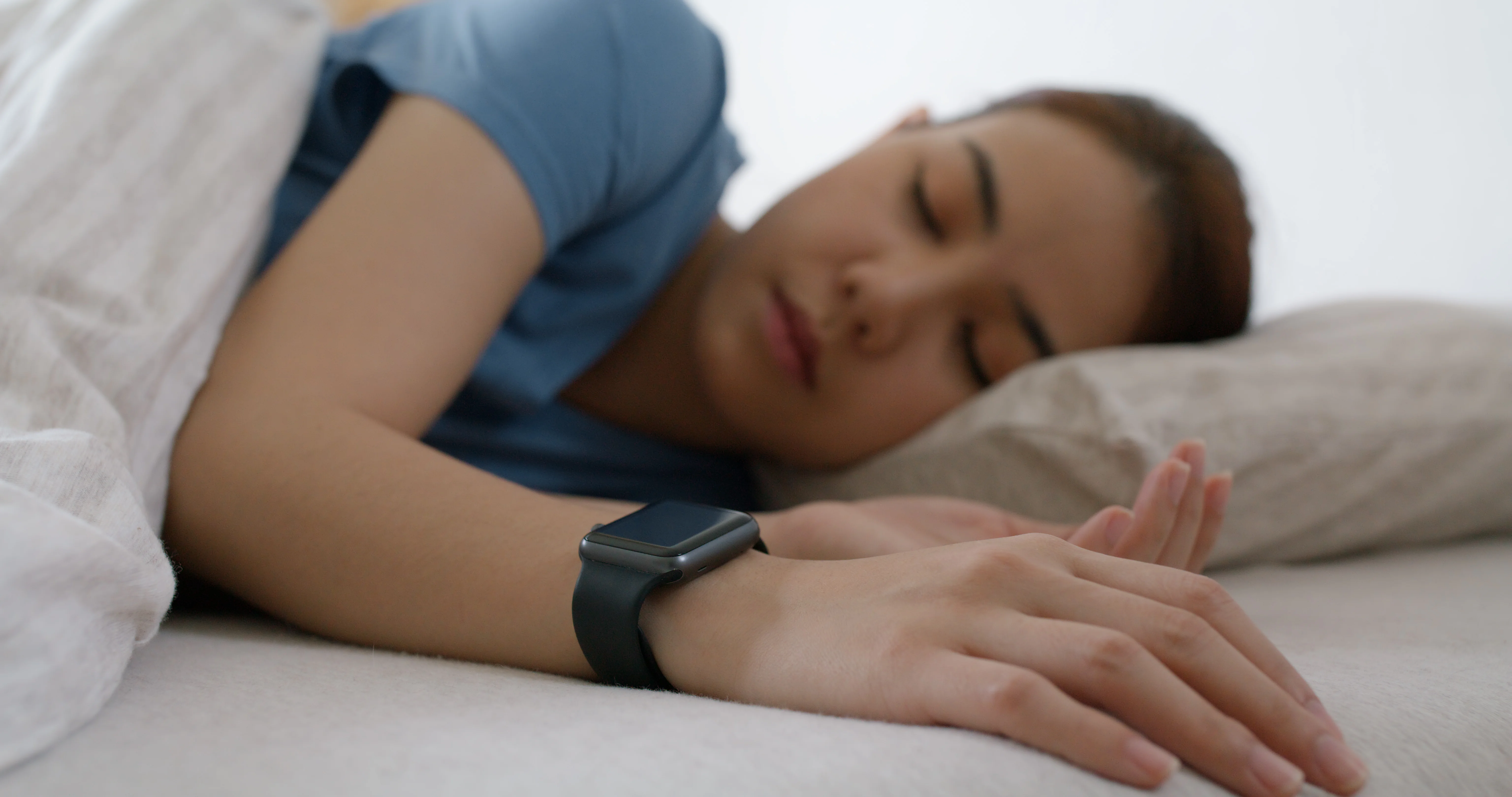

Yes. Regularly getting too little sleep can contribute to higher blood pressure and may increase your chance of developing hypertension 1 2. A single bad night does not mean you now have hypertension, however. Blood pressure changes from moment to moment, and a diagnosis depends on a pattern of properly taken readings rather than how you feel after one short night 3.
The evidence has two parts. Large observational studies link habitual short sleep with future hypertension, while controlled sleep-restriction studies show that cutting sleep can raise blood pressure over the short term. Sleep is still only one factor among many, including age, genetics, diet, physical activity, body weight, alcohol, medications, kidney disease, and other health conditions.
What the research actually shows
Habitual short sleep is associated with hypertension
A 2024 meta-analysis included 16 cohort studies that followed more than 1 million people for 2.4 to 18 years. Fifteen contributed to the pooled short-sleep result. Compared with sleeping 7 to 8 hours, short sleep was associated with a 7% higher relative rate of developing hypertension. The association was 11% higher among people sleeping less than 5 hours 1.
Those numbers describe an association, not proof that short sleep caused every case. Sleep duration was defined differently across studies, was often self-reported, and the results varied between studies. People who sleep less may also differ in work schedules, stress, health conditions, or other factors that affect blood pressure.
Experimental restriction can raise blood pressure over days
Controlled research gives more direct evidence of a short-term effect. In a randomized crossover study, 20 healthy young adults spent 9 nights with either 4 hours or 9 hours available for sleep. On Day 12, their 24-hour mean blood pressure was 2.1 mm Hg higher under sleep restriction (95% CI 0.6 to 3.6). Their food intake and body weight were controlled, which helps isolate the effect of reduced sleep 2.
This was a small laboratory study using a severe level of sleep restriction. It shows that too little sleep can raise blood pressure over several days, but it cannot tell us exactly what years of sleeping 6 rather than 7 hours would do to a particular person. An exploratory analysis also found larger increases among the nine women in the study, but that finding needs confirmation in larger groups.
Taken together, the evidence supports a careful answer: lack of sleep can raise blood pressure in the short term and likely contributes to long-term hypertension risk, but it is rarely the only cause.
Why sleep can affect your blood pressure
Blood pressure normally falls during sleep. This lower-pressure period gives the heart and blood vessels a break from daytime demands. Short sleep reduces the time available for that pattern, and fragmented sleep may interfere with it 4.
Sleep loss can also keep the sympathetic nervous system, which helps run the body's alert response, more active. In the controlled study above, sleep restriction increased norepinephrine and impaired the ability of blood vessels to widen normally. These findings offer plausible ways that short sleep may raise pressure, but a biological explanation alone does not establish how much it changes a person's long-term risk 2.
Sleep health is broader than the number of hours alone. Timing, regularity, continuity, daytime alertness, and sleep disorders can all matter. The American Heart Association notes that short sleep and interrupted sleep are associated with unfavorable blood-pressure patterns, while also calling for more trials to determine how much improving sleep changes cardiometabolic outcomes 4.
Short sleep is not the same as insomnia or sleep apnea
Short sleep means getting less sleep than your body needs. It may happen because work, caregiving, commuting, or habits leave too little time for sleep.
Insomnia means having trouble falling asleep, staying asleep, or returning to sleep despite having an adequate opportunity to rest. Someone can have insomnia and short sleep, but the two are not interchangeable. Simply spending longer in bed may not solve persistent insomnia 4.
Obstructive sleep apnea (OSA) is a separate breathing disorder. The airway repeatedly narrows or closes during sleep, causing oxygen drops, brief awakenings, and surges in nervous-system activity. OSA is linked to hypertension and is especially important to consider when blood pressure remains poorly controlled. Loud snoring, witnessed breathing pauses, gasping or choking during sleep, and excessive daytime sleepiness are reasons to discuss a sleep evaluation with a healthcare professional 5.
A person with OSA may spend 8 hours in bed and still have disrupted, unhealthy sleep. Getting more time in bed does not treat an obstructed airway. Read more about how sleep apnea affects blood pressure in our guide to that separate condition.
How to tell whether your blood pressure is high
Most people with high blood pressure have no symptoms. Headaches, dizziness, or fatigue cannot confirm or rule it out. Measurement is the only way to know 6.
For nonpregnant adults, current US categories are:
- Normal: below 120 systolic and below 80 diastolic
- Elevated: 120 to 129 systolic and below 80 diastolic
- Stage 1 hypertension: 130 to 139 systolic or 80 to 89 diastolic
- Stage 2 hypertension: 140 systolic or higher, or 90 diastolic or higher 7
Systolic is the top number and measures pressure when the heart contracts. Diastolic is the bottom number and measures pressure between beats. One elevated result is a snapshot, not a diagnosis. A healthcare professional can interpret an average from repeated office, home, or 24-hour ambulatory readings.
Get a more reliable home reading
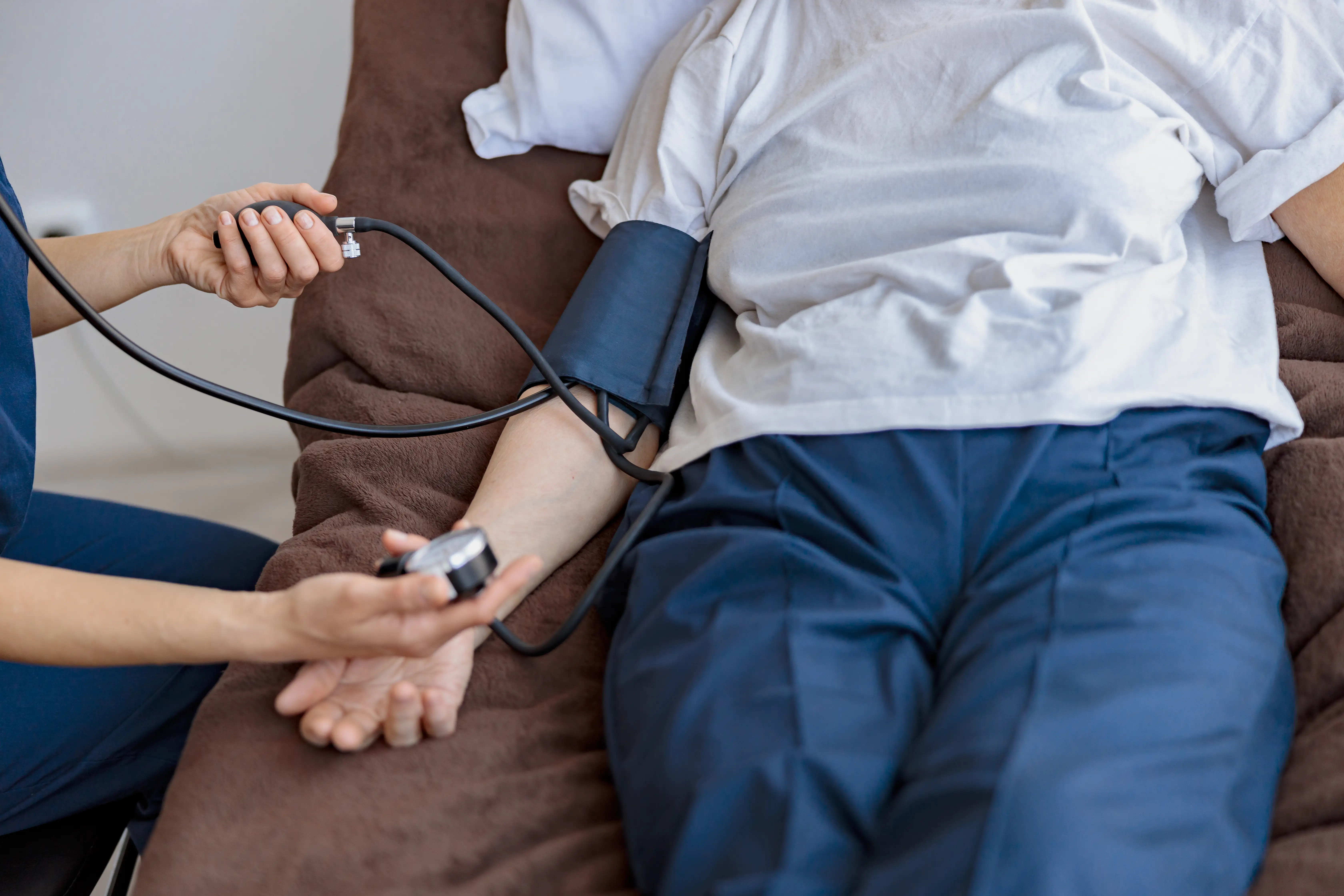
If you check at home, use a validated automatic upper-arm monitor with a cuff that fits. Wrist and finger devices are less reliable. For each session:
-
Avoid smoking, caffeine, and exercise for 30 minutes, and empty your bladder.
-
Sit quietly for at least 5 minutes without talking or using your phone.
-
Put the cuff on bare skin and support your arm at heart level.
-
Take two readings 1 minute apart and record both.
-
Measure at the same times on the days your healthcare professional recommends 3.
A reading after a poor night may be higher than your usual result. Repeat it correctly and look at the pattern, but do not dismiss repeated high readings as “just sleep.”
Will getting more sleep lower blood pressure?
It may help, especially if you regularly cut sleep short, but it is not a guaranteed treatment for hypertension. The American Academy of Sleep Medicine and Sleep Research Society recommend that adults get at least 7 hours of sleep per night on a regular basis. Individual needs vary, and healthy sleep also requires adequate quality and regularity 8.
Research on extending sleep and treating poor sleep is encouraging, but it does not yet establish a predictable blood-pressure reduction for every person 4. Protecting sleep should support, not replace, the care that is known to control hypertension: taking prescribed medication, following an appropriate eating plan, exercising, limiting alcohol, avoiding tobacco, and addressing other risk factors with your healthcare team 7.
Do not stop or reduce blood-pressure medication because your sleep improves or a home reading looks better. Review medication changes with the clinician who manages your blood pressure 3.
A practical sleep plan
-
Build in enough time to get at least 7 hours of actual sleep, not just 7 hours in bed.
-
Keep your wake time and bedtime reasonably consistent.
-
If obligations are cutting sleep short, move bedtime earlier in small, realistic steps where possible.
-
If you have enough opportunity but still cannot sleep, or daytime sleepiness persists, ask about an insomnia or sleep-disorder evaluation.
-
If you snore loudly, gasp, stop breathing during sleep, or have difficult-to-control hypertension, ask specifically about sleep apnea.
When to seek medical care
Arrange a routine appointment if your home readings repeatedly fall in the stage 1 or stage 2 range, or if poor sleep continues and affects daytime life. Bring a record of your readings and your monitor if possible 3.
For a sudden reading higher than 180 systolic and/or higher than 120 diastolic, wait at least 1 minute and measure again. If it remains that high and you do not have new concerning symptoms, contact a healthcare professional immediately. If it remains that high and you have chest pain, shortness of breath, back pain, numbness, weakness, a change in vision, or difficulty speaking, call emergency services. Do not wait for it to fall on its own 3.
The bottom line
Regular lack of sleep can raise blood pressure and is associated with a modest increase in the risk of developing hypertension. It does not mean that one restless night caused a chronic condition, and it does not explain every high reading. Aim for adequate, regular sleep, measure your blood pressure correctly, and treat repeated high results as a medical issue rather than assuming that sleep alone will fix them.