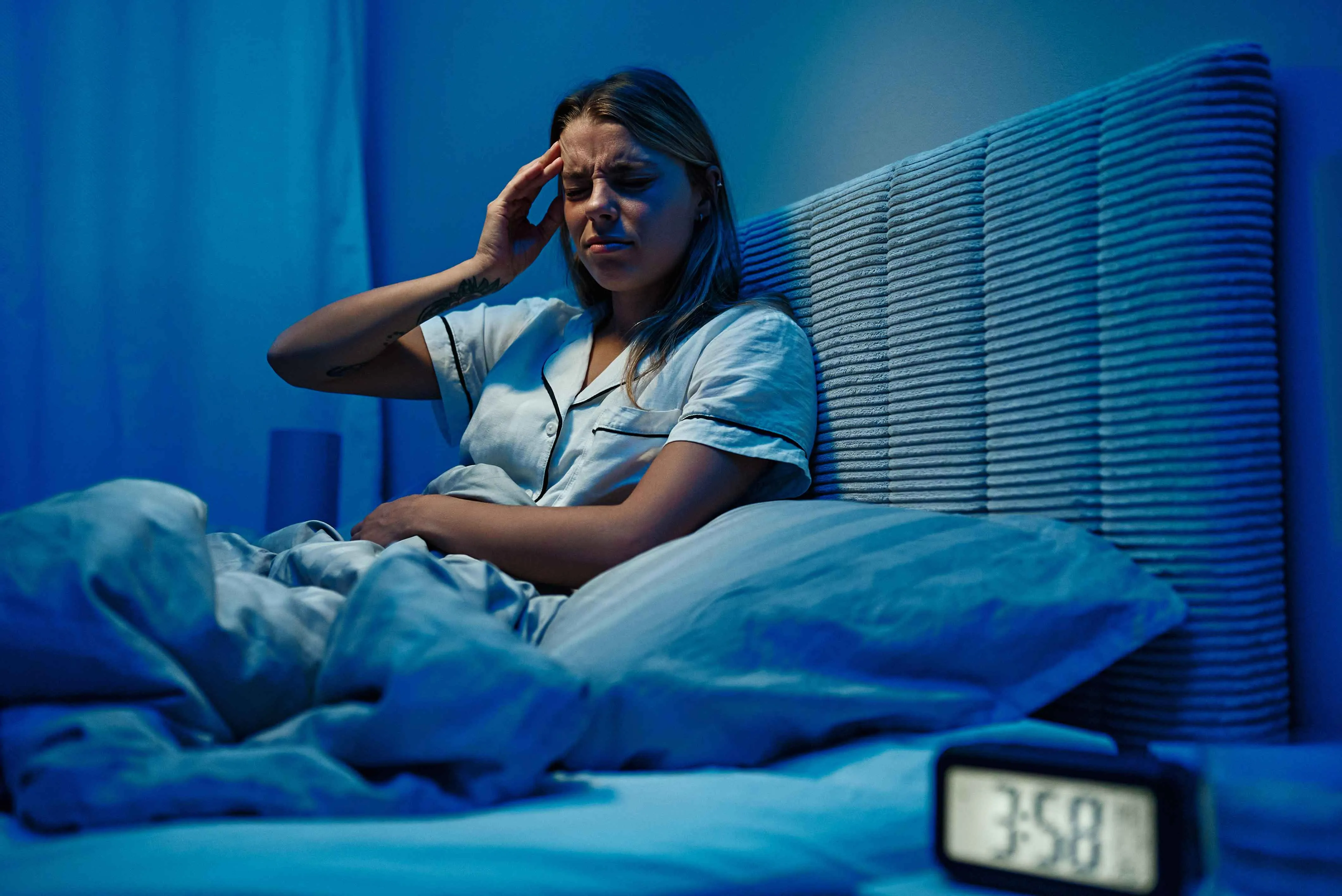


You can often sleep after hitting your head, but bedtime is not the test of whether the injury is safe. Sleep itself does not cause a brain bleed or turn a mild injury into a severe one. The concern is that a more serious injury may already be present and worsening drowsiness could be missed 1 2.
If a clinician, emergency department, or medical advice service has assessed the situation and said home observation is appropriate, normal sleep is usually allowed. Follow the exact discharge instructions you receive. If the injury has not been assessed, do not use a symptom checklist, a fixed waiting period, or the fact that the person seems alert to diagnose it as minor 3.
Call emergency services now if the person is unconscious, cannot be woken normally, has a seizure, or develops another emergency sign listed below. For less obvious concerns, contact an urgent medical advice service rather than waiting until morning.
Why sleep is not the main danger
The old advice to keep everyone awake after any head impact confuses sleep with declining consciousness. A person who is tired but can be woken and responds normally is different from someone whose alertness is getting worse or who cannot be woken 2.
A concussion can cause fatigue, sleeping more or less than usual, headache, dizziness, nausea, slowed thinking, and memory problems. Some symptoms begin immediately, while others become noticeable hours or days later 2.
A brain bleed is a different concern. Increasing drowsiness or inability to wake can be a sign of deterioration. Sleep may make a change in responsiveness less obvious to a caregiver, which is why the decision about home monitoring should come after appropriate triage, not after forcing the person to stay awake for an arbitrary number of hours 2 3.
UK guidance allows sleep during home care for a minor head injury and does not require an injured person to stay awake simply because they are tired 1. For children with concussion and no danger signs, CDC guidance also says not to prevent normal sleep 4.
Get emergency help for these adult warning signs
Call your local emergency number if an adult develops any of the following after a head injury:
- Loss of consciousness without prompt recovery, or a new loss of consciousness
- Increasing drowsiness, inability to keep the eyes open, or difficulty waking
- A seizure
- A headache that keeps getting worse or does not go away
- Repeated vomiting
- Increasing confusion, agitation, unusual behavior, or failure to recognize people or places
- Slurred speech, new weakness or numbness, poor coordination, or trouble walking
- One pupil larger than the other or a new major vision problem
- Blood or clear watery fluid from an ear or the nose, bruising behind the ear, or an obvious dent or open injury in the skull
- Abnormal breathing, or concern about a serious neck injury
These signs can indicate injury that needs rapid assessment. Do not keep the person awake at home to monitor the problem, and do not drive an impaired person to the hospital yourself if emergency transport is needed 2 3.
A high-energy event also changes the decision even before symptoms are obvious. Examples include a high-speed road collision, being struck as a pedestrian or cyclist, ejection from a vehicle, a substantial fall, or an object penetrating the head. Call emergency services or follow local trauma advice rather than deciding that sleep is safe at home 3.
Children and babies need age-specific assessment
Children can have the same emergency signs as adults, including increasing drowsiness, difficulty waking, seizure, repeated vomiting, worsening headache, confusion, weakness, slurred speech, or unequal pupils. CDC guidance adds two particularly useful signs in young children: crying that will not stop and cannot be consoled, and refusing to nurse or eat 2.
Seek urgent emergency assessment if a baby or child:
- Is not acting normally for them, becomes increasingly irritable, or is unusually quiet or floppy
- Cannot be consoled or will not feed
- Is difficult to wake or cannot stay awake at a time they normally would
- Has a seizure, repeated vomiting, new weakness, or worsening balance
- Has a large scalp bruise or swelling as an infant, a tense or bulging soft spot, or signs of a skull injury
- Was injured in a high-energy fall or collision
- May have been intentionally harmed
Memory loss is difficult or impossible to assess reliably in preverbal children and many children under five. Vomiting also needs age- and context-specific interpretation. This is why adult rules and online scoring tools should not be applied to a child. A clinician decides whether a child needs observation, imaging, or home care 3.
If a child has possible concussion symptoms but no emergency sign, contact their healthcare professional for assessment. CDC advises that a child with a possible concussion should be seen by a healthcare provider and that parents should report any loss of consciousness, memory loss, seizure, medicines, and details of the impact 4.
Loss of consciousness or amnesia changes the decision
Being briefly knocked out does not prove that there is bleeding in the brain, and a person can have concussion without ever losing consciousness. Still, any loss of consciousness or amnesia for events before or after the impact is a reason to get prompt medical advice rather than going straight to sleep.
NICE guidance directs remote medical services to refer a person for emergency-department assessment after any injury-related loss of consciousness from which they recovered or amnesia around the event. Imaging decisions then depend on the examination, age, mechanism, duration of amnesia, bleeding risk, and other findings 3.
Tell the clinician:
- Whether consciousness was lost and for how long
- What the person cannot remember before or after the impact
- Whether symptoms are improving, stable, or worsening
- Whether vomiting, seizure, severe headache, confusion, or neck pain occurred
- The mechanism of injury and approximate time it happened
- Every medicine taken, including blood thinners and antiplatelet drugs
Do not ask the injured person to repeatedly prove they can walk, read, or complete mental tasks. A normal answer at home does not rule out a serious injury.
Blood thinners and antiplatelet medicines
Anticoagulants and antiplatelet medicines can increase concern about bleeding after head trauma. Examples include warfarin, apixaban, rivaroxaban, dabigatran, heparin, clopidogrel, ticagrelor, and similar medicines.
If the injured person takes one of these medicines, contact an urgent medical service after the impact even if they feel well. Give the exact medicine, dose if known, time of the last dose, and whether more than one medicine is used. NICE recommends considering CT imaging for people taking an anticoagulant or an antiplatelet other than aspirin alone even when no other CT indication is present 3.
U.S. emergency guidance similarly says adult decision tools cannot reliably exclude the need for CT in people taking anticoagulants or antiplatelets other than aspirin. Aspirin-only evidence and recommendations differ, so disclose aspirin use rather than assuming it does or does not change the plan 5.
After an adult has a normal initial CT, is back to their neurological baseline, and has no other reason for extended monitoring, the American College of Emergency Physicians does not recommend routine repeat imaging or hospital admission solely because of anticoagulant or antiplatelet use. Discharge instructions must still explain the signs of rare delayed bleeding 5.
That recommendation applies after emergency assessment and imaging, not before. Do not stop or skip a prescribed blood thinner or antiplatelet medicine on your own. Ask the treating clinician how to manage the next dose.
Do not let an intoxicated person “sleep it off”
Alcohol, cannabis, opioids, sedatives, and other substances can cause sleepiness, poor balance, vomiting, slowed responses, and memory problems that overlap with head-injury symptoms. This makes home assessment unreliable.
NICE lists current alcohol or drug intoxication as a reason for emergency-department referral after a head injury and as a factor that can make discharge unsafe 3. Do not assume unusual drowsiness is only intoxication, and do not leave the person alone to sleep.
Tell emergency staff what was taken, approximately how much, and when. If breathing is abnormal or the person cannot be woken, call emergency services immediately and follow dispatcher instructions.
Safe sleep after a clinician approves home observation
Once a qualified clinician or medical advice service says home care is appropriate, sleep can usually be part of the plan. Do not substitute general online advice for the written or verbal instructions given for that person.
A safe home plan should include:
- A capable, sober adult who understands the instructions and can get help
- A charged phone and a clear route to emergency care
- The specific symptoms that require an immediate return
- Instructions about whether any overnight checks are needed
- Guidance about pain medicine and regular prescriptions
- A follow-up contact if symptoms continue or change
NICE says a person should only be sent home when suitable supervision is available and specifies that a responsible adult should stay during the first 24 hours after injury. Other services may tailor the monitoring period to the injury and assessment, so follow the discharge plan rather than treating 24 hours as a universal clearance point 3.
If nobody reliable can stay, tell the clinician before discharge. A person with intoxication, ongoing abnormal alertness, significant symptoms, or no safe supervision should not simply be left alone to sleep.
Do you need to wake the person every few hours?
Not routinely. Scheduled waking is not a universal rule after every head injury.
If a clinician has approved home care and has not asked for overnight waking, do not invent a two-hour or three-hour schedule. NHS guidance says a person with a minor head injury does not need to stay awake because they are tired, and CDC guidance tells parents not to prevent a child with concussion from sleeping when danger signs are absent 1 4.
If the discharge plan does call for checks, ask what to assess and when. A caregiver should know how the person normally sleeps and should seek emergency help if the person is unusually difficult to wake, is confused when awakened, has abnormal breathing, or has any new warning sign. The caregiver is watching for change, not performing a neurological examination.
| More consistent with ordinary sleep | Needs emergency action |
|---|---|
| Falls asleep around a usual sleep time after home care was approved | Becomes increasingly sleepy while normally awake |
| Breathes normally and has stable symptoms | Has abnormal breathing, seizure, or repeated vomiting |
| Wakes and responds in their usual way when there is a reason to check | Cannot be woken normally or is newly confused, weak, or slurring speech |
If you cannot tell which column fits, call an urgent medical advice service. Do not wait for a scheduled check.
Medicines, alcohol, and the first night
Use only the pain medicine recommended in the discharge plan. NHS home-care guidance commonly suggests paracetamol, called acetaminophen in the United States, for headache 1. Whether an anti-inflammatory medicine such as ibuprofen is suitable can depend on age, other injuries, bleeding risk, and the clinician's plan.
Do not add a sleeping pill, sedating antihistamine, tranquilizer, opioid, cannabis product, alcohol, or another sedating substance to make the person sleep. These can worsen impairment or make a change in alertness harder to recognize. NHS guidance advises avoiding alcohol, recreational drugs, and sleeping pills during early recovery unless a doctor specifically advises otherwise 1.
Do not change regular prescriptions, including blood thinners, without instructions from the treating clinician. For a child, ask the child's clinician before giving any medicine intended to cause sleep 4.
What happens after the first-night decision?
This article covers the period from impact through emergency triage and clinician-approved home observation. If a clinician diagnoses concussion and sends the person home, follow the individualized discharge plan.
For guidance on sleep patterns, symptom-limited activity, and recovery after a diagnosed concussion, see Is It Safe to Sleep with a Concussion?.
Seek medical review if symptoms persist, appear later, or worsen after an earlier assessment. A previous reassuring period or normal initial scan does not cancel new emergency signs 3 5.
Bottom line
Sleeping after a head impact is not inherently dangerous. The unsafe step is using sleep, wakefulness, or a fixed observation window to decide at home that the injury is minor.
Call emergency services for an unresponsive or hard-to-wake person, seizure, repeated vomiting, worsening headache, increasing confusion, new speech or movement problems, unequal pupils, or signs of a skull injury. Get prompt medical advice for loss of consciousness, amnesia, anticoagulant or antiplatelet use, intoxication, high-energy injury, or a child whose behavior is not normal.
After a clinician says home observation is appropriate, the person can usually sleep. Make sure suitable supervision is available, follow the written instructions, and wake the person only if the individualized plan calls for it or a concerning change gives you a reason to check.