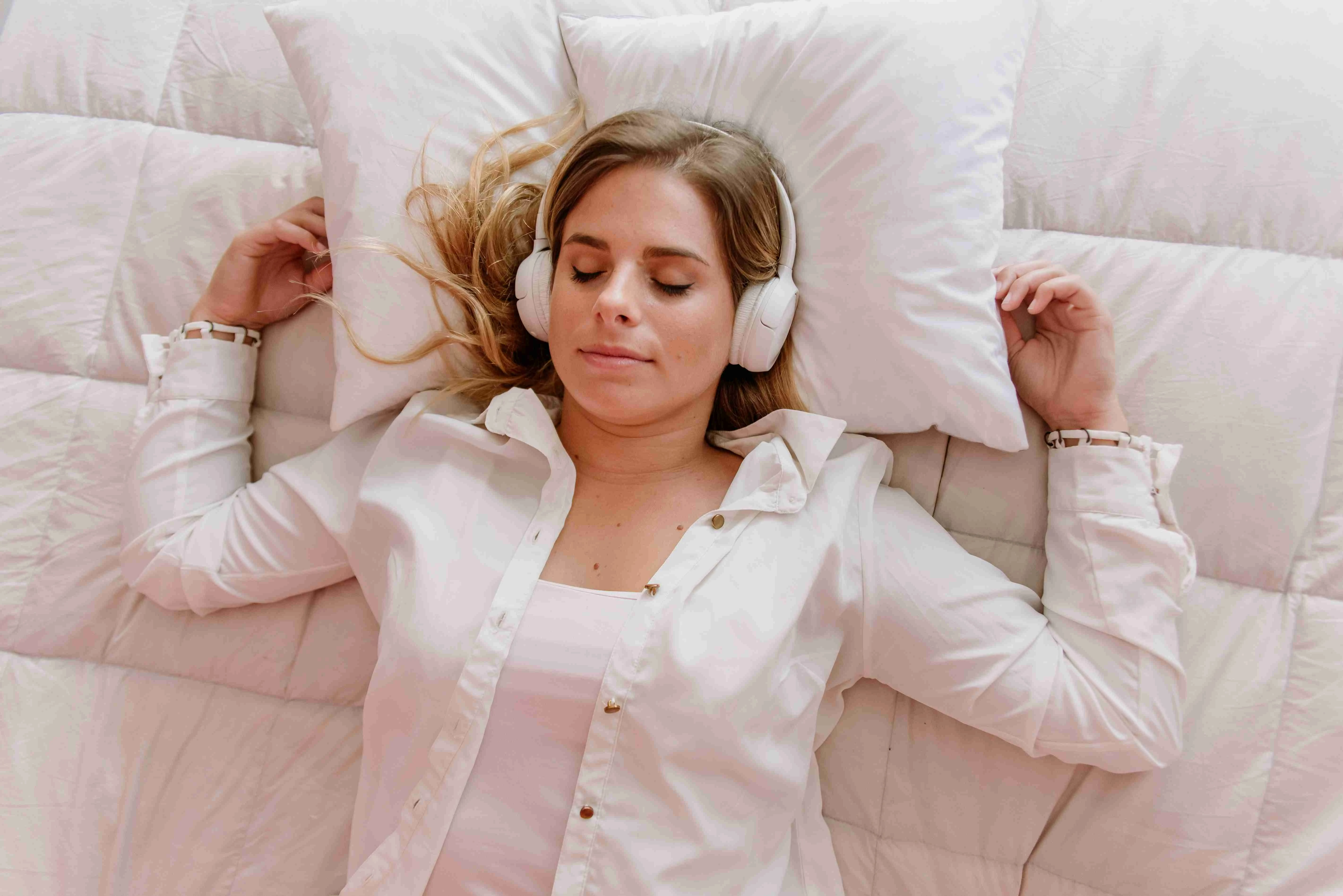

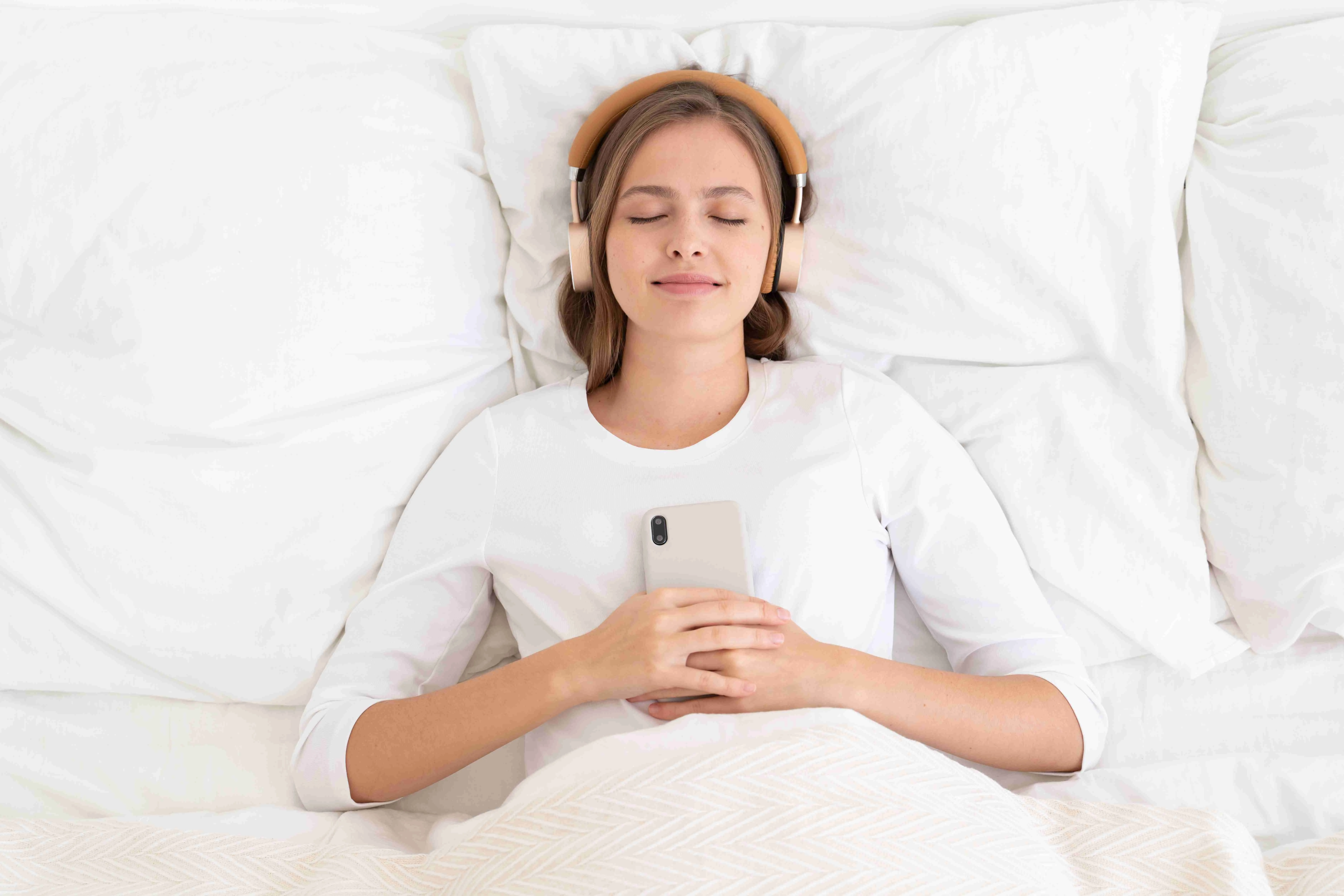
No, you cannot learn a usable new language simply by playing lessons while you sleep. Speaking, understanding, and writing a language require attention, practice, feedback, and repeated use while awake.
Sleep still matters. It helps the brain stabilize and reorganize memories formed during the day. Some tightly controlled experiments have also found that replaying a cue during sleep can strengthen material that people learned while awake. A smaller line of research suggests that the sleeping brain can form simple, unconscious associations. Neither finding shows that an overnight podcast can teach vocabulary, grammar, pronunciation, or conversation from scratch.
Three different claims often get called sleep learning
Discussions of learning a language in your sleep tend to mix together three different ideas:
- Ordinary sleep-dependent consolidation: You study while awake, then sleep helps preserve or reorganize what you learned.
- Targeted memory reactivation: You learn material while awake, then researchers replay a sound associated with some of that material during a carefully monitored sleep stage.
- Learning genuinely new information during sleep: The first meaningful exposure happens after you are asleep.
The first is well supported as part of normal memory processing. The second is promising but inconsistent and technically demanding. The third has produced narrow signs of implicit learning, not conscious command of a language.
What sleep can support after you study
Sleep is an active biological state, not a period when the brain switches off. Across the stages of sleep, patterns of brain activity help stabilize some new memories and integrate them with existing knowledge. This is one reason a full night of sleep is part of learning rather than time taken away from it.
Language studies support this general role, but their results are narrower than claims about fluency. In one experiment involving 35 adults, participants learned rules from an artificial language while awake. The sleep group later performed better than a wake group on fixed, sequence-based rules, while sleep did not provide the same advantage for every type of rule. The findings concerned consolidation of a small artificial system, not learning a natural language during sleep 1.
Sleep may therefore help retain words or detect patterns that you have already worked on. It does not eliminate the awake practice needed to understand meaning, retrieve words, pronounce them, follow real speech, or respond in conversation.
What targeted memory reactivation actually involves
Targeted memory reactivation, or TMR, is more specific than leaving a language course on overnight. In a typical study, a person learns an item while awake and hears a distinctive cue connected with it. Researchers then monitor brain activity and replay selected cues during a particular non-REM sleep stage. The cue is intended to reactivate an existing memory, not deliver a complete new lesson.
A frequently cited vocabulary experiment used Dutch-German word pairs. German-speaking participants first learned the pairs while awake. During monitored non-REM sleep, researchers replayed the Dutch words from some pairs. Recall for the cued translations was better than recall for uncued translations the next morning 2.
A monitored nap study found a benefit for generalizing some rules from an artificial grammar after grammar-related cues were replayed. The authors also found that cueing favored one rule pattern over another, which shows that reactivation can bias what is strengthened rather than improving an entire language system 3.
Across memory research more broadly, a meta-analysis of 91 TMR experiments involving 2,004 participants found a small average benefit. Effects were present in analyses of stage N2 and slow-wave sleep, but not REM sleep. The result supports a modest laboratory effect across several kinds of memory tasks. It does not validate consumer sleep-learning recordings or show that TMR creates new language knowledge 4.
The vocabulary findings are mixed
Positive findings have not appeared in every study:
- A pilot and main study with 34 adults found no vocabulary benefit from replay during either N2 or slow-wave sleep. The researchers said larger, preregistered, multi-laboratory replications were needed 5.
- A study of 18 adolescents found no improvement for cued foreign-language words the next morning or one week later 6.
- An at-home study of 66 young adults found that results depended on habituation and reported sleep disturbance. The full group showed no clear benefit on the first two nights. Participants who reported waking because of the words remembered cued items worse 7.
- A more recent at-home study found better retention for cued pseudowords in 24 young adults, but it used a wearable EEG system to time cues to slow waves. It was a small, one-night study, not a test of ordinary audio playback 8.
These differences matter. Cue volume, timing, sleep stage, prior learning, awakenings, and the memory test can all affect the result. A phone playlist cannot reliably reproduce an EEG-monitored protocol.
Can the brain learn anything completely new during sleep?
The answer is more nuanced than a simple yes or no. The sleeping brain can register some sensory information and form basic associations. What has not been demonstrated is the unconscious acquisition of a functional vocabulary or grammar.
In one study, researchers paired tones with pleasant or unpleasant odors during sleep. Later, the tones alone changed participants' sniff responses, including after they woke. This was new learning, but it was simple conditioning without words, meaning, or conscious study 9.
Other experiments have played made-up words together with meanings during slow-wave sleep. Participants sometimes performed slightly better than chance on a later forced-choice task when the words were timed to particular points in the brain's slow waves 10. A study of 22 adults also found limited transfer from sleep-presented Japanese words to a picture-category task, mainly after non-REM rather than REM exposure. Participants did not know when their choices were correct, and a wake-learning control was much more efficient 11.
A 2024 study of 30 adults found that repeatedly presenting pseudoword-translation pairs at a specific slow-wave phase could influence a semantic-category test 36 hours later. It did not show that participants could consciously translate, pronounce, or use the words 12.
These are interesting demonstrations of implicit memory. They use small samples, carefully timed stimuli, made-up or unfamiliar words, and constrained tests. Above-chance classification is not the same as knowing a word, and knowing isolated words would still be far from understanding grammar or holding a conversation.
Why an overnight podcast is not a language lesson
A podcast, audiobook, or vocabulary track contains a continuous stream of sounds. During sleep, you are not deliberately focusing on it, checking meaning, noticing errors, practicing retrieval, or adjusting your pronunciation from feedback. Those awake processes are central to language learning.
The successful cueing studies did not ask sleeping participants to follow a story or decode a lesson. They replayed brief cues linked to material that had already been learned. Researchers monitored sleep and stopped or changed playback when a participant showed signs of arousal 2 8.
This means background exposure while asleep should not be treated as immersion. It has not been shown to teach sentence structure, improve an accent, or build listening comprehension. If you enjoy a target-language podcast, listen while awake, when you can pause, predict meaning, repeat phrases, and check what you understood.
Could sleep audio interfere with sleep?
It can if it wakes you or makes your sleep less settled. The at-home vocabulary study found worse retention for cued items among participants who reported waking because of the words 7. Controlled studies reduce this problem by monitoring sleep stage and arousal, something an ordinary recording cannot do.
Do not sacrifice sleep for a speculative memory benefit. If overnight audio wakes you, leaves you feeling less rested, or bothers a bed partner, turn it off. The possible TMR effect is small and uncertain, while adequate sleep supports the daytime attention and memory that language study depends on.
A practical way to combine language study and sleep
Use sleep to support a sound learning routine, not to replace one:
- Learn while fully awake. Work with a manageable set of words or one grammar pattern. Connect each item to meaning, context, sound, and use.
- Practice retrieval. Close the book or app and try to recall the word, explain the rule, or produce your own sentence. Correct errors while you can still pay attention.
- Finish with a brief review. A short review before bed can be convenient, but research does not establish a special bedtime window that makes learning automatic.
- Protect a full sleep period. Do not stay up late to add more practice. Aim for the amount of sleep that lets you function well the next day.
- Test yourself again after sleep. Retrieve yesterday's material before rereading it. Use the mistakes to choose the next practice set.
- Use audio actively. Listen while awake, repeat aloud, compare your pronunciation, and answer comprehension questions.
There is no validated household protocol that reproduces the closed-loop methods used in research. If you still choose to experiment with replay, treat it as optional, use only material you have already studied, and stop if the sound disturbs your sleep. It should never replace awake study.
Frequently asked questions
Can subliminal recordings make me fluent?
The sleep-learning studies discussed here do not show that subliminal recordings can produce fluency. Usable language depends on conscious comprehension, retrieval, speaking, listening, correction, and continued practice.
Can I memorize vocabulary while sleeping?
Sleep can help preserve vocabulary you learned while awake. Cueing some previously learned words during monitored non-REM sleep has improved recall in certain studies, but other studies found no benefit. Research on entirely new sleep-presented words has shown only limited implicit associations, not conscious vocabulary that people can reliably translate and use.
Is non-REM sleep or REM sleep better for language learning?
Most language cueing studies have targeted non-REM sleep, especially stage N2 or slow-wave sleep. The broader TMR meta-analysis found benefits in N2 and slow-wave sleep but not REM 4. That does not mean you should try to manipulate your sleep stages. An ordinary audio recording does not reproduce the brain monitoring and precise timing used in laboratory experiments.
Should I play a language track during a nap?
Some language experiments have found better retention or rule generalization after monitored naps, but that is not evidence for an exact nap length or an audio routine that teaches a language 3. If a nap helps you feel rested, study before it and test yourself afterward. Avoid audio that keeps you from sleeping.
Will sleep improve my pronunciation?
Current sleep-learning studies do not show that passive overnight audio corrects pronunciation or creates a more natural accent. Pronunciation improves through attentive listening, speaking, feedback, and repeated correction while awake.
The bottom line
Sleep is a partner in language learning, not a hidden classroom. It can help consolidate material you have studied, and precisely timed cues may sometimes strengthen selected memories. Evidence for those cueing benefits is modest and inconsistent, and signs of genuinely new learning during sleep remain implicit and highly constrained.
Put your effort into active practice, then give your brain enough uninterrupted sleep to work with what you learned. That approach is less dramatic than waking up fluent, but it fits the evidence.