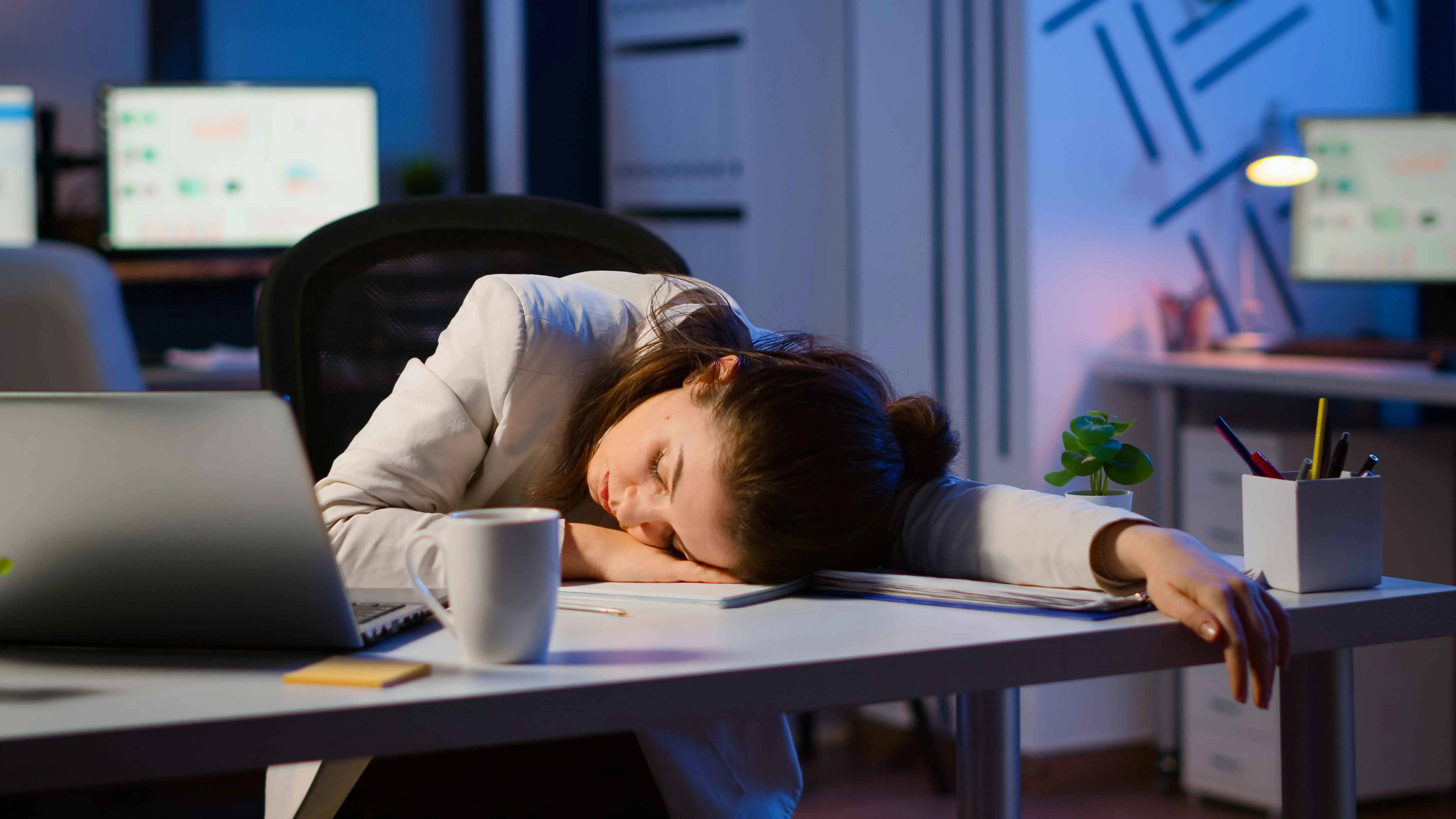
Your chronotype is your tendency toward earlier or later sleep, wakefulness, and activity. It falls on a continuum from stronger morningness to stronger eveningness. Most people are somewhere between the two ends.
Chronotype is not a four-animal personality system, a diagnosis, or a schedule that guarantees peak creativity or productivity. It is one useful description of timing. Your actual sleep also reflects sleep pressure, light exposure, age, work, school, caregiving, social life, habits, and how much sleep you need.
This guide focuses on normal variation in timing. Read our circadian rhythm guide for the underlying clock system and our guide to circadian rhythm sleep-wake disorders if sleep timing is persistently impaired.
Chronotype is a continuum, not a personality type
Two biological processes help shape when you sleep. Your circadian system organizes daily rhythms, including the timing of alertness and sleepiness. Homeostatic sleep pressure builds while you are awake and decreases during sleep. Genetics influences both systems, but light, behavior, and social schedules also affect when they are expressed 1.
Researchers often use “morning type,” “intermediate type,” and “evening type” as convenient groups. The underlying measurements are continuous. A person can lean somewhat late without fitting an extreme category, and the boundary between categories depends on the questionnaire and population.
Sleep need is a separate trait. A late chronotype does not mean someone naturally needs more sleep, and an early chronotype does not make short sleep harmless. Going to bed late because of work, entertainment, insomnia, or a new baby also does not establish an evening chronotype.
Genes contribute without assigning a permanent identity. A genome-wide study of 697,828 people identified hundreds of variants associated with self-reported morningness. In the activity-monitor subset, average sleep timing in the 5% with the most morningness-associated variants was about 25 minutes earlier than in the 5% with the fewest 2. That finding supports a distributed genetic influence, not a consumer test that can infer your ideal schedule from one or two “clock genes.”
How chronotype is measured
There is no single home test that isolates a pure biological clock. Each method answers a slightly different question.
Morningness-Eveningness Questionnaire
The 19-item Morningness-Eveningness Questionnaire, or MEQ, asks about preferred timing, alertness, and ease of functioning at different times. Its score places someone along a morningness-eveningness scale and is often divided into type categories. The original study compared the questionnaire with daily temperature timing in a small sample, so the MEQ is a useful self-report research measure, not a medical diagnosis or a complete performance forecast 3.
Munich ChronoType Questionnaire
The Munich ChronoType Questionnaire, or MCTQ, records actual sleep timing separately on workdays and free days. A common chronotype estimate is the midpoint of sleep on free days, corrected for extra sleep that may be repaying workweek sleep debt. The method was created to capture timing in daily life rather than preferences alone 4.
That calculation still needs context. “Free” days may include alarms, children, religious observance, a second job, social plans, illness, or recovery after a night shift. The developers' later critical review emphasizes that chronotype and social jetlag are related measures with methodological limits, not direct readouts of every person's internal clock 5.
Sleep diary and actigraphy
A sleep diary can show bedtime, estimated sleep onset, awakenings, final waking, getting-up time, naps, alarms, work shifts, and substances over at least one or two representative weeks. This is often more informative than judging yourself from one weekend.
Clinical actigraphy uses a wrist-worn movement sensor over multiple days to estimate sleep and wake patterns. The American Academy of Sleep Medicine supports it as one part of assessing suspected circadian rhythm sleep-wake disorders, but it remains an estimate and must be interpreted with the history and sleep log 6. A consumer watch may help reveal a personal pattern, but an app's proprietary “chronotype” score is not interchangeable with a validated questionnaire, clinical actigraphy, or a circadian phase measurement.
In selected clinical or research settings, the timing of melatonin under controlled dim-light conditions can estimate internal circadian phase 7. It is not a casual at-home saliva test, and it is rarely needed simply to decide whether you prefer mornings or evenings.
Workdays, free days, and social jetlag
Social jetlag describes a difference between the midpoint of sleep on workdays and free days. For example, someone who sleeps from 11 p.m. to 6 a.m. before work and 1 a.m. to 9 a.m. on free days has shifted both the timing and duration of sleep.
This gap can reflect a late chronotype meeting an early schedule, but it can also reflect weekday sleep restriction, weekend nightlife, shift work, caregiving, travel, or alarm use. Social jetlag is therefore a measure of schedule mismatch, not another name for chronotype and not proof of circadian disease 5.
Before drawing conclusions, look at both timing and duration:
- If you sleep much longer on free days, sleep debt may be driving the later wake time.
- If sleep is consistently late even after adequate sleep and several genuinely unrestricted days, later timing may be a stronger trait.
- If timing moves later day after day rather than settling, that pattern needs a different assessment.
- If you can sleep well on your preferred schedule but not at required hours, mismatch may be more important than insomnia.
Chronotype changes across life
Chronotype is not fixed at birth. Group averages tend to move later through adolescence, reach their latest point around late adolescence or early adulthood, and shift earlier across later adulthood. A large U.S. time-diary study found this pattern while also showing wide variation within every age group 8.
Studies also report average sex or gender differences, but the size and direction vary with age and how researchers measure and label participants. These population patterns cannot predict one person's schedule. Puberty, pregnancy, parenting, menopause, retirement, work, light exposure, and health can all change observed sleep timing without converting someone into a new personality type.
What chronotype can and cannot predict
Alertness and performance
People may perform some tasks better when testing time is closer to their preferred part of the day. The evidence is not a universal timetable. A 2025 systematic review found that more than 80% of included studies showed no overall cognitive advantage for one chronotype. About 45% of adult studies supported some synchrony effect, mostly for attention, inhibition, or memory, with results depending on age, task, light, sleep, and study design 9.
Use chronotype as a hypothesis to test, not a command to do analytical work at 10 a.m. or creative work at 10 p.m. Track a specific task under reasonably similar sleep and caffeine conditions. A repeated pattern in your own work is more useful than a commercial chart assigning every “type” a productivity hour.
School and work schedules
Adolescents tend to have later timing, which can collide with early school schedules. In a study of 753 Argentinian students assigned to morning, afternoon, or evening school shifts, early chronotypes had an advantage in morning classes, the difference disappeared in afternoon classes, and later chronotypes did better with evening classes 10. This does not establish one ideal class time for every student or school.
Adequate sleep opportunity remains the first concern. The American Academy of Sleep Medicine supports middle and high school start times of 8:30 a.m. or later because adolescent timing and early starts can combine to curtail sleep 11.
Chronotype may also help explain why some people tolerate a shift better than others, but matching a worker's preference to a shift does not remove the risks of night work, long hours, rotating schedules, or insufficient recovery. A meta-analysis of 14 observational studies found links among chronotype, shift work, and poor mental health, but it could not prove that chronotype-based rostering prevents harm 12. NIOSH advises employers and workers to manage fatigue as a workplace safety problem, not solely as an individual scheduling preference 13.
Mood, metabolism, substances, and longevity
Eveningness has been associated with depression, cardiometabolic markers, and some health behaviors. Most of this evidence is observational, so it cannot cleanly separate chronotype from sleep loss, social jetlag, work hours, age, socioeconomic conditions, smoking, alcohol, activity, diet, or existing illness.
One health meta-analysis included 39 observational studies, 37 of them cross-sectional. Although several glucose, lipid, diabetes, cancer, and depression outcomes differed between morning and evening groups, the design mix cannot show that eveningness caused those differences 14. A newer depression meta-analysis likewise found strong heterogeneity and only two cohort studies among 22 included studies, which makes causal claims premature 15.
Alcohol research has a similar limit. A systematic review found that eveningness and social jetlag were commonly associated with greater alcohol use, but measures varied and the authors described the relationship as potentially bidirectional 16. Later social opportunities, sleep disruption, age, and other behaviors may contribute.
Chronotype itself is not a death sentence. In a 37-year Finnish cohort, the small mortality difference for evening types was largely attenuated by smoking and alcohol. The researchers found no increased mortality among nonsmokers who drank no more than lightly and concluded that chronotype made little or no independent contribution 17.
The useful response is to address modifiable problems such as inadequate sleep, schedule mismatch, smoking, risky alcohol use, inactivity, or untreated depression. Trying to turn yourself into a morning type is not an evidence-based substitute for that care.
Work with your timing before trying to change it
Start with a two-week diary that includes workdays and free days. Record when you become sleepy, when you actually sleep, alarm use, naps, caffeine, alcohol, light exposure, shifts, and how alert you feel during specific tasks.
Then make decisions in this order:
- Protect enough sleep opportunity. Do not create an earlier wake time by cutting sleep from the night.
- Find the main conflict. Separate a biological preference from a late workload, bedtime procrastination, insomnia, caregiving, shift work, or accumulated sleep debt.
- Use flexible hours where they are truly available. A modest change in start time may reduce mismatch without rebuilding the whole day.
- Place demanding tasks from observed performance. Use your diary and results, not a chronotype brand's clock-time chart.
- Keep safety-critical tasks away from marked sleepiness. Chronotype never makes drowsy driving, operating machinery, or working after inadequate sleep safe.
For students, families can use the same approach to distinguish late biological timing from an overloaded evening and too little sleep opportunity. For shift workers, roster stability, protected rest, workload, breaks, commute safety, and access to occupational health support matter alongside individual preference.
If you need to move your sleep earlier
A normal timing preference can often move somewhat, but there is no promise of permanently changing your underlying chronotype. The direction and size of a shift depend on when light, darkness, sleep, activity, and other cues occur relative to your internal clock.
For a required earlier schedule:
- choose a realistic wake time and keep it reasonably stable across the week
- allow enough time in bed by moving the sleep window gradually rather than making a large one-night jump
- seek outdoor light after waking and reduce bright light late in the evening
- move meals and activity earlier with the sleep schedule
- reassess after several days instead of advancing again while severely sleepy
Light can move circadian timing in opposite directions depending on when it is received. Clinical guidelines therefore use strategically timed light or melatonin for selected diagnosed circadian disorders, not a universal morning-light or supplement prescription 7. If a large shift is needed, symptoms are severe, or you are considering a bright light box or melatonin, ask a clinician or sleep specialist for timing that fits the actual pattern. This is especially important with eye disease, medicines that increase light sensitivity, pregnancy, bipolar disorder, or other health conditions.
Moving sleep later requires different light and darkness timing. Do not simply reverse the checklist to prepare for night work. A shift-work plan also has to account for the sequence of shifts, days off, protected daytime sleep, workplace fatigue controls, and a safe commute 13.
Do not use an all-night “reset,” rotating sleep around the clock, sedatives, or repeated sleep deprivation to force a new schedule. These methods can worsen impairment and create immediate safety risks.
When timing preference may be a sleep disorder
A late or early preference is not a disorder by itself. Clinical evaluation becomes more useful when the pattern is persistent, conflicts with the required schedule, and causes substantial insomnia, sleepiness, missed obligations, distress, or unsafe functioning.
Arrange an assessment if:
- sleep remains extremely delayed or advanced despite enough opportunity
- timing drifts later from day to day instead of settling into a 24-hour pattern
- sleep is repeatedly fragmented or irregular across day and night
- you cannot sleep at the required time but sleep normally on your preferred schedule
- adequate sleep does not resolve severe daytime sleepiness
- there is loud snoring, breathing pauses, restless legs, unusual nighttime behavior, or another possible sleep disorder
- a timing change arrives with depression, mania-like symptoms, medication changes, substance use, neurologic symptoms, or major illness
A clinician may use the history, a sleep diary, and actigraphy, then order circadian phase testing or a sleep study only when it answers a specific question. Treatment depends on whether the problem is delayed, advanced, non-24-hour, irregular, related to shift work, or caused by something else.
Never drive through significant sleepiness. NIOSH advises pulling over rather than trying to push through fatigue, and persistent fatigue after adequate sleep warrants medical assessment 18.
Read commercial chronotype claims carefully
A useful tool should name the validated questionnaire or measurement it uses, explain what the score represents, and acknowledge sleep debt and schedule constraints. Be skeptical if a test:
- assigns an animal or personality identity without a validated measure
- claims one weekend, bedtime preference, wearable score, or genetic variant reveals your exact biological clock
- gives universal hours for meals, exercise, creative work, or concentration
- treats eveningness as a disease or morningness as inherently healthier
- promises weight loss, mental-health improvement, or disease prevention from chronotype matching
- sells supplements or light devices as a way to permanently change your type
Chronotype can help you describe timing and spot a mismatch. It cannot replace enough sleep, a safe work schedule, treatment for a sleep or mood disorder, or direct testing of what works in your life.
Bottom line
Chronotype is a continuous tendency toward earlier or later sleep and activity, shaped by biology and lived schedules. Estimate it from a pattern across multiple workdays and free days, not a label, a single weekend, or a wearable result.
Use that pattern to protect sleep and make modest scheduling decisions where you have flexibility. If timing is extreme, drifting, persistently impairing, or unsafe, the next step is a clinical sleep assessment rather than a more elaborate chronotype quiz.