
A fitted sheet is designed to cover the mattress as the bottom layer. A flat sheet is an untailored rectangle most often placed between the sleeper and a blanket or duvet, although a large enough flat sheet can also cover the mattress when it is tucked securely. Neither is universally better. The useful choice depends on where the sheet will go, whether it stays in place, and how much lifting, tucking, washing, and folding works for your household.
The names describe construction, not fabric quality. A flat and a fitted sheet made from the same fabric can feel similar against the skin. Fiber, weave, finish, weight, and care have more to do with that experience than the sheet's shape.
Flat vs. fitted sheets at a glance
| Feature | Fitted sheet | Flat sheet |
|---|---|---|
| Construction | Shaped corners with elastic at the corners or around the perimeter | Rectangular piece of fabric without shaped mattress pockets |
| Usual position | Directly over the mattress, pad, or topper | Above the sleeper as a top sheet |
| Other use | Rarely useful away from the mattress size it was made for | Can be tucked around a mattress as a bottom sheet if it has enough width and length |
| How it stays in place | Elastic and corner pockets wrap under the mattress | Fabric is tucked under the mattress, often with folded corners |
| Fit tolerance | Depends closely on mattress length, width, depth, elastic, and stretch | More forgiving when oversized, but needs enough overhang for a secure tuck |
| Bed-making | Usually quicker once the fit is correct | Requires more aligning, smoothing, and tucking when used as a bottom sheet |
| Folding | Shaped corners make a compact fold less intuitive | Straight edges make it simple to fold |
What is a fitted sheet?
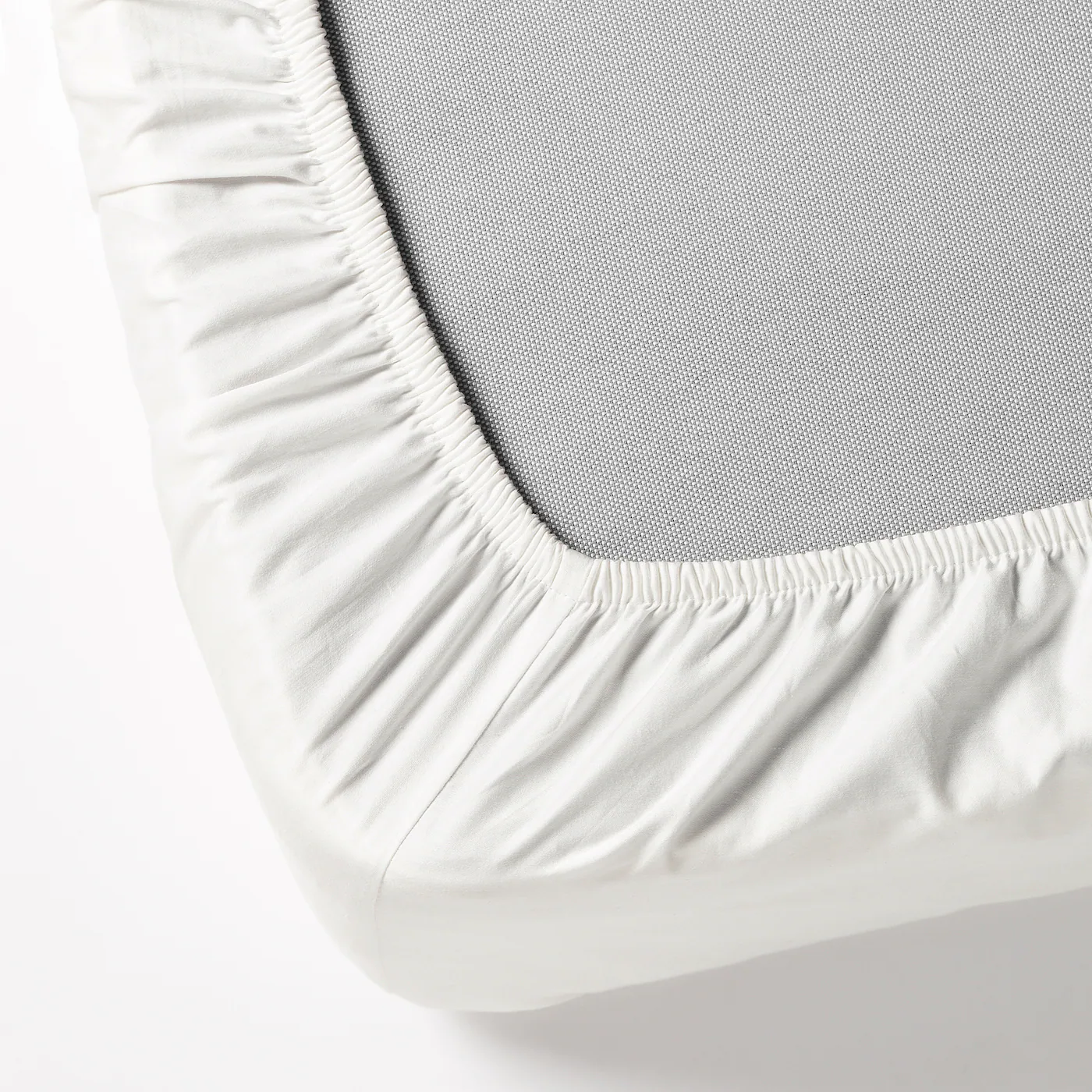
A fitted sheet has sewn corner pockets and elastic that pull its edges beneath the mattress. Some use elastic only near the corners. Others have elastic around the entire perimeter or additional bands intended to improve retention.
The elastic does not guarantee a good fit. A sheet can come loose when its pocket is too shallow, its length or width is wrong, its elastic has lost tension, or a topper changes the size and movement of the sleep surface.
A fitted sheet is usually the practical bottom layer when:
- you want shaped corners that can be installed without making folds
- the mattress matches the sheet's actual dimensions and pocket range
- the bed moves on an adjustable base
- each side of a split mattress needs to move independently
- there is limited fabric clearance around a low platform or bed frame
What is a flat sheet?
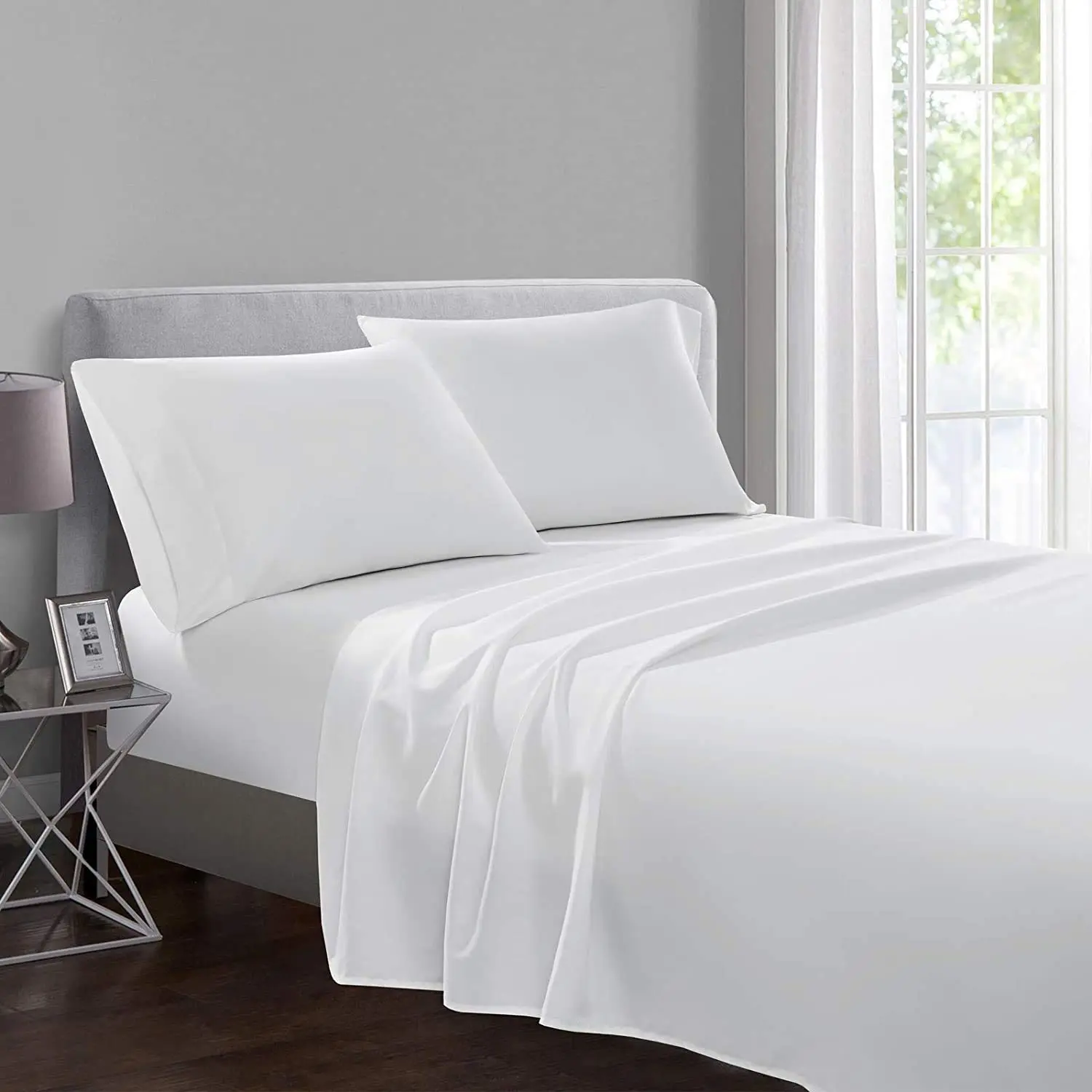
A flat sheet is a finished rectangle without elasticized pockets. As a top sheet, it lies between the sleeper and the blanket, comforter, or duvet. As a bottom sheet, it must be larger than the mattress surface so its edges can reach down the sides and tuck underneath.
A flat sheet can be useful when:
- you want a separate light top layer
- you prefer to wash a top layer separately from a duvet or blanket
- you find straight-edged laundry easier to fold and store
- you need a flexible bottom sheet for mattresses with unusual dimensions
- you are willing and able to lift the mattress edge and make secure folds
A flat sheet is not a duvet cover. A duvet cover is a sewn enclosure that contains an insert. A loose flat sheet placed over or under a duvet will not contain the insert in the same way.
Which setup makes sense?
The choice is not limited to one sheet replacing the other.
Use both
A common setup is a fitted sheet over the mattress and a flat sheet below a blanket or duvet. The fitted sheet handles the close mattress fit, while the flat sheet supplies a separate top layer. This arrangement works well for people who like a smooth layer under heavier bedding or who sometimes sleep under the top sheet alone.
A top sheet can also be tucked at the foot, left loose, or omitted according to preference. In a shared bed, partners may disagree about how tightly it should be tucked. Leaving the sides looser, using separate top layers, or omitting the shared top sheet may reduce pulling without requiring a different bottom sheet.
Use one
A fitted sheet alone is a straightforward choice when the sleeper uses a washable duvet cover or another preferred top layer and does not want a top sheet.
A flat sheet alone can serve as the bottom sheet when it is large enough to tuck securely on every relevant side. This can help with an uncommon mattress size or a guest bed that needs flexible linens, but remaking it usually requires more mattress lifting.
Use neither traditional sheet
Some sleep systems use another washable surface designed for the product, such as a removable zippered cover, a sleeping bag, or bedding supplied for a specialized sleep surface. Follow the mattress or sleep-product maker's instructions rather than assuming that sleeping directly on an ordinary mattress is equivalent. For an adult bed, this is a care and preference decision. Infant sleep spaces have separate safety rules covered below.
Measure the mattress before comparing sheets
Nominal names such as queen, king, or twin are only a starting point. Actual sheet dimensions and pocket depths can differ even among products sold by the same manufacturer, and split sets may contain two fitted sheets rather than one 1.
Measure the bed itself:
- Remove loose bedding and straighten the mattress, pad, and topper.
- Measure the mattress stack from side to side at its widest point.
- Measure from head to foot at its longest point.
- Measure total height from the bottom edge of the mattress to the top of everything the fitted sheet must enclose, including a pad or topper.
- Note rounded corners, thick edge panels, separate toppers, or a mattress that bows beyond its stated dimensions.
Compare those measurements with the manufacturer's finished sheet dimensions and stated fit range. For a fitted sheet, "pocket depth" is not the same as useful tuck. The pocket must be deep enough to reach below the mattress and allow the elastic to engage without pulling the corner seam onto the sleep surface. A very deep pocket can also bunch on a shallow mattress unless the elastic or construction takes up the extra fabric.
For a flat bottom sheet, allow fabric for the mattress height and for the portion that will tuck underneath on both sides. For example, the sheet's width must cover the mattress width, travel down both sides, and leave usable fabric under both edges. Apply the same logic at the head and foot. A top sheet needs less precision, but its width should still provide the side drop you want and its length should account for any foot tuck or fold-back at the head.
Check the product instructions before laundering. Fiber, construction, and drying method can affect finished dimensions, and care directions differ by product. Some manufacturers say their sheets are initially cut to account for expected shrinkage, which is one reason a prewash measurement and an after-care fit may not be identical 2. Read the return policy before washing if you have not confirmed the fit.
How to keep a fitted sheet from coming off
A corner that repeatedly pops free is usually a fit, installation, movement, or wear problem. Work through the causes in this order:
- Confirm the orientation. A sheet rotated 90 degrees can feel almost correct while placing excessive tension on two corners.
- Recheck the complete mattress stack. Include toppers and pads. A pocket that once fit may become too shallow after one is added.
- Seat each seam correctly. The corner seam should follow the mattress corner, and the elastic should sit beneath the lower edge rather than across the side panel.
- Check the layers under the sheet. Align a shifting topper or pad before pulling the sheet tight.
- Look at the elastic. It should return toward its original length when released. Stretched, twisted, or detached elastic cannot grip as designed.
- Follow the care instructions. Heat, bleach, or aggressive stretching may be unsuitable for some elastic or fabrics.
Sheet straps or clips may help on an adult bed when they are compatible with the sheet and base. They still require reaching beneath the mattress and can interfere with moving parts, so they are not the first fix for an undersized sheet. Keep hardware away from hinges, motors, cables, and infant sleep products.
Adjustable bases and split mattresses
An adjustable base changes the angles of the mattress and can pull at corners that fit adequately on a flat foundation. Use a sheet that fits the full mattress stack throughout the base's range of motion. Raise and lower the bed slowly after installation to check that fabric, straps, or elastic do not enter a hinge or pinch point. Follow the base manufacturer's compatibility instructions.
When two mattresses move independently, each side generally needs its own fitted sheet. Official split sheet sets commonly include two fitted sheets and one shared flat sheet 1. A shared flat sheet can bridge the gap, but it may pull or restrict movement when the two sides are set to different positions. Separate top layers avoid that conflict.
How to secure a flat sheet with hospital corners
Hospital corners create a flat diagonal fold at the lower corners. They can secure a top sheet at the foot or help hold a sufficiently large flat sheet around a mattress.
- Center the sheet so the overhang is even.
- Tuck the lower edge beneath the foot of the mattress.
- At one corner, lift the side edge upward to form a triangular flap on top of the mattress.
- Tuck the fabric hanging below that flap under the mattress.
- Fold the triangular flap down over the mattress side and tuck its edge underneath.
- Repeat at the other corner, then smooth the sheet without pulling it so tight that the mattress bows.
If the flat sheet is the bottom sheet, continue securing the head and sides. If there is not enough fabric to reach beneath the mattress after covering its height, stronger pulling will not solve the problem. Use a larger sheet.
Both fitted-sheet installation and hospital corners can require grip, reaching, and mattress lifting. A lighter mattress does not always mean an easier bed if it sits tightly inside a frame. For limited hand strength, shoulder movement, balance, or reach, prioritize a fitted sheet with an appropriate pocket and accessible elastic, ask another person to handle a heavy edge, or use a bed-making aid intended for the bed. Do not strain to force an undersized sheet into place.
Comfort, movement, and climate
Fitted and flat sheets solve different movement problems. A correct fitted sheet aims to keep the bottom surface smooth as the sleeper changes position. A flat top sheet is intentionally freer to move, which some people like and others experience as twisting or bunching. Tucking it more tightly can reduce movement but can also feel restrictive around the feet.
In warmer conditions, a flat sheet may be used as the only top layer. In colder conditions, it may sit below a blanket or duvet. That does not make flat sheets inherently cooling or fitted sheets inherently warm. Fabric, weave, weight, moisture, room conditions, and the rest of the bedding all contribute.
The same distinction applies to terms such as soft, hypoallergenic, cooling, organic, and sustainable. They are not properties created by a flat or fitted shape. Read the actual fiber disclosure and the basis of any certification or performance claim. In the United States, most covered textile products must disclose generic fiber content, country of origin, and the responsible business 3. A product described casually as bamboo may legally need to be identified as rayon or viscose made from bamboo, and unsupported antibacterial or broad environmental claims should not be treated as established facts 4.
Thread count also does not identify fiber, weave, finish, fabric weight, or fit. Treat it as one specification, not a shortcut for comfort or durability. If those material decisions are your main concern, compare complete fabric specifications after deciding whether you need a bottom sheet, a top sheet, or both.
Washing, folding, and replacement
Both styles should be washed and dried according to their own instructions. Do not assume that a flat sheet tolerates hotter washing or drying simply because it has no elastic. Fiber, dye, finish, seams, and decorative details can still limit care.
A flat sheet is usually simpler to fold because all four edges are straight. To fold a fitted sheet compactly, place one corner pocket inside another, repeat with the remaining corners, straighten the elasticized edges into a rough rectangle, then fold that rectangle.
Replace or reassign a sheet based on condition and fit rather than age alone. Signs that a fitted sheet is no longer doing its job include:
- elastic that remains stretched and no longer grips beneath the mattress
- detached elastic, torn corner seams, holes, or thinning fabric
- permanent shrinkage that pulls seams onto the mattress top
- repeated corner release after orientation and mattress measurements have been confirmed
A flat sheet may need replacement as a bottom sheet when shrinkage, a taller topper, or a different mattress leaves too little fabric for a secure tuck. Frayed hems, tears, or fabric that no longer tolerates its labeled care are separate reasons to retire it.
A separate rule for cribs and bassinets
Adult sheet preferences do not apply to infant sleep spaces. The U.S. Consumer Product Safety Commission advises keeping a crib, bassinet, or play yard bare except for a fitted sheet and using a firm, flat sleep surface in a product intended for infant sleep 5.
Use only a tight-fitting sheet made for the exact crib or bassinet mattress. Do not add a loose top sheet, blanket, comforter, pillow, bumper, or other soft bedding. Never improvise with an adult flat sheet. CPSC specifically warns that an adult sheet can loosen around a crib mattress and create an entrapment or suffocation hazard 6.
If the sheet can be pulled loose, bunches on the sleep surface, or does not stay under every corner, stop using it and choose one specified for that mattress. Do not use adult sheet clips, straps, folds, or hospital corners to compensate.
Frequently asked questions
Is a flat sheet better than a fitted sheet?
Not in general. A fitted sheet is usually more convenient as a mattress-covering bottom layer. A flat sheet offers more size flexibility and works as a top layer or a carefully tucked bottom sheet. The better choice is the one that fits the intended position and can be installed and cared for safely.
Can a flat sheet replace a fitted sheet?
Yes, on an adult bed, if it is wide and long enough to cover the complete mattress stack and tuck securely underneath. Hospital corners can improve retention. A flat sheet that barely reaches the lower edge of the mattress is too small for this job.
Why does a fitted sheet keep popping off?
Common causes include incorrect orientation, a pocket that is too shallow, a mismatch in length or width, an added topper, a shifting pad, worn elastic, or corner seams that are not seated under the mattress. Measure the stack and inspect the elastic before adding straps.
Are fitted sheets harder to wash?
Not necessarily. Care depends on the fabric and manufacturer's instructions. Their elasticized shape can make folding less intuitive and may allow other laundry to collect inside during a wash or dry cycle, but that does not establish a different universal washing schedule.
Do hotels always use flat sheets?
No. Bedding systems vary by property and laundry operation. Flat sheets are easy to fold and can be tucked around different mattress depths, but that practical advantage does not mean every hotel uses them instead of fitted sheets.
Should a top sheet be tucked in?
It is optional on an adult bed. Tucking the foot and making hospital corners can reduce shifting. Leaving the sides or foot loose gives more legroom. In a shared bed, agree on the amount of tuck or use separate top layers if one person feels restricted.