
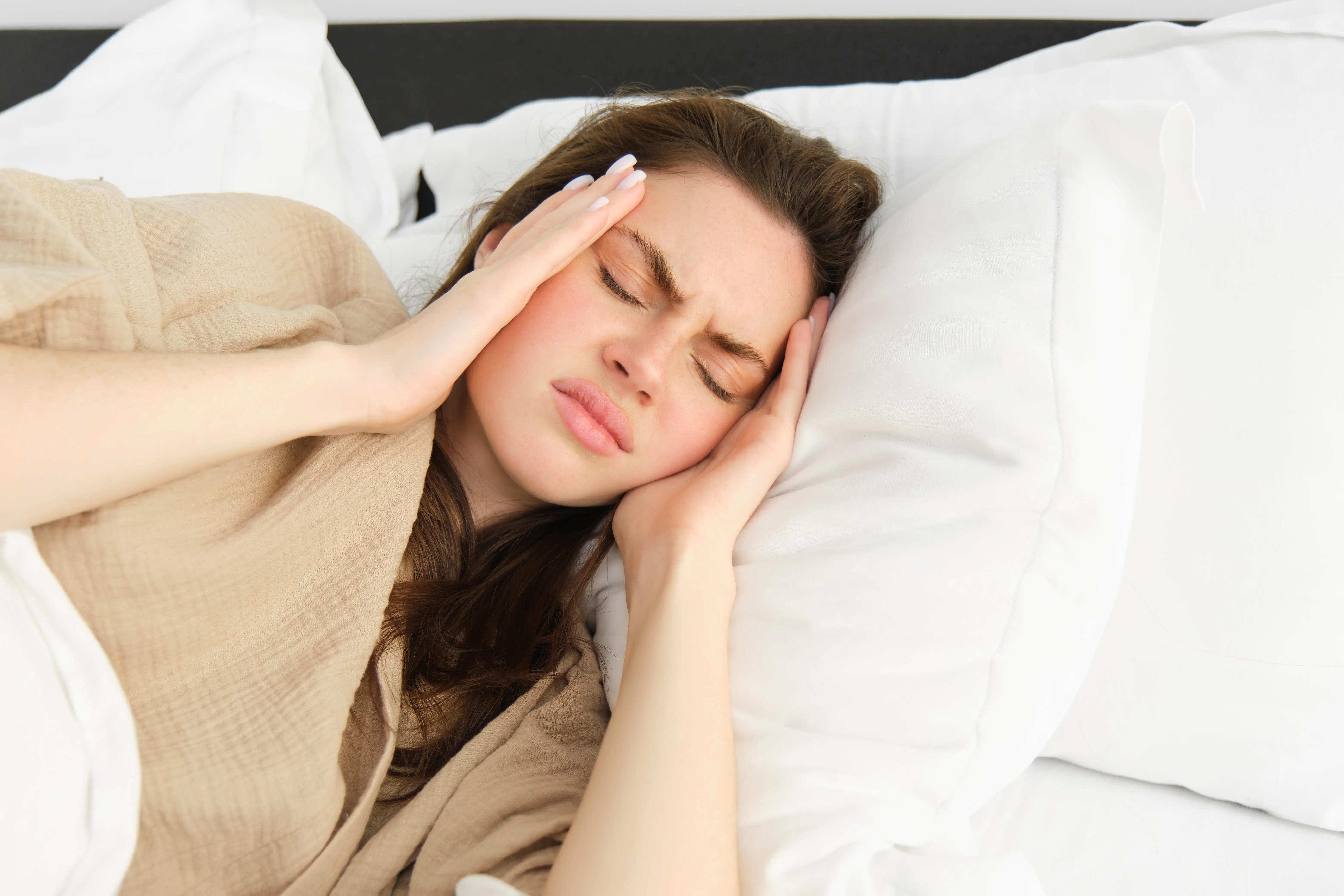
Sleep and headache can affect each other in both directions. Too little sleep, an irregular schedule, or sometimes sleeping longer than usual can trigger an attack in susceptible people, especially those with migraine. Headache pain can also delay sleep, cause awakenings, and leave sleep feeling unrefreshing 1 2.
A headache on waking does not prove that sleep loss caused it. It also does not diagnose sleep apnea. The timing, pain features, other symptoms, medicines, and pattern across several days are more informative than one morning alone 3.
Why the relationship is not one simple mechanism
Migraine, insomnia, sleep apnea, jaw pain, and medication overuse can overlap, but they are different conditions. Research supports a two-way association between migraine and insomnia, while the biology behind that association remains complex and incompletely understood 1.
This is why a single explanation such as “low REM sleep,” melatonin imbalance, or reduced oxygen should not be used to diagnose a headache. A person may also sleep badly because an attack has already begun. Tracking the sequence helps separate a possible trigger from an early symptom or consequence.
Which headache pattern fits?
Sleep timing alone cannot identify a headache disorder. The pain and accompanying symptoms provide more useful clues.
- Migraine: Attacks often involve moderate to severe pain that may be one-sided, pulsating, worse with routine activity, and accompanied by nausea or sensitivity to light and sound. Sleep changes can be triggers for some people, and sleep may also be disrupted before, during, or after an attack 4. Our migraine and sleep guide covers this relationship in more detail.
- Tension-type headache: The typical pattern is mild to moderate pressing or tightening pain on both sides that is not worsened by routine activity and does not include nausea or vomiting. One episode after a poor night does not establish this diagnosis 5.
- Cluster headache: Attacks cause severe or very severe pain around one eye or temple, usually with eye watering, redness, nasal symptoms, eyelid changes, facial sweating, or marked restlessness. During an active cluster period, attacks can recur at similar times. This pattern needs medical assessment and is not explained by ordinary sleep loss 6.
- Hypnic headache: This uncommon disorder occurs only during sleep and wakes the person repeatedly. It is diagnosed only after other causes of nighttime headache, including sleep apnea and medication overuse, have been considered 7. See our hypnic headache guide for the focused criteria and treatment discussion.
- Headache attributed to sleep apnea: The International Classification of Headache Disorders describes a recurring headache present on awakening in someone with diagnosed sleep apnea, plus evidence that the two are causally related. Improvement as sleep apnea improves is part of that evidence. The headache is often bilateral and pressing, but a waking headache remains nonspecific 3.
What else can explain a headache on waking?
Consider the wider pattern rather than assuming the headache came from a missed sleep stage. Our morning headache guide covers the broader differential in more detail.
Possible obstructive sleep apnea becomes more relevant when a waking headache occurs alongside loud habitual snoring, witnessed breathing pauses, gasping or choking, insomnia, unrefreshing sleep, or daytime sleepiness. A symptom checklist cannot diagnose sleep apnea. Diagnosis requires a clinical evaluation and, when appropriate, a home sleep apnea test or laboratory sleep study 8. Our sleep apnea headache guide explains that focused question.
Jaw or facial pain may point toward temporomandibular disorder when the headache is near the temple, ear, or chewing muscles and is aggravated by chewing, jaw movement, clenching, or grinding 9. Do not assume that tooth grinding caused every morning headache. A systematic review found limited and inconsistent evidence linking sleep bruxism with primary headache disorders 10.
A change in caffeine use can matter. Withdrawal headache can follow interruption or a marked delay in habitual caffeine use. If you plan to reduce caffeine, a gradual change is generally easier to interpret than alternating between large amounts and none 11.
Acute headache medicine use belongs in the same review. Medication-overuse headache occurs in people with a pre-existing headache disorder who develop frequent headache while regularly overusing acute medicines. The relevant number of treatment days differs by drug class, combinations also matter, and the classification thresholds are based on expert opinion. A clinician or pharmacist should review the exact medicines and doses before you increase, combine, or abruptly stop them 12.
Alcohol, long gaps without food, and low fluid intake may be part of an individual's migraine pattern. Alcohol can also fragment sleep, even when it initially makes a person drowsy 13 14 15. These factors are worth recording, but they do not justify a rigid diet or a universal bedtime cutoff.
Carbon monoxide exposure must be treated differently from an ordinary trigger. Carbon monoxide is colorless and odorless, and exposure can cause headache, dizziness, weakness, nausea, chest pain, or confusion. Sleeping people can become severely ill before recognizing symptoms 16.
Keep one combined headache and sleep log
A short daily record can reveal whether the headache follows a sleep change, begins during sleep, or is already developing before bedtime. Headache diaries also help clinicians distinguish headache types and assess medicine use more accurately 17.
Record:
- when the headache started, including whether it woke you or was present on waking
- location, pressure or throbbing quality, severity, and duration
- nausea, light or sound sensitivity, eye or nasal symptoms, neck pain, jaw pain, and neurological symptoms
- bedtime, estimated sleep time, wake time, awakenings, naps, and how rested you felt
- snoring, witnessed breathing pauses, gasping, choking, dry mouth, and daytime sleepiness
- jaw clenching, grinding reported by a bed partner, chewing pain, or tooth sensitivity
- caffeine amount and timing, alcohol, long gaps without food, and unusually low fluid intake
- every medicine or supplement taken, the dose, and whether it helped
- menstrual timing when relevant
- effect on work, school, driving, exercise, and other daytime activities
Look for repetition over time. A single bad night followed by a headache can be meaningful, but it cannot establish cause by itself.
What you can do now
Follow your established acute treatment plan. Use the medicine and timing already recommended for your diagnosed headache. Contact the prescriber if it is no longer effective, you are treating on more days, or you are adding over-the-counter products.
Protect a regular sleep opportunity. Aim for enough time to sleep and a reasonably consistent wake time. Make gradual adjustments when possible. There is no universal clock time for bed, screen use, meals, or caffeine that prevents headaches for everyone.
Keep caffeine predictable. If caffeine is part of your routine or acute treatment, record it and avoid sharp day-to-day swings. Ask a clinician for a taper plan if you use a large amount or have withdrawal symptoms.
Do not use alcohol as a sleep aid. It may shorten the time it takes to fall asleep while making sleep lighter and more fragmented later in the night 15.
Evaluate the sleep symptom that is actually present. Persistent trouble falling or staying asleep may need an insomnia assessment. Snoring with gasping, witnessed pauses, or daytime sleepiness may need a sleep apnea evaluation. An urge to move the legs that is worse at rest or at night may point to restless legs syndrome. Jaw pain or function-related headache may need a dental, orofacial pain, or medical assessment. Treating a separate sleep disorder is more targeted than trying to change every sleep habit at once 1.
Discuss prevention rather than self-prescribing it. Preventive medicines, magnesium, and riboflavin are individualized choices. The right option depends on the headache diagnosis, other conditions, current medicines, and life stage. Magnesium supplements can cause side effects and interact with medicines. Pregnancy does not make a high-dose supplement automatically safe, and the NIH notes that no professional organization currently recommends routine magnesium supplementation during pregnancy 18 19.
When to seek medical care
Arrange a medical assessment for a new recurring headache, a clear change in an established pattern, headaches that repeatedly wake you, increasingly frequent medicine use, or symptoms suggesting insomnia, sleep apnea, restless legs syndrome, or a jaw disorder. New headache after age 50, or new headache in someone with cancer or a weakened immune system, also needs prompt evaluation 20.
Seek emergency care now for:
- a sudden, explosive, or worst-ever headache
- new weakness, numbness, trouble speaking, vision change, loss of balance, confusion, loss of consciousness, or seizure
- headache with fever and a stiff neck
- severe headache after a head injury
- vision loss or severe pain in one red eye
- a severe or persistent new headache during pregnancy or within one year after birth, especially with vision changes, dizziness, swelling, or other new symptoms
These features can signal conditions that need urgent assessment 20 21 22.
If carbon monoxide exposure is possible, get everyone into fresh air, call emergency services, and seek medical help immediately. Do not go back to bed to see whether the headache passes 23.