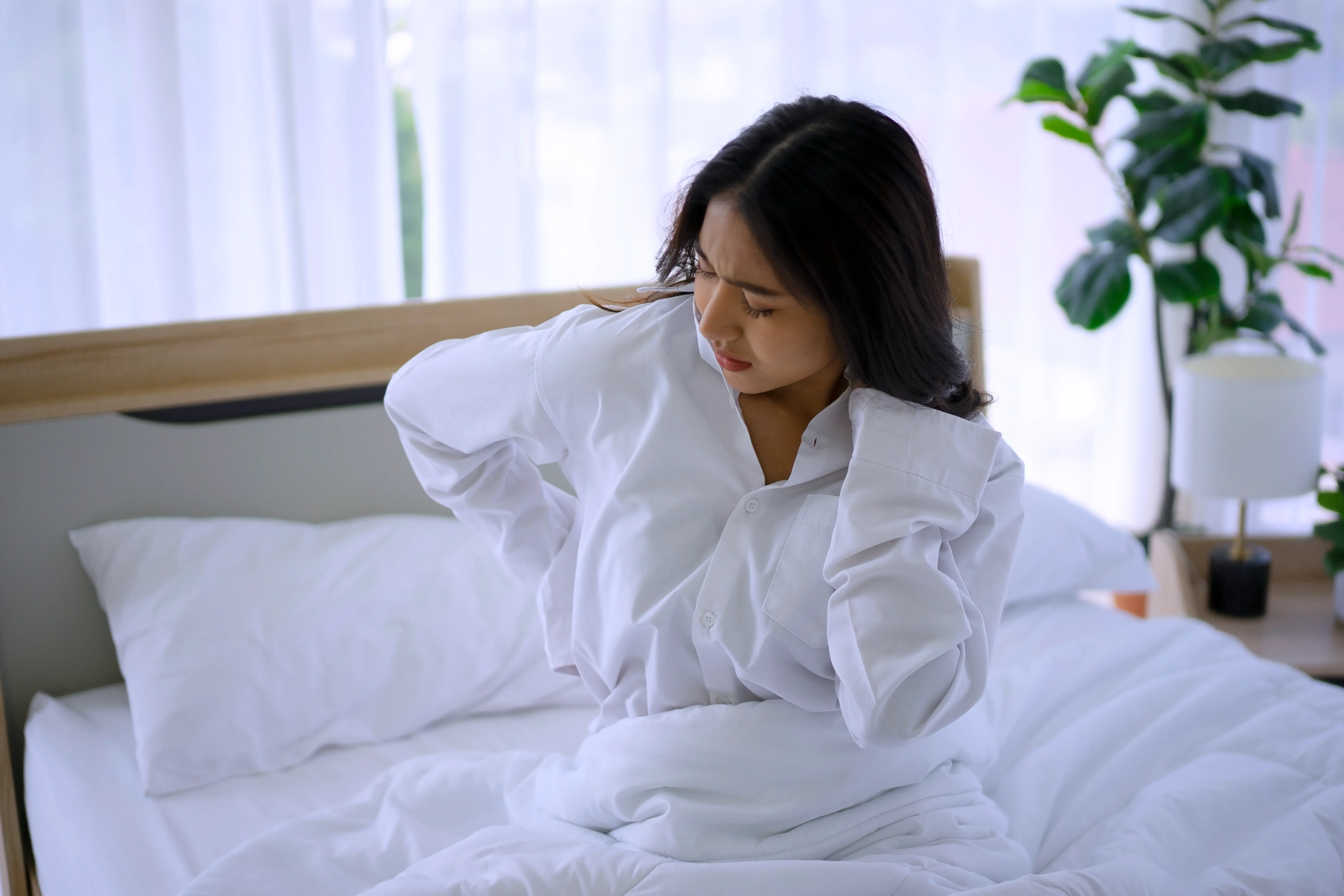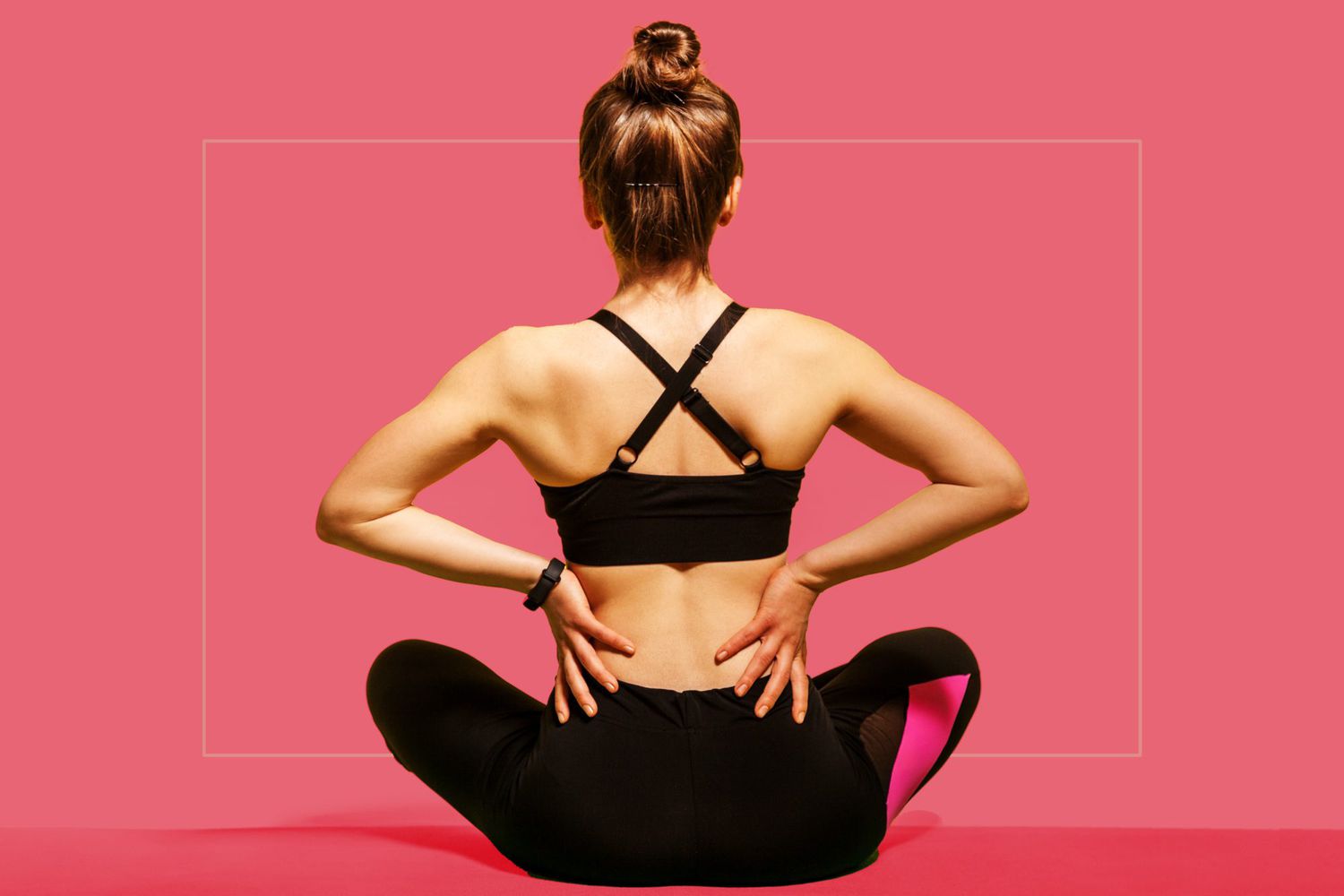

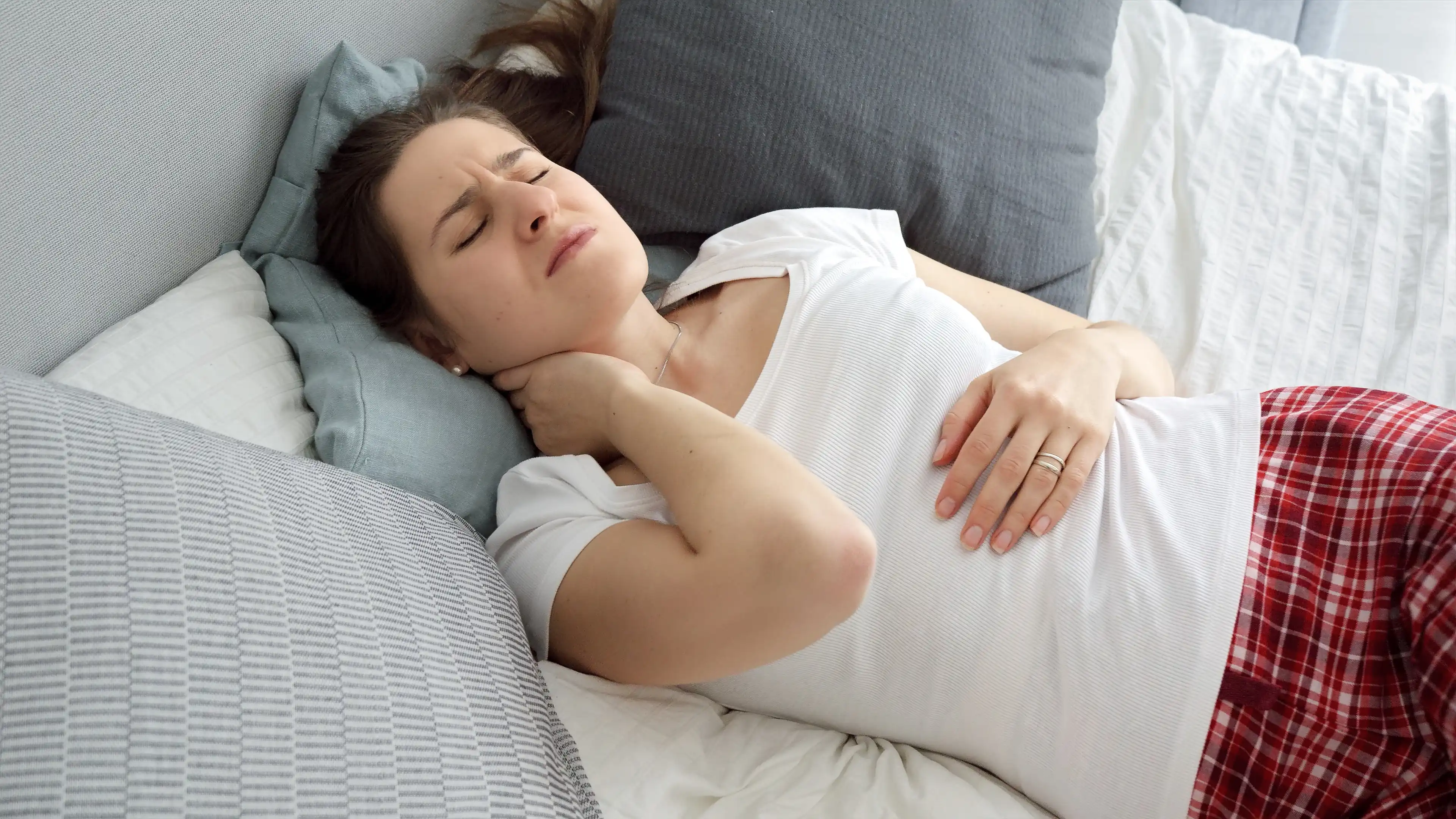
If an intercostal muscle strain has already been diagnosed, or the pain began after a clear twisting, lifting, coughing, or sports episode and a clinician considers a strain plausible, the best position tonight is the one that lets you breathe normally and move with the least pain. Try reclining, lying on your back, and lying on either side. There is no evidence-based rule that everyone should sleep on the uninjured side or avoid the painful side.
First, make sure the problem is safe to manage at home. Pain between the ribs that gets worse with a deep breath, cough, torso rotation, or pressure on one spot can fit a chest-wall injury. Those clues do not confirm an intercostal strain. Localized pain and tenderness reproduced by movement are not enough to rule out heart, lung, digestive, rib, or other serious causes 1. If this is new or unexplained chest pain, use the warning signs below before treating it as a pulled muscle.
A practical plan for tonight
The aim is comfort while you continue to breathe and move normally enough to protect your lungs. Sleep posture may reduce pressure or the effort of turning, but it has not been shown to make the tissue heal faster.
1. Settle the pain before lying down
Use only a pain reliever that you already know is suitable for you, and follow its label. Acetaminophen and nonsteroidal anti-inflammatory drugs, or NSAIDs, are not interchangeable for every person.
If you use acetaminophen, check every pain, cold, and nighttime product for the same active ingredient. The FDA advises against taking more than one acetaminophen-containing product at a time and warns that exceeding the label can cause severe liver damage 2.
Before using an NSAID such as ibuprofen or naproxen, ask a pharmacist or clinician if you are pregnant or breastfeeding, have a stomach ulcer or previous gastrointestinal bleeding, or have kidney, liver, heart, or blood-pressure problems. Check first if you take an anticoagulant, steroid, antidepressant, another NSAID, or blood-pressure medicine. These conditions and combinations can change whether an NSAID is appropriate 34. A topical NSAID still comes with label warnings, so check them rather than treating a gel as risk-free.
Do not add alcohol, an antihistamine sleep aid, or another sedating product just to sleep through the pain. Alcohol can increase the drowsiness from antihistamines and sleep medicines, and sleep medicines can interact with sedatives or tranquilizers 5. Sedation does not treat the injury or make unexplained chest pain safer.
If pain remains strong enough that you cannot take a reasonably full breath or cough despite suitable pain relief, contact a clinician the same day rather than taking extra doses or stacking products 4.
2. Try three position families
Give each position a brief, awake trial before committing to it. Notice the pain at rest, the pain on a normal breath, and whether you can get out of the position without a sharp catch.
Reclined: Raise your torso with a wedge, an adjustable bed you already use, or several stable pillows behind your upper back. NHS guidance for painful rib injuries suggests sleeping more upright for the first few nights 6. The point is to test whether the angle is more comfortable, not to improve oxygen levels or accelerate healing. Make sure you cannot slide down or become trapped between supports.
On your back: Support your head in a neutral, comfortable position. A pillow under the knees or forearms may reduce the effort needed to hold the torso still. Remove any pillow that increases rib pressure or makes breathing feel restricted.
On either side: Test both the painful and less painful side. Direct pressure feels worse for some people, while others find that gentle support against the sore side limits painful motion. Neither response is wrong. Hugging a pillow can give your arms somewhere to rest, and a pillow behind the back can reduce accidental rolling. Stop using a side if it increases pain, breathlessness, numbness, or tingling.
Stomach sleeping is not automatically dangerous for a confirmed uncomplicated strain, but it can make turning and getting up harder. If it is the only comfortable position, check that you can breathe freely and exit it without twisting sharply.
Pillows are comfort tools. They do not put a strained muscle or rib back into alignment, keep the spine in a medically ideal position, or shorten recovery.
3. Turn and get up with less twisting
Before rolling, bend your knees if that is comfortable and move your shoulders and hips together rather than rotating the chest first. To get out of bed, roll toward the side that feels easier, bring your legs over the edge, and push up with your arms while keeping your torso as one unit. An NHS chest-injury guide similarly recommends rolling to the unaffected side and sitting up sideways while supporting the sore area 7.
That is a comfort strategy, not a requirement to immobilize yourself. Change position if you need to, and do not surround yourself with so many pillows that you cannot get out of bed safely.
If you need to cough or sneeze, hold a folded pillow or towel gently against the sore area. This can make the movement more tolerable 67. Do not wrap, strap, or bind the chest. Tight binding can restrict breathing and raise the risk of complications 7.
Keep breathing and moving
Pain with a deeper breath can make you want to guard the area and breathe shallowly. Do not deliberately suppress normal breaths or coughs. Guidance for rib and chest-wall injuries recommends breathing normally, coughing when needed, taking regular slow deep breaths, and walking around rather than staying in bed for long periods 67.
This does not mean forcing repeated maximum breaths through severe pain. If a clinician has given you a breathing exercise or incentive spirometer plan after an injury, follow that plan. If pain prevents an effective breath or cough despite pain relief, seek same-day advice 4.
Alternate relative rest with easy daily movement. Pause lifting, forceful trunk rotation, contact sport, and any exercise that clearly worsens the pain. As movement becomes tolerable, increase ordinary activity gradually rather than waiting in bed until every sensation is gone. General strain guidance recommends protection and rest early, followed by movement once pain no longer stops it 8.
Skip forceful side bends, twisting stretches, foam rolling over the ribs, and attempts to "release" the muscle. A clinician or physical therapist can choose exercises after confirming what is injured. A sudden increase in pain during a stretch is not evidence that scar tissue is breaking up.
Cold or heat
For a recent injury with tenderness or swelling, place a cold pack inside a cloth rather than directly on the skin. NHS strain guidance suggests up to 20 minutes at a time during the first two to three days 8. Stop earlier if the skin becomes painful, numb, or unusually pale, and ask a clinician before using cold if sensation or circulation is reduced.
Heat may feel better later, once the area is no longer newly swollen or warm, but it is for comfort rather than proven faster healing. Keep it warm, not hot, use a fabric barrier, and do not fall asleep on a heating pad. General strain guidance advises avoiding heat during the first couple of days because it may increase swelling 8.
What the pain pattern can and cannot tell you
A clinically plausible intercostal strain often follows a movement that loads the trunk, a bout of coughing, or a direct injury. It may be tender in a limited area and hurt with deep breathing, coughing, sneezing, reaching, or rotation. Those features help a clinician build a diagnosis, but they overlap with rib fracture, bruising, costochondral injury, pneumonia, pneumothorax, and pulmonary embolism. Chest pain from the heart can also vary and does not always feel dramatic.
A pulmonary embolism can cause shortness of breath, pain with deep breathing, rapid breathing or heart rate, cough with or without blood, lightheadedness, or fainting 9. A collapsed lung can cause sharp chest or shoulder pain that is worse with a breath or cough, shortness of breath, blue-tinged skin, lightheadedness, or collapse 10. These overlaps are why reproducing pain by pressing or twisting cannot safely diagnose a strain by itself.
When to get medical help
Call emergency services now for any of the following:
- sudden chest pressure, squeezing, fullness, or persistent discomfort, especially with pain in an arm, the back, neck, jaw, or stomach, sweating, nausea, lightheadedness, or shortness of breath 11
- severe, sudden, or worsening breathlessness; blue or gray lips or skin; fainting; collapse; or an inability to speak normally because of breathing difficulty 10
- coughing up blood, a rapidly worsening heart rate or breathing rate, or chest pain with new one-sided leg swelling 912
- a serious fall, crash, crushing blow, penetrating injury, or visible chest or back deformity 613
- new weakness, numbness, loss of coordination, trouble walking, or loss of bladder or bowel control after trauma, which can signal a spinal injury 13
Seek same-day medical advice for fever or chills, a new or worsening cough, yellow or green mucus, increasing rather than settling breathlessness, pain that is worsening, substantial bruising or swelling, or pain that stops a full breath or effective cough. Fever and discolored mucus after a chest-wall injury can point to a chest infection 6.
Arrange a non-emergency assessment if the cause has never been evaluated, the pain keeps returning, or it is not steadily improving. There is no reliable one- or two-week cutoff that confirms or excludes a strain. Recovery depends on what is actually injured, how severe it is, and whether coughing, work, sport, or another condition keeps loading the area. Persistent or worsening pain needs a fresh diagnosis, not a more elaborate sleep position.
Common questions
Is it safe to sleep on the injured side?
There is no universal rule against it. If a known uncomplicated strain feels better with gentle pressure, you can try the painful side. Roll away if pressure increases pain or makes breathing harder. After significant trauma, or before the cause of chest pain has been assessed, do not use position tolerance as proof that no rib or lung injury exists.
Should I sleep in a recliner?
A reclined position is a reasonable short-term comfort trial, and NHS rib-injury guidance suggests sleeping more upright early on 6. Use a stable chair that supports your head and lets you stand without pulling on the chest. It is not medically better than a bed if a flat or side position feels easier.
Can I stretch the intercostal muscle before bed?
Avoid forceful stretching while the diagnosis is uncertain or the movement produces sharp pain. Easy, pain-limited movement is preferable to complete bed rest. If the pain persists or you need a return-to-sport plan, a clinician or physical therapist can confirm the source and guide a gradual progression.
How long should I expect sleep to be uncomfortable?
There is no single timeline for an intercostal strain, and chest pain alone cannot establish the grade of injury. Look for a trend toward easier breathing, turning, and daily movement rather than expecting a fixed number of nights. Seek reassessment if the trend reverses, the diagnosis is uncertain, or symptoms are not steadily improving.