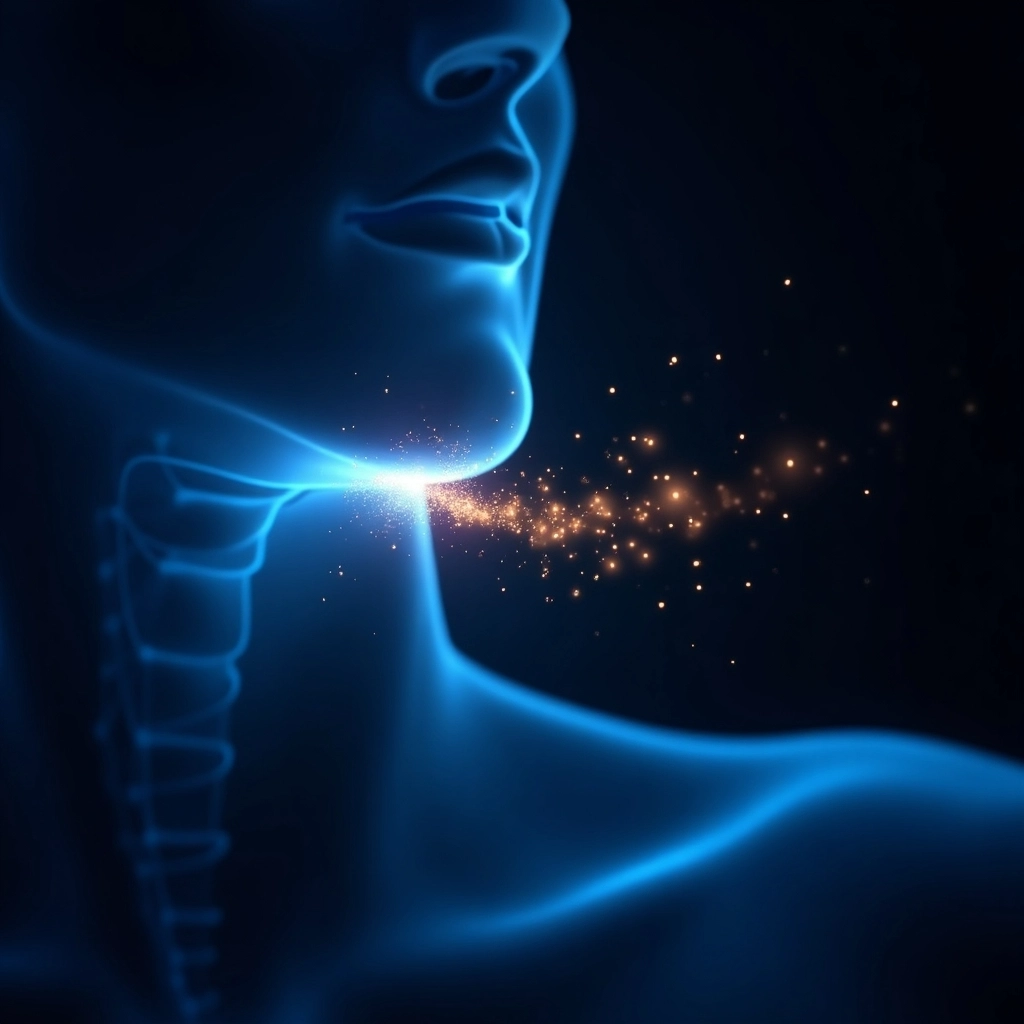
Hypoglossal nerve stimulation is an implanted treatment for selected people with obstructive sleep apnea (OSA). It sends electrical pulses to branches of the nerve that controls tongue movement. The resulting tongue movement or stiffening can help keep the upper airway open during sleep.
This treatment does not make the brain breathe and is not intended for predominantly central sleep apnea. It is also not one standardized implant. Three systems currently have U.S. Food and Drug Administration approval, and their designs, external equipment, labeled populations, and MRI rules differ substantially 123.
How the current systems differ
All three systems stimulate the hypoglossal nerve, but they do not deliver therapy in the same way.
| System | How therapy is delivered | Nightly equipment and power |
|---|---|---|
| Inspire Upper Airway Stimulation | A cuff stimulates selected branches on one side. A separate chest lead senses breathing effort so stimulation can be coordinated with the breathing cycle. | A handheld remote starts, pauses, and stops therapy. The implanted generator contains a nonrechargeable battery. |
| Genio System 2.1 | A small battery-free implant under the chin stimulates terminal branches on both sides. It does not use a chest sensing lead. | A rechargeable activation chip, attached to a disposable patch under the chin, powers the implant during sleep. |
| aura6000 system | A cuff with six contacts stimulates the proximal nerve in programmed cycles. It does not use a respiratory sensing lead. | A remote starts and stops the sleep session and a charging antenna recharges the implanted generator. |
Inspire detects respiratory effort before delivering timed stimulation. Genio and aura6000 instead use programmed stimulation patterns. This is why statements such as "the implant senses every breath" or "the implant never needs charging" are true for some systems and false for others 145.
None of these systems is a ventilator. Therapy works only while the system is being used and adequately programmed. When it is off, it is not providing that night's airway support.
Who may be a candidate?
Candidacy has four separate layers: clinical suitability, the exact FDA label, the implanting program's assessment, and the insurer's coverage policy. Meeting one layer does not automatically satisfy the others.
Confirmed obstructive sleep apnea
A sleep study needs to show that upper-airway obstruction, rather than loss of respiratory drive, accounts for nearly all breathing events. Current labels use a combined central and mixed event threshold around one-quarter of the total apnea-hypopnea index (AHI). Inspire lists more than 25% as a contraindication, while Genio and aura6000 use 25% or more 143.
That distinction matters when a report contains a meaningful number of central or mixed events. A hypoglossal nerve implant may move the tongue, but it does not correct pauses caused by absent breathing effort.
A genuine attempt to make PAP work
Hypoglossal nerve stimulation is generally considered after positive airway pressure (PAP) has not adequately controlled OSA or cannot be used consistently. Before moving to surgery, a sleep clinician should review objective PAP efficacy and usage data and troubleshoot the actual barrier. Depending on the problem, that may include mask fit, leak, dryness, nasal symptoms, pressure intolerance, education, or a different PAP configuration. AASM guidance specifically calls for adequate follow-up, troubleshooting, and monitoring after PAP starts 6.
PAP difficulty is not a personal failure. The point of this step is to avoid permanent surgery for a reversible equipment or settings problem and to document what was genuinely tried. The exact definitions of PAP failure and intolerance also differ between device labels and insurance policies.
The exact device label
The FDA-labeled populations are not interchangeable:
- Inspire: The current adult indication covers people age 22 or older with an AHI from 15 through 100 who cannot use or do not benefit adequately from PAP and do not have complete concentric collapse at the soft palate. Its indication does not set a BMI ceiling, but the labeling says safety and effectiveness above a BMI of 40 are unknown 1.
- Genio System 2.1: The indication covers adults age 22 or older with an AHI from 15 through 65 who have failed, cannot tolerate, or are ineligible for standard treatments including lifestyle measures, PAP, an oral appliance, and applicable pharmacotherapy. The indication does not state a BMI ceiling. However, the pivotal DREAM study enrolled people with BMI of 32 or lower, and patient labeling says safety and effectiveness above BMI 32 or with complete concentric palatal collapse have not been established 27.
- aura6000: The indication covers adults with an AHI from 15 through 65 who have failed, cannot tolerate, or are ineligible for standard treatments such as PAP, an oral appliance, or pharmacotherapy. Its labeling advises careful consideration outside the studied population, including people younger than 22 or older than 75 and those with BMI above 35 3.
A higher BMI is not simply an administrative number. It can affect airway behavior, surgical planning, and the chance of response. Weight change after implantation can also change OSA severity. A substantial gain or loss should prompt reassessment rather than an unsupervised change in stimulation 81.
Anatomy, DISE, and surgical fitness
The evaluation also considers tongue and palate movement, tonsils or other obstructions, prior airway procedures, hypoglossal nerve function, the ability to operate the required equipment, other implanted electrical devices, anesthesia risk, and whether surgery can be performed safely.
Drug-induced sleep endoscopy (DISE) shows how the airway collapses during sedated sleep. Inspire requires absence of complete concentric collapse at the soft palate. Genio's pivotal study also excluded this pattern, and its labeling says effectiveness in that group has not been established. In contrast, aura6000 labeling says DISE is not required and notes that complete concentric collapse was not systematically characterized as a separate trial subgroup. A clinician still has to judge whether the observed anatomy fits the proposed device 173.
Insurance criteria are a separate test
A current Medicare local coverage determination is narrower than some FDA labels. It requires age 22 or older, BMI below 35, a qualifying polysomnogram within 24 months, predominantly obstructive events, AHI from 15 through 65, documented PAP failure or intolerance, no complete concentric palatal collapse on DISE, and no other anatomy expected to compromise performance. It also defines PAP failure and intolerance in its own terms 9.
That is a Medicare coverage policy, not a universal medical definition and not an expansion or restriction of FDA approval. Commercial policies, regional Medicare contractors, and individual plans may use different rules or may not yet cover every newly approved system. Ask the implanting center to obtain written authorization for the exact device before surgery.
A separate indication for younger people
Inspire has additional U.S. labeling for ages 18 through 21 with moderate to severe OSA and for ages 13 through 18 who have Down syndrome and severe OSA. The Down syndrome indication is narrow: AHI must be from 10 through 50, complete concentric palatal collapse must be absent, adenotonsillectomy must be contraindicated or ineffective, PAP must have failed or remained intolerable despite attempts to improve use, and other standard options must be considered. Patients with BMI above the 95th percentile on CDC growth curves were not studied 1.
This is not a general pediatric indication. The supporting study followed 42 adolescents with Down syndrome and persistent severe OSA after adenotonsillectomy. It was a small, single-group cohort, so the decision requires a pediatric sleep and airway team that can weigh growth, communication, caregiver support, repeated future procedures, and alternatives 10.
What happens before and after implantation?
1. Selection and planning
The workup usually brings together a sleep physician and an airway surgeon. It includes a recent sleep study, review of PAP and other treatment attempts, an airway and neurologic examination, and DISE when the device or payer requires it. The team should also review other implants, future MRI needs, medications, bleeding risk, pregnancy plans, work and sports, and whether the patient can manage the remote, patch, or charging routine.
Discuss all plausible alternatives at this stage, not after a device has already been chosen. AASM recommends discussing referral to a sleep surgeon for adults with OSA and BMI below 40 who cannot accept or tolerate PAP, but that recommendation is about referral for a full surgical discussion. It is not automatic eligibility for hypoglossal nerve stimulation 11.
2. Surgery and healing
The surgeon places the nerve electrode and any generator, sensing lead, or connecting lead used by that system. Incision number and location therefore differ. Inspire includes neck stimulation and chest respiratory-sensing components. Genio uses a battery-free submental implant. aura6000 uses a proximal nerve cuff connected to a rechargeable generator 145.
The system is normally left off while tissues heal. The schedule is device-specific. Inspire labeling describes activation at about 4 weeks followed by a titration sleep study about 4 to 8 weeks later. Genio labeling describes activation after roughly 8 weeks and an adjustment phase that may take several months. These are examples, not promises for every patient 17.
3. Activation, acclimation, and programming
At activation, the clinician confirms tongue response and sets a comfortable starting level. The patient then learns the system-specific routine. That may mean using a sleep remote, placing and powering an under-chin patch, or charging an implanted generator.
Stimulation is often increased gradually so the tongue and sleep can adapt without excessive discomfort or awakening. The clinician can change amplitude, timing, electrode selection, and other parameters available on the particular system. More than one office visit or sleep study may be needed. A fixed promise that the implant will be fully optimized after one visit is not realistic.
4. Follow-up sleep testing
Symptom improvement and device-use records are useful, but they do not show how much OSA remains. A follow-up sleep study with the device in use measures residual AHI, oxygen changes, sleep position effects, and whether programming needs adjustment. Continued follow-up also detects weight-related changes, recurrent symptoms, equipment problems, and declining battery or component function.
How effective is hypoglossal nerve stimulation?
Many carefully selected patients have substantial reductions in breathing events and sleepiness, but response is not guaranteed. The major studies used device-specific populations and designs, and most were sponsored by the manufacturer. They should not be read as a head-to-head ranking of the systems, PAP, or oral appliances.
- In the 126-person STAR trial of Inspire, the median AHI fell from 29.3 before treatment to 9.0 at 12 months. The study was a prospective single-group trial, although a small randomized withdrawal phase supported a real treatment effect. Participants were highly selected, had a mean BMI of 28.4, and people with complete concentric palatal collapse were excluded 12.
- The ADHERE registry provided a broader practice sample for Inspire. Among 381 people with the required 12-month AHI data, 265, or 69%, met the study's response definition of at least a 50% AHI reduction and a final AHI of 20 or lower. The registry was observational, and many enrollees did not have complete 12-month AHI data, so it does not establish that 69% of every person offered surgery will respond 8.
- In the nonrandomized DREAM trial supporting Genio, 63.5% of the full 115-person analysis population met the AHI response definition at 12 months. Eleven serious adverse events occurred in 10 participants. The trial studied a selected group and classified missing primary outcomes as nonresponse 13.
- In the 104-person OSPREY trial supporting aura6000, all participants received an implant, but therapy was delayed in the control group. At month 7, 58.2% of the active-treatment group and 13.5% of the control group met the AHI response definition. The trial was randomized but unblinded, small, manufacturer-funded, and had relatively short controlled follow-up 14.
A "responder" can still have clinically meaningful residual OSA because the common study definition allows a final AHI below 20 rather than requiring a normal AHI. Some people improve without meeting that definition, while others gain little benefit. This is why a response percentage cannot replace the individual's follow-up sleep study.
PAP can often reduce obstruction whenever it is worn and properly adjusted, while an oral appliance has different advantages and limitations. Comparing those treatments with an implant using a single efficacy percentage ignores nightly use, baseline severity, tolerability, anatomy, and different study methods.
Risks and possible complications
Hypoglossal nerve stimulation combines the risks of surgery, a permanent implant, and repeated electrical stimulation.
Surgical and healing risks include bleeding, infection, pain, swelling, bruising, hematoma or fluid collection, scarring, skin erosion, allergic reaction, and injury to nearby nerves, blood vessels, or tissue. Tongue weakness or altered movement can affect speech or swallowing. Systems with chest components can also involve chest-wall pain and a small risk of pneumothorax. Anesthesia adds its own patient-specific risks 173.
Stimulation and device problems can include uncomfortable pulling or tingling, tongue soreness or weakness, tongue abrasion against a tooth, dry mouth, cough, unwanted movement, sleep disruption, and changes in speech or swallowing. Genio's disposable skin patch can cause local irritation. Settings can often be adjusted, but persistent symptoms need assessment rather than simply increasing or abandoning therapy 145.
Hardware complications include migration, a broken or displaced lead, poor electrical contact, battery or charging failure, loss of stimulation, and generator malfunction. These problems can reduce benefit and may require reprogramming, component replacement, revision surgery, or explantation. Removal can be more difficult after scar tissue develops, and part of a lead or cuff may sometimes be left in place to avoid nerve injury 17.
Battery planning also depends on the model. Inspire's implanted generator eventually needs surgical replacement when its battery reaches end of service. Genio has no implanted battery, but its external activation chip is charged daily and the implanted component still has a finite supported service life. aura6000 has a rechargeable implanted generator that the patient charges regularly. Rechargeable does not mean free from future revision or replacement 1715.
Contact the surgical team promptly for fever, spreading redness, drainage, opening of an incision, worsening swelling or pain, new tongue or facial weakness, trouble swallowing, loss of stimulation, or a visible or shifting component. New breathing difficulty, rapidly increasing neck swelling, severe chest pain, or inability to swallow saliva needs urgent medical care.
MRI, medical procedures, pregnancy, and travel
MRI status must be checked by exact model
"MRI compatible" is not a sufficient description for any implanted system:
- The Inspire model 3028 generator with the specified model 4063 stimulation lead and model 4323 or 4340 sensing lead is MR Conditional. Scanning is allowed only under the manufacturer's model-specific conditions. An older model 3024 generator is not eligible under that labeling, and a partly removed system may be MR Unsafe 1.
- The Genio System 2.1 model 2954 implant is MR Conditional under defined conditions. The MRI team must use the implant card and current scan instructions rather than assume that every scan is allowed 7.
- The current aura6000 generator and lead are MR Unsafe. Its labeling states that the implanted components must be removed if MRI is required 3.
Before implantation, discuss not only an MRI scheduled now but also any condition likely to need repeated MRI later. Before any future scan, give the radiology team the implant card and exact component models. Keep remotes, activation chips, charging equipment, and other external components out of the MRI room unless their own instructions explicitly permit entry.
Other procedures and implanted devices
Diathermy can transfer dangerous energy through an implanted stimulation system. Inspire and aura6000 labeling prohibit shortwave, microwave, and therapeutic ultrasound diathermy. Genio labeling requires consultation before diathermy and several other energy-based procedures. Electrocautery, cardioversion, defibrillation, radiation, lithotripsy, therapeutic ultrasound, magnetic stimulation, and another implanted electrical device can also require special planning or a post-procedure device check 173.
Tell every medical, dental, surgical, and rehabilitation clinician about the implant before a procedure. The device may need to be turned off, protected, or checked afterward.
Pregnancy and breastfeeding
Current labels contraindicate implantation or use in pregnancy because safety and effectiveness have not been established. Genio and aura6000 labels also address planning pregnancy and breastfeeding. Anyone who becomes pregnant with a device in place should stop making independent settings changes and contact the implanting and obstetric teams promptly for system-specific guidance 143.
Travel and security
Carry the implant identification card and the equipment needed to use or charge the system. Tell security staff about the implant, follow the manual's instructions for screening equipment, and do not linger against theft detectors or strong electromagnetic sources. Bring the remote or activation equipment to medical appointments because the clinician may need it for interrogation or programming 1715.
Alternatives if the implant is not a good fit
A device decision should come after matching treatment to the reason the airway closes and to what the person can use consistently. Options may include:
- another attempt at PAP with focused troubleshooting or a different mask or mode
- a custom titratable mandibular advancement device through a qualified dental sleep clinician
- positional therapy when OSA is strongly position-dependent
- weight-management treatment, including the FDA-approved use of tirzepatide for moderate to severe OSA in adults with obesity when medically appropriate
- treatment of nasal obstruction or enlarged tonsils
- another airway operation, maxillomandibular advancement, or bariatric surgery in selected patients
AASM guidance supports discussing oral appliances with adults who cannot tolerate CPAP or prefer an alternative, and its surgical-referral guideline emphasizes a patient-centered discussion rather than one default operation 1611. Tirzepatide's OSA indication is limited to adults with obesity and is used with reduced-calorie eating and increased physical activity; it is not a substitute for individualized treatment of every form of OSA 17.
Until the implant has been activated, adjusted, and shown to control OSA, continue the clinician-approved treatment plan. Do not drive or perform hazardous work when sleepy. If sleepiness develops while driving, pull over safely rather than relying on the implant, caffeine, or willpower to restore alertness 18.