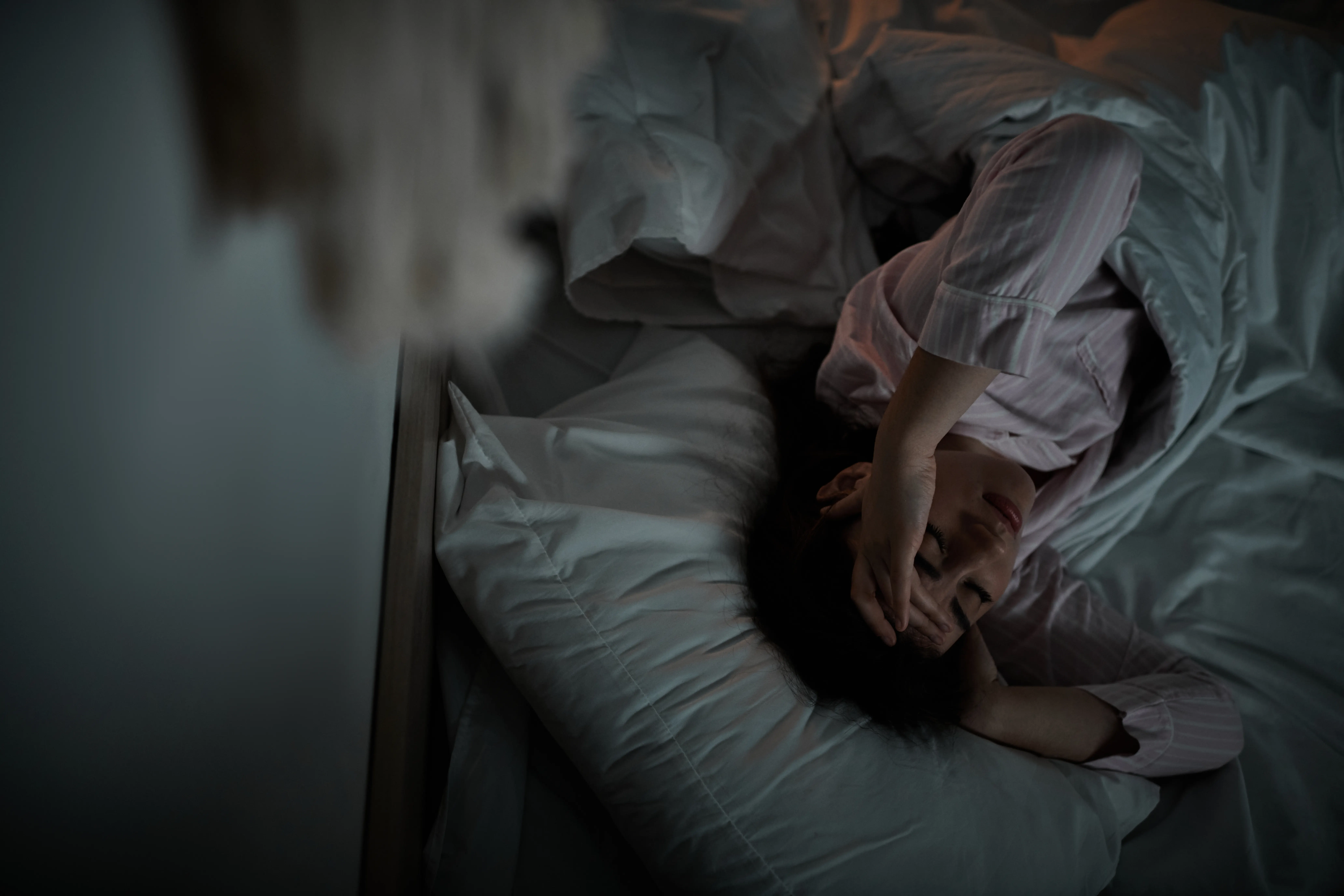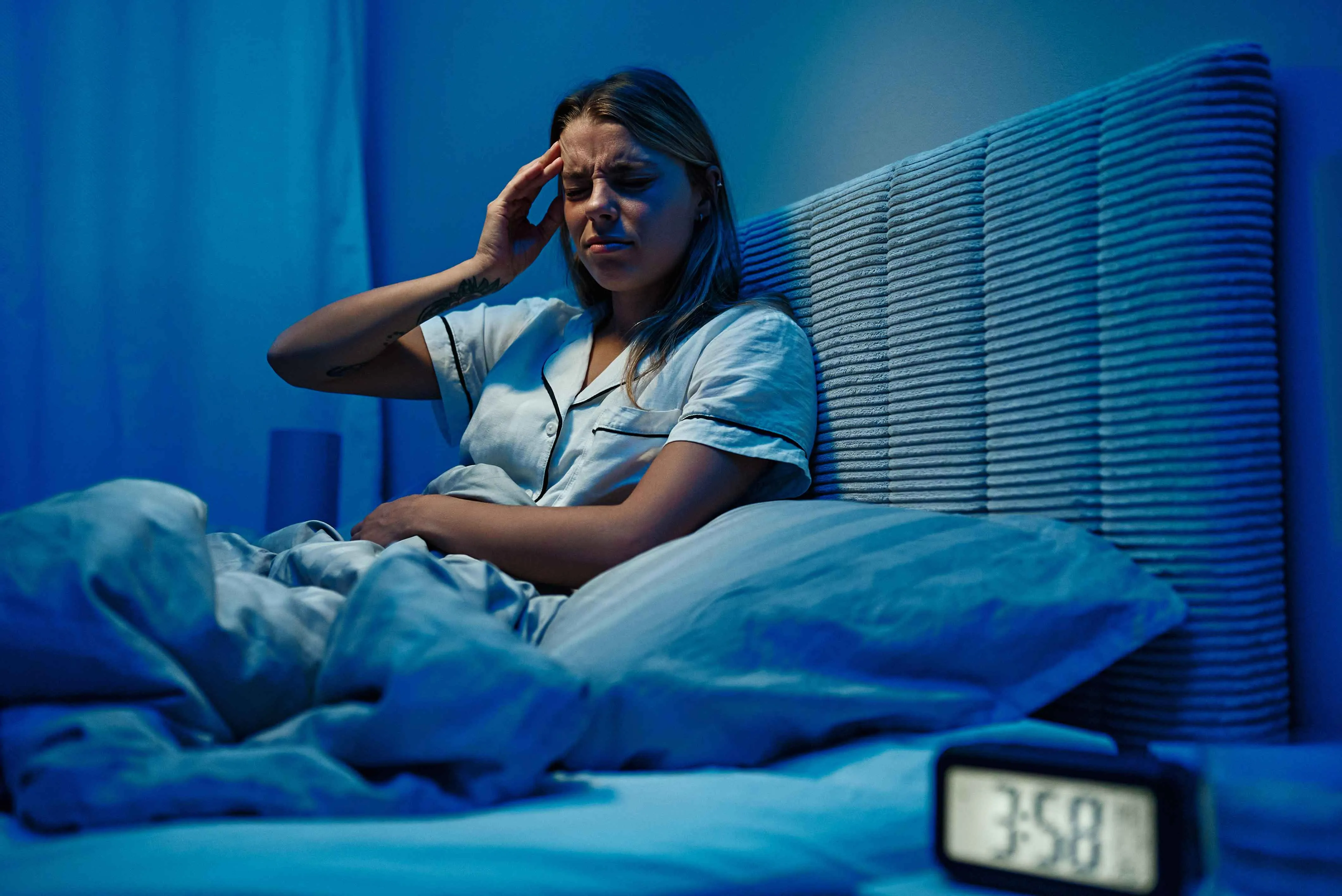
A nocturnal seizure is a seizure that happens during sleep. The term describes timing, not a single seizure type, and it does not mean that every frightening movement or confused awakening is epilepsy. Sleep terrors, sleepwalking, dream enactment, sleep apnea, panic, movement disorders, fainting, and other events can look similar.
No single movement, sound, episode feature, or next-morning symptom confirms a seizure. The pattern across events, an eyewitness account, a safe home video, and appropriately selected testing are more useful than a checklist of isolated signs 12.
What a sleep-related seizure can look like
Seizures during sleep can be focal, meaning they begin in one brain network, or generalized, meaning abnormal activity involves both sides of the brain from the start. The outward event depends on where and how the seizure begins.
Possible patterns include:
- sudden stiffening followed by rhythmic jerking of both sides of the body
- repeated turning of the head or eyes to the same side
- one-sided stiffening, jerking, or an asymmetric body posture
- abrupt sitting, kicking, rocking, cycling movements, grabbing, or a frightened vocalization
- a brief pause in awareness, unresponsiveness, lip smacking, picking movements, or confused behavior
- a sudden sensory, emotional, or autonomic experience before or during waking, such as an unusual smell, rising abdominal sensation, intense fear, or racing heart
These features can increase suspicion, particularly when the same sequence recurs. They are not exclusive to epilepsy, and some seizures are much less visible 2.
Sleep-related hypermotor epilepsy, formerly called nocturnal frontal lobe epilepsy, is one example of a focal epilepsy with sleep-predominant events. Episodes are often abrupt, brief, highly stereotyped, and may cluster several times in one night. Movements can be forceful or complex. Even in this distinctive syndrome, the level of diagnostic certainty depends on whether the pattern is witnessed, captured on video, or confirmed with video EEG 3.
Other focal and generalized epilepsies can also produce seizures during sleep or near waking. A person does not need to have sleep-related hypermotor epilepsy for a seizure to occur at night.
Clues that help, but do not decide the diagnosis
Stereotypy and clustering
A series of episodes that begins and ends abruptly and looks almost identical each time is more suggestive of epilepsy than variable, wandering behavior. Several short events in one night can also raise suspicion for a sleep-related focal epilepsy 32.
Neither clue is definitive. NREM parasomnias can recur, and a witness may describe complex behavior differently from one night to the next. A single dramatic event can still be a seizure, while repeated jerks can come from a movement disorder.
Timing within the night
Sleep-related seizures often arise from non-REM sleep and can occur at different points across the night. NREM arousal disorders tend to arise from deeper sleep earlier in the sleep period, while nightmares and REM sleep behavior disorder are more likely later, when REM sleep is longer. There is enough overlap that clock time or sleep stage cannot diagnose the event 2.
Focal features
The same one-sided jerking, forced head or eye turn, asymmetric stiffening, speech arrest, sensory warning, or weakness after an episode can help localize a possible focal seizure. Such observations deserve prompt neurological assessment. They do not tell a witness which lobe caused the event, and their absence does not exclude epilepsy 2.
Recovery afterward
Confusion, deep sleepiness, headache, muscle soreness, temporary weakness, or a language problem can follow a seizure. Tongue injury or loss of bladder control can occur with a convulsive seizure. None of these is specific enough to diagnose a seizure alone.
Confusion also occurs during and after NREM parasomnias. Wet bedding has many possible causes. A sore jaw can come from tooth grinding, and a morning headache can accompany sleep apnea, migraine, or poor sleep. A focal seizure may also end with little obvious confusion 2.
What else can resemble a nocturnal seizure?
NREM parasomnias
Sleepwalking, confusional arousals, and sleep terrors involve partial waking from non-REM sleep. Behavior may include sitting up, screaming, walking, pushing a caregiver away, or performing familiar actions with limited awareness. The event is often longer and more variable than a brief focal seizure, and the person usually remembers little afterward.
Those are tendencies, not rules. Brief parasomnias and seizures with wandering behavior can be difficult to separate, even for specialists. An atypical, repetitive, focal, violent, or injurious event may need video polysomnography with an expanded EEG montage or video EEG 45.
Nightmares and REM sleep behavior disorder
A nightmare usually wakes the person fully enough to recall a frightening dream. REM sleep behavior disorder involves vocal or motor behavior associated with dream enactment and requires specialist assessment, usually including video polysomnography. A remembered dream does not prove that movements were non-epileptic, and forceful movement does not prove REM sleep behavior disorder 2.
Nocturnal panic
A nocturnal panic attack causes sudden waking with intense fear and physical symptoms such as a racing heart, sweating, trembling, chest discomfort, or air hunger. The person is usually awake and remembers the attack. Focal seizures can also produce fear and autonomic symptoms, so a recurring, highly similar or unusually brief pattern still deserves clinical assessment 2.
Obstructive sleep apnea
Repeated snoring, pauses in breathing, choking, or gasping can end in a sudden arousal with movement, fear, or confusion. Oxygen changes or movements on a consumer monitor do not show that a seizure occurred. When breathing symptoms are prominent, a sleep study may be needed to assess obstructive sleep apnea, either as an alternative explanation or a condition that coexists with epilepsy 2.
Sleep-related movement disorders
Sleep starts are brief jerks near sleep onset. Periodic limb movements repeat during sleep, and rhythmic movement disorder can involve rocking or head movement. Tooth grinding may explain jaw discomfort. These patterns usually lack a focal sequence and a clear post-event state, but appearance alone is not enough to rule a seizure in or out 2.
Fainting and other seizure mimics
A collapse after getting out of bed may be syncope rather than an event arising from sleep. Brief stiffening or jerks can occur during a faint. Cardiac rhythm disorders and metabolic problems can also produce seizure-like events, which is why first-event assessment can include an electrocardiogram and targeted checks such as blood glucose 1.
What a witness should record
A witness often has information the person cannot recall. Write down:
- when the event began in relation to falling asleep and when it ended
- whether onset and recovery were sudden or gradual
- the exact first movement or sound, not only the most dramatic part
- whether the eyes or head turned, and whether both sides moved the same way
- whether the person responded to their name or a simple instruction
- breathing, skin or lip color, injury, and loss of bladder control
- how long confusion, sleepiness, weakness, or speech trouble lasted afterward
- whether earlier events followed the same sequence or occurred in a cluster
- recent illness, fever, sleep loss, alcohol or substance use, and missed or changed medicines
If it is safe, a phone video that shows the whole body and captures the beginning of a recurrent event can help a specialist. Do not delay first aid, move into danger, provoke an event, shine a bright light into the person's eyes, or restrain them to obtain footage. Eyewitness accounts and videos support expert assessment but do not establish the diagnosis on their own 1.
How clinicians investigate suspected nocturnal seizures
Assessment begins with the event history, witness description or video, medical and family history, medicines and substances, neurological examination, and the person's recovery. Clinicians may also consider an ECG, targeted laboratory testing, and brain imaging according to the suspected cause. A single nighttime event does not automatically establish epilepsy 1.
Routine EEG
A routine EEG records brain electrical activity for a limited period, usually between events. Epileptiform discharges can support an epilepsy diagnosis, but a normal routine EEG does not exclude it. Many people with epilepsy have no epileptiform activity during that short recording. An EEG should support a clinical diagnosis, not replace the history or be used as a screening test for every unusual sleep behavior 1.
Sleep-deprived and ambulatory EEG
If routine EEG is normal and uncertainty remains, a specialist may request a sleep-deprived EEG to increase the chance of recording sleep. If routine and sleep-deprived studies are unrevealing, ambulatory EEG can record for longer, often during ordinary sleep at home. These tests can improve the chance of finding supportive abnormalities, but another negative result still does not by itself rule out epilepsy 1.
Do not deprive yourself or a child of sleep unless the testing team gives specific instructions. Sleep loss can increase seizure susceptibility in some people 2.
Video EEG monitoring
Video EEG links behavior with simultaneous brain electrical activity. Inpatient or prolonged monitoring is especially useful when events are frequent enough to capture, the diagnosis remains uncertain, or clinicians need to classify seizures before treatment.
Capturing a typical event with an EEG seizure pattern can confirm epilepsy. A recording without an obvious scalp EEG change still needs expert interpretation because movement can obscure the signal and some focal seizures, including some sleep-related hypermotor seizures, may not produce a clear scalp pattern 3.
Video polysomnography
Video polysomnography records sleep stage, breathing, oxygen, heart rhythm, muscle activity, movements, and a sleep EEG montage. When the main question is seizure versus parasomnia, sleep apnea, or a movement disorder, a study with synchronized video and an expanded EEG montage can be useful. A routine sleep study with only limited EEG channels is not the same as full video EEG monitoring 4.
In children, expanded-montage video polysomnography is particularly considered when an atypical or potentially injurious parasomnia cannot be distinguished from sleep-related epilepsy after the clinical assessment and standard EEG 5.
Treatment depends on the diagnosis
Antiseizure medication is selected according to the seizure type, epilepsy syndrome, age, other health conditions, interactions, pregnancy considerations, and adverse effects. “Nocturnal” is not enough information to choose a drug, and taking every antiseizure medicine at bedtime is not a general treatment rule 62.
After a single unprovoked seizure, the decision to start medication is individualized. Confirmed epilepsy is generally treated with an appropriate antiseizure medication. If seizures continue, the next step may include rechecking the diagnosis and seizure type, adherence and interactions, medicine choice and dose, and whether specialist evaluation for surgery, a device, or a dietary treatment is appropriate 6.
Take prescribed medicine at the instructed dose and time. Do not shift doses to nighttime, double a missed dose, stop abruptly, or taper without an individualized plan from the prescriber or pharmacist. If a dose is missed, follow the medicine-specific instructions or contact the pharmacist or epilepsy team 67.
Adequate sleep is part of seizure management because sleep loss can increase susceptibility for some people. A regular schedule supports the treatment plan, but sleep hygiene does not replace antiseizure therapy. Loud snoring, gasping, insomnia, restless legs, or marked daytime sleepiness deserve their own assessment because a coexisting sleep disorder can worsen sleep and complicate seizure control 2.
A clinician may prescribe a rescue medicine and a written seizure action plan for someone at risk of prolonged or clustered seizures. The plan should state which event to treat, how to give the medicine, and when to call emergency services. Family, school, or care staff should be trained for that person's plan. Do not use another person's rescue medicine 8.
Seizure first aid
During a convulsive seizure:
- stay with the person and time the event
- move hard, sharp, or hot objects away
- ease them to a safe surface and place something soft and flat under the head
- loosen tight clothing around the neck
- turn them gently onto one side when possible so the mouth points downward
- remain with them while they recover and explain what happened once they are alert
Do not hold the person down, force the movements to stop, or put anything in their mouth. Do not give food, drink, or pills until they are fully alert. Mouth-to-mouth breathing is not routinely given during the convulsion; assess breathing when the event ends and follow emergency instructions if normal breathing does not resume 9.
For a known brief seizure that follows the person's usual pattern, use their seizure action plan. Call local emergency services when:
- the person has never had a seizure before
- the seizure lasts more than five minutes
- another seizure begins before the person recovers
- the person has trouble breathing or waking after the seizure
- a serious injury occurs
- the seizure happens in water
- the person is pregnant, or has diabetes and loses consciousness
These thresholds come from general first-aid guidance. A person's action plan may direct emergency treatment earlier 9.
Everyday safety after a suspected or confirmed seizure
Until a suspected seizure is assessed, avoid driving, swimming alone, bathing alone, working at an unprotected height, or using dangerous machinery. Driving rules differ by location and may still apply when seizures have occurred only during sleep. Ask the treating clinician and local licensing authority before returning to driving 10.
For ongoing seizures, showers are generally safer than filled baths. Do not lock the bathroom door when help may be needed, and use direct, capable supervision for a child in water. Swim with someone who knows about the seizures and can help. The right precautions depend on whether seizures impair awareness, cause falls, or remain uncontrolled 10.
For sleep, remove sharp or breakable objects close to the bed and address a known fall risk with the epilepsy team. Do not assume that a firm mattress, special pillow, bed rail, camera, watch, or movement alarm prevents injury or death. Monitoring may be useful for selected people, but it does not replace individualized assessment or guarantee detection 11.
Children with suspected nocturnal seizures need pediatric assessment, not only a consumer monitor. Parents and caregivers should give the school or childcare setting an up-to-date action plan when epilepsy is diagnosed, including first aid, rescue medicine instructions, and the child's usual recovery pattern 18.
A proportionate discussion of SUDEP
Sudden unexpected death in epilepsy, or SUDEP, concerns people with epilepsy. It should not be used to label one unexplained nighttime event or to frighten someone before a diagnosis.
For people with confirmed epilepsy, the major modifiable concerns include uncontrolled generalized tonic-clonic or focal-to-bilateral tonic-clonic seizures and not taking medication as prescribed. People who have seizures during sleep should discuss their individual SUDEP risk and ways to reduce it with the epilepsy team 11.
Nighttime supervision or a monitor is not a universal requirement. NICE recommends discussing it for people with sleep seizures who have been assessed as being at higher risk. The decision should account for seizure type and control, the person's independence and privacy, who could respond, and the limitations of the device 11.
When to arrange medical care
A first suspected seizure needs prompt medical assessment even if the person feels normal afterward. Seek specialist review for repeated stereotyped events, focal movements, unexplained injuries, prolonged post-event confusion, new episodes after a seizure-free period, or a change in a known seizure pattern. Children and young people should be assessed by a pediatrician with expertise in first seizures and epilepsy 1.
Bring the event notes, safe video if available, full medicine and supplement list, and seizure action plan. Tell the clinician about snoring, gasping, daytime sleepiness, panic, sleepwalking, dream enactment, rhythmic movements, fainting symptoms, fever, recent illness, pregnancy, alcohol or substance use, and recent sleep loss. These details help select the next test instead of assuming every nighttime movement needs the same study.
The practical takeaway
Nocturnal seizures can be subtle or dramatic, but appearance alone cannot confirm epilepsy. Repeated abrupt events with the same sequence, focal features, clustering, and a consistent recovery pattern can guide the investigation. None is a stand-alone home test.
The most useful next steps are safe witness notes or video, prompt clinical assessment, and the right recording for the question. A normal routine EEG does not end the evaluation when the history remains concerning. During any convulsive event, protect the person from injury, time it, avoid restraint or objects in the mouth, and use the emergency thresholds above.