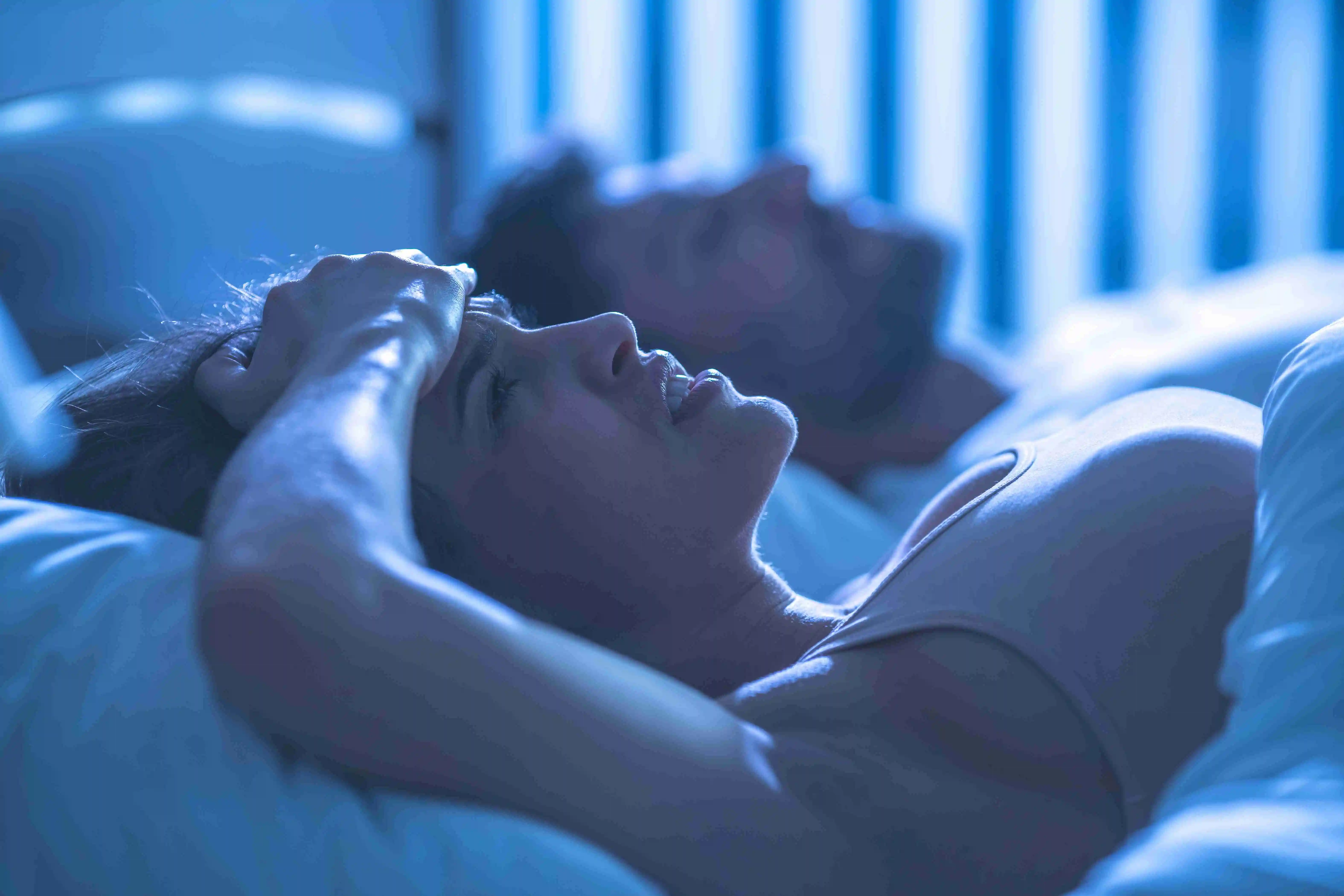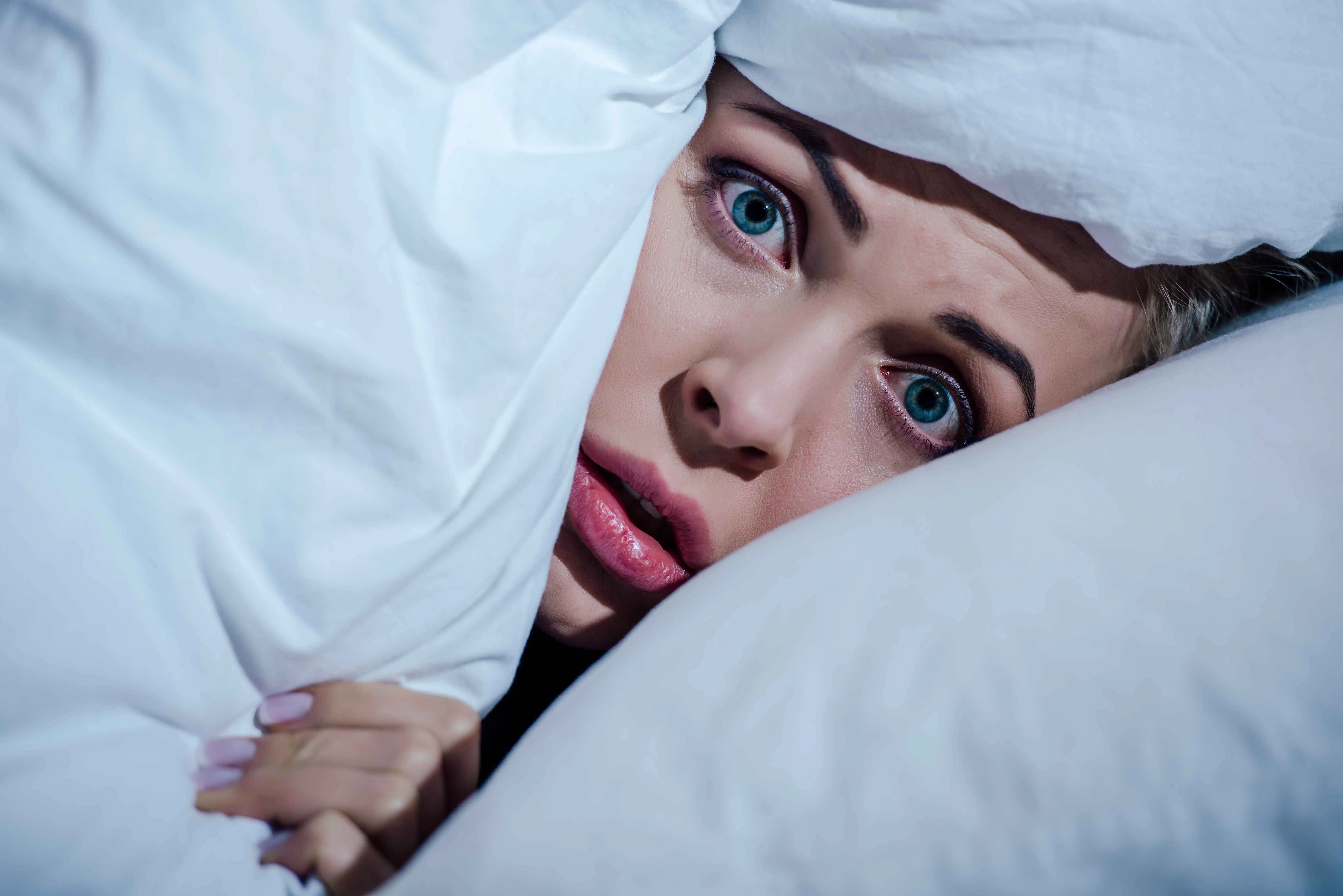

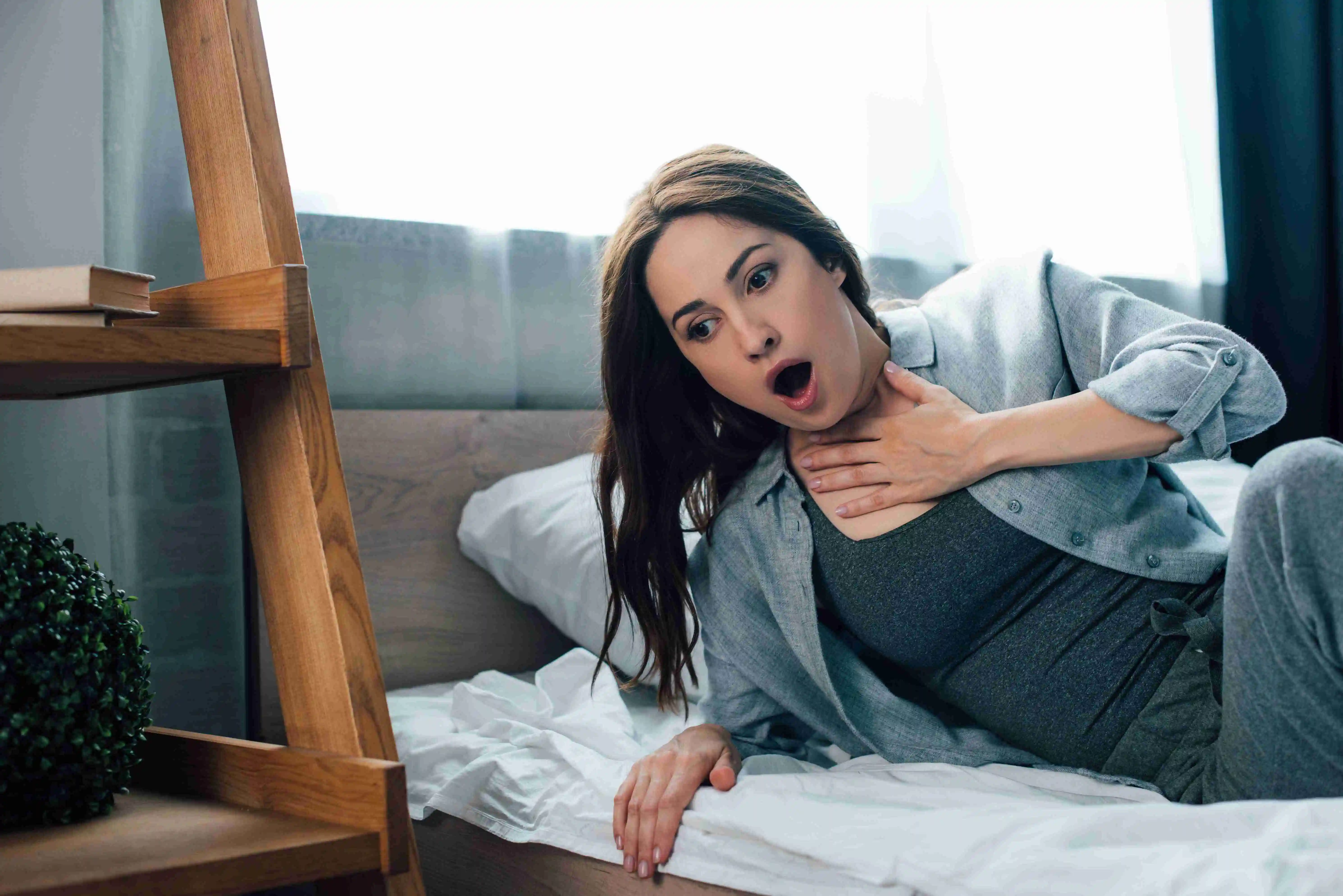
A nocturnal panic attack is a sudden awakening from sleep in a fully awake state of intense fear or discomfort. The fear does not begin as a reaction to a remembered nightmare. Once awake, the person is generally alert, aware of the symptoms, and able to remember the episode 12.
The attack may include a pounding or racing heart, sweating, trembling, chest discomfort, shortness of breath, a choking sensation, nausea, dizziness, tingling, a sense of unreality, or fear of dying or losing control. These symptoms can feel severe, but no single symptom, including a racing heart, proves that panic is the cause 3.
A first or unusual episode should not be self-diagnosed. Heart and lung problems, sleep disorders, seizures, reflux, and medicine or substance changes can produce a similar awakening. The immediate question is not only "Was this panic?" but also "Is there any sign that this needs urgent medical care?"
What makes an episode nocturnal panic?
The defining pattern is waking from sleep already in a panic state. It is different from lying awake and becoming anxious, or waking from a frightening dream and then panicking about the dream. Symptoms usually intensify quickly, but there is no reliable fixed duration that can confirm or exclude the diagnosis.
A person can experience a nocturnal panic attack without having panic disorder. Panic disorder is a broader diagnosis involving recurrent unexpected attacks plus persistent worry, fear about what the attacks mean, or behavior changes intended to prevent another attack. One isolated attack does not meet that definition 3.
Researchers still debate whether nocturnal attacks are simply panic attacks that occur from sleep or a partly distinct presentation. Proposed respiratory and sleep-stage explanations have not established one universal mechanism, and research focused specifically on nocturnal panic remains limited 2.
What else can look like nocturnal panic?
Several clues can help a clinician narrow the possibilities, but a home checklist cannot make the diagnosis.
| Possible explanation | Clues that point toward it | Why the distinction matters |
|---|---|---|
| Nightmare | A distressing dream appears to cause the awakening, the dream is usually remembered, and the person becomes oriented quickly 4. | Treatment may focus on recurrent nightmares, trauma, medicines, or another source of disturbed dreaming rather than panic disorder. |
| Sleep terror | The person screams, sits up, moves, or looks terrified but remains only partly awake, responds little or seems confused, and has limited recall later 5. | Sleep terrors are incomplete arousals from non-REM sleep, not fully awake panic attacks. |
| Sleep paralysis | Awareness returns while the person is temporarily unable to move or speak. Dream-like sounds, images, a sensed presence, or chest pressure may occur 4. | Immobility at a sleep-wake transition is the central feature, even when the experience causes panic. |
| Sleep-related seizure | Episodes may be very brief, highly similar each time, cluster in one night, involve focal stiffening or repeated movements, or be followed by confusion, weakness, tongue injury, or loss of bladder control 6. | Not every seizure causes full-body convulsions. Recurrent stereotyped events need neurologic assessment. |
| Obstructive sleep apnea | Repeated snoring, choking or gasping, witnessed breathing pauses, fragmented sleep, morning headache, or daytime sleepiness supports a breathing-related arousal. | A sleep evaluation and objective sleep apnea testing may be appropriate; symptoms alone do not diagnose OSA 7. |
| Reflux or another esophageal cause | Burning discomfort, regurgitation, a sour taste, or symptoms related to meals or lying down may point toward reflux. | Reflux can mimic chest pain, but a heart cause should be excluded before chest pain is labeled noncardiac 8. |
| Heart or lung problem | Persistent pressure or pain, pain spreading beyond the chest, severe breathlessness, fainting, a new irregular heartbeat, color change, or symptoms with exertion are warning signs. | Panic and medical emergencies can overlap. These features need urgent medical assessment, not reassurance alone 91011. |
Why might the attacks happen?
Nocturnal panic does not have one proven cause. For some people it occurs as part of panic disorder, with or without daytime attacks. Anxiety disorders, depression, PTSD, and other mental health conditions may coexist, but an association does not show that one condition caused a particular nighttime event 32.
The timing of medicines and substances can be more informative than a generic trigger list. Tell a clinician about a recently started medicine, a dose change, a missed dose, or a change in alcohol, cannabis, nicotine, stimulant, sedative, or other drug use. Do not stop a prescribed medicine abruptly to test whether it is responsible.
Abruptly stopping or rapidly reducing a benzodiazepine can cause serious withdrawal, including seizures, and requires a clinician-guided taper. Alcohol withdrawal can also become medically dangerous and is not something to manage alone when dependence or previous withdrawal is possible 1213.
Snoring and gasping may shift attention toward sleep apnea. Burning or regurgitation may suggest reflux. Repeated stereotyped movements may raise concern for seizures. A daytime pattern of unexpected attacks, fear of body sensations, repeated reassurance-seeking, or avoidance may support panic disorder. More than one issue can be present at the same time.
What to do during an episode
- Get physically safe. Sit upright or settle somewhere you will not fall. If you are fully alert, orient yourself by naming where you are, the time of night, and a few things you can see or feel.
- Check for emergency signs. Do not assume chest pain, severe breathing difficulty, fainting, or seizure-like activity is "just anxiety." Use the urgent guidance below.
- Let breathing become slow and regular. Avoid repeated forceful deep breaths. Relax the shoulders and take comfortable breaths at a pace you can maintain. First-aid guidance recommends calm support and slow, regular breathing while continuing to watch for deterioration 14.
- Use a familiar plan if one exists. If a clinician has already assessed the same pattern, follow the coping or medicine plan you agreed on. A simple grounding task or a calm voice from another person may help you remain oriented while the symptoms settle.
- Do not breathe into a paper bag. Rebreathing can lower oxygen to dangerous levels and is especially unsafe when the breathing problem has been mistaken for panic 14.
How a clinician assesses recurrent episodes
Diagnosis begins with the story of the event. Useful details include:
- whether fear woke you or followed a remembered dream
- whether you were fully alert, unable to move, confused, or difficult to wake
- the exact chest, breathing, stomach, movement, and sensory symptoms
- whether episodes are stereotyped, clustered, linked to exertion, or also happen while awake
- snoring, witnessed breathing pauses, reflux symptoms, daytime sleepiness, and sleep loss
- recent medicine, supplement, alcohol, or drug changes
- daytime anxiety, avoidance, trauma symptoms, mood changes, and effects on daily life
- heart, lung, thyroid, neurologic, and family medical history
A clinician may perform a physical exam and choose tests based on the pattern rather than order every test for every person. There is no blood test, heart tracing, or sleep study that confirms a panic attack by itself 3.
Sleep apnea testing is relevant when a comprehensive sleep evaluation finds signs of OSA. Depending on the person's health and the clinical question, this may be a technically adequate home sleep apnea test or in-laboratory polysomnography. Polysomnography is preferred in some people with significant heart, lung, neurologic, opioid-related, or severe insomnia concerns 7.
Recurrent brief, stereotyped episodes, unusual movements, prolonged confusion, or other seizure clues may lead to neurologic assessment and sometimes EEG or video-EEG monitoring. Chest symptoms, fainting, an irregular rhythm, exertional symptoms, or relevant medical and family history may lead to cardiac assessment. Reflux testing or treatment is considered after dangerous cardiac causes of chest pain have been addressed 68.
Treatment after the cause is clearer
Treatment should match the finding. Sleep apnea, reflux, a seizure disorder, a medicine effect, or withdrawal needs its own plan. When the episodes are part of panic disorder, treatment usually targets the panic pattern rather than treating nocturnal panic as a separate condition.
Cognitive behavioral therapy
Cognitive behavioral therapy (CBT) is a well-supported treatment for panic disorder. It helps a person understand panic sensations, reconsider catastrophic interpretations, reduce avoidance and safety behaviors, and respond differently to fear. Panic-focused CBT may include interoceptive exposure, which safely and deliberately brings on selected body sensations in a therapeutic plan so they become less frightening 315.
Exposure exercises should be chosen with a qualified clinician, especially when symptoms have not been medically assessed or a heart, lung, neurologic, or pregnancy-related concern may change what is safe. The goal is not to provoke attacks alone at night.
Medication
A prescriber may recommend an antidepressant such as a selective serotonin reuptake inhibitor for panic disorder. These medicines are not instant-relief treatments, may cause early side effects, and can cause discontinuation symptoms if doses are missed or treatment is stopped too quickly 315.
Benzodiazepines can reduce panic symptoms quickly in some circumstances, but tolerance, dependence, and dangerous withdrawal limit their role. NICE advises against prescribing them for long-term treatment of panic disorder, and anyone already taking one should discuss a gradual, individualized taper with the prescriber rather than stopping suddenly 1512.
Sleep support
Regular sleep, exercise, and a calm wind-down can support general health and may make recovery from a disrupted night easier. They do not cure panic disorder or replace evidence-based treatment 3.
If fear of another attack has led to insomnia or sleep avoidance, that problem deserves attention too. Treating disrupted sleep is not a substitute for panic-focused treatment or assessment of a medical mimic. Evidence for treatments aimed specifically at nocturnal panic is much smaller than the evidence base for panic disorder overall 2.
When to seek urgent help
Contact local emergency services now if an episode involves:
- sudden chest pain or pressure that does not go away, pain spreading to an arm, the neck, jaw, back, or stomach, or chest pain with sweating, nausea, lightheadedness, or shortness of breath 9
- severe breathing difficulty, gasping, choking, inability to speak normally, a tight or heavy chest, very pale, blue, or gray skin, or sudden confusion 10
- fainting with failure to recover normally, chest pain, a pounding or irregular heartbeat, injury, shaking or jerking, or fainting during exercise or while lying down 11
- a first suspected seizure, a seizure lasting more than five minutes when the person's usual duration is unknown, repeated seizures without recovery, serious injury, or difficulty breathing afterward 16
- possible severe alcohol or sedative withdrawal, particularly confusion, hallucinations, seizures, or marked deterioration 1312
Seek immediate local crisis or emergency help for thoughts of suicide or urges to harm yourself 17. Also seek urgent mental health assessment for hallucinations or delusions while fully awake, dangerous or severely disorganized behavior, or very little sleep without feeling tired together with an unusually high or irritable mood, racing thoughts, fast speech, or markedly increased activity. Those features can point to psychosis or mania rather than an isolated panic attack 18.
If the episode has ended and no emergency sign is present, arrange a medical assessment for a first unexplained event or for attacks that recur, cause sleep avoidance, impair daytime function, or occur with snoring, gasping, reflux, unusual movements, medicine changes, or daytime panic. A brief record of what happened before, during, and after each event can make that assessment more useful.