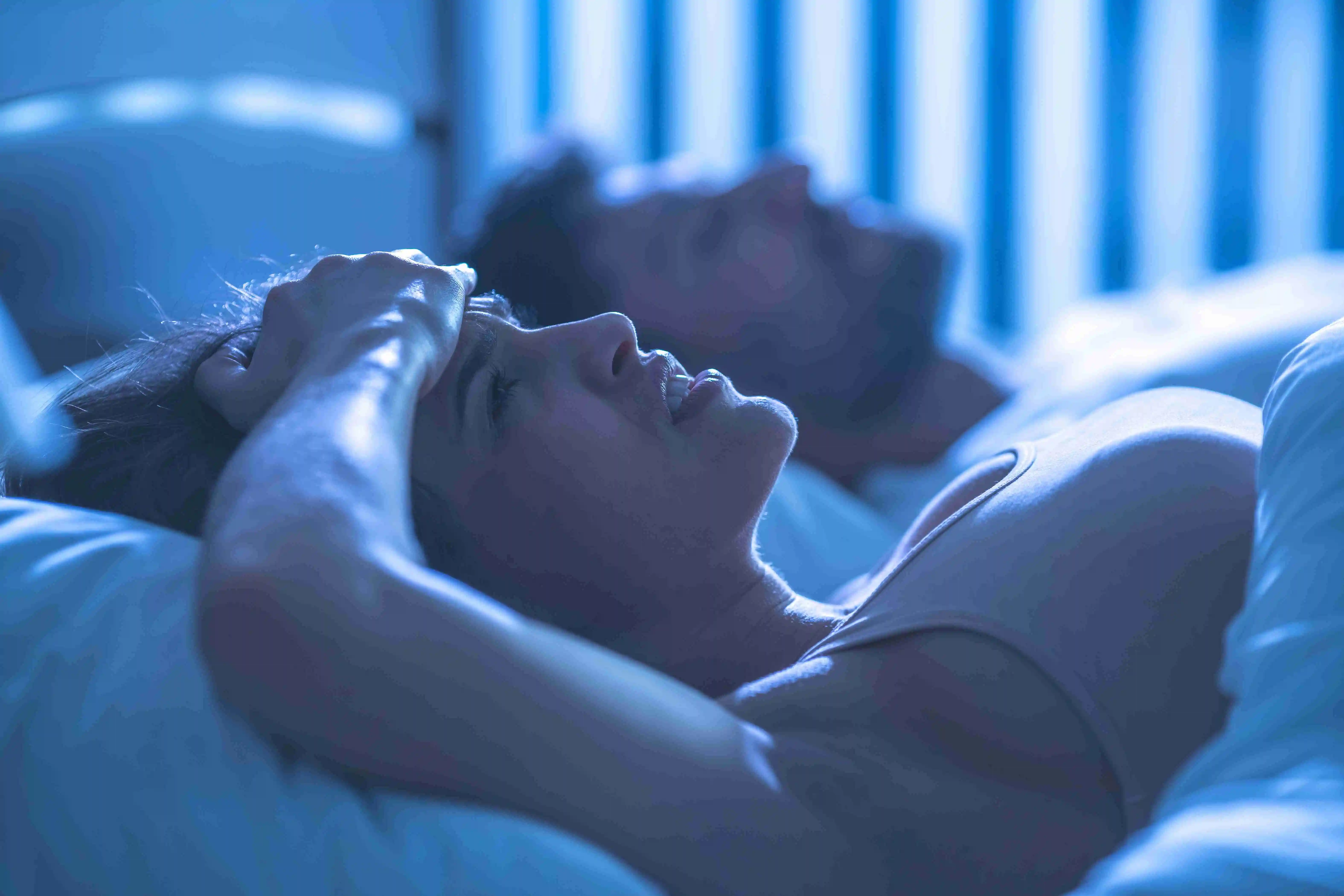

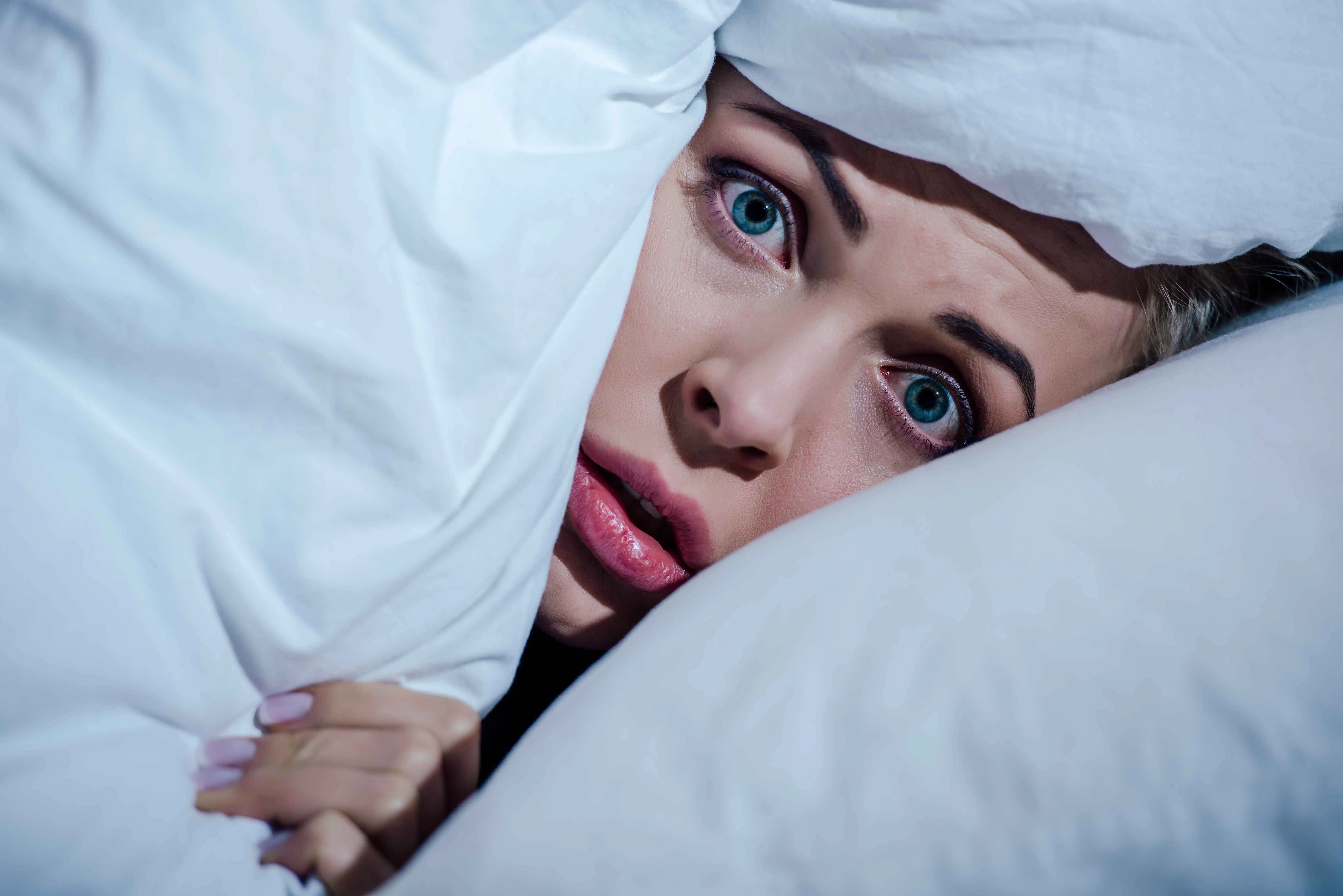
“Somniphobia” is a descriptive name for fear of sleep. It does not, by itself, identify a formal diagnosis or explain why the fear is happening. One person may have a phobic fear of becoming unconscious. Another may be afraid of nightmares, panic, sleep paralysis, breathing pauses, a seizure, an intrusive thought, or a real threat in the home.
That distinction matters because treatment should target the actual driver. Exposure-based CBT may fit a specific phobia pattern. CBT for insomnia, called CBT-I, fits persistent insomnia. Trauma, nightmares, panic, obsessive-compulsive symptoms, unusual nighttime events, and an unsafe environment each call for a different response.
This guide draws on established diagnostic and treatment evidence for the conditions that can produce fear around sleep rather than treating “somniphobia” as a single, well-studied disorder.
What does fear of sleep look like?
Fear may begin well before bedtime or surge when you enter the bedroom, turn off the light, close your eyes, or notice yourself drifting off. The feared outcome is often more informative than the intensity of the anxiety.
A person might fear:
- losing awareness or control
- dying or not waking up
- having a nightmare, flashback, panic attack, or episode of sleep paralysis
- choking, stopping breathing, or having a seizure
- an intrusive thought that something terrible will happen if they sleep
- being unable to monitor a child, relative, door, appliance, or body sensation
- being harmed by someone or something in a genuinely unsafe setting
Avoidance can include delaying bedtime, sleeping only with another person present, repeatedly checking locks or vital signs, asking for reassurance, keeping lights or media on, using alcohol or sedatives, or staying awake until exhaustion takes over. These behaviors do not all point to the same diagnosis.
The World Health Organization’s diagnostic requirements for specific phobia focus on marked fear tied to a particular object or situation, avoidance or intense distress, functional impairment, and fear that is out of proportion to the actual danger in the person’s circumstances. A clinician also has to determine whether another mental, medical, or sleep condition better explains the symptoms 1.
Fear and sleep loss can reinforce each other
A common pattern is fear at bedtime, followed by monitoring, avoidance, or an effort to force sleep. More time awake then creates fatigue and another difficult night to anticipate. The person may start treating tiredness, the bedroom, or the first signs of drowsiness as warnings.
That is a useful way to understand a possible cycle, not a proven mechanism for every case. Trauma reminders, panic sensations, compulsions, breathing symptoms, pain, medication effects, an irregular schedule, or an unsafe environment can change the pattern. The goal of assessment is to find those differences rather than assume all sleep fear is learned avoidance.
How clinicians distinguish the main patterns
Several patterns can overlap. The following clues help decide what deserves attention first.
A phobic fear pattern
A phobic pattern is more likely when sleep or a closely related cue consistently triggers marked fear, the feared outcome is disproportionate to the person’s actual risk, and avoidance causes distress or limits daily life. Some people eventually sleep when exhaustion overrides the avoidance, but the fear returns around the next opportunity.
For established specific phobias, exposure-based treatment has the strongest evidence. A meta-analysis of 85 single-session and multi-session studies found large improvements in phobia symptoms and approach behavior with exposure treatment, although it did not study fear of sleep as its own group 2.
In practice, a therapist first identifies the feared prediction, avoidance, safety behaviors, and any genuine danger. CBT may then use a collaboratively planned, graded exposure hierarchy, such as tolerating a dim room, lying in bed without checking, or allowing normal drowsy sensations while reducing a safety behavior. The aim is to learn that anxiety and uncertainty can be tolerated, not to force the body to sleep. Clinical guidance rates exposure as the treatment of choice for specific phobia and recommends assessing cues, avoidance, accommodation by others, beliefs, and impairment before treatment 3.
Do not turn this into an unsupervised flooding exercise. Starting with the most frightening step, staying awake until collapse, or commanding yourself to sleep can overwhelm the assessment and may target the wrong problem. Trauma, psychosis, medical symptoms, and real danger need to be ruled in or out first.
Chronic insomnia and fear of not sleeping
Insomnia is not the same as fear of sleep. Someone with insomnia usually wants to sleep but has persistent difficulty falling asleep, staying asleep, or waking too early despite adequate opportunity, along with daytime effects. The main fear may be the consequences of another bad night rather than sleep itself.
The two can coexist. If chronic insomnia is present, multicomponent CBT-I is the recommended first-line behavioral treatment for adults. It combines sleep-focused cognitive and behavioral strategies rather than relying on generic sleep hygiene. The American Academy of Sleep Medicine strongly recommends CBT-I and suggests against using sleep hygiene alone as treatment for chronic insomnia 4.
A qualified clinician should review whether individual CBT-I components need adapting when severe sleepiness, bipolar disorder, seizures, untreated breathing problems, or another condition could affect how they are used. A bedtime routine or breathing exercise may feel supportive, but it is not a substitute for CBT-I or for treating the cause of the fear.
Panic and fear of nighttime sensations
Panic attacks can occur during sleep as well as during the day. Panic disorder is characterized by recurrent, unexpected attacks and ongoing worry or behavior change because another attack might happen. The feared target is often the surge of bodily sensations, such as a racing heart, breathlessness, dizziness, or loss of control, rather than sleep itself 5.
CBT for panic may include carefully planned exposure to feared body sensations and new ways of responding to them. Chest pain, fainting, or new breathing symptoms still need appropriate medical assessment rather than being assumed to be panic.
Trauma-related hypervigilance and nightmares
A person with trauma-related symptoms may feel vulnerable when unconscious, scan for danger, avoid a bedroom associated with an event, or fear a recurring nightmare. This is not simply a generic phobia to push through. NICE recommends trauma-focused CBT or eye movement desensitization and reprocessing for adults with clinically important PTSD symptoms, delivered by trained practitioners using validated, phased approaches 6.
Recurrent nightmares may also need their own assessment. The American Academy of Sleep Medicine recommends imagery rehearsal therapy for nightmare disorder and PTSD-associated nightmares, while noting limited direct evidence for many nightmare treatments. Imagery rehearsal changes and practices a less distressing version of a recurring nightmare while awake 7. Treatment does not require deciding that a dream has one hidden or symbolic meaning.
Intrusive thoughts and reassurance rituals
An intrusive thought may say, “If I fall asleep, someone will die,” or “I must check one more time to make sure I am safe.” When distress is followed by repeated checking, mental reviewing, monitoring, or asking someone for certainty, an obsessive-compulsive pattern may be more relevant than a phobia.
NICE recommends CBT that includes exposure and response prevention for OCD. Response prevention means working on the compulsion or ritual that follows the thought, not proving the feared outcome impossible through repeated reassurance 8. A clinician trained in OCD can distinguish a compulsion from a reasonable safety step and plan the work without turning bedtime into another test.
Sleep paralysis
Sleep paralysis happens while falling asleep or waking when a person is aware but temporarily cannot move or speak. A sensed presence, chest pressure, or vivid dream-like perception can make the episode frightening. These experiences occur at a sleep-wake transition and are not, by themselves, the same as psychosis 9.
Occasional isolated sleep paralysis is generally harmless. Repeated episodes, persistent fear of sleep, or accompanying excessive daytime sleepiness deserve medical or sleep evaluation because another condition, including narcolepsy, may need consideration 9.
Breathing symptoms, seizures, and other nighttime events
Fear after a genuine nighttime symptom should not be dismissed as irrational. Loud habitual snoring, witnessed breathing pauses, gasping, choking, morning headaches, or marked daytime sleepiness can point to sleep apnea and warrant a medical sleep assessment 10.
Recurrent, similar nighttime episodes involving stiffening or rhythmic jerking, injury, tongue biting, loss of bladder control, or prolonged confusion afterward can require neurologic assessment. A first suspected seizure or a change in known seizures should be discussed promptly with a medical professional 11.
A brief note from a witness, including what happened before, during, and after an episode, can help. Do not provoke an episode as a test.
Psychosis or mania
Hallucination-like experiences confined to falling asleep or waking can occur with sleep paralysis. Voices, visions, fixed beliefs that others are plotting harm, or severe confusion while fully awake need a different assessment. Get urgent medical help when hallucinations are new, worsening, accompanied by agitation or confusion, or involve commands to harm yourself or someone else 12.
Mania can involve a decreased need for sleep rather than being tired but unable to sleep. An unusually elevated or irritable mood, racing thoughts, much faster speech, increased activity, risky behavior, or psychotic symptoms alongside little sleep warrants urgent mental-health assessment 13.
A genuinely unsafe environment
Fear is not a phobia when the danger is real. If another person may harm you, the home cannot be secured, or sleeping would leave you exposed to an immediate threat, safety comes before sleep therapy. Move to a safer place if you can, contact someone you trust or a local domestic-abuse or safeguarding service, and use local emergency services when danger is immediate.
Exposure is not appropriate for actual violence or credible danger. A clinician should understand the person’s environment before labeling the fear disproportionate 1.
What an assessment may include
A primary care clinician, mental-health professional, or sleep specialist may ask:
- what you believe will happen if you fall asleep
- when the fear began and whether it followed trauma, panic, a nightmare, paralysis, illness, or a nighttime event
- whether fear occurs only near sleep or also during the day
- what you avoid, check, monitor, or ask others to do
- whether you have enough opportunity and a safe setting for sleep
- whether you snore, gasp, stop breathing, move unusually, lose awareness, or feel very sleepy during the day
- whether medicines, caffeine, alcohol, cannabis, or other substances changed before symptoms began
- whether mood, energy, speech, beliefs, or thoughts of self-harm have changed
A brief sleep and symptom diary can help show timing and patterns. There is no single blood test or sleep study that diagnoses a phobic fear of sleep. Testing is chosen when breathing, seizure, narcolepsy, movement, medication, or another medical concern is plausible.
What to avoid while seeking help
Do not try to force sleep or stay awake until your body “gives in.” Do not use alcohol, cannabis, borrowed sedatives, over-the-counter sleep products, or supplements as a do-it-yourself exposure or cure. They can blur the pattern a clinician needs to assess, add side effects or interactions, and create new risks. Do not stop a prescribed medicine suddenly; ask the prescriber how to change it safely.
Repeated reassurance, checking, or monitoring may reduce anxiety for a few minutes while making the next bedtime feel more dependent on the ritual. That pattern is especially relevant when intrusive thoughts or compulsions are present. Keep reasonable safety steps, but let a clinician help distinguish them from rituals before removing them.
Calming practices can make a difficult moment more tolerable, but relaxation is not a cure for every cause of sleep fear. Use it as support, not as a rule that says you are only safe if you become completely calm.
When to get urgent help
Seek urgent medical or mental-health care if you:
- have been awake for an unusually long stretch and become confused, severely agitated, unable to care for yourself, or begin hallucinating
- hear commands to hurt yourself or someone else, have suicidal thoughts or intent, or cannot keep yourself or another person safe
- have signs of mania, psychosis, a first suspected seizure, severe breathing difficulty, chest pain, or fainting
- are in immediate danger from another person or your environment
Use local emergency services or go to the nearest emergency department when the danger is immediate. Do not drive yourself if you are severely sleep deprived, confused, faint, or otherwise unsafe to drive.
Sleepiness behind the wheel is an emergency in the moment. Pull over somewhere safe and stop driving. The National Highway Traffic Safety Administration warns that caffeine alone may make a severely sleep-deprived person feel more alert without preventing brief microsleeps 14.
The bottom line
Fear of sleep is real and treatable, but “somniphobia” is a starting description rather than a complete explanation. The best next step is to identify what you fear, what happens at night, what you do to prevent it, and whether the danger is imagined, medical, trauma-related, or real. Treatment can then target the right problem instead of forcing sleep or applying generic anxiety advice.