

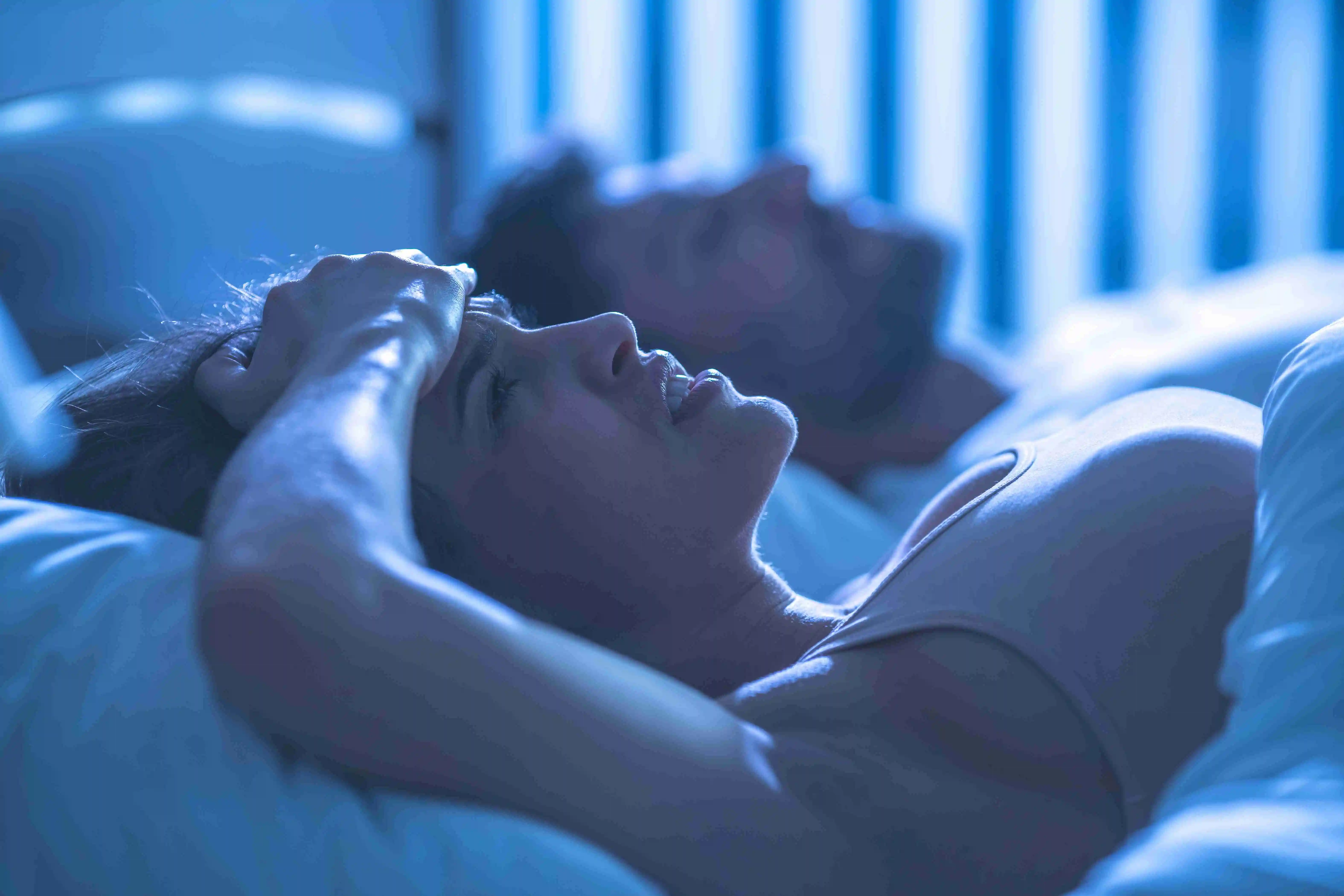
Trouble sleeping after trauma is common, but it is not the same for everyone. A person may feel alert in bed, wake at small sounds, avoid sleep because of nightmares, lose a familiar routine, or feel exhausted without being able to settle. These reactions can occur soon after an event, as part of post-traumatic stress disorder (PTSD), or alongside a separate sleep or health condition 12.
Sleep symptoms alone cannot show whether someone has PTSD, explain why the problem is happening, or determine which treatment will help. The useful question is not simply, "Was there trauma?" It is, "What is disturbing sleep now, what keeps it going, and what would make care feel safe enough to use?"
How sleep can change after trauma
Several patterns can appear, separately or together:
- Difficulty falling or staying asleep. Bedtime may leave more room for memories, worry, physical tension, or monitoring the surroundings.
- Feeling on guard. A person may startle at ordinary noises, check doors repeatedly, keep a light or television on, or sleep lightly because rest does not feel safe.
- Distressing dreams. Some dreams repeat part of an event, while others carry the same fear without replaying it. Our guides to trauma-related dreams and nightmares focus on those experiences.
- Fear of sleep or bedtime. Repeated nightmares, panic, or flashbacks can make the bed itself feel like a warning cue. Going to bed later may reduce distress in the moment while shortening sleep over time.
- A disrupted schedule. Hospital care, displacement, shift changes, caregiving, pain, legal proceedings, or a loss of routine can move sleep to unfamiliar hours.
- Daytime fatigue or sleepiness. Short or fragmented sleep can reduce alertness. Medication effects, depression, sleep apnea, and other conditions can produce similar symptoms.
These patterns do not prove that every affected person has the same change in cortisol, rapid eye movement (REM) sleep, memory processing, or "nervous system regulation." Research examines several possible pathways, but no single mechanism explains every person's sleep or provides a diagnosis. A symptom-based assessment is more useful than a universal biological story.
An early stress reaction is not automatically PTSD
Fear, jumpiness, upsetting memories, dreams, fatigue, and trouble sleeping can be common soon after a traumatic event. Most people do not go on to develop PTSD, and early symptoms may lessen with time, practical support, and restored safety 12.
Timing is only one part of diagnosis:
- An acute stress reaction describes early, often temporary responses after trauma.
- Acute stress disorder may be diagnosed when a qualifying pattern lasts from three days to one month and causes significant distress or impairment.
- PTSD requires symptoms for more than one month, meaningful interference with daily life, and a qualifying pattern across more than sleep. The symptoms also must not be better explained by a substance, medication, or illness 32.
A clinician also considers depression, anxiety, grief, pain, traumatic brain injury, medication effects, substance use or withdrawal, and whether danger is still ongoing. Our PTSD and sleep guide covers that diagnosis and its sleep effects in more detail.
There is no requirement to disclose every detail of an event in order to ask for sleep care. Psychological first aid guidance emphasizes practical, humane support and says people should not be pressured to tell their story 4. NICE also advises against psychologically focused debriefing, a structured intervention that pushes early recounting after trauma, because trials did not show benefit and suggested possible harm 5.
Check for another sleep or health problem
A traumatic experience and another condition can exist at the same time. Trauma should not become a shortcut that ends the assessment.
| Pattern | Clues worth discussing with a clinician |
|---|---|
| Insomnia | Repeated difficulty falling asleep, staying asleep, or waking earlier than wanted despite enough opportunity, with distress or daytime impairment. Fear of sleep can contribute, but chronic insomnia can also continue after other trauma symptoms improve 67. |
| Nightmare disorder or PTSD-associated nightmares | Recurrent, well-remembered disturbing dreams that cause distress, disrupt sleep, or affect daytime life. The dream does not have to reproduce the traumatic event 8. |
| Obstructive sleep apnea | Loud or habitual snoring, gasping, witnessed breathing pauses, or marked daytime sleepiness calls for a standard sleep evaluation. Trauma does not by itself diagnose or explain sleep apnea 6. |
| Restless legs syndrome | An urge to move the legs that begins or worsens at rest, improves temporarily with movement, and is worse in the evening or at night 9. |
| Parasomnia or possible nighttime seizure | Repeated injury, leaving the bed, forceful dream enactment, unusual stereotyped movements, or episodes with loss of awareness deserve assessment. A first seizure, prolonged seizure, or breathing trouble after an episode needs urgent help 10. |
| Medication, substance use, or withdrawal | A new medicine, dose change, alcohol or drug use, or extra sedatives can change sleep. Abruptly reducing a benzodiazepine after physical dependence has developed can cause dangerous withdrawal 11. |
| Possible mania or psychosis | Needing far less sleep without feeling tired, together with unusually high energy, racing thoughts, rapid speech, marked irritability, or risky behavior is different from wanting sleep but being unable to get it. Hallucinations while fully awake, delusions, severe confusion, or difficulty telling what is real need prompt assessment 1213. |
This is not a self-diagnosis table. It helps identify what to report so that a clinician can choose the right evaluation. For example, an insomnia questionnaire does not replace testing when breathing symptoms suggest sleep apnea, and a trauma history does not make unusual nighttime movements harmless. If both conditions are in question, our guide to sleep apnea and PTSD explains how to keep the assessment separate.
A choice-preserving plan for tonight and this week
The first goal is not to force relaxation. It is to reduce avoidable threat and give the person more control over the conditions for sleep.
Start with present safety
If danger is ongoing, a darker room or stricter bedtime will not solve it. Prioritize a safe place, medical care, and practical support. A trusted person, clinician, local emergency service, or relevant community service can help with the next safe step. The person experiencing trauma should have as much voice and choice as the situation allows.
If the setting is safe but does not feel safe, choose one or two cues that make it easier to rest. That might mean a dim light, steady background sound, a view of the door, a different sleeping position, a support person nearby, or an agreed check-in. There is no requirement to sleep in complete darkness or silence if those conditions increase distress.
Use orientation only if it helps
After a nightmare or flashback, some people find it useful to open their eyes, look around, name the place and date, move their body, drink water, or contact someone they trust. These steps can help distinguish the present setting from the remembered event 14.
Grounding is an option, not a test of effort. If close-eyed breathing, a body scan, guided imagery, or a focus on physical sensations increases distress, stop the exercise and choose a more external cue, such as looking at objects in the room or listening to a familiar voice.
Protect sleep without making the routine rigid
A roughly consistent wake time, enough opportunity for sleep, and a brief wind-down can support sleep timing. If a strict schedule increases fear or is unrealistic during a crisis, start with the most stable part of the day. A simple record of estimated sleep, nightmares, medication or substance changes, and daytime sleepiness can help a clinician. It does not need to include the trauma story or the content of every dream 6.
General sleep habits can support treatment, but they are not a complete treatment for chronic insomnia. The 2025 VA/DoD insomnia guideline recommends cognitive behavioral therapy for insomnia (CBT-I) and explains that it combines several methods rather than relying on sleep hygiene alone 6.
Do not use disclosure as a sleep requirement
Talking can help when it is wanted and the listener is safe. It should not be compulsory. A person can ask for help with insomnia, nightmares, or daytime safety without telling family, friends, a support group, or an online audience what happened. A clinician may need enough information to assess diagnosis and risk, but trauma-informed care should explain why a question is being asked and respect reasonable limits 4.
Treatments should match the problem
Sleep care and trauma care can be coordinated without assuming one fixed sequence for everyone.
Trauma-focused psychotherapy
For diagnosed PTSD, the 2023 VA/DoD guideline strongly recommends three individual, manualized trauma-focused psychotherapies: cognitive processing therapy (CPT), eye movement desensitization and reprocessing (EMDR), and prolonged exposure (PE). It also recommends these therapies over medication as the primary PTSD treatment 3.
These are structured treatments delivered by trained clinicians. They are not instructions to flood yourself with reminders, repeatedly retell the event without support, or recreate dangerous situations. The right treatment also depends on readiness, access, medical needs, and informed preference. Symptoms in the first days after trauma do not automatically require trauma processing.
PTSD treatment may help sleep, but insomnia or nightmares can remain and deserve direct care. That does not mean the trauma treatment failed.
CBT-I for persistent insomnia
CBT-I targets the patterns that maintain chronic insomnia through a combination of behavioral and cognitive methods. It is more than a list of bedroom tips. The 2025 VA/DoD guideline recommends CBT-I for chronic insomnia 6.
In a randomized trial of 45 adults with PTSD and insomnia, eight sessions of CBT-I improved sleep outcomes compared with a wait-list monitoring condition, and gains were maintained at six months. The trial was small, most participants were women, and it did not establish that CBT-I treats every PTSD symptom 7. Our CBT-I guide explains the treatment in more detail.
A clinician should adapt the plan when there is ongoing danger, severe daytime sleepiness, possible mania, seizures, parasomnia, untreated breathing symptoms, or another reason that restricting time in bed could be unsafe. Do not copy an intensive sleep-restriction schedule from the internet without considering those factors.
Imagery rehearsal therapy for nightmares
Imagery rehearsal therapy (IRT) involves creating a less distressing version of a recurring dream and rehearsing that new version while awake. The American Academy of Sleep Medicine recommends IRT for nightmare disorder and PTSD-associated nightmares in adults, while noting that comparative evidence for many other nightmare treatments is less clear 8.
The 2023 VA/DoD PTSD guideline reached a more cautious conclusion, finding insufficient evidence to recommend for or against IRT for PTSD-associated nightmares 3. The difference reflects a limited and mixed evidence base, so IRT is an option to discuss rather than a treatment that is guaranteed to work.
IRT is not compulsory exposure to the original event. A clinician can help choose how much detail to use, and the new script does not have to reproduce the trauma. Someone who becomes overwhelmed by dream work should pause and ask for an adapted approach. See our guides to nightmare disorder and ways to reduce nightmares for the focused decision path.
Medication
Medication decisions should identify the target symptom and consider blood pressure, other medicines, substance use, pregnancy, breathing risk, falls, and other health conditions. There is no universal "trauma sleep medication."
The VA/DoD guideline weakly suggests prazosin for nightmares associated with PTSD, but suggests against using it for PTSD as a whole. That difference matters: evidence for one symptom does not make a drug a complete PTSD treatment, and a weak recommendation reflects uncertainty and mixed trial findings 3.
The same guideline recommends against benzodiazepines and cannabis or cannabis derivatives as treatments for PTSD 3. That is not a direction to stop a prescribed drug abruptly. The FDA warns that rapid reduction or abrupt discontinuation of a benzodiazepine can cause severe, sometimes life-threatening withdrawal, including seizures. A prescriber should guide any change 11.
When to seek help
Arrange a clinical assessment when sleep problems persist, impair work or relationships, make functioning difficult, or lead to repeated avoidance of sleep. Seek care sooner for loud snoring with gasping or pauses, severe daytime sleepiness, recurrent injury during sleep, worsening substance use, or symptoms suggesting PTSD, depression, mania, psychosis, or another condition.
Get urgent help through local emergency services or an emergency department when any of the following is present:
- immediate danger, suicidal intent, or a credible risk of harming someone else 21
- hallucinations while fully awake, severe confusion, loss of contact with reality, or behavior that is threatening or unsafe 13
- very little sleep without tiredness plus rapidly escalating energy, agitation, racing thoughts, or risky behavior that could indicate mania 12
- severe withdrawal symptoms, especially seizures, hallucinations, delirium, or marked confusion 11
- a first seizure, a seizure lasting longer than five minutes, repeated seizures without recovery, serious injury, or trouble breathing or waking afterward 10
- severe breathing trouble or inability to stay awake
Do not drive when you are struggling to keep your eyes open, drifting across lanes, or having brief lapses in awareness. Pull over somewhere safe and arrange another way to travel. Sleepiness can impair driving even when the cause is trauma-related 15.
The bottom line
Sleep can change after trauma, but the change does not tell the whole story. Early stress reactions may ease, PTSD requires more than a sleep symptom, and conditions such as insomnia, nightmare disorder, sleep apnea, restless legs syndrome, parasomnias, medication effects, or withdrawal need their own assessment.
Good care protects choice. It does not require forced disclosure, compulsory journaling, public retelling, or self-directed exposure. The most efficient plan identifies the current sleep pattern, addresses present safety, and matches treatment to insomnia, nightmares, PTSD, or another condition without claiming that better sleep alone can heal trauma.