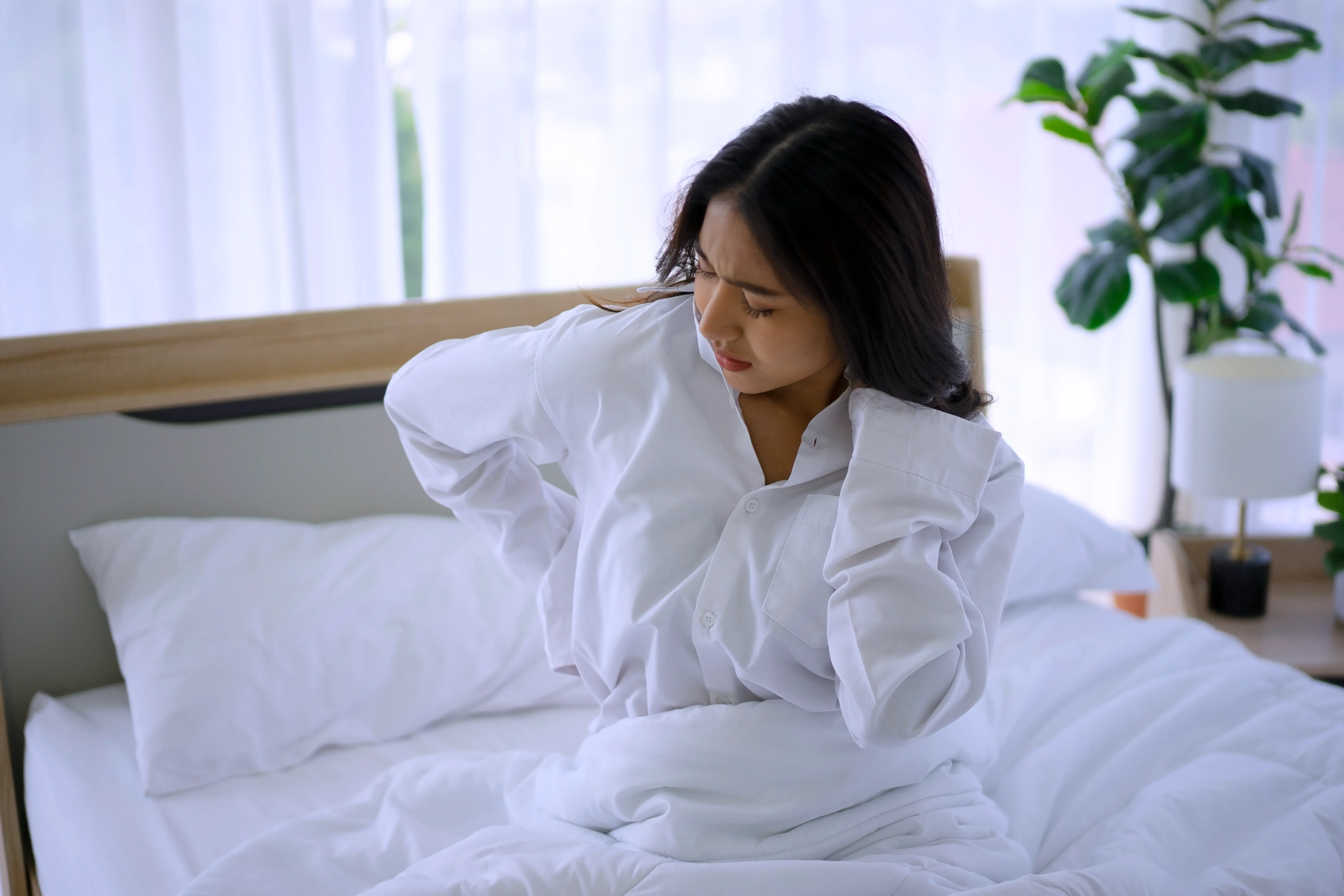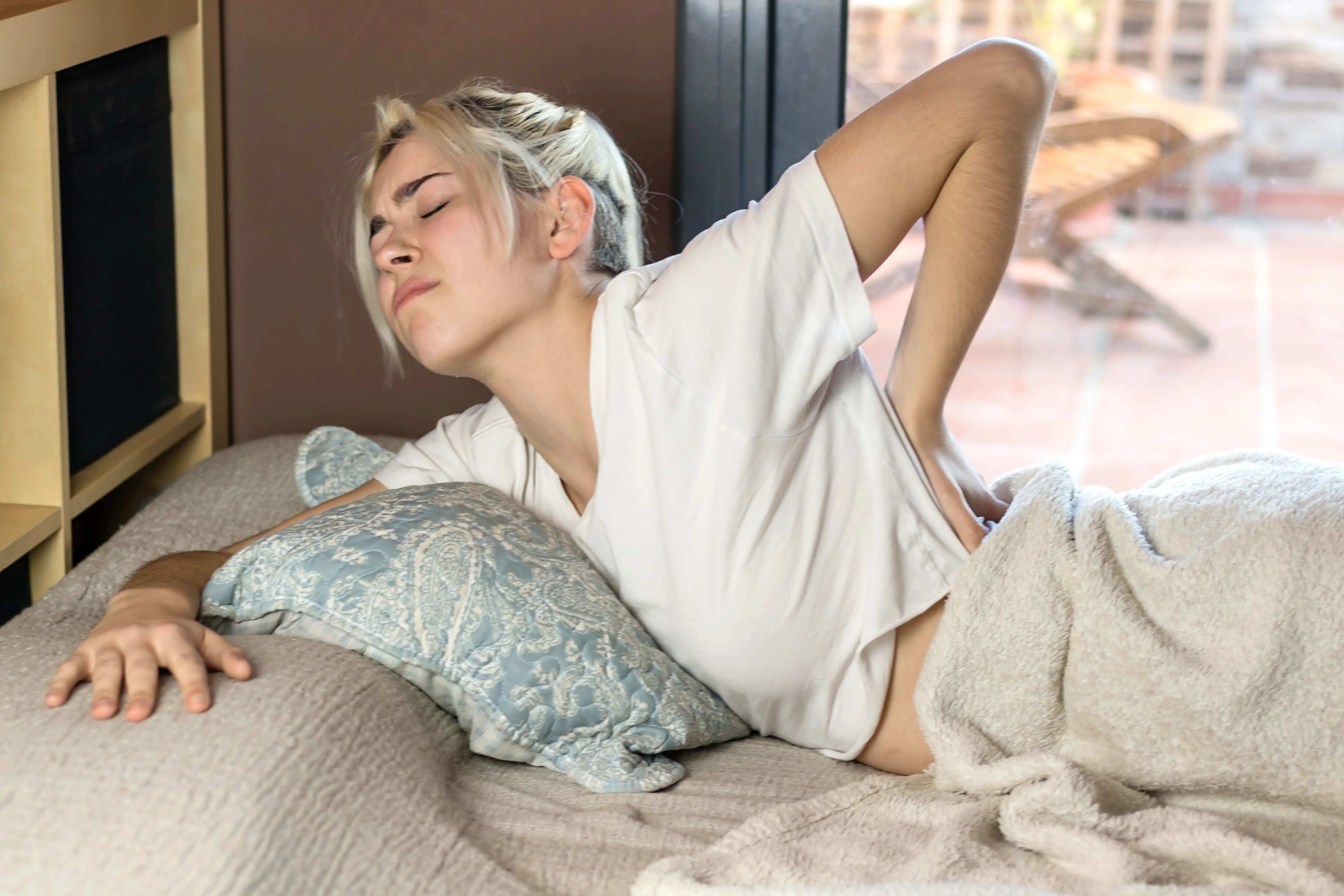

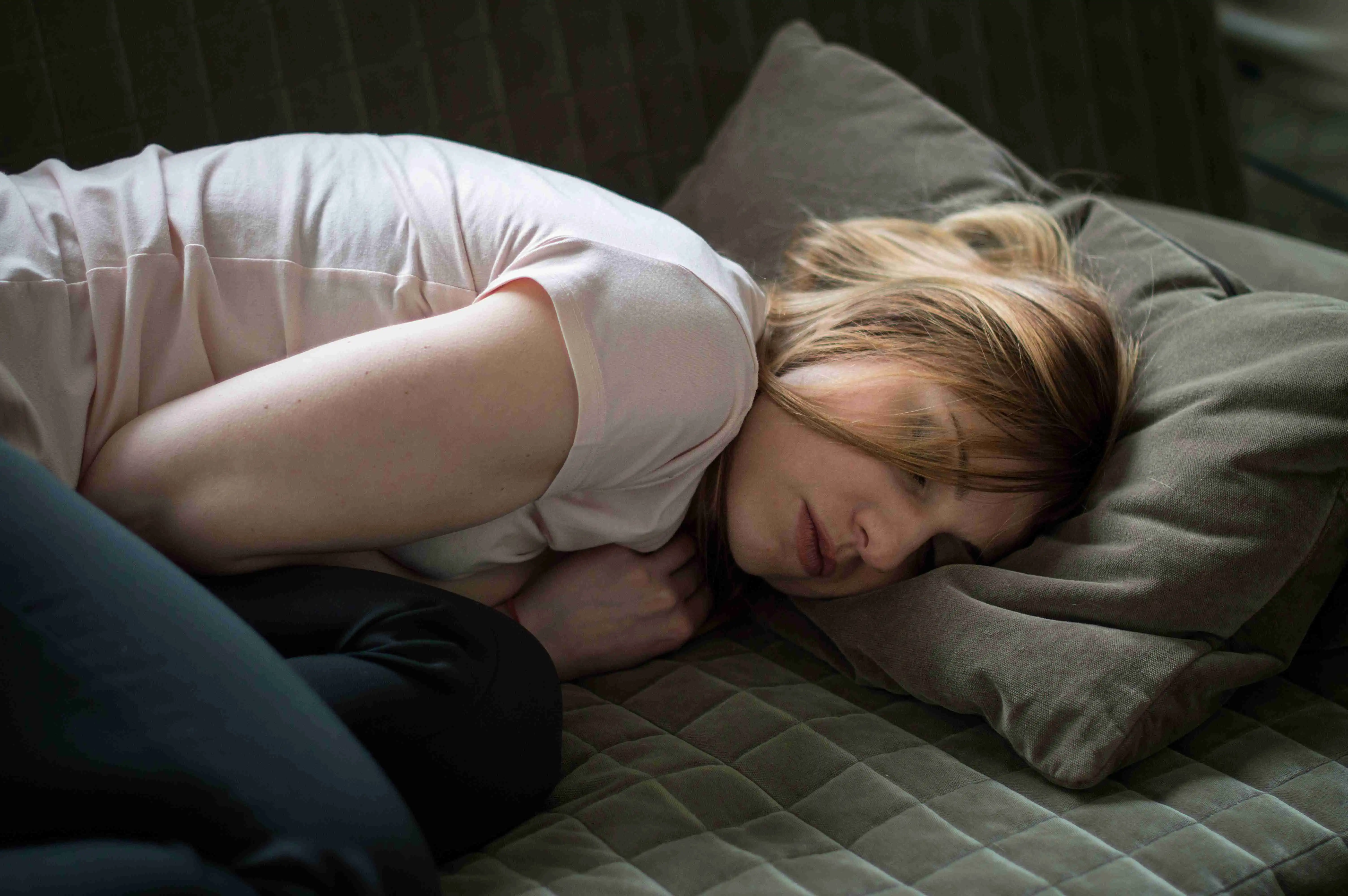
Pain can make it harder to fall asleep, stay asleep, or find a tolerable position. A short or broken night can then change how strongly pain is felt the next day 12. This relationship is real, but it does not mean that poor sleep is the sole cause of pain or that improving sleep will repair an injury or cure an underlying disease.
The most useful approach is to address both sides. The pain still needs cause-specific assessment and treatment. A persistent sleep problem also deserves its own evaluation instead of being dismissed as an unavoidable part of living with pain.
What research says about the pain-sleep relationship
Research supports a connection, but the type of evidence matters.
A 2024 review of prospective studies found that sleep problems were associated with a greater likelihood of later chronic musculoskeletal pain. Chronic musculoskeletal pain was also associated with later sleep problems in some analyses. However, certainty varied, the evidence did not establish cause and effect, and the findings do not automatically apply to every type of pain 1.
Experimental research answers a narrower question. A meta-analysis found that sleep deprivation increased pain sensitivity in healthy volunteers. That result shows that lost sleep can change pain perception under controlled conditions. It does not show that sleep treatment resolves a person's arthritis, nerve injury, migraine, cancer pain, or another clinical cause 2.
Pain may interrupt sleep through discomfort, changes in position, worry about another flare, medicines, or the condition causing the pain. Poor sleep may leave a person more sensitive to discomfort the next day. The details differ from person to person, so this is better understood as a possible feedback pattern than a universal sequence.
Acute and chronic pain need different questions
New pain, pain after an injury or procedure, and a substantial change in an established pattern call for attention to the cause. Sleep strategies may make a night more manageable, but they should not replace the instructions or evaluation appropriate to that condition.
The International Association for the Study of Pain defines chronic pain as pain that persists or recurs for longer than 3 months. Chronic pain may be primary, meaning no other condition adequately accounts for the pain and its impact, or secondary to an underlying condition. Both can occur together 34.
Chronic pain is not another term for imaginary pain. It can remain a serious clinical problem even when a scan or test does not fully explain its severity. It can also be caused by an identifiable disease or injury. That distinction matters because advice for chronic primary pain should not be applied automatically to inflammatory disease, cancer, a healing injury, postsurgical pain, neuropathy, or another secondary cause.
Identify the sleep problem before trying to fix it
“I am tired” can describe several different experiences:
- Insomnia is repeated difficulty falling asleep, staying asleep, or returning to sleep after waking too early, together with daytime impact despite having a reasonable opportunity to sleep 5.
- Sleepiness is a tendency to doze or fall asleep.
- Fatigue is low energy, exhaustion, or reduced capacity. A person may feel fatigued without being likely to fall asleep, although fatigue and sleepiness can occur together 6.
- Fragmented sleep may come from pain, breathing disturbances, movement symptoms, a noisy environment, caregiving, or other interruptions.
These differences guide the next step. CBT-I can treat persistent insomnia, but it does not treat obstructive sleep apnea or a medication-related breathing problem. More time in bed may not help when the main problem is fragmented sleep. A pain flare can cause fatigue without causing a sleep disorder.
Keep brief notes for 1 to 2 weeks if the pattern is unclear. Record bedtime, estimated time to fall asleep, awakenings, final wake time, naps, pain timing, daytime sleepiness, and the timing of medicines, caffeine, and alcohol. This is a practical record for a clinical conversation, not a diagnostic test.
Treat the pain and the sleep problem in parallel
Start with a cause-specific assessment
A useful assessment covers where the pain is, when it began, how it feels, what changes it, and whether there are new symptoms or losses of function. Sleep questions should cover sleep opportunity, insomnia symptoms, daytime sleepiness, breathing clues, movement symptoms, schedule, and medicine or substance effects.
NICE recommends a person-centered assessment for chronic pain that considers possible causes, daily function, sleep, psychological wellbeing, goals, and the person's own experience. Its treatment recommendations for chronic primary pain are not a substitute for guidelines addressing a specific underlying condition 4.
A new flare does not always mean new tissue damage, but neither should it be assumed to be harmless. A substantial change in pain or new symptoms should prompt reassessment rather than automatic escalation of sleep aids, bedding changes, or pain medicine.
Treat persistent insomnia directly
The American Academy of Sleep Medicine strongly recommends multicomponent cognitive behavioral therapy for insomnia, or CBT-I, for adults with chronic insomnia. CBT-I usually combines work on sleep timing, learned associations with the bed, sleep-related thoughts, and other behaviors. Sleep hygiene alone is not considered an adequate treatment for chronic insomnia 5.
In randomized trials involving people with chronic non-cancer pain and insomnia, CBT-I produced meaningful average improvements in sleep. Average effects on pain were smaller and were not consistently maintained, so CBT-I should be presented as an insomnia treatment, not an analgesic or a cure for the pain condition 7.
Pain may require the plan to be adapted. A clinician can account for mobility limits, fall risk, nighttime caregiving, pain flares, and medicines that affect alertness. Do not impose an aggressive sleep-restriction schedule on yourself. A tailored plan can preserve the treatment's purpose without asking someone to make unsafe transfers or ignore a condition-specific need for rest.
Use pacing and activity for the right purpose
Pacing is a way to organize activity and recovery, not a promise to eliminate pain. It might involve alternating demanding and lighter tasks, changing position before discomfort becomes overwhelming, or spreading essential activities across the day. A systematic review found that pacing did not reliably reduce pain severity, although some evidence suggested benefits for fatigue interference, stiffness, or activity consistency 8.
Within condition-specific limits, daytime activity can support function. The type and amount must fit the diagnosis, current capacity, and any rehabilitation or postsurgical instructions. NICE recommends supervised exercise and sustainable physical activity for chronic primary pain, but that recommendation should not be generalized to every acute injury or secondary pain condition 4.
Pacing is not a test of effort or discipline. A flare after activity does not prove that someone failed, and a difficult night does not mean they made the wrong choices. The plan should be adjusted around function and safety.
Make positioning a comfort experiment
There is no single best sleep position, pillow arrangement, mattress type, or firmness for all pain. A side, back, stomach, or supported reclined position may help one condition and aggravate another.
Follow any restrictions from a surgeon, physical therapist, or other treating clinician first. Otherwise, change one variable at a time:
- Start in the position that is currently easiest to enter, leave, and tolerate.
- Use a pillow or folded support only where it reduces pressure or effort without causing new numbness, weakness, breathing difficulty, or pain elsewhere.
- Keep the change for a few nights if it remains comfortable, then remove it if it does not help.
- Judge the experiment by comfort, awakenings, safe movement, and daytime function rather than a promise of perfect “alignment.”
Heat, cold, braces, and other supports may be appropriate for particular conditions, but none is a universal sleep treatment. Use the condition-specific instructions, protect the skin, and do not sleep with a product that its instructions say requires active monitoring.
Review medicines without changing them on your own
Pain medicines and sleep products can affect alertness, balance, breathing, and sleep in different ways. Write down each prescription medicine, over-the-counter product, supplement, dose, and timing. Note whether it helps the intended symptom and whether there is next-day sleepiness, confusion, dizziness, unusual behavior, or a new breathing concern. Review the list with the prescriber or pharmacist.
Check with the prescriber or pharmacist before adding a sedating antihistamine, supplement, cannabis product, or another sleep product. Do not combine medicine with alcohol to “knock yourself out,” use someone else's medicine, move doses, take extra doses during the night, or rapidly reduce or stop a prescription medicine without professional guidance.
Opioids require particular attention. Chronic opioid therapy is associated with daytime sleepiness and several forms of sleep-disordered breathing, including sleep-related hypoventilation, central sleep apnea, and obstructive sleep apnea. The American Academy of Sleep Medicine recommends appropriate screening and diagnostic testing rather than assuming every breathing problem is ordinary snoring or OSA 9.
The FDA warns that combining an opioid with alcohol, benzodiazepines, gabapentinoids, or other central nervous system depressants can increase overdose risk. It also advises against taking opioids more often than prescribed or abruptly stopping them without clinical guidance. Ask whether an opioid overdose reversal medicine is appropriate for your situation and make sure household members know how it is used 10.
Check for a separate breathing disorder
Pain does not explain every awakening or tired day. Frequent loud snoring, witnessed pauses in breathing, gasping, morning headache, dry mouth, insomnia, and daytime sleepiness or fatigue can occur with sleep apnea. These symptoms do not confirm the diagnosis, but they are reasons to discuss evaluation and possible sleep testing 11.
Tell the clinician about opioid use, other sedating medicines, lung or neuromuscular disease, and any known sleep apnea. Those details can affect which type of sleep test is suitable. The AASM notes that home sleep apnea testing has not been substantiated for opioid users at risk of nonobstructive sleep-related breathing disorders, so a clinician may recommend laboratory testing instead 9.
A practical plan for tonight
If the pain has already been assessed and there is no urgent change:
- Follow the condition-specific movement, wound, brace, and medicine instructions you already have.
- Choose the safest tolerable position and make one small support change rather than rebuilding the entire bed.
- Take medicines only as prescribed. Do not add alcohol or another sedating product.
- Keep a clear path to the bathroom and any mobility aid within reach if pain or medicine effects increase fall risk.
- If you are awake for a long period, use the CBT-I plan you were given. If leaving the bed is unsafe, a clinician can adapt stimulus-control instructions.
- Record what woke you and what helped. Repeated patterns are more useful than trying to interpret one difficult night.
A bad night can feel consequential without being proof that the pain condition is worsening. Look for the pattern across several nights while continuing cause-specific care.
When pain and poor sleep need prompt care
Contact a clinician or an appropriate urgent service when pain is new, is substantially different from the established pattern, follows an injury or procedure, or comes with another new symptom. The cause and accompanying symptoms determine urgency, so follow the relevant condition-specific or discharge instructions. Sleep tips should not delay assessment of the underlying problem. Chronic pain that is repeatedly disrupting sleep, work, mobility, mood, or daily activities also deserves a coordinated plan 4.
Call your local emergency number for:
- Chest pressure, squeezing, fullness, or pain, especially with shortness of breath, cold sweat, nausea, lightheadedness, or discomfort in an arm, the back, neck, jaw, or stomach 12.
- Sudden one-sided weakness or numbness, trouble speaking or understanding speech, sudden vision or balance trouble, or a sudden severe headache. Do not drive yourself if stroke is possible 13.
- Slowed, shallow, or difficult breathing, severe sleepiness, or inability to respond or wake in someone who may have taken an opioid. Use an available opioid reversal medicine as instructed while emergency help is on the way 10.
If you are fighting sleep, having microsleeps, or impaired by medicine effects, do not start driving. If sleepiness develops while driving, pull over safely and arrange a safer way to continue. Checking a medicine label and feeling temporarily more alert do not establish that driving is safe 14.