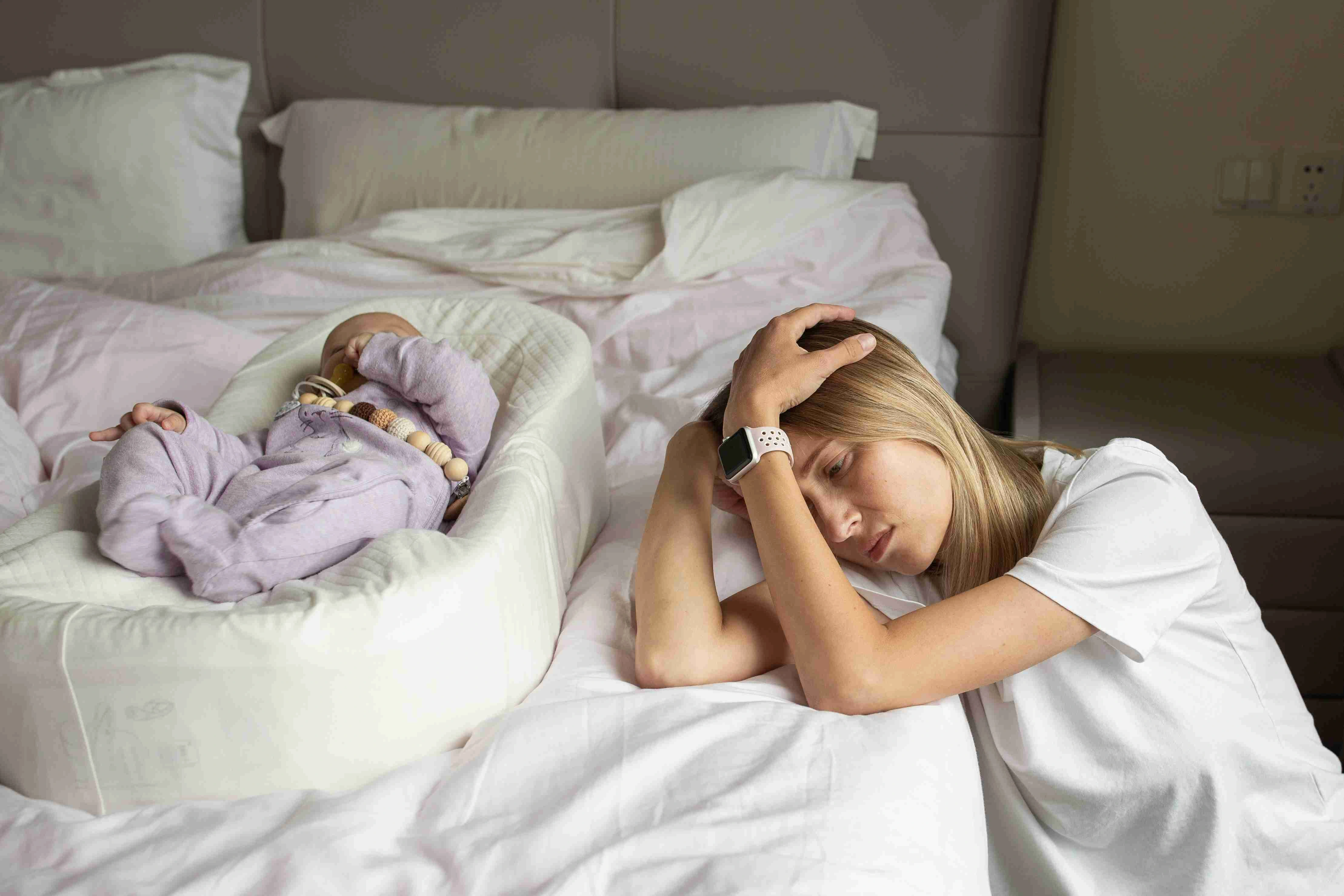


Trouble sleeping before or during a period can be real, but “period insomnia” is a description, not a diagnosis. The timing may fit premenstrual syndrome (PMS) or premenstrual dysphoric disorder (PMDD). Cramps, heavy bleeding, migraine, mood symptoms, hot flashes, a medicine, or an unrelated sleep disorder can also be responsible.
Research supports this cautious view. Systematic reviews have linked premenstrual symptoms, painful periods, and abnormal or heavy bleeding with worse self-reported sleep. However, many studies are observational and rely on questionnaires. Objective sleep findings in PMS and PMDD are inconsistent, so the evidence does not show that one hormone change explains every case 12.
First, check whether the pattern is actually premenstrual
PMS involves physical or emotional symptoms that recur before a period, ease soon after bleeding starts, and interfere with everyday life. PMDD is a more severe, mood-focused premenstrual disorder. A diagnosis depends on the repeated pattern, not on one difficult night or a prediction from a cycle app 3.
Several patterns can look similar:
-
PMS or PMDD: Symptoms appear in the premenstrual part of the cycle, improve after the period begins, and leave a relatively symptom-free interval.
-
Premenstrual worsening of another condition: Depression, anxiety, bipolar disorder, migraine, and some other conditions can be present through the month but become worse before a period. This is different from a disorder that switches on and off with the cycle.
-
Dysmenorrhea: Cramps or pelvic pain during menstruation may wake you or make it hard to settle. New, worsening, or treatment-resistant pain can have an underlying cause and deserves assessment 4.
-
Heavy or abnormal bleeding: Leaks, repeated product changes, and anxiety about bleeding can interrupt sleep. Ongoing blood loss can also cause iron-deficiency anemia 56.
-
Perimenopause: Irregular cycles, hot flashes, and night sweats can disturb sleep during the years leading to menopause 7.
-
Pregnancy: A late or unusual period does not reliably exclude pregnancy. Bleeding and pelvic pain in pregnancy need a different assessment because an ectopic pregnancy can become an emergency 8.
-
Insomnia or another sleep disorder: Difficulty sleeping that continues across the month may be insomnia disorder rather than a period-only problem. Loud snoring, pauses in breathing, gasping, or marked daytime sleepiness can point to sleep apnea 910.
The older phrase “primary insomnia” can make this seem like an either-or choice. Insomnia can coexist with pain, PMS, PMDD, perimenopause, or another health condition. Both the sleep problem and its contributors may need care.
What may be disturbing sleep
Cycle-related changes
Body temperature, circadian timing, melatonin, and reproductive hormones have all been studied in PMS and PMDD. Some studies find differences in nighttime temperature or self-reported sleep, while actigraphy and sleep laboratory results are mixed. That makes a universal “hormonal insomnia” explanation too simple 2.
Your own repeated pattern is more useful than an exact cycle-day rule. Cycles vary between people and from one cycle to the next.
Pain, migraine, and physical symptoms
Cramps, pelvic pain, headache, migraine, breast tenderness, nausea, and bowel symptoms can delay sleep or cause awakenings. Migraine may worsen premenstrually, but a new sudden neurological symptom should never be assumed to be “just a menstrual migraine” 3.
Mood symptoms
Irritability, anxiety, depression, and feeling overwhelmed can interfere with sleep. Severe depression, hopelessness, or suicidal thoughts need prompt attention regardless of cycle timing. Prospective daily ratings help distinguish PMDD from an ongoing mood disorder that becomes worse before menstruation 11.
Bleeding and iron deficiency
Heavy menstrual bleeding can cause iron loss. Iron-deficiency anemia may cause weakness, fatigue, dizziness, shortness of breath, or chest pain. A clinician may use a blood count and iron tests, including ferritin, to investigate it 6.
Fatigue does not always mean you are sleepy, and spending more time in bed will not correct iron deficiency. An uncomfortable urge to move the legs at rest in the evening is also worth mentioning because iron status can influence the evaluation and treatment of restless legs syndrome 12.
Medicines and contraception
Antidepressants, hormonal contraception, pain medicines, stimulants, sedating medicines, and over-the-counter products can change sleep or alertness. Record what you take and when. Do not stop, start, or alter a prescribed medicine or contraceptive schedule on your own.
Track sleep and symptoms for at least two cycles
ACOG recommends daily symptom records over multiple cycles when evaluating PMS. DSM-5-aligned PMDD assessment also relies on prospective daily ratings during at least two symptomatic cycles 311.
Each day, record:
-
the actual start and end of bleeding, plus how heavy it was for you
-
bedtime, estimated time to fall asleep, awakenings, wake time, and whether sleep affected daytime function
-
cramps, pelvic pain, headaches, aura or other neurological symptoms, hot flashes, night sweats, and an urge to move the legs
-
mood symptoms, including anxiety, depression, irritability, hopelessness, or suicidal thoughts
-
prescription medicines, contraception, pain relievers, sleep products, caffeine, and alcohol, including timing
-
snoring, gasping, witnessed pauses in breathing, and unusually strong daytime sleepiness
-
pregnancy possibility, a late period, unusual bleeding, or pregnancy test results when relevant
Do not wait two cycles to seek help for a severe or urgent symptom.
A paper diary, calendar, or app can all hold the record. Treat app predictions as estimates rather than evidence that a symptom occurred on a particular hormonal day. A large study of self-tracked app data found useful cycle-level patterns, but it also described missing entries, ambiguous symptom labels, and limits on diagnostic interpretation 13.
Bring the record to a primary care clinician, gynecologist, mental health professional, or sleep clinician. The pattern can help decide what to evaluate instead of assuming every sleep problem near a period is PMS.
Match treatment to the pattern
Treat persistent insomnia directly
If difficulty sleeping persists outside the premenstrual window, causes substantial daytime impairment, or keeps returning, ask about treatment for insomnia as well as treatment for menstrual symptoms. Multicomponent cognitive behavioral therapy for insomnia (CBT-I) is the recommended first-line behavioral treatment for chronic insomnia. Sleep-hygiene advice by itself is not an adequate treatment 14.
CBT-I is more than a bedtime routine. A trained clinician tailors techniques such as stimulus control, sleep scheduling, and work on unhelpful beliefs about sleep. Do not attempt an aggressive sleep restriction schedule without appropriate guidance. Ask a clinician to adapt the plan if you have marked daytime sleepiness or if reduced alertness would be dangerous.
Address pain and bleeding
A clinician or pharmacist can help determine whether a nonsteroidal anti-inflammatory drug (NSAID) is appropriate for cramps. NSAIDs are not safe for everyone, and severe, new, or persistent pain needs evaluation rather than repeated self-treatment 4.
Heavy or irregular bleeding may require pregnancy testing, an examination, blood tests, imaging, or other evaluation depending on the situation. Iron treatment should follow evidence of deficiency and a plan for the cause of blood loss. Do not use iron as a general sleep supplement 6.
Review PMS or PMDD treatment
Care can include psychological treatment, an antidepressant, hormonal treatment, or a combination, depending on the symptom pattern, pregnancy plans, other health conditions, and treatment preferences 15.
Selective serotonin reuptake inhibitors (SSRIs) probably reduce overall PMS and PMDD symptoms, but they can also cause side effects, including sleepiness or nausea. Continuous and premenstrual-only regimens have both been studied, and the choice belongs with a prescriber 16. Do not change an antidepressant schedule on your own, particularly if it is also treating depression, anxiety, or another condition.
Combined hormonal methods may reduce bleeding, cramps, or some menstrual migraines, but they are not suitable for everyone. Migraine with aura, clotting risk, blood pressure, smoking, age, and other factors can change the safety decision 17. Review the exact method with a clinician rather than treating birth control as a universal sleep remedy.
Use comfort measures for a specific problem
Comfort measures can support sleep while the cause is being addressed:
-
Choose menstrual protection that fits your flow and feels manageable overnight. Keep spare supplies nearby if fear of leaks is keeping you awake, and follow the product's wear-time instructions.
-
If heat helps cramps, use a purpose-made heat product according to its instructions. Do not fall asleep with a device that is not intended for overnight use.
-
Adjust bedding, sleepwear, and airflow to your own comfort if hot flashes or temperature sensitivity are waking you. There is no single bedroom temperature that treats menstrual insomnia.
-
If you are awake and becoming frustrated, use a quiet, low-stimulation activity until sleepiness returns. This can support a CBT-I plan, but it does not replace care for pain, bleeding, mood symptoms, or persistent insomnia.
Supplements, “hormone-balancing” diets, seed cycling, detoxes, essential oils, and exact cycle-day sleep routines do not diagnose the cause. Some supplements interact with medicines or vary in quality. Discuss any product you are considering with a clinician or pharmacist, especially during pregnancy or when taking prescription medicine.
When to seek medical care
Arrange a clinical assessment if:
-
sleep or mood symptoms repeatedly interfere with work, school, relationships, or daily function
-
symptoms occur through most of the month, or insomnia continues after the period ends
-
pain is severe, new, worsening, or not relieved by your usual treatment
-
bleeding is unusually heavy, prolonged, irregular, or occurs between periods
-
you have possible anemia symptoms, an evening urge to move your legs, loud snoring, gasping, witnessed breathing pauses, or strong daytime sleepiness
-
symptoms changed after starting or changing a medicine or contraceptive
-
cycles have become irregular and hot flashes or night sweats are disturbing sleep
Get urgent help now
Seek emergency care now if:
-
you are changing a pad or tampon every hour for more than two hours and also have chest pain, shortness of breath, lightheadedness, or dizziness 5
-
pregnancy is possible and you have sudden or severe abdominal or pelvic pain, shoulder pain, weakness, dizziness, fainting, or abnormal bleeding 8
-
you have suicidal thoughts or feel that you may harm yourself. Contact emergency services or go to the nearest emergency department, and do not stay alone if you may act on those thoughts 18
-
you develop sudden one-sided weakness or numbness, trouble speaking, confusion, a sudden vision or balance problem, or a sudden severe unexplained headache. These can be stroke symptoms, even if migraine usually occurs around your period 19
Do not drive if you are struggling to stay awake. Use another driver or a safe alternative and arrange prompt medical advice if the sleepiness is unexplained or severe 20.