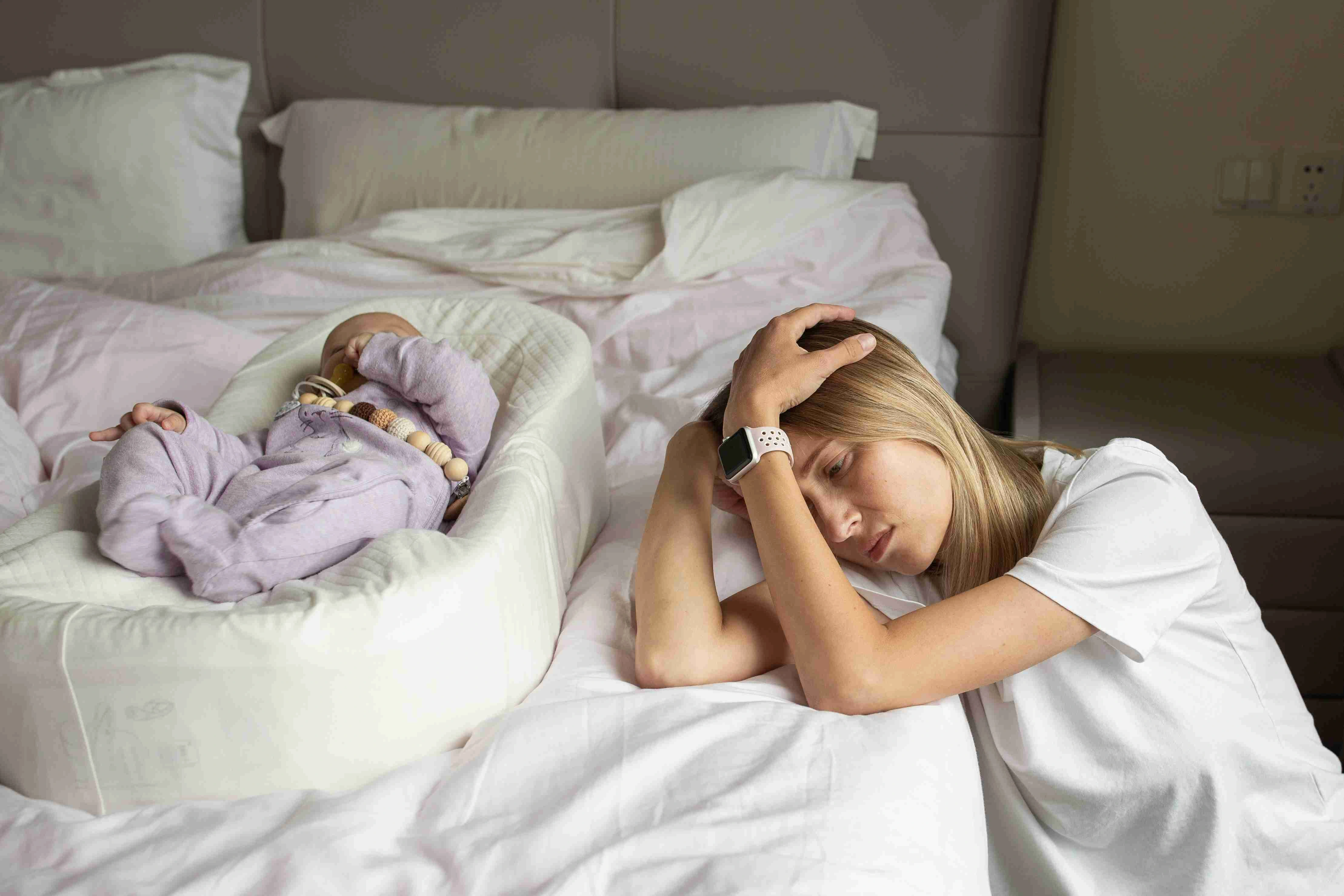


Pregnancy can make you need more rest while also making sleep harder to obtain. Hormonal changes, nausea, urinary frequency, reflux, pain, fetal movement, worry, restless legs, and changes in breathing can affect different nights and different stages of pregnancy 12.
A difficult night does not mean that you have harmed the pregnancy. Fatigue is common, especially early and late in pregnancy, and the useful response is to protect a realistic opportunity for sleep while addressing the specific symptom that keeps interrupting it 3.
How sleep may change across pregnancy
There is no universal trimester-by-trimester pattern. These are common possibilities, not a schedule your body must follow.
| Stage | What may affect sleep |
|---|---|
| First trimester | Fatigue can rise quickly. Nausea, breast tenderness, emotional changes, and trips to the bathroom may interrupt sleep even before the abdomen changes much 32. |
| Second trimester | Sleep may become easier for some people, but this is not guaranteed. Reflux, nasal congestion, pain, leg symptoms, snoring, or worry can start or continue 12. |
| Third trimester | A larger abdomen, back or pelvic pain, fetal movement, reflux, frequent urination, leg discomfort, snoring, and the need to begin sleep on a side can fragment the night 452. |
Changes also depend on work, other children, housing, mental health, a high-risk pregnancy, and health conditions that existed before conception. Do not assume every symptom is "just pregnancy" when it is severe, sudden, or affecting safety.
How much sleep should you aim for?
The general adult recommendation is at least seven hours of sleep per night on a regular basis, but it is a population recommendation rather than a pregnancy-specific prescription. Individual need varies, and some people need more sleep or daytime rest during pregnancy 6.
Focus on three questions:
- Do you have enough opportunity to sleep? Work, care duties, discomfort, and repeated bathroom trips can reduce the available window.
- Can you sleep when the opportunity exists? If you remain awake despite being tired and reasonably comfortable, insomnia may be part of the problem.
- Can you function safely? Unintended dozing, near misses while driving, or being unable to stay alert for essential tasks needs prompt attention.
A nap can replace some lost opportunity if it helps. It does not need to be forced, and it can be moved earlier or shortened if it consistently makes nighttime sleep harder. Avoid deliberately restricting sleep to meet a tracker target or to make yourself "tired enough."
Sleep position during pregnancy
Before 28 weeks
Use a position that is comfortable unless your obstetric clinician has given you different instructions for a medical reason. There is no need to spend the whole pregnancy on the left side, and discomfort is a reasonable reason to change sides 7.
From 28 weeks
NICE advises going to sleep on a side rather than on the back after 28 weeks 8. Either the left or right side is acceptable. An individual-participant meta-analysis found an association between going to sleep on the back and late stillbirth, but no important difference between going to sleep on the right and left sides 9.
The evidence is largely observational. It supports a practical going-to-sleep habit, not blame for a pregnancy loss and not a claim that one brief period on the back causes harm.
If you wake on your back, turn to either side and settle again. Waking that way is not a reason to panic 3.
A few low-cost adjustments may make side sleeping easier:
- place a pillow between the knees
- support the abdomen with a small pillow if that reduces pulling
- hug a pillow or place one behind the back to reduce rolling
- switch sides when a hip or shoulder becomes sore
You do not need a specialty pregnancy pillow if ordinary pillows already make the position comfortable. The aim is comfort and a stable side position, not a perfect spinal shape or a required product.
Match the response to what is waking you
Reflux or heartburn
Reflux often feels worse when lying down. Try smaller meals, avoid foods or drinks that reliably trigger your symptoms, and leave time upright after eating. Raising the head and upper torso can help some people 5.
Ask your obstetric clinician or pharmacist which antacid or acid-reducing medicine fits your pregnancy and other medicines. Chest pressure, trouble breathing, faintness, or severe upper abdominal pain should not be treated as ordinary heartburn.
Back, hip, or pelvic pain
Use pillows to reduce the pull on the abdomen and pressure between the knees. ACOG also lists brief, low-temperature heat or cold as options for sore back muscles, with protection between the skin and the heat or cold source 4.
Pain that remains severe, lasts more than two weeks, or occurs with fever, burning urination, or vaginal bleeding needs obstetric assessment because infection and pregnancy complications can also cause back pain 4.
Frequent urination
Shift more of your usual fluid intake earlier in the day and avoid a large drink immediately before bed, but do not dehydrate yourself to reduce bathroom trips. Empty your bladder before settling and keep the path to the bathroom lit enough to prevent falls.
Urinary frequency by itself is common in pregnancy. Burning or pain with urination, blood in the urine, fever, chills, nausea, vomiting, or pain in the back or side can point to a urinary infection and should be reported promptly. A urine test is needed because ordinary pregnancy frequency and a UTI can overlap 10.
Restless legs or leg cramps
Restless legs syndrome causes an urge to move the legs, usually with uncomfortable sensations that begin or worsen at rest, improve temporarily with movement, and are worse in the evening or at night. A leg cramp is a sudden painful tightening and is a different problem 1.
Tell your prenatal clinician if the restless-legs pattern repeatedly delays sleep. Current AASM guidance recommends iron studies, including ferritin and transferrin saturation, for clinically significant restless legs syndrome, along with a review of medicines and other factors that may worsen it 11.
Do not start high-dose iron, magnesium, valerian, or a restless-legs medicine on your own. Pregnancy-specific treatment depends on symptoms, laboratory results, trimester, other conditions, and the safety profile of the exact treatment. Evidence for magnesium and many herbal products is limited, and iron choice and dose should be based on clinician review rather than symptoms alone 12.
Snoring, gasping, or breathing pauses
Snoring can begin or worsen during pregnancy, but snoring alone does not diagnose obstructive sleep apnea. Frequent loud snoring, witnessed pauses, gasping, morning headaches, dry mouth, high blood pressure, or excessive daytime sleepiness should prompt evaluation 113.
Pregnancy-specific CHEST guidance conditionally supports appropriate home or laboratory diagnostic testing and positive airway pressure when indicated. It also recommends reassessment after delivery when OSA was diagnosed during pregnancy, because the condition does not always resolve. The guideline rates its recommendations as very low certainty, so individual symptoms and clinical context still matter 14.
If you already use positive airway pressure, continue it and ask the sleep clinician to review the data and settings as pregnancy progresses. Do not stop treatment or change pressure settings on your own 14.
When wakefulness has become insomnia
Symptom-driven sleep disruption and insomnia can occur together. Insomnia becomes more likely when you repeatedly cannot fall asleep or return to sleep despite having enough opportunity and a reasonably safe, comfortable setting, and the problem affects daytime function 1.
Start by treating the active disruptor, such as reflux, pain, restless legs, or breathing symptoms. For wakefulness that remains:
- keep wake time reasonably consistent while still allowing enough sleep opportunity
- use the bed for sleep rather than prolonged work, scrolling, or clock watching
- if you are fully awake and frustrated, move briefly to a safe, dimly lit place and return when sleepy
- use a low light for bathroom trips and move slowly if you feel dizzy or unsteady
- record sleep opportunity, awakenings, symptoms, naps, caffeine, and medicines for several days if the pattern is hard to explain
Cognitive behavioral therapy for insomnia, or CBT-I, can be adapted for pregnancy. In a randomized trial of 194 pregnant participants, CBT-I produced a larger reduction in insomnia severity than a control intervention 15. This supports CBT-I as a real treatment option, but it does not mean every online sleep-restriction schedule is safe to follow alone. Ask for pregnancy-aware care when sleep opportunity is already short, daytime sleepiness is severe, or another medical or mental health condition is present.
Medicines, supplements, caffeine, and alcohol
There is no single sleep medicine or supplement that is suitable for every pregnancy. The decision depends on the reason for poor sleep, trimester, dose, timing, other medicines, health conditions, and the risks of leaving the underlying problem untreated.
Review all prescription medicines, over-the-counter products, vitamins, herbal products, and dietary supplements with the obstetric clinician or a pharmacist. Do not start a sleep product or abruptly stop a prescribed medicine because of pregnancy without discussing the benefits and risks 16.
Doxylamine illustrates why the active ingredient and purpose matter. ACOG recognizes vitamin B6 with doxylamine as a treatment option for nausea and vomiting of pregnancy, but the same drug is also sold in some over-the-counter sleep aids. Its use for nausea does not automatically make unsupervised nightly use for insomnia appropriate 17.
The same caution applies to melatonin, magnesium, antihistamines, and herbal blends. "Natural" does not establish pregnancy safety, a useful dose, or effectiveness for the cause of your sleep problem.
ACOG advises keeping total caffeine below 200 milligrams per day during pregnancy. If caffeine delays sleep, moving it earlier or using less may help while still keeping the daily total within that limit 18.
Do not use alcohol as a sleep aid. The CDC states that there is no known safe amount or safe time for alcohol use during pregnancy 19.
If a psychiatric medicine is part of your care, do not discontinue it solely because you are pregnant. ACOG recommends weighing medication exposure against the risks of untreated mental illness and advises against withholding or stopping mental health treatment based on pregnancy status alone 20.
When to ask for care
Contact your obstetric, primary care, mental health, or sleep clinician when:
- you regularly cannot sleep during a genuine opportunity or the problem is worsening
- fatigue or sleepiness affects driving, work, balance, or basic daily tasks
- frequent loud snoring, gasping, breathing pauses, or morning headaches are present
- restless legs repeatedly delay sleep
- reflux, pain, nausea, or urinary symptoms remain uncontrolled
- sleep trouble occurs with persistent hopelessness, loss of interest, severe anxiety, panic, or intrusive thoughts
Perinatal depression can begin during pregnancy and may include persistent sadness or anxiety, loss of interest, abnormal fatigue, concentration problems, and sleeping much more or much less than usual. These symptoms are treatable and deserve assessment rather than being dismissed as ordinary pregnancy changes 21.
Do not drive or perform hazardous work when you cannot stay alert. Arrange another driver and seek prompt help.
When symptoms are urgent
Seek urgent or emergency medical care for:
- sudden or severe trouble breathing, chest pain, fainting, or a fast heartbeat with dizziness
- a severe or worsening headache, especially with vision changes
- severe abdominal, chest, shoulder, or back pain
- vaginal bleeding beyond spotting, fluid leaking, or a marked reduction in the baby's usual movement
- severe one-sided leg or arm swelling, redness, or pain
- fever of 100.4°F (38°C) or higher
- thoughts of suicide or harming yourself when you may act or cannot stay safe
These are among the CDC's urgent maternal warning signs. Tell emergency staff that you are pregnant and how far along you are 22.
Frequently asked questions
Do I have to sleep on my left side?
No. From 28 weeks, begin sleep on either the left or right side. Research did not find an important difference between the two sides for late stillbirth risk 9. Choose the side that is more comfortable and switch when needed.
What if I wake up on my back?
Turn onto either side and go back to sleep. The guidance focuses on the position in which you settle to sleep, and the NHS specifically advises not to worry if you wake on your back 3.
Is one bad night dangerous for the baby?
A bad night is distressing, but it is not evidence that you harmed the pregnancy. Fatigue and disrupted sleep are common 3. Seek help based on persistent symptoms, daytime function, breathing, mood, and pregnancy warning signs rather than treating a single night's sleep as a verdict.
Can I take something to sleep?
Sometimes a clinician may recommend medication after identifying the problem and weighing the benefits and risks. Do not assume an over-the-counter sleep aid, melatonin, magnesium, or an herbal product is safe because it is available without a prescription. Bring the exact product or ingredient list to the obstetric clinician or pharmacist 16.