

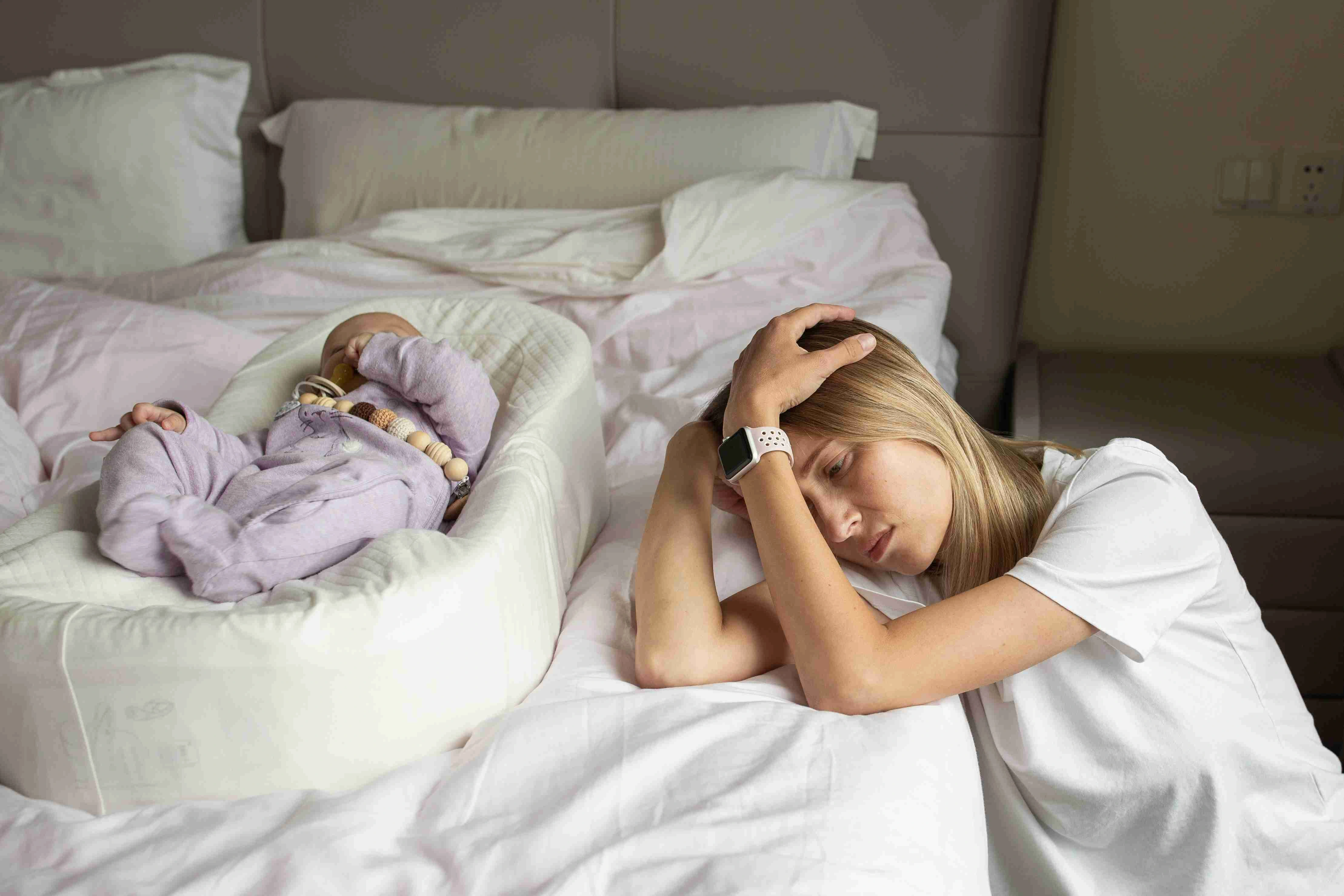
Postpartum insomnia is persistent difficulty falling asleep, staying asleep, or returning to sleep despite having a realistic opportunity to rest, with effects such as fatigue, irritability, poor concentration, or difficulty functioning the next day 1. If the baby needs care every hour and no sleep opportunity exists, the immediate problem is sleep disruption, not insomnia by itself.
The distinction changes the response. More opportunity and practical help address sleep lost to caregiving. Cognitive behavioral therapy for insomnia, or CBT-I, addresses the alertness, worry, and sleep habits that keep a person awake after the baby has settled. Many parents have both problems and need both kinds of support.
Is it insomnia or interrupted opportunity?
A longitudinal study used structured interviews from pregnancy through two years postpartum to separate insomnia from perinatal sleep disruption. When researchers ignored the requirement for adequate sleep opportunity, the apparent insomnia rate was two to four times higher. Both groups still reported impaired sleep and daytime effects, so disrupted sleep deserves help even when it does not meet insomnia criteria 2.
| Pattern | What it may feel like | What to address first |
|---|---|---|
| Limited sleep opportunity | You usually fall asleep when you can, but feeding, settling, pumping, pain care, work, or household duties repeatedly end the sleep period | Share or simplify overnight work where feasible and protect a realistic rest period |
| Postpartum insomnia | The baby is settled or another adult is covering care, yet you remain awake, alert, worried, or unable to return to sleep | Assess insomnia and use postpartum-adapted CBT-I |
| Both | Caregiving shortens the night, and much of the remaining opportunity is spent awake | Work on opportunity and insomnia together |
| Another sleep or medical problem | Snoring with gasping, an urge to move the legs, severe pain, palpitations, or other symptoms repeatedly disturb sleep | Evaluate the suspected condition |
| A perinatal mental health condition | Low mood, panic, disturbing intrusive thoughts, trauma symptoms, marked agitation, or unusual changes in energy accompany the sleep problem | Prompt mental health screening and treatment |
A few difficult nights after birth do not automatically establish an insomnia disorder. You also do not need to wait for the problem to become chronic before asking for help, especially when sleep loss is affecting safety, mood, infant care, or basic functioning.
What can keep a postpartum parent awake?
Postpartum insomnia usually has more than one contributor. A useful assessment looks for the parts that can be treated rather than assuming hormones or the baby explain everything.
A nervous system that stays on duty
A parent may remain alert for cries, monitor the baby's breathing, replay the birth, worry about feeding, or start calculating the small number of hours left before the next wake-up. After several difficult nights, the bed itself can become a cue for effort and fear. Feeling exhausted does not guarantee that the brain will switch quickly from vigilance to sleep.
Depression, anxiety, obsessive-compulsive symptoms, and post-traumatic stress can all include sleep disturbance. Insomnia can also occur alongside bipolar disorder. A sleep complaint cannot distinguish among these conditions, which is why mood, anxiety, intrusive thoughts, unusual energy, and prior mental health history belong in the assessment 3.
Too little uninterrupted opportunity
Feeding and infant care are real sleep disruptors. Recovery tasks, other children, shift work, and lack of practical support can remove much of the remaining opportunity. Telling a parent in this situation to relax or improve “sleep hygiene” misidentifies the main constraint.
Pain and physical symptoms
Incision or perineal pain, breast discomfort, reflux, headache, itching, shortness of breath, and frequent urination can prevent sleep or make returning to sleep difficult. New or severe physical symptoms need postpartum medical assessment rather than an insomnia workaround.
Postpartum thyroiditis is one possible medical contributor during the first year after birth. Its overactive phase can cause trouble sleeping, heat intolerance, irritability, tiredness, and a fast heartbeat. A later underactive phase can cause marked fatigue, cold intolerance, dry skin, and concentration problems. Symptoms and blood tests, not sleep trouble alone, determine whether thyroid testing is appropriate 4.
Another sleep disorder or a substance effect
Loud snoring, witnessed breathing pauses, waking with choking, or pronounced daytime sleepiness can suggest obstructive sleep apnea. Uncomfortable leg sensations that improve with movement can suggest restless legs syndrome. Caffeine, nicotine, some medicines, alcohol, cannabis, and supplements may also change sleep or alertness. A clinician should review the complete list, including nonprescription products.
When sleeplessness needs immediate help
Contact local emergency services or go to emergency care now if the postpartum parent:
- has thoughts of suicide, self-harm, or harming the baby, especially with intent, a plan, or fear that they may act
- hears or sees things that others do not, has fixed false beliefs or paranoia, or seems severely confused or disorganized
- has slept very little but feels unusually energized rather than tired, with racing thoughts, rapidly changing mood, impulsive behavior, or a reduced need for sleep
- cannot safely care for themselves or the baby
These symptoms can signal postpartum psychosis, mania, or another acute condition. Postpartum psychosis requires immediate medical attention and often involves hallucinations, delusions, paranoia, confusion, or disorganized behavior 5. Bring in a trusted adult to help keep the parent and baby safe while emergency care is arranged.
Frightening intrusive thoughts that feel unwanted and upsetting are not automatically the same as psychosis or an intention to act. They can occur with postpartum anxiety or obsessive-compulsive symptoms. Tell a clinician promptly so they can assess the thoughts, distress, and safety. Treat any intention, plan, command to act, loss of contact with reality, or doubt about immediate safety as an emergency.
How postpartum insomnia is assessed
There is no single blood test or overnight sleep test for insomnia. The history should establish when the problem began, whether a genuine opportunity to sleep exists, how often wakefulness continues after caregiving ends, and how daytime functioning has changed. It should also review pain, physical symptoms, mood, anxiety, trauma, bipolar-spectrum symptoms, medications, substances, and signs of another sleep disorder 1.
A brief sleep record can make that discussion more accurate. For several days, note:
- each period when sleep was realistically possible
- when infant care started and ended
- estimated time spent awake after care was complete
- naps, caffeine, medication, and substance use
- pain, mood, anxiety, unusual energy, and daytime sleepiness
The Insomnia Severity Index can quantify insomnia symptoms 6. The Edinburgh Postnatal Depression Scale or Patient Health Questionnaire can screen for depression. These are screening tools, not self-diagnoses. ACOG recommends validated depression and anxiety screening during postpartum care, prompt assessment after a positive screen, bipolar screening before medication is started for depression or anxiety, and immediate attention to self-harm risk or postpartum psychosis 3.
Testing should follow the history. Thyroid blood tests may be reasonable when symptoms suggest postpartum thyroiditis. Breathing symptoms, irresistible sleep attacks, or leg discomfort may lead to a sleep-disorder evaluation. Persistent pain, infection symptoms, or other postpartum concerns need their own medical assessment.
Treatment starts with the correct constraint
Protect an opportunity when one does not exist
If support is available, make the overnight plan specific. One adult might cover diapering, settling, bottle preparation, or a feeding that fits the family's established feeding plan while the other has a protected rest period. For a breastfeeding parent who still needs to wake, another adult may be able to bring the baby, handle burping and resettling, and manage supplies.
Do not change feeding or pumping solely from generic sleep advice. An obstetric clinician, pediatric clinician, or lactation professional can help account for milk supply, infant growth, parental health, and family preferences.
Support is not equally available. A parent without another adult has not failed at sleep. Asking a friend or relative for one defined task, such as an early-evening baby shift, meal, school run, or daytime watch period, can be more workable than a vague request for help. When no informal support exists, tell the postpartum care team that lack of sleep opportunity is the barrier.
Use CBT-I for wakefulness that persists despite opportunity
The American Academy of Sleep Medicine recommends multicomponent CBT-I for chronic insomnia in adults. It combines a review of sleep timing with stimulus control, carefully managed time in bed, cognitive strategies for sleep-related worry, and relaxation. Sleep-hygiene tips alone are not equivalent to CBT-I 7.
Postpartum CBT-I needs flexibility:
- Separate caregiving time from insomnia time. A sleep diary should not label a feed or diaper change as unexplained wakefulness.
- Reduce effort, not infant responsiveness. Cognitive work can address catastrophic predictions and clock-watching without asking a parent to ignore the baby.
- Adapt stimulus control. If you are safely off duty and remain frustrated and alert, a quiet, dimly lit activity outside bed until drowsy may help weaken the bed-worry link. The plan must still allow safe infant care.
- Do not impose aggressive sleep restriction on yourself. Perinatal trials modified time-in-bed recommendations and allowed safety naps when daytime sleepiness was significant 8.
- Treat a safety nap as a safety tool. A rigid ban on naps is inappropriate when severe sleepiness makes driving, feeding, or holding the baby unsafe.
A therapist-assisted Australian trial found that a six-week CBT program reduced insomnia symptoms among first-time parents four to twelve months postpartum. The trial excluded severe psychiatric illness, major sleep disorders, and infants waking more than three times nightly while needing parental help, so it does not show that the same protocol fits the early newborn period or a parent in crisis 6. A clinician trained in behavioral sleep medicine or perinatal mental health can adapt CBT-I to the person's recovery, feeding, caregiving, and safety needs. Telehealth may make this easier to access.
Medication and breastfeeding are individual decisions
Medication may be considered when insomnia is severe, another condition needs treatment, CBT-I is unavailable, or behavioral treatment alone is insufficient. There is no single postpartum sleep medicine that is right for everyone. The decision depends on the suspected cause, prior response, exact drug and dose, duration, other medicines, infant age and health, feeding method, and whether another alert adult can cover infant care.
Breastfeeding does not make every medication unsafe, and “natural” does not make a supplement safe. The National Library of Medicine's LactMed database provides drug-specific information about levels in milk and infant blood, reported infant effects, and possible alternatives, but it does not replace professional judgment 9. Review prescription medicines, over-the-counter sleep aids, melatonin, herbs, alcohol, and cannabis with the prescriber or pharmacist. Do not stop a needed psychiatric medicine abruptly or withhold treatment solely because of lactation; ACOG recommends an individualized benefit-risk discussion 10.
Sedation also affects caregiving safety. The American Academy of Pediatrics advises against bed sharing and notes especially high risk when an adult is fatigued or has used a medicine or substance that makes waking harder. Avoid feeding on a sofa or armchair if you may doze, and return the baby to a separate, firm, flat sleep surface as soon as you are ready to sleep 11. If a prescribed medicine may impair alertness, ask the prescriber what overnight coverage and infant monitoring are needed.
A practical plan for the next appointment
Bring the sleep record and ask the clinician to help answer four questions:
- Is most sleep being lost because no opportunity exists, because I stay awake during the opportunity, or both?
- Do pain, thyroid symptoms, another sleep disorder, a medicine, or a substance need evaluation?
- Do I need screening or treatment for depression, anxiety, trauma, obsessive-compulsive symptoms, bipolar disorder, or psychosis?
- Can I access postpartum-adapted CBT-I, and what is the safe plan if medication is considered?
Seek an appointment promptly when inability to sleep persists across several opportunities, worsens, or interferes with safe infant care, driving, mood, or basic daily tasks. Use emergency care for the warning signs above. Postpartum insomnia is treatable, but the useful treatment begins by naming the actual problem rather than treating every interrupted night as the same condition.