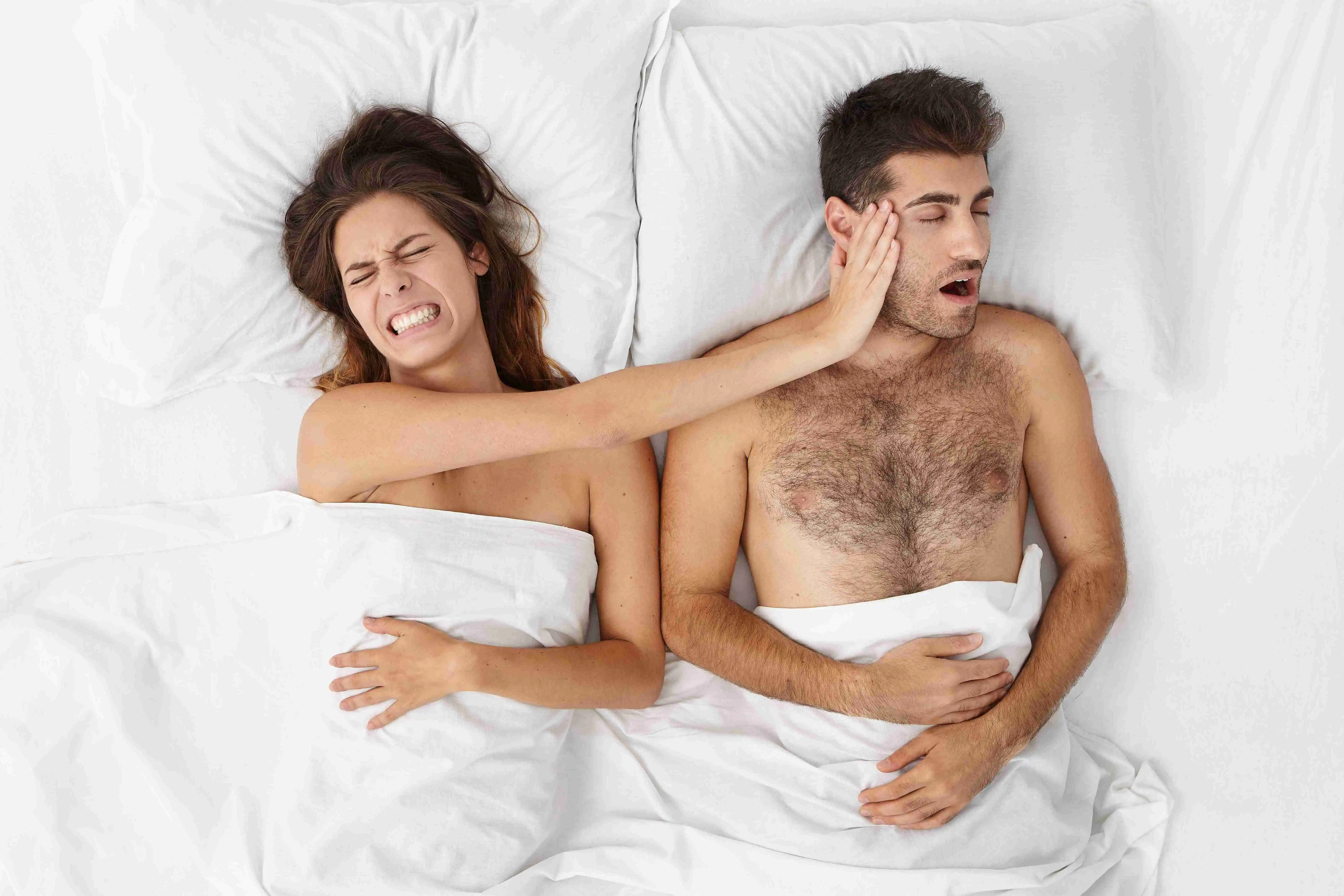
Sleep apnea is repeated stopping or reduction of breathing during sleep. It is not one single disorder. Obstructive events happen when the upper airway narrows or closes despite an effort to breathe. Central events happen when breathing effort falls or stops. A mixed event contains both patterns.
The distinction matters because the same symptom can have different causes, and a treatment that opens the airway does not solve every problem with breathing control. Symptoms can raise suspicion, but neither snoring nor an oxygen graph can establish the diagnosis.
This is the general guide to the types, evaluation, health implications, and treatment logic. For greater detail, see obstructive sleep apnea, central sleep apnea, sleep apnea symptoms, and sleep apnea treatments.
The three breathing-event categories
| Category | What happens during the event | Why the distinction matters |
|---|---|---|
| Obstructive apnea | Airflow stops or nearly stops while the chest and abdomen continue trying to breathe against a narrowed or closed upper airway. | Treatment focuses on keeping the airway open and addressing contributing anatomy or other OSA factors. |
| Central apnea | Airflow and breathing effort fall or stop together because the drive to breathe is temporarily absent or unstable. | Evaluation looks for the central-apnea setting, such as heart failure, medication or substance effects, high altitude, or a neurologic or other medical condition. |
| Mixed apnea | One event has a central portion without breathing effort and an obstructive portion with effort against a blocked airway. | The full-night pattern, not the word "mixed" alone, determines the diagnosis and plan. |
Polysomnography classifies an event by comparing airflow with breathing effort. The label describes what the sensors recorded, not what a person can reliably identify by sound or appearance at home 1.
"Mixed apnea" and "treatment-emergent central sleep apnea" are not synonyms. Treatment-emergent CSA describes central events that appear or persist as obstructive sleep apnea is treated, often during PAP therapy. A mixed apnea is one event with both central and obstructive portions 2.
What obstructive and central sleep apnea mean
Obstructive sleep apnea
Obstructive sleep apnea, or OSA, is the most common type. The airway repeatedly narrows or closes during sleep, reducing airflow while breathing effort continues. Body and airway anatomy, age, family history, obesity, large tonsils or tongue, alcohol, smoking, and some hormone or medical conditions can affect risk. None of these factors proves that a person has OSA 34.
Central sleep apnea
Central sleep apnea, or CSA, is a group of disorders rather than one simple failure of the brain to "remember" breathing. Breathing control may become unstable, a medicine such as an opioid may suppress respiratory drive, or another medical or neurologic condition may contribute. Heart failure, stroke, high altitude, and treatment-emergent CSA are important clinical settings 42.
A person can have obstructive and central events in the same night. Sleep-related hypoventilation, which means sustained underbreathing with elevated carbon dioxide, is another problem and is not defined by apnea count alone. These distinctions affect both testing and treatment 12.
Who should be evaluated?
Arrange a clinical evaluation when there is a repeated pattern such as:
- witnessed pauses followed by gasping, choking, or a loud snort
- frequent loud snoring with unrefreshing sleep or daytime sleepiness
- recurrent waking short of breath with observed breathing changes
- morning headaches, dry mouth, fatigue, insomnia, reduced concentration, or frequent nighttime urination alongside nighttime breathing signs
- unintended dozing, a driving near miss, or difficulty staying awake during safety-sensitive work
NHLBI lists breathing that starts and stops, frequent loud snoring, and gasping among the main nighttime signs. Daytime sleepiness, fatigue, headache, insomnia, dry mouth, reduced concentration, and other daytime effects can occur, but each also has other possible causes 5.
A lower threshold for evaluation can make sense when symptoms occur with OSA-related anatomy or risk factors, difficult-to-control high blood pressure, heart failure, prior stroke, chronic opioid use, neuromuscular weakness, or another condition that changes the likely type of sleep-related breathing disorder 46.
Risk is not diagnosis. A person does not need to have obesity, be an older man, or report dramatic sleepiness to have sleep apnea. Women may report more fatigue, insomnia, or headache, and children may show snoring, mouth breathing, bedwetting, overactivity, learning difficulty, or growth concerns 57.
This does not mean every person without symptoms should be tested. The U.S. Preventive Services Task Force found insufficient evidence to recommend for or against screening the general adult population without recognized OSA symptoms. That statement does not apply to someone seeking care for symptoms, to children, or to several special clinical and occupational settings 8.
How sleep apnea is diagnosed
Diagnosis begins with a comprehensive sleep and medical evaluation. A clinician considers the nighttime pattern, daytime function, sleep opportunity, medicines and substances, health conditions, airway examination, and whether another sleep or breathing disorder could explain the problem. Objective sleep testing then has to match the question 96.
Polysomnography
An attended overnight polysomnogram records sleep stages, airflow, chest and abdominal effort, oxygen, heart rhythm, and other signals. It can distinguish obstructive, central, and mixed events and detect patterns that a simpler home test may miss 16.
Polysomnography is the standard adult diagnostic test when OSA is suspected after a comprehensive evaluation. It is preferred over home testing when significant heart or lung disease, possible respiratory muscle weakness, hypoventilation, chronic opioid use, prior stroke, severe insomnia, central apnea, or another competing sleep disorder is a concern 6.
Children need pediatric assessment and an appropriately performed sleep study rather than an adult self-test pathway 7.
Home sleep apnea testing
A medically ordered home sleep apnea test can diagnose OSA in a selected, uncomplicated adult whose clinical evaluation shows a higher likelihood of moderate or severe OSA. It is not a general screening tool and is not designed to settle every central-apnea, hypoventilation, pediatric, or complex medical question.
If one home test is negative, inconclusive, or technically inadequate while suspicion remains, the AASM recommends polysomnography. A negative consumer test should not be treated as stronger evidence than a negative medically ordered test 6.
Wearables, apps, and overnight oximetry
A watch, ring, phone app, bed sensor, or consumer oximeter can produce information worth discussing with a clinician. It cannot show the full relationship among sleep, airflow, respiratory effort, arousal, oxygen, and carbon dioxide needed to diagnose and classify sleep apnea.
Oxygen drops can occur for different reasons, and obstructive or central events may not produce the same oxygen pattern every night. The AASM states that consumer sleep technologies should not be used to diagnose or treat a sleep disorder without appropriate validation and clinical evaluation 10.
What the AHI does and does not tell you
The apnea-hypopnea index, or AHI, is the number of scored apneas and hypopneas per hour of sleep during polysomnography. It is widely used to establish and grade OSA, but it is not a complete measure of one person's symptoms or health risk.
Two people with the same AHI can differ in:
- the type, length, and timing of their breathing events
- how far and for how long oxygen falls
- how often events cause arousal or sleep fragmentation
- daytime sleepiness and functional impairment
- heart, lung, neurologic, metabolic, and medication context
A research statement reviewing OSA severity metrics concluded that AHI remains the best-studied measure but has important limits for predicting consequences and treatment response 11.
Home studies may report a respiratory event index based on monitoring time rather than confirmed sleep time. Device, sensor, and scoring differences can also change the reported number. A clinician should interpret the original report, the event types, oxygen and sleep data, symptoms, and health context rather than treating one cutoff as the person's full risk profile 611.
Why diagnosis and treatment matter
Repeated breathing events can fragment sleep, lower oxygen, and increase physiologic stress. OSA is associated with difficult-to-control high blood pressure, atrial fibrillation, heart disease, stroke, type 2 diabetes, impaired concentration, and reduced quality of life. Daytime sleepiness can also create driving and workplace risk 12.
These associations do not mean that every person with sleep apnea will develop each condition, that AHI alone predicts who will, or that treating apnea guarantees prevention of a heart attack or stroke. Risk depends on the apnea type and burden, symptoms, oxygen effects, other health conditions, and treatment response 11.
CSA may be clinically important both for its breathing effects and for what it reveals about an underlying condition or medication. Current AASM guidance therefore prioritizes treating contributors and improving symptoms and quality of life, not simply erasing every central event on a report 2.
Treatment depends on the type and cause
There is no single treatment for every form of sleep apnea.
For OSA, positive airway pressure, or PAP, holds the upper airway open. A systematic review supporting AASM guidance found that PAP reduces OSA severity and sleepiness and improves sleep-related quality of life, with average benefits for blood pressure and motor-vehicle risk across the included adult evidence 13.
A custom oral appliance, weight management when relevant, selected positional treatment, treatment of contributing nasal or upper-airway disease, tonsil or other airway surgery, or an implanted therapy may be appropriate for some people. Eligibility and expected benefit depend on anatomy, test results, age, symptoms, health context, and preference 14. See the focused sleep apnea treatment guide for how the options differ.
For CSA, clinicians first identify and address contributing heart, medication, substance, altitude, neurologic, or other medical factors. The 2025 AASM guideline gives conditional recommendations for selected forms of PAP, oxygen, acetazolamide, and transvenous phrenic nerve stimulation in specific adult CSA settings. The evidence certainty and suitability vary, so the diagnosis and cause have to guide the choice 2.
For mixed or treatment-emergent patterns, the clinician reviews the original diagnosis, PAP data or titration, symptoms, medications, heart function when relevant, and whether central events persist. Some treatment-emergent central events improve with time, while others need a different plan. Do not alter pressure ranges, switch PAP modes, add oxygen, stop an opioid or heart medicine, or start a breathing-related drug on your own 2.
For children, enlarged tonsils or adenoids and other pediatric factors change the treatment pathway. A child's plan may involve surgery, PAP, medication, weight support, orthodontic care, or another cause-specific approach under pediatric supervision 7.
No option cures sleep apnea for everyone. Weight loss, surgery, an oral appliance, or PAP can work well for the right person, but residual or recurring events, changing pressure needs, growth, aging, weight change, and new medical conditions can make follow-up necessary 127.
Safety boundaries
Do not drive or perform safety-sensitive work when you are struggling to stay awake or have recently nodded off. Caffeine, music, or an open window cannot reliably prevent a microsleep. Stop in a safe place and arrange another way to travel 15.
Sleep apnea is usually evaluated through outpatient sleep care. Do not assume that severe breathing difficulty while awake, blue or gray lips or skin, chest pain with breathing difficulty, collapse, or inability to wake normally is "just sleep apnea." Call emergency services for those symptoms 16.
Tell surgical, anesthesia, and prescribing clinicians about diagnosed sleep apnea and the treatment you use. Bring the name of the device or oral appliance and the most recent sleep report when relevant. Sedatives, opioids, procedures, or a major health change can alter respiratory risk or treatment needs 12.
Questions to ask after a sleep study
A useful follow-up visit should answer:
- Were the events obstructive, central, mixed, or a combination across the night?
- What did the study show beyond AHI, including oxygen, arousals, sleep stages, body position, and carbon dioxide when measured?
- Which symptoms and health goals are treatment intended to improve?
- Why does the proposed treatment fit this apnea type and cause?
- How will effectiveness, side effects, and ongoing need be checked?
The practical goal is not to diagnose yourself from a symptom list or reduce one number at any cost. It is to identify the breathing pattern accurately, understand what it means in your health context, and use a treatment that improves breathing and outcomes that matter to you.