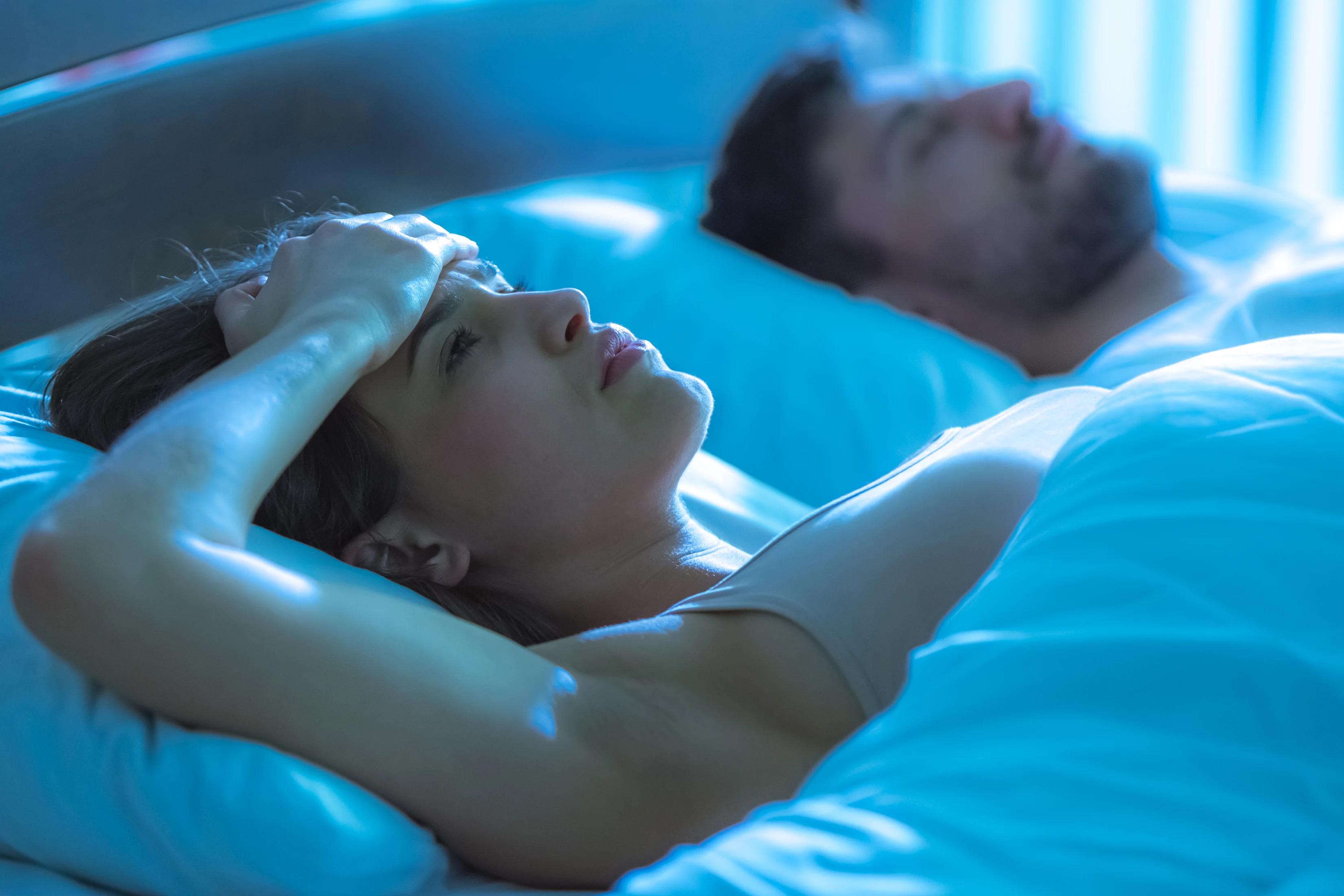
A sleep disorder is not one diagnosis. It may affect the ability to sleep, breathing during sleep, alertness during the day, sleep timing, behavior during sleep, or movement around sleep. The International Classification of Sleep Disorders groups these conditions into six major clinical categories 1.
The useful first question is not “Which disorder do I have?” It is “What pattern is happening, and what could explain it?” Trouble falling asleep, daytime sleepiness, and repeated awakenings can each come from several categories. A medical history and sleep pattern usually narrow the possibilities before any test is ordered.
This article is an adult overview. Symptoms, testing, and common diagnoses differ in younger people, so see our guide to sleep disorders in children for that age group.
The six main types of sleep disorders
The categories below are a map, not a self-diagnosis tool. Some people have more than one disorder, and medical conditions, mental health conditions, insufficient sleep, medicines, or substances can produce similar symptoms.
| Category | Pattern that may point toward it | How evaluation commonly starts |
|---|---|---|
| Insomnia disorders | Trouble falling asleep, staying asleep, or returning to sleep despite enough time and suitable conditions, with effects during the day | A detailed history and sleep diary usually come first. Polysomnography is not routine unless symptoms suggest another disorder or the diagnosis remains uncertain 2 |
| Sleep-related breathing disorders | Loud habitual snoring, witnessed pauses, gasping, choking, morning headaches, unrefreshing sleep, or daytime sleepiness | An overnight polysomnogram may be used. A home sleep apnea test is an option for selected uncomplicated adults with suspected moderate to severe obstructive sleep apnea, not a general test for all breathing disorders 3 |
| Central disorders of hypersomnolence | An overwhelming tendency to fall asleep, unintended sleep episodes, cataplexy, prolonged sleep, or severe sleep inertia after adequate sleep has been considered | The clinician first checks sleep amount, schedule, other disorders, medicines, and substances. Suspected narcolepsy is usually assessed with an overnight study followed by a properly prepared next-day multiple sleep latency test 4 |
| Circadian rhythm sleep-wake disorders | Sleep timing is consistently too late, too early, irregular, or drifting for required times; sleep may improve when the person can follow their internal schedule | A sleep diary and often clinical actigraphy show timing across days or weeks. A single night in a laboratory usually cannot show the full pattern 5 |
| Parasomnias | Sleepwalking, confusional arousals, sleep terrors, nightmares, sleep-related eating, dream enactment, or other behaviors arising around sleep | Evaluation starts with the event's timing, pattern, witness description, medicine history, and any injury. Video polysomnography with additional EEG channels is considered when events are atypical, potentially injurious, or difficult to distinguish from seizures 6 |
| Sleep-related movement disorders | An urge to move the legs that appears at rest, worsens in the evening, and improves with movement; repeated limb movements in sleep; or sleep-related jaw activity | Restless legs syndrome is diagnosed from its clinical pattern, with blood tests used selectively for contributors such as low iron. Periodic limb movement disorder requires different evidence and should not be inferred from a partner's observation or watch data 75 |
Focused Sleepiverse guides cover insomnia, sleep-related breathing disorders, narcolepsy, hypersomnia, circadian rhythm sleep-wake disorders, and parasomnias in more detail.
Why symptoms overlap
The same symptom can mean different things in different contexts:
- Trouble sleeping at a required time may reflect insomnia, a circadian mismatch, pain, a medicine effect, or simply too little opportunity to sleep.
- Daytime tiredness needs clarification. Feeling likely to doze is different from having low energy without a tendency to sleep. Insufficient sleep, sleep apnea, sedating medicine, depression, and central hypersomnolence disorders can all enter the differential.
- Repeated awakenings can occur with insomnia, breathing events, reflux, pain, urinary symptoms, limb movements, or environmental disruption.
- Sleep paralysis and vivid experiences at sleep-wake transitions can occur with narcolepsy, but either symptom alone is not enough to diagnose it. Cataplexy, which is sudden muscle weakness triggered by emotion, is a more specific clue that deserves specialist assessment 8.
- Unusual movements or behavior at night may be a parasomnia, a medicine effect, a breathing-related arousal, or a seizure. A description of the timing and behavior is more useful than calling every event “sleepwalking.”
Snoring illustrates the problem well. Snoring can occur without obstructive sleep apnea, while obstructive sleep apnea can occur without dramatic snoring. A questionnaire can estimate risk, but AASM guidance says it cannot diagnose adult obstructive sleep apnea without polysomnography or an appropriate home sleep apnea test 3.
How sleep disorders are evaluated
1. The sleep and health history
The history determines which test, if any, can answer the clinical question. Expect questions about:
- The exact nighttime and daytime symptoms, when they began, how often they occur, and how they affect function
- Bedtime, wake time, naps, shift work, and differences between workdays and free days
- Whether there is enough opportunity to sleep
- Snoring, pauses, movements, injuries, confusion, dream enactment, or other observations from a bed partner
- Medical and mental health conditions, pregnancy, pain, and recent illness
- Prescription medicines, over-the-counter products, supplements, caffeine, nicotine, alcohol, cannabis, and other substances
- Driving, work, fall, and nighttime injury risks
For insomnia, a thorough sleep, medical, substance, and psychiatric history is the main diagnostic foundation. A diary and questionnaires can organize the information, but they do not replace clinical interpretation 2.
2. A sleep diary and clinical actigraphy
A sleep diary records estimated sleep and wake times, awakenings, naps, and relevant events over repeated days. It can reveal a stable delay, a drifting schedule, variable sleep opportunity, or a mismatch between workdays and free days that one office visit cannot show.
Clinical actigraphy uses a validated movement sensor, usually worn on the wrist, to estimate rest-activity patterns over multiple days. AASM conditionally supports it for selected insomnia, circadian, and hypersomnolence evaluations, but it should not replace muscle recordings for periodic limb movement disorder 5.
Before an MSLT, AASM guidance calls for two weeks of sleep-diary data and, when available, actigraphy so insufficient or irregular sleep does not distort the result 4.
3. Overnight polysomnography
An attended sleep study records brain waves, eye movements, muscle activity, heart rhythm, breathing effort and airflow, and blood oxygen. Video may help document unusual behavior. This makes polysomnography useful for breathing disorders, selected movement or behavior concerns, and the overnight portion of a narcolepsy evaluation 9.
Polysomnography does not answer every sleep question. It is not routinely needed to diagnose typical chronic insomnia, and a single laboratory night is a poor way to characterize a pattern that changes across the week.
4. Home sleep apnea testing
An at-home sleep study answers a narrower question than laboratory polysomnography. It can diagnose obstructive sleep apnea in an appropriate, uncomplicated adult when a clinician has already found a high enough likelihood. It does not evaluate insomnia, narcolepsy, parasomnias, most movement disorders, central apnea, or hypoventilation in the same way.
A negative, inconclusive, or technically inadequate home test does not always rule out obstructive sleep apnea. AASM recommends laboratory polysomnography when a single home test fails to establish the diagnosis and suspicion remains 3.
5. Daytime sleepiness testing
The multiple sleep latency test, or MSLT, measures how quickly someone falls asleep during a series of scheduled daytime nap opportunities and whether rapid eye movement sleep appears unusually soon. It is not a stand-alone test for anyone who feels tired.
The test normally follows an overnight polysomnogram. Sleep schedule, untreated sleep apnea, caffeine, cannabis, and medicines that are sedating, alerting, or change REM sleep can alter the result. Medication changes require an individualized plan because abrupt withdrawal or an unsafe washout can cause harm 4.
6. Targeted medical tests
Blood work, neurological testing, imaging, or other studies are chosen for a suspected contributor, not ordered as one standard “sleep panel.” For example, the clinical pattern of restless legs syndrome may lead to iron testing, while seizure-like nighttime events may call for an expanded neurological evaluation 7.
What a questionnaire or sleep tracker can tell you
A questionnaire can measure symptom severity or flag risk. A watch or app may show a useful pattern in bedtime, wake time, or activity. Neither can independently tell whether awakenings came from insomnia, apnea, pain, a movement disorder, or another cause.
Consumer devices also infer sleep through proprietary sensors and algorithms that may not match clinical measurements. The AASM advises that consumer sleep technology should support, not replace, a medical evaluation. An output should be used only for the purpose for which that specific feature has been validated and cleared 10.
Bring useful data to an appointment, but do not chase a nightly sleep-stage score. A short written description of symptoms, a regular diary, and a bed partner's observations may answer more relevant questions.
When to arrange an evaluation
Consider a medical evaluation when a sleep or alertness problem:
- Recurs despite enough opportunity to sleep
- Interferes with concentration, mood, work, school, relationships, or safety
- Includes loud habitual snoring, gasping, or witnessed breathing pauses
- Causes unintended sleep episodes or difficulty staying awake
- Includes an urge to move the legs at rest that repeatedly disrupts sleep
- Involves new, frequent, violent, or injurious nighttime behavior
- Began after a medicine, supplement, substance, or major health change
A primary care clinician can begin the history and medication review. A sleep clinician may be needed when the pattern is unclear, objective testing is indicated, or a focused sleep disorder is suspected. A neurologist may be involved for seizure-like events or central hypersomnolence, and a dentist may assess tooth wear or jaw injury when sleep bruxism is suspected.
When it is urgent
- Dangerous sleepiness: Do not drive or operate machinery when you are struggling to stay awake. Arrange another way home or stop in a safe place. Coffee alone does not reliably prevent microsleeps in a seriously sleep-deprived driver 11.
- Severe breathing trouble: Repeated gasping or witnessed pauses need medical evaluation. Sudden difficult breathing, confusion, or blue lips or skin can signal respiratory failure and requires emergency help 12.
- Medicine or substance-related sedation: Extreme sleepiness, slowed or difficult breathing, or inability to wake after opioids are combined with benzodiazepines, alcohol, or another central nervous system depressant requires immediate medical attention 13.
- Possible seizure: Get emergency help for a first seizure, an event lasting longer than five minutes, repeated seizures without recovery, serious injury, or trouble breathing or waking afterward. Do not restrain the person or put anything in their mouth 14.
- Acute mental-health risk: Thoughts of suicide or urges to harm yourself require immediate help from local emergency or crisis services 15.
What happens after the category is clearer
Treatment follows the diagnosis and the person's goals. It may target sleep behavior, breathing, circadian timing, daytime alertness, movement symptoms, an underlying condition, medicine effects, or injury prevention. The focused guides linked above explain those paths in context.
No single lifestyle change treats all six categories. Accurate classification matters because a step that fits one disorder may completely miss another. The best next step is the one that addresses the pattern actually found, then checks whether symptoms and daytime function improve.